
When compared to gas engines, diesel engines are far superior in terms of both efficiency and durability. Unfortunately, nothing lasts forever and there will come a time where certain parts will have to be replaced. Some are even considered regular service items due to their high wear rate.
Here at DFI, we understand your concerns and aim to educate and help reduce current and potential future problems from happening. This post will go over some of the most common diesel engine problems encountered by drivers, owners, fleets, and mechanics alike. We’ve gathered all this information so you don’t have to. After all, the money is made behind the wheel, not sitting on your phone, right?
Keep in mind that the reasons listed below are not the only ones, but just some of the most common. The truth is that internal combustion engines, diesel or not, are extremely complex, and therefore the list of potential problems could be much higher.
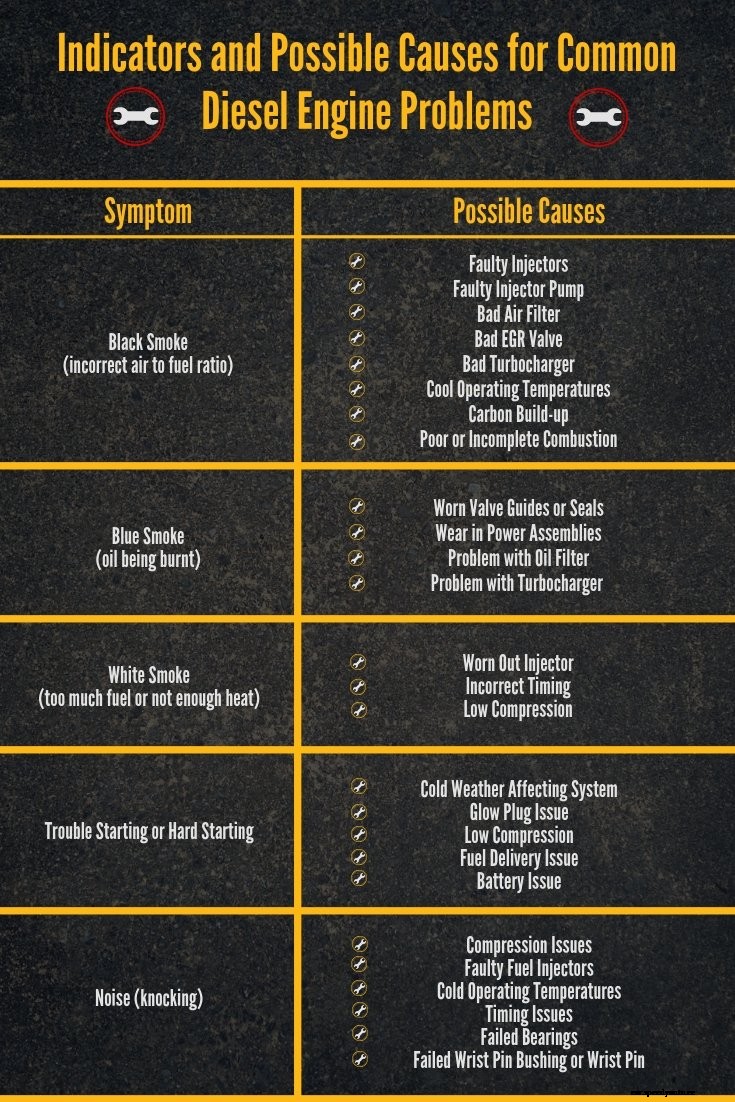
Modern diesel engines are no longer the locomotives they once were. Emissions regulations have gotten stricter and it’s one of the main reasons that modern combustion engines produce next to no smoke. If you notice black smoke coming from your exhaust, it’s generally a sign of serious engine problems.
Black smoke can be caused by:
When engine oil gets burned, the end result is usually tons of blue smoke coming from the exhaust. Generally, when you see a truck that’s burning oil, chances are that its engine is on its last legs.
Possible blue smoke causes include:
Seeing an entire white cloud coming from your truck’s exhaust is never a good sign. More often than not, white smoke will be accompanied by a burning, sweet smell indicative of burned engine coolant.
Here are some of the most common reasons for white smoke:
A hard start, especially in colder climates is nothing new for diesel engines. Their compression ratio is much higher compared to that of their gasoline counterparts. Add to that the lack of spark plugs and the reasons start to become clear as to why diesel engines have a much harder time starting.
Hard or no start reasons include:
If you notice your diesel engine becoming louder than usual, it could be a sign of more serious issues. Any engine knocks should be investigated right away to prevent further complications.
Engine knocks can be caused by one or a combination of the following issues:
Is your diesel engine feeling more sluggish than usual? Don’t just discard the matter as being regular wear and tear. Diesel engines will start to lose power over time, but a sudden drop is not normal. Knowing the how the difference between a defective and tired diesel engine is critical.
Low engine power can be caused by:
It is widely accepted that older, high mileage engines will consume some oil. However, oil consumption should be closely monitored and if any drastic changes occur, a proper inspection should be carried out.
Oil consumption can be caused by:
Total engine failure is an obvious sign that your diesel engine has seen better days. Although rare, it has happened where little to no previous warning signs were given beforehand. Learning to read your engine comes naturally if you spend hours or even days in your truck.
Engine disruption/failure can be caused by:
If left for too long, minor issues can become major in just a matter of days. Don’t neglect your engine. Without it, your truck becomes a huge yard ornament. DFI is committed to providing you with all the information necessary you keep your diesel engine going just that much longer.
Are you experiencing truck problems? We’ll help get you back on the road in no time. Give us a call at 1-855-212-3022 or send us a message today. Our ASE-certified staff is are some of the best and most experienced in the industry!
