
Chevrolet has been making small-block engines since 1954. The term “LS engine” has been used for the third and fourth generations of the small-block V8s that were introduced in 1997 and are still in production.
Known as the Vortec 6000, this 6.0L or 364.1 cu-in V8 engine is a rugged low-tech engine meant to run for over 200,000 miles without major repairs. It doesn’t have many flaws, so we’ll also have to look into its drawbacks from the design perspective if we are to discuss 7 problems.
Chevy 6.0 engine suffers from poor gas mileage, loss of power, throttle position sensor failure, exhaust manifold leak, active fuel management system failure, water pump failure, and engine knocking.
The Vortec 6000 is a thirsty engine, a point which every Chevy owner agrees with. The gas mileage depends on the type of engine, how it was maintained and whether it’s under a load or not, but in general, owners struggled to cross more than 17 miles to the gallon.
Having fuel consumption be the biggest problem with the engine is both a good and a bad thing. Even though all the extra fuel is an added expense, it’s a known variable and you can easily calculate how much it’s going to cost you to run the vehicle. In some ways, it’s a better problem to have than reliability issues and frequent, unpredictable failures.
The Chevy 6.0 engine produces 300 – 400 horsepower depending on the generation and model, but the power output in real-life conditions is unimpressive.
Mostly fitted into Sierra and Silverado models, the engine has to move the 5,000+ pound truck along with its passengers and cargo. While you can get some sense of power out of the Vortec 6000, it has been designed as a workhorse engine that prioritizes reliability over speed.
The throttle position sensor (TPS) is often one of the first parts to go out on the 6.0 Chevy engine. While the MAF sensor measures the volume of air flowing into the engine, the TPS sensor has a similar role but takes measurements at the throttle body.
The low power and high fuel consumption can be caused by a faulty TPS sensor that’s making the engine run rich. Throttle response and acceleration will also be affected, and the problem is always accompanied by a check engine light and a P0121 or a P012 error code.
Most aftermarket throttle position sensors cost less than $50 and replacing them is extremely easy, so even though it’s one of the more frequent problems on the 6.0 Chevy engine, it’s not a real cause for concern.
The real problem with the third generation Vortec 6.0 is the exhaust manifold leak. Through either improper torquing or low-quality bolts used in manufacture, the exhaust manifold will loosen up or even snap the bolts holding it in place.
The main symptoms of a leaking exhaust manifold are the smell of exhaust fumes in the cabin, louder engine noise, and some exhaust smoke coming from the engine bay. The problem is easily identifiable and can be mended at home by applying the DIY methods invented by 6.0 engine owners.
Chevrolet decided to take something as simple as the Vortec 6000 engine and optimize it with high-tech components, but instead of improving it, they’ve only managed to create one of the major problems for the IV generation models.
The active fuel management system shuts off half the cylinders to improve the otherwise poor gas mileage, but what has been reported on mass was severe oil consumption, lifter failure, and issues with the oil life monitoring system. Some owners immediately tuned their vehicles to turn off the AFM system, but there are still a lot of vehicles with the system running.
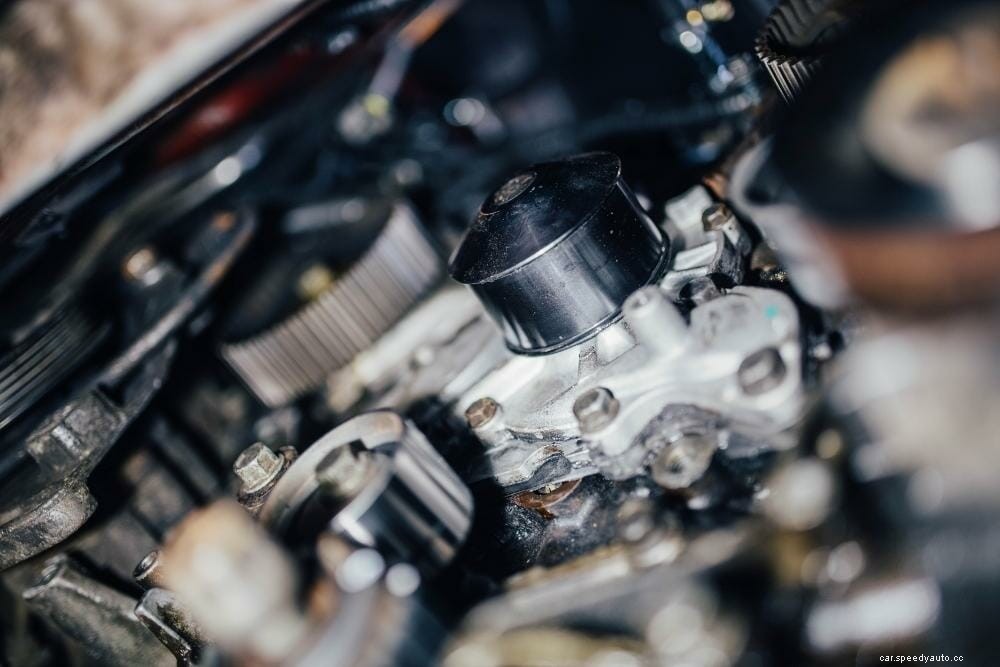
It wouldn’t be fair to Chevy’s engineers to say that the 6.0 Vortec has a problem with the water pump. The notion comes from the fact that most owners don’t change the water pump in regular intervals, together with the serpentine belt.
Aftermarket water pumps are not expensive, and changing them can be done at home with the right set of tools. You’ll also have to bleed the coolant and swap it with a new batch, but when we consider everything, the total cost of the repairs shouldn’t be more than $300.
The lifter problems mentioned in the active fuel management sensor section are caused by a bad knock sensor. Positioned under the intake manifold, it detects vibrations and warns of engine knocking. It tends to fail under the effects of the AFM sensor or from water damage caused by bad seals.
Engine knocking is somewhat of a problem on the 6.0 Chevy engine, but primarily when it’s running cold. That’s why it’s not recommended to leave the vehicle idling, at least not before the engine has heated up from driving.
The Vortec 6000 has been around from 1999 to 2020 and has been offered in 12 different variants, including two hybrid options. Knowing exactly what engine is inside the vehicle can help you determine which of the problems it’s affected by.

The third generation of Chevrolet’s small-block engines features two 6.0L engines.
The LQ4 (U) and has been fitted in vehicles between 1999 to 2008. It produces 300 to 325 horsepower at 5200 RPM and 360-370 foot-pounds of torque at 4400 RPM. The engine block was made out of iron while the heads were an iron-aluminum mix.
The LQ9 (N) was added in 2002 and was produced until 2007. It delivers more power and torque than the LQ4 – 345 horsepower at 5200 RPM and 380 foot-pounds of torque at 4000 RPM. The engine block is made of iron while the heads are aluminum.
The fourth-generation had been continuously updated and had a total of 8 variations across 15 years of production.
The LS2 (U) engine is the earliest IV generation Vortec 6000 used from 2005 to 2007 and in 2009, giving it a two-year overlap with the III generation. It produces 390-400 horsepower at 6000 RPM and 400 foot-pounds of torque at 4400 RPM. It’s built with an all-aluminum block and cylinder head.
The LY6 (K) was in production from 2007 to 2010. It delivers 361 horsepower at 5600 RPM and 385 foot-pounds of torque at 4400 RPM. The engine block is made out of iron while the cylinder head uses aluminum.
The LFA (5) was an attempt to make a hybrid and had a span of just two years, from 2008 to 2009. It delivered 331 horsepower at 5100 RPM and 367 foot-pounds of torque at 4100 RPM and used an all-aluminum engine.
The LZ1 (J) succeeds the LFA as a hybrid and runs from 2010 to 2012. It has the same power ratings as the LFA and the aluminum construction.
The L98 (H) had a production run of two years, from 2009 to 2010. It is rated at 362 horsepower at 5700 RPM and 391 lb-ft of torque at 4400 RPM. The block and cylinder head are aluminum.
The L76 (Y) was fitted in vehicles from 2007 to 2009 and delivers 361-367 horsepower at 5600 RPM and 375-385 foot-pounds of torque at 4400 RPM. The engine block and cylinder head were made out of aluminum.
The L77 (2) had a long production life from 2011 to 2016. It produces 362 horsepower at 5700 RPM and 391 foot-pounds of torque at 4400 RPM. It was built with an all-aluminum engine block and cylinder head.
The L96 (G) had a decade-long production from 2010 to the final year of the Vortec 6000 in 2020. Its power output is 322-360hp at 4400-5400 RPM and 373-382 lb-ft of torque at 4200-4400 RPM. The engine block was made out of iron while the cylinder head is aluminum.
Some people will fight tooth and nail to separate the Vortec engine from the LS brand, but the truth is that despite the differences, the 6.0 Vortec is categorized as an LS small-block engine. The codenames for all ten of its versions start with an “L”, with the early gen IV model having an LS2 codename.
It may sound odd, but the 6.0L Vortec is classified as a small block engine. The label “big block” is reserved for the Vortec 7400 and Vortec 8100.
As the engine itself has a 6.0 stamp on it, that’s an immediate answer as to its displacement. If you want to figure out the exact 6.0 engine variant, look at the engine markings or the 8th digit in the VIN code. Cross-reference that letter or number with the 3-letter engine codes. The same letter might be used for more than one engine, but only one will be a 6.0L.
The answer depends on which 6.0 Vortec we’re talking about. The LQ4 (U) has the least power at 300-325 hp, while the LS2 (U) produces 400 horsepower. On average, the 6.0 Vortec engines deliver 330 to 360 horsepower.
The 6.0 Vortec is one of the best engines in terms of reliability, and it’s not uncommon to see a truck with 250,000+ miles on the road. If we take the engine rebuild as the end of Vortec’s lifespan, the engine can run for up to 350,000 miles.
The 6.0 in the name stands for 6-liter displacement or 364 cubic inches. In terms of classification, it belongs in the small-block category.
It depends on the exact generation, but the 6.0 engine block should be a big-bored 5.3, making them virtually the same engines with different displacements.
Answering this question is very difficult as there are no credible sources to rely on and the owner’s input is the only thing we can take into account. The 2004 year is often praised, which can be either the LQ4 or more likely the LQ9 engine. The 2010-2020 L96 is also held in high regard due to the L92 heads and variable valve timing, but most importantly, the lack of an active fuel management system.
The L96 6.0 engine can handle boosts of up to 800 horsepower, but boosting it to about 500 horsepower is more reasonable in the long run, given its base power of roughly 350hp.
The 6.0 Chevy engine is one of the best-built V8s to this date. Extremely reliable and simple to repair, other than the issues with the exhaust manifold and the active fuel management system, these engines run perfectly. The gas mileage may not be the best, but that’s a drawback worth putting up with an engine like the 6.0 Vortec.
You may read other similar posts here:
What Size Tires Can You Put On A Chevy Silverado?
Is The Chevy Equinox AWD Or FWD?
Does The Chevy Colorado Have Push Button Start?
