
The Chevy Bolt has a rollercoaster ride of a history to it. Similar to the cockroach analogy, it can be kicked down, but it’s never out. The Chevy Bolt (not to be confused with the Volt, which for some reason, it often is) was first launched in 2016, where it was a cult favorite until sales slowed and production stopped for a whopping seven months due to battery recall in 2021. In 2022, it was redesigned, only to be killed at the end of 2023, despite record breaking sales, to focus on other EVs on the Ultium platform. Oh wait, Barra lied, and only a few months later, announced it’s returning on that platform. No exact date was given, but we were told it would come back.
Wait, nope. It was discontinued again in December of 2023. Even with a revival confirmed, they still pull the plug on the original line. The last first-gen Bolt rolls off the Lake Orion assembly line, leaving a 2-year gap in the market. Now, in 2026, the all-new, redesigned and overhauled Bolt is back with a 2027 model year. The 2027 Bolt RS finally arrives at dealerships, built in Kansas as a “limited engagement” model to bridge the gap until GM’s next-gen affordable platform is ready.
Kristen Brown
And, like the Crosstrek Hybrid, the third time is the charm. The webpage dubs the Bolt “America’s most affordable EV,” and that’s a fair claim. The base MSRP for the LT is $28,995, which is slightly less than the Nissan Leaf, while the RS, the one I tested, starts at $32,995. With a new, faster charging architecture, more horsepower, Super Cruise, and a maximum range of 262 miles, it feels like Chevy finally understands what a Bay Area commuter really needs. So, I tested it by commuting from my home in the East Bay to San Jose, California to see how it stacks up. Here’s how it went.
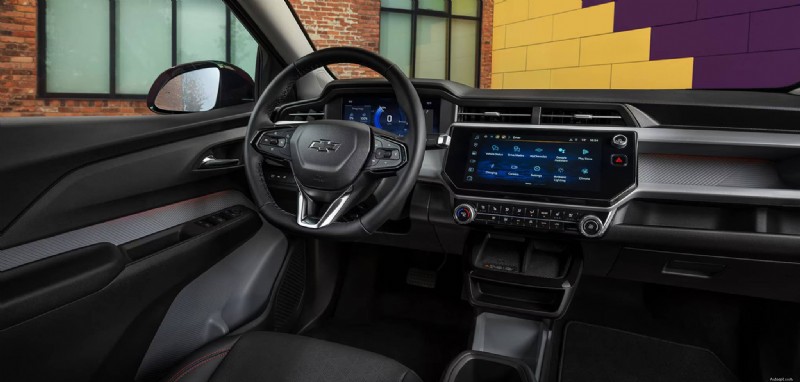
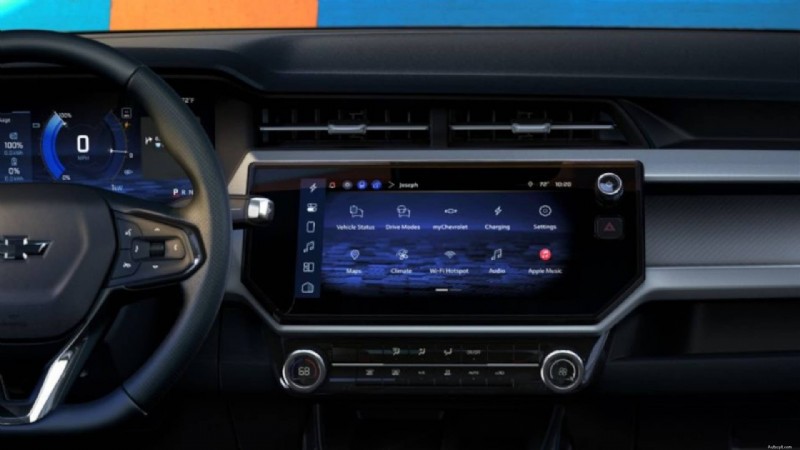
When a manufacturer decides to make a car “affordable,” one of the first things that usually suffer is the interior—whether it was through the materials, the colors, lack of sound dampening—you get the idea. Yes, the Bolt RS had a lot of black plastic in there, but it was tastefully put together and mixed with a leather wrapped steering wheel and leatherette seats in the front and rear. The driver’s information display was clean, crisp, and easy to interpret, and I liked that the windows were large with a medium-sized sunroof to open up the interior and let in some light. It didn’t feel cheap to me at first glance; it felt very middle ground—where it should be.
Chevy Newsroom
But there were a few things that, after a while, brought me back down to earth. Like the funky adjustable cup holders that, because of their odd shape, never truly fit my energy drink cans or my larger water bottle. And they were very annoying to adjust while driving. Then, the elbow rest was so far back that there wasn’t a place to rest my right arm at all if I needed to use both arms to maneuver while driving. And it’s not adjustable, either, like it is in EVs like the Hyundai IONIQ 5. The multimedia display was at an awkward angle, too, and sometimes I felt like it made it harder to see, but other than that, for the price, and what it’d be used for (commuting), those aren’t dealbreaker issues at all. For me, at least.
Similar to what I said about interiors, the drive and ride quality tend to suffer on “cheap” cars, too. And I was a bit worried that, without the drone of an engine to drown the sound of the subpar roads of the Bay Area, the interior would be unbearably loud (especially since either the RS or the LT lacks a premium sound system—but the factory system is just fine). But I was very pleasantly surprised. It drove smoothly and quietly, and the rough roads didn’t translate too badly into the interior at all. The Kia Niro was much louder on the inside, for reference.
Kristen Brown
And no, you won’t miss Android Auto because it has Google built in, so you get Google Maps and Google Assistant. I have a Google Pixel phone, so I didn’t realize that it didn’t have Android Auto until I had to download Spotify (which I recommend doing because the BT audio feature is a bit laggy). If you have an Apple, it might take you a while to become accustomed to the change in software, but it isn’t as drastic as you might be thinking.
The Chevy Bolt RS looks small from the outside, but there’s more passenger space available than there is in my Subaru Forester. Not in the trunk, obviously, but for the front and rear passengers. Installing the rear seats was a no-brainer, with a large, wide and tall entry point for the rear, easy-to-access lower anchor points, and the headrests were thankfully very easy to remove so I could secure the top tethers on the back of the seats. They loved the sunroof, which helped it feel a lot bigger than it actually was, and helped break up a lot of the black leather and plastic. But my kids fit perfectly, with room to spare.
Obviously, I’m not saying you should replace your Toyota Highlander or Grand Highlander with one of these. But it fits into the Bay Area’s typical two-car formula, where one car is a dedicated family-hauler, and the other is the commuter champ. This would fit the ladder role perfectly. And if you had to pick Timmy up from school because he got sick on himself and you brought the Bolt to work, you’d be able to accommodate him just fine.
Chevrolet
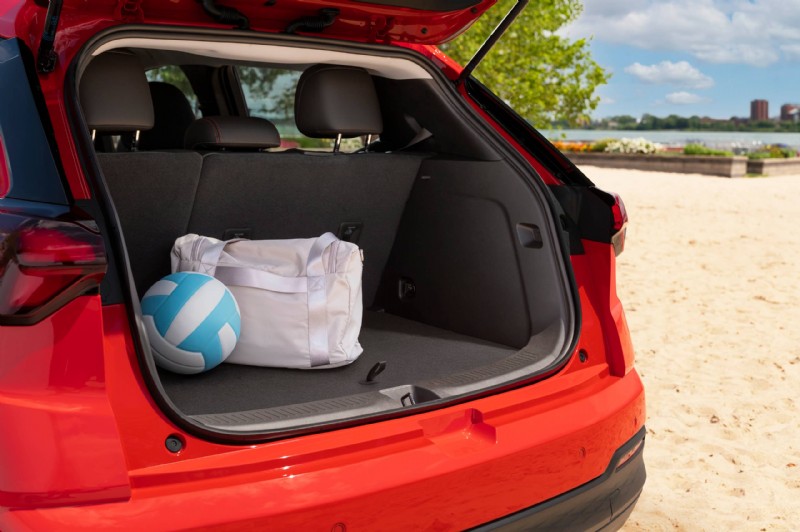
The cargo space is small, but that’s to be expected. And you don’t need a large trunk to fit your gym bag, lunch box, and briefcase anyway. All that could fit in the passenger’s seat without issue, and then you can use the trunk space for the Safeway pickup order on the way home.
If you, like me, live in the Bay Area, you’re likely a commuter unless you’re lucky enough to work remotely or you’re in a comfortable enough tax bracket to live close to work. Commuting sucks, it’s mentally draining, and it’s irritating after a long day of work. So, the new Bolt is beaming, wagging its tail, ready to show you how effectively it can do it all for you. Seriously. It’s Chevy’s most affordable vehicle that offers Super Cruise, a hands-free driving assistance system that I’ve reviewed and praised many times before. In a commuter’s world, Super Cruise and One-Pedal Driving are a godsend because it handles steering, braking, accelerating, and even lane changes if you want them to. Yes, it only works on pre-mapped highways, but the database is consistently growing, and luckily for me, 680 South, 242 East, and 4 East were all mapped roadways I could use it on.
On 680, the closer I get to Fremont, the heavier the traffic always is because no one knows how to effectively merge. I was a bit nervous using Super Cruise here, because the drivers here are angry and sporadic, but the Bolt handled every cut off perfectly. I simply set a speed, turned it on, and let the Bolt do the rest. I kept my eyes on the road, of course, but I felt comfortable enough to look around me and was able to maintain a good conversation with my husband without letting the frustration from other drivers bleed into it. It was amazing. You don’t really realize how heavy the mental weight of commuting really is until you drive a car that can do it all for you. And, as a bonus, if you set the regen to the max setting, it’ll drive itself and maintain a good chunk of charge when you’re in the thick of it.
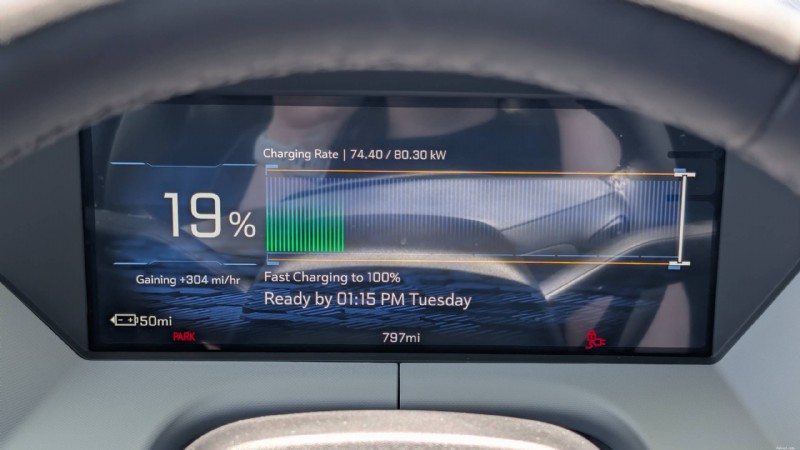
Speaking of charging, the 2027 model year comes with an NACS port as standard equipment, but it still comes with two adapters. But with an NACS port, I could pull up to one of the seemingly millions of Tesla Supercharger networks in the Bay Area, charge it fairly quickly (up to 150 kW with DC fast charging, which is 2.5x faster than the OG Bolt), and get back to the grind if I had to. Because it has a range of 262 miles, though, I didn’t need to. I got to San Jose and back with about 50 miles to spare. If I had an EV charger installed in my house, that’d be perfect, because I could plug it in, charge it overnight, and do it all again the next morning. If you work for a company that provides free employee charging, that’s an even sweeter deal. Especially with gas prices out here being higher than $6 per gallon.
Kristen Brown
It’s also worth mentioning that the battery composition is different for 2027. This time around, the battery is comprised of Lithium Iron Phosphate (LFP). This new chemistry is more durable for the daily cycle. Unlike many EVs, where you’re told to only charge to 80% to save the battery, LFP batteries can often be charged to 100% regularly without the same degradation concerns. This means the full 262-mile range is more usable daily than a car that you only feel comfortable charging to 210 miles. That’s a major win for commuters.
Since both the LT and the RS come with a long list of standard features, it makes it a bit difficult to choose between the two. The RS has a few aesthetic and important upgrades that help justify the elevated (but still affordable) price tag. First, on the inside, there are ambient lighting features that the LT doesn’t have, as well as leather, red accent stitching, heated and ventilated seats up front, and a heated steering wheel for those frigid morning runs to the office. It also has a heat pump, which is also standard in the LT, which helps preserve its range for commuters in colder regions. In the Bay Area, that isn’t a huge concern, especially if you can precondition the cabin and get everything ready for the drive before you head out for work.
Kristen Brown
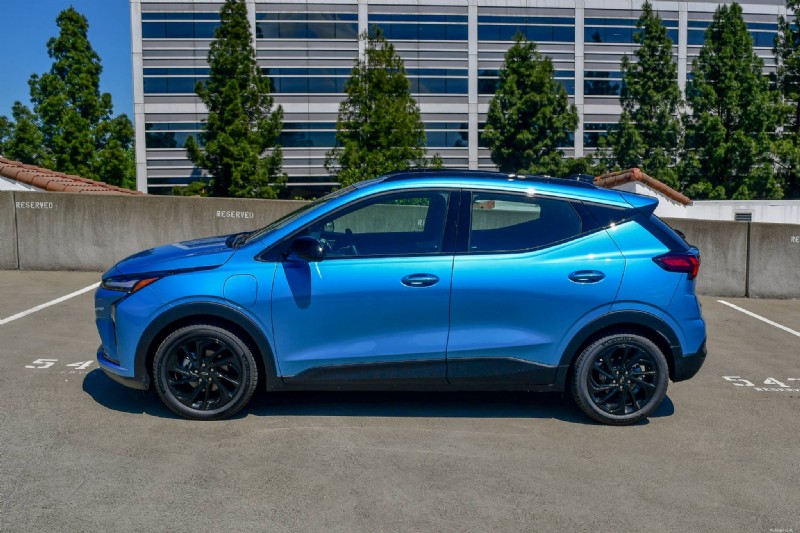
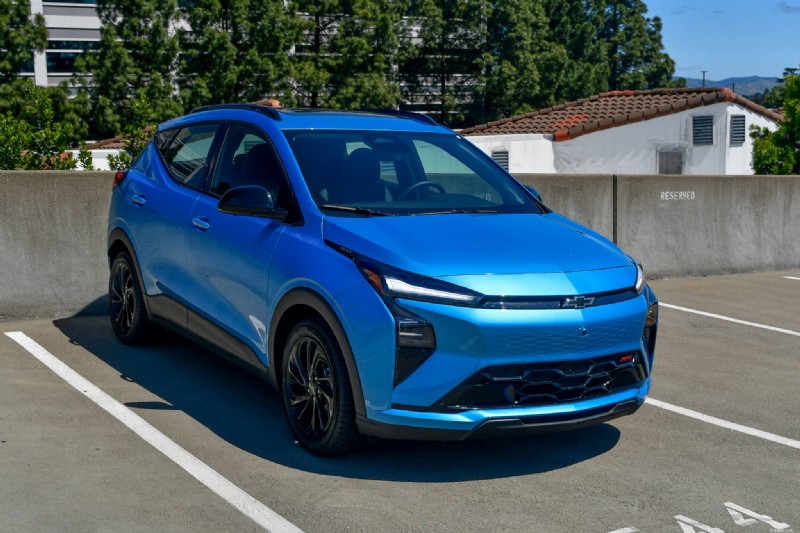
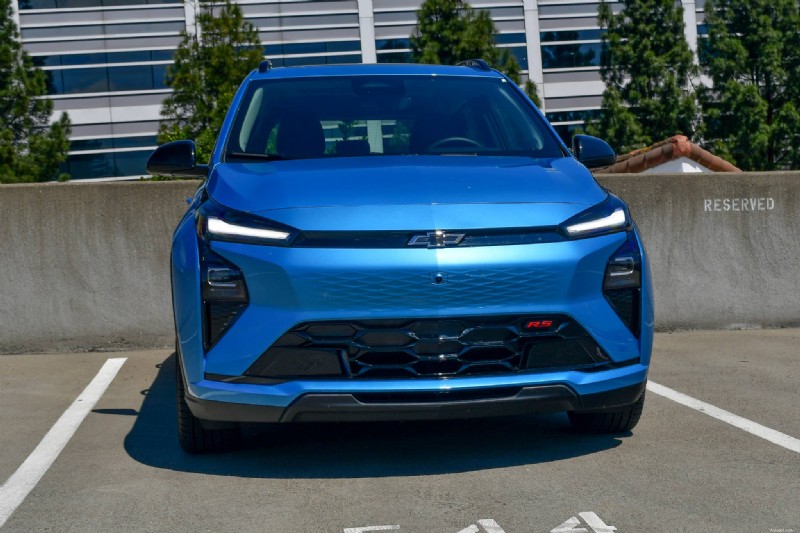
On the outside, the RS shows off “RS” badging, which would make you think, “Oh, so that means it has more horsepower than the LT!” But, like me, you’d be wrong. Both the LT and the RS have 210 horsepower and 169 lb-ft. It does appeal to the RS vibe with trim-specific glossy black wheels and grille, as well as roof rails that the LT lacks. Other than that, you’d be spending the extra for the leatherette materials and heated seats and a steering wheel. On the LT, you can have these, but in the form of an added Comfort or Evotex package.
The 2027 Chevy Bolt is proof that, to make something great, you sometimes need to start over. And over. And over, until it’s done right. Chevy’s done a fantastic job with the new Bolt, and it has everything Bay Area folks need for a reliable, safe, affordable, and effective commuter. Would I say it’s worth the price? If you work for a company that offer’s complimentary charging for commuters or you have a place to charge it in the garage, it’s a no-brainer.

Kristen Brown is an Oregon-based automotive writer and photographer who has been covering the industry since 2018. She specializes in a wide range of topics, including industry news, off-road vehicles, and Subaru culture, with a particular focus on testing new family cars from the practical perspective of a parent. Her writing has been featured in outlets such as U.S. News & World Report, The US Sun, and HotCars, while her photography has been published in Autoweek and Vintage Motorsports.
