
We all remember what happened with the Subaru Solterra and the model formerly known as the bZ4x. Toyota debuted its EV first, and then Subaru came immediately afterwards to ride the wave, trying valiantly to disguise the fact that the Solterra was, quite literally, a rebadged version of the bZ4x. The interior layout, the operating system for the multimedia system, and the driver’s display screen were identical to the Toyota version—oh, but the steering wheel was a different shape, but the exterior design was a very blatant copy-and-paste job of the Toyota. The main difference, though, was that the Toyota could come with FWD to get more miles out of it, while the Subaru was all-wheel drive only, and somehow, more expensive than the Toyota.
Subaru
Kristen Brown
Nowadays, Subaru doesn’t seem as cautious about hiding its collaboration with Toyota. The all-new bZ (renamed from bZ4x to make it simpler and easier to remember) debuted with a larger frame and a redesign, and then the Subaru Trailseeker debuted not long afterward. The Solterra got a redesign, finally, and looks more Subaru-y than Toyota-y, but… We still know. However, Toyota’s strategy this time around is much different. The bZ is still the only one of the two that can be bought with FWD, it’s still less expensive than the Subaru version, and this time, the pricing structure is different, which makes deciding between the two a bit more difficult. After driving both, here’s what I’d pick, and why.
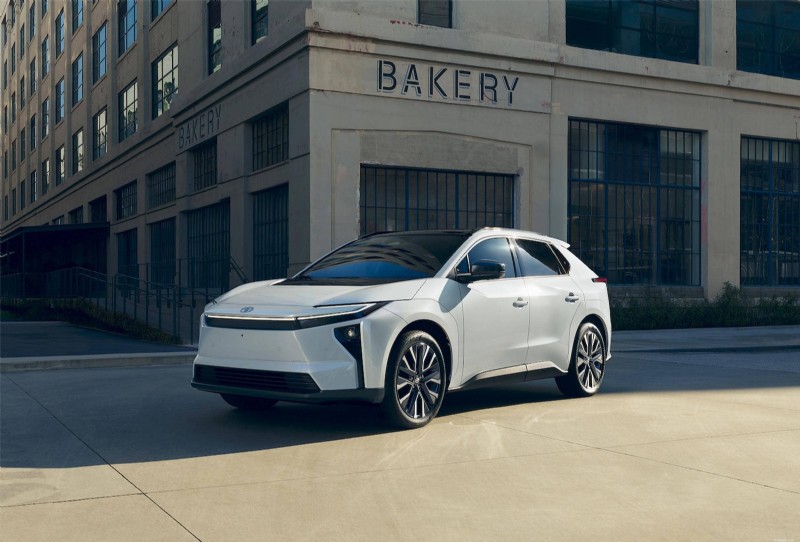
Unlike the Subaru Trailseeker, which anchors its entire identity in the outdoor-lifestyle niche, the Toyota bZ offers a broader spectrum of choice. You can spec the Toyota as a sleek, premium-leaning commuter or a rugged adventurer. The standard bZ lineup is streamlined into the XLE and Limited trims—starting at $34,900 and climbing to $43,300—while the Woodland edition sits at the top of the hierarchy with a $45,300 MSRP.
Subaru’s pricing structure is notably loftier, but more condensed. The entry-level Premium starts at $39,995, but by the time you reach the Touring (with its leather-trimmed interior), you’re looking at $46,855. The fundamental divide, however, is in the drivetrain philosophy. Every Trailseeker comes standard with Symmetrical All-Wheel Drive and X-Mode, marketed explicitly to those who live at the end of a dirt road or in the heart of the snow belt. Toyota’s marketing for the standard bZ trims leans heavily into urban city-slicker imagery, with the bZ Woodland being the more expensive, premium, off-road model.
While Subaru ensures you don’t have to pay for a top-tier trim to get off-road goodies, they don’t offer a high-efficiency counterpart to Toyota’s front-wheel-drive models. If you choose the Subie life, you’re locked into a range of 274 to 280 miles. Toyota, conversely, allows you to trade that extra motor for efficiency, pushing the FWD models up to 314 miles. It’s fitting, then, that when Toyota finally does get dirty with the Woodland edition, the range settles right into Subaru territory at 281 miles.
Kristen Brown
There are also four (yes, four) different horsepower options for the Toyota, while there’s just one for the Subaru—375 horsepower, even with the base model. Here’s how the horsepower works for the bZ:
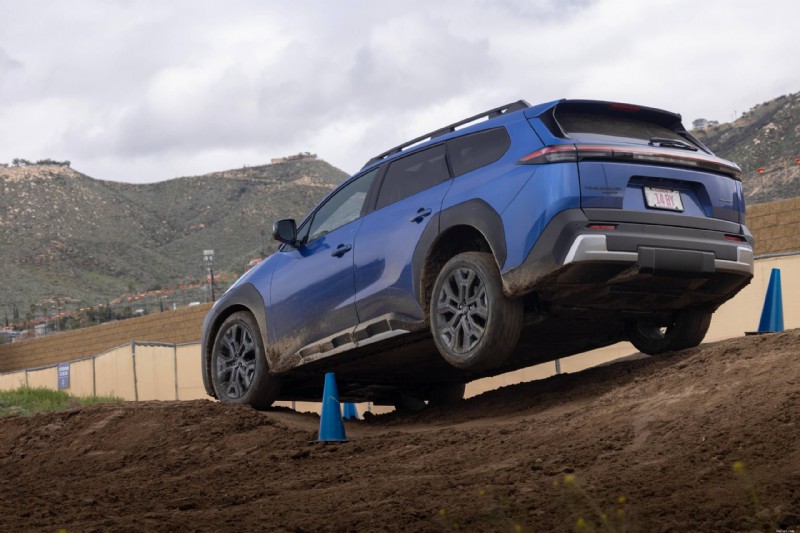
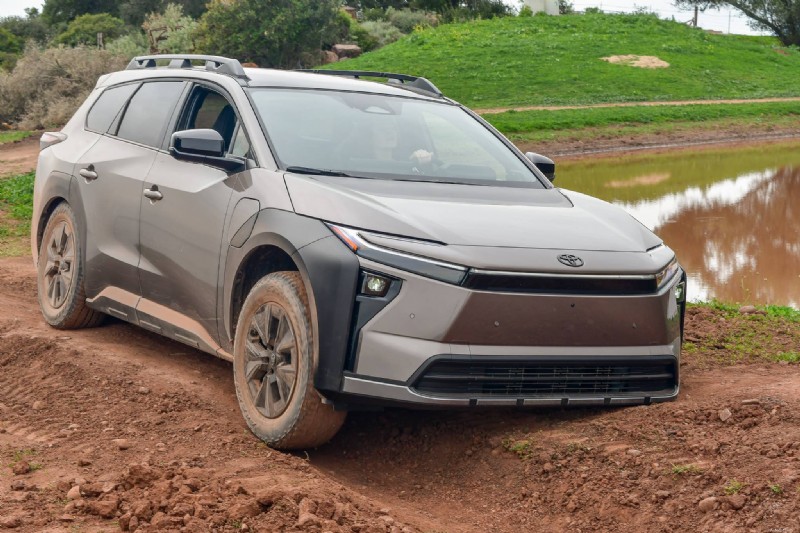
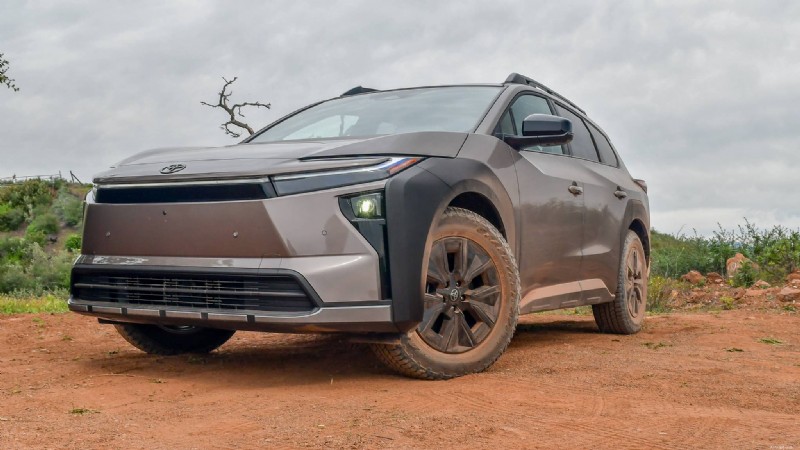
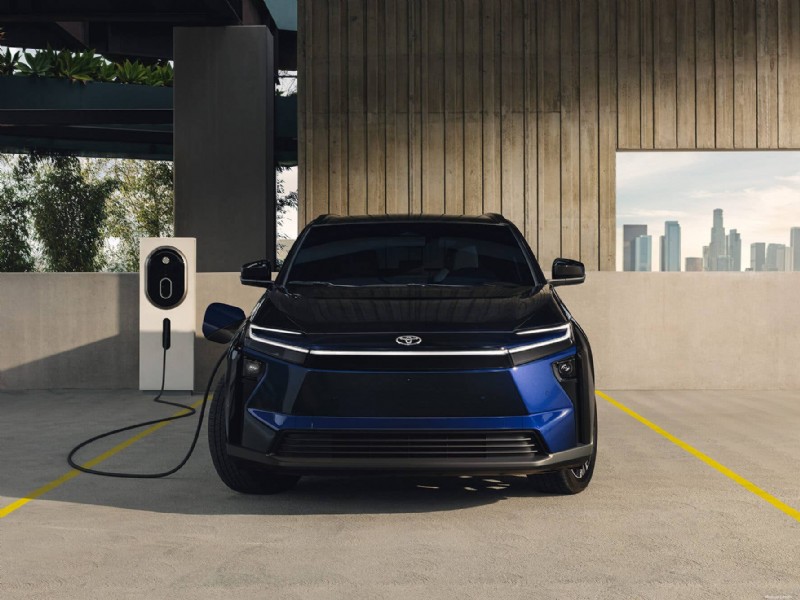
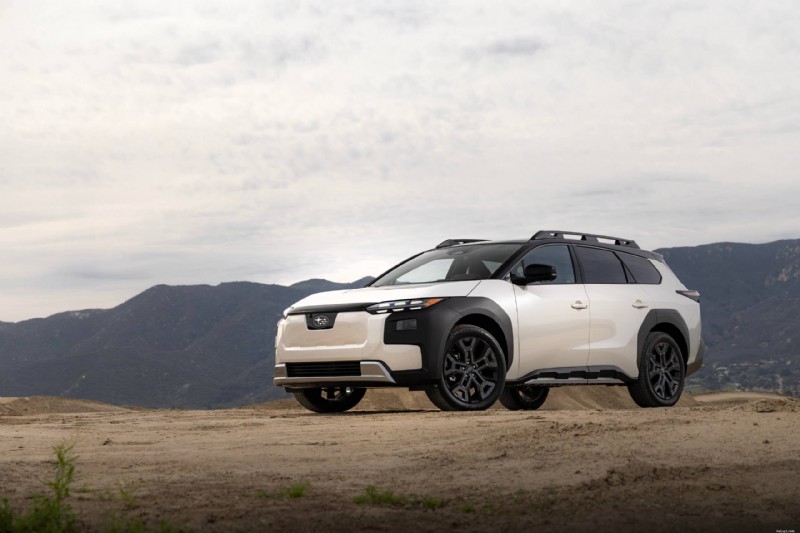
The story here is the same as the Subaru Solterra versus the Toyota bZ4x. The exteriors are slightly different, with the Subaru looking more rugged with heavier bumper armor, and a more “open” look to the starry headlights, and more body cladding, no matter the trim. And, of course, there’s the Subaru badging. I found it interesting, though, that the 3D-embossed “SUBARU” badge is the same as it is on the Toyota. Depending on the trim, the wheel arches on the bZ can match the color of the body, while the Woodland is matte black to appear more rugged and tough.
Toyota
Subaru
Toyota’s look is a lot more angular, too, compared to Subaru’s softer look. The bZ and bZ Woodland have the company’s signature hammerhead headlights, which I especially like because the design both fits the off-road aesthetic of the Woodland, but looks very tight and polished for the Limited or XLE models.
Subaru
Toyota
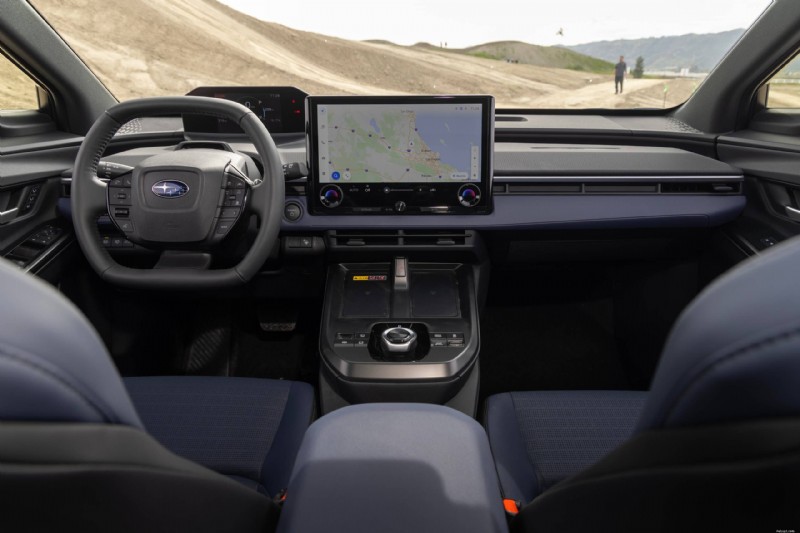
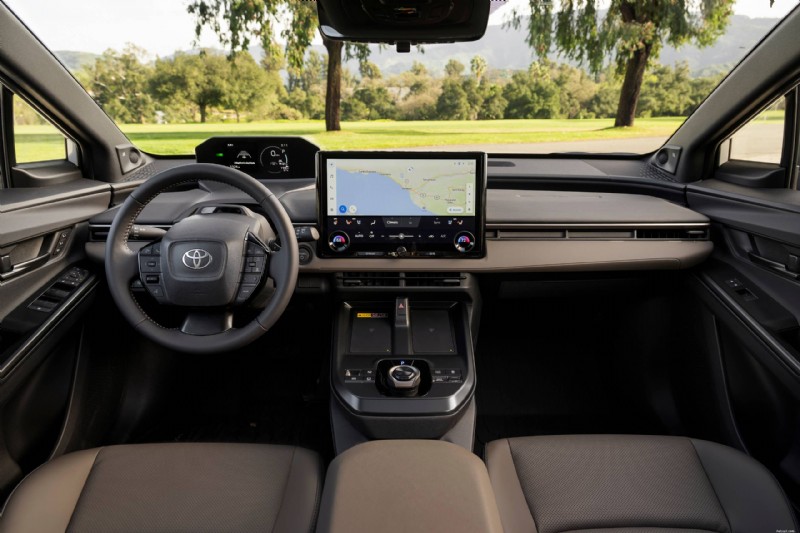
The interiors of both, though, are basically identical. The size, shape, and placement of the multimedia and driver display screen are the same. The shape of the steering wheel is the same, save for a flat top and bottom for the Subaru. Both have the dual-wireless phone chargers up front, as well as what I call the “thick neck” steering column. They’re shamelessly identical, which bummed me out, because I always preferred Subaru’s gas-only interiors to Toyota’s, and hoped that design language would translate into their EVs, but… I guess not.
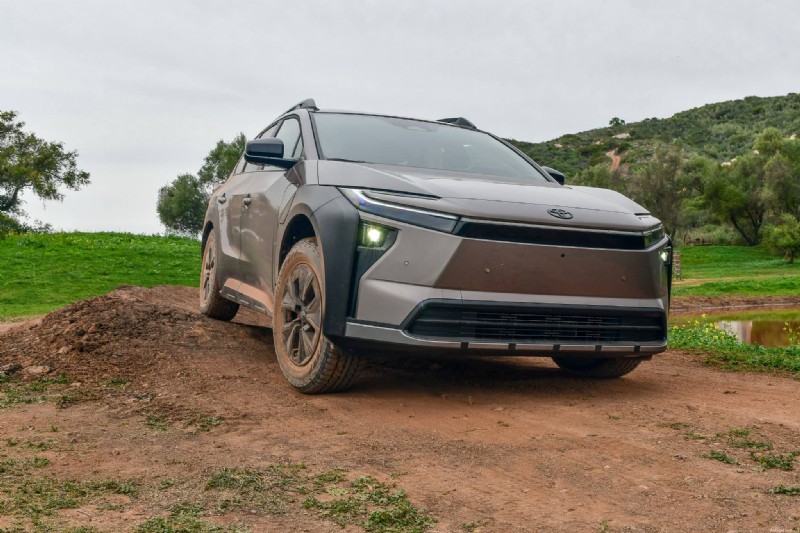
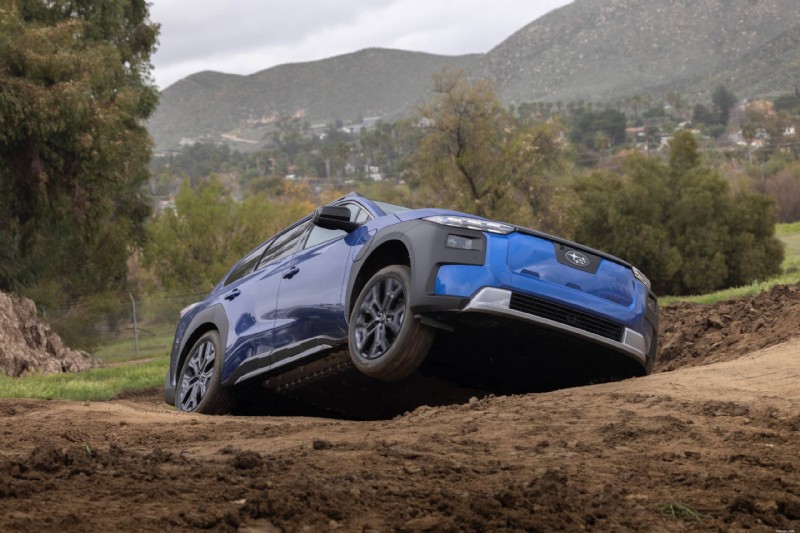
When it comes to actual trail performance, these two are essentially identical twins sharing the same brain. Both utilize the same X-Mode software architecture, which manages motor output and braking to optimize traction when things get slippery. Subaru sticks with its “Dual-Mode” branding, offering specific toggles for Snow/Dirt and Deep Snow/Mud, while Toyota packages it as X-Mode with Grip Control. Functionally, they are the same low-speed crawl system, but Subaru’s interface feels more central to the driving experience, whereas Toyota treats it like a secondary tool for “if you absolutely must” leave the pavement.
Kristen Brown
Despite the shared software, Subaru squeaks out a win in the nitty-gritty, fine-print mechanical specs. The Trailseeker offers 8.5 inches of ground clearance, besting the bZ Woodland’s 8.4 inches by a tenth of an inch. It sounds like a rounding error, but for those navigating rocky ruts, that extra sliver of daylight can be a badge of honor. More importantly for tight forest trails, the Subaru boasts a much tighter turning circle of 36.7 feet, making the Toyota’s 40-foot radius feel a bit more like a boat when you’re trying to execute a three-point turn at a cramped trailhead.
So, where does the real advantage lie? It comes down to how you plan to use the car the day you drive it off the lot, and how closely you pay attention to the details. Toyota offers a factory all-terrain tire option for the Woodland that provides a massive confidence boost on jagged surfaces (but with a drop in range to 260 miles), while the Trailseeker comes with all-seasons, no matter the trim. Subaru, however, wins when a few small details are considered. The Trailseeker includes a rear camera washer (a lifesaver when you’re backing through mud) and a flatter steering wheel design that helps keep the instrument cluster visible during steep climbs.
Subaru
But here’s the main point I really want to try and bring home: you don’t have to buy an off-road-specific trim of the Subaru, so you could buy the base model and get everything you’d get in the Woodland for much less because Subaru doesn’t treat AWD or off-road software like a premium upgrade. So, it really, truly comes down to how you prefer the styling, and whether or not you really need/want the off-road software and aesthetic.
I’ve tested both off-road, and they’re both excellent choices for those who live in colder or rainier climates. However, Subaru coming with all the “premium” off-road technology and hardware that the bZ Woodland has, even at the base price of $39,995, is very, very hard to ignore. The bZ Woodland, in my opinion, has a much nicer exterior design, but I have a hard time justifying the price, knowing Subaru offers the same (sans all-terrain tires) for $5,305 less. With that extra cash, you can easily buy your own AT tires and have enough for other light-duty modifications.
So, here’s how I’d summarize which is the better buy for off-roading specifically: the Subaru Trailseeker is the smarter buy, hands down, because of the pricing phenomenon I mentioned above. Plus, with the Subaru, you get 375 horsepower even at the base—so, while the base model of the Subaru is more than the Toyota’s, it’s because you get more than the base bZ. A higher range, more horsepower, and all-wheel drive. The Woodland’s looks are nicer, but they come at a pretty hefty premium. If you’re serious about needing the X-Mode and all-wheel drive, go with Subaru.

Kristen Brown is an Oregon-based automotive writer and photographer who has been covering the industry since 2018. She specializes in a wide range of topics, including industry news, off-road vehicles, and Subaru culture, with a particular focus on testing new family cars from the practical perspective of a parent. Her writing has been featured in outlets such as U.S. News & World Report, The US Sun, and HotCars, while her photography has been published in Autoweek and Vintage Motorsports.
