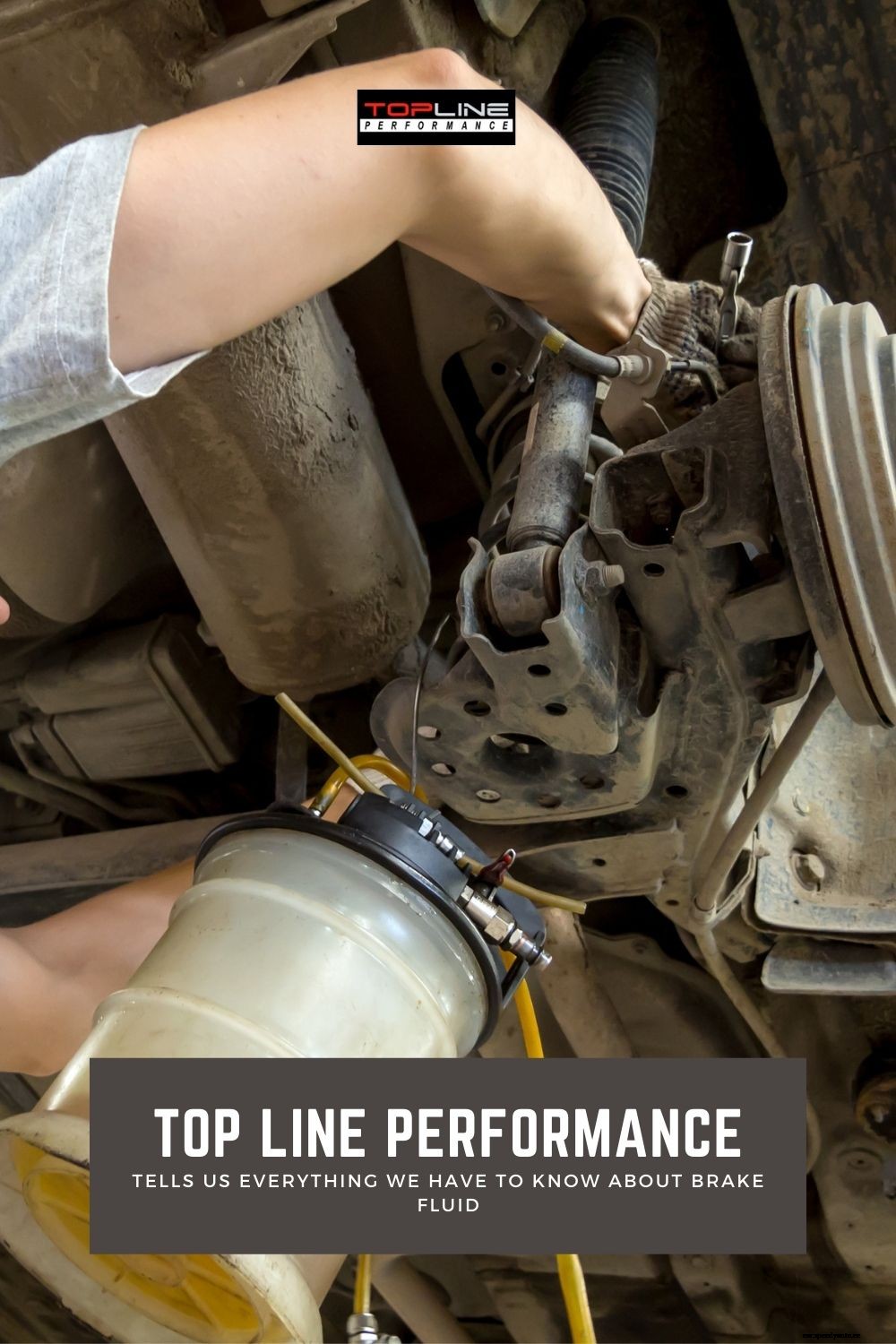
If you think a car’s brakes are extremely important, not a lot of people would disagree with you. Top Line Performance, an auto repair shop in Huntington Beach, CA, understands how brake fluid is necessary for moving various components of your car’s braking system.
Brake fluid is a kind of hydraulic fluid used in braking systems to help the brake pedal activate the brake pads on the wheels, which is how your brakes stop your vehicle. In addition to being a lubricant, Brake Fluid also serves as an anti-corrosion fluid that ensures your car’s brake system works as it should.
Brake Fluid issues normally occur when moisture leaks into the brake fluid, but the service problems encountered today are a far cry from those of 20 – 30 years ago. Indeed, moisture leakage isn’t really a serious issue anymore since newer models of brake hoses have eliminated most moisture intrusion problems, and brake fluids can now be precisely tested to determine replacement requirements.
This is due to the fact that most fluid problems derive from the levels of dissolved copper and consumed additive packages found within their composition. The level of dissolved copper in brake fluid is a sign of the health of the brake fluid’s additive package, and when the additive package of brake fluid is drained, one of the negative outcomes may be component corrosion and/or an accumulation of sludge in the internal brake system.
The brake fluid itself can’t corrode, but when the additive package, an element of the brake fluid, is drained or breaks down, the brake fluid does not have enough anticorrosive inhibitors anymore, so corrosion occurs of internal brake hydraulic components can happen. Phew, what a mouthful!
Brake fluid additive packages are additives that are mixed into brake fluid stocks by manufacturers. Normally, a mixture of anti-corrosion inhibitors, anti-wear additives, anti-rust additives, acid-neutralizing or PH balancer additives, anti-foaming additives, and viscosity stabilizers are combined into brake fluids. As the vehicle is being used, the additive package mixes in with the brake fluid and degrades it over time. The deficiency of additive packages is the leading source of brake fluid problems, and as a result of this, auto repair technicians in Huntington Beach advise drivers that their cars need brake fluid service when these problems occur.
Over a period of time, brake fluid can take in moisture from the air and make the fluid deteriorate and malfunction. For this reason, it’s important to drain the fluid out from time to time and replace it with new fluid to maintain proper brake fluid function. Many car technicians recommend changing the fluid every one to two years, even though every car has different maintenance requirements. Considering that your brake fluid is vital for functioning brakes (and hence your safety), have a look at your car’s manufacturer manual for the recommended brake fluid changing schedule. If you are still unsure how often you should change your car’s brake fluid or are concerned about your braking system, don’t hesitate to call auto repair shops in Huntington Beach like Top Line Performance to get the problems fixed.
Many people believe a lot of fictitious stories about brake fluid. Here we debunk the most common myths circulating in the car community:
False, the breakdown of the additive package is the main issue. In the past, the application of modern flexible brake hose manufacturing techniques meant that moisture was a problem, as it could penetrate through the hoses and into the fluid when the latter cooled down. Modern hose manufacturing has removed this problem, however.
Brake fluid should be replaced in contemporary vehicles when the copper content is 200 PPM (parts per million) or more. Replacing it will restore the additive package of the brake fluid and the protection it provides.
If you only change the fluid in the master cylinder, you are not removing enough fluid to allow the new fluid to provide the necessary protection implemented by the proper additive package.
When you do a brake fluid exchange, it usually includes removing the old fluid in the master cylinder, refilling it, and then removing the fluid from all four wheels (carried out as specified by the manufacturer), thereby eliminating most of the old fluid. The fluid is tested using a test strip to make sure that there is no or almost no copper within the system.
If the ABS system doesn’t permit a free flow of fluid through the HCU (hydraulic control assembly), the auto repair technicians in Huntington Beach may have to use a scan tool to activate the HCU valves while pouring clean fluid through the system (carried out as specified by the manufacturer).