
What is a throttle position sensor, and why is it important for it to work correctly? The throttle position sensor (TPS) is an essential part of your vehicle’s fuel management system, tasked with ensuring that a precise blend of air and fuel is routed to your engine. This sensor works in tandem with others sensors to optimize acceleration, cruising speed and fuel economy. Replacing a defective TPS is critical for keeping your vehicle running smoothly. But, exactly what is a throttle position sensor, and how can you recognize when one might be faulty?
Manufacturers typically place the throttle position sensor on the throttle valve spindle to monitor its position. The engine control unit (ECU) collects TPS data to optimize vehicle performance.
A faulty throttle position sensor doesn’t happen without warning. Some of the telltale signs include:
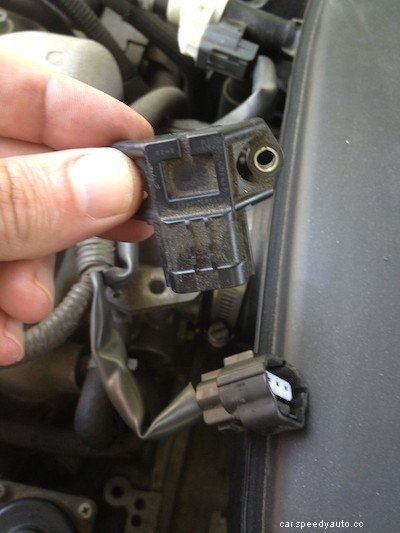
Once you diagnose the problem, the solution is straightforward: Replace the throttle position sensor. Luckily, this is a job you can handle on your own.
After locating the TPS, disconnect the negative battery terminal before you remove the sensor electrical connector. Next, use a screwdriver to remove the sensor mounting screws, then lift the sensor. Swap out the old sensor with a new one, then reverse the earlier steps. You may need to adjust the sensor screws using a voltmeter to achieve an optimal reading.
When the throttle position sensor is doing its job, your vehicle should accelerate smoothly and maintain its optimal fuel economy. But when it fails, it becomes a safety issue — a problem you must address at once.
