
Most light cars and trucks have automatic transmissions, with some having up to 10 forward gear ratios that shift on their own, faster than you can. Automatic transmission fluid (ATF) makes this possible, functioning as hydraulic fluid, cooling fluid and lubricant. Depending on age, mileage and use, ATF eventually wears out, which means a transmission flush is in order.
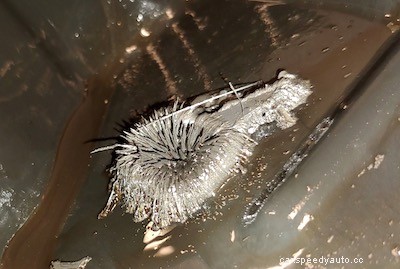
Inside the transmission, ATF endures heat, friction and force, burning off additives and conditioners. This can result in shifting hesitation, slipping gears or surging. Towing, hauling and stop-and-go driving increase stress, wearing the transmission fluid faster. Under these conditions, a flush would be needed around 20,000 to 30,000 miles. With mostly highway miles, a transmission fluid change is needed less often, perhaps every 30,000 to 60,000 miles.
On many vehicles, ATF condition can be checked via the dipstick. On so-called “sealed” transmissions, you might have to pull a fill plug or drain plug to get a sample. New ATF is bright, clear, red and sweet-smelling. If your ATF is dark, opaque, brownish-red or smells burnt, it’s time for new transmission fluid.
Generally, there are three ways to change ATF: transmission drain-and-fill, ATF transfusion or transmission flush. Transfusion and flush procedures are similar and might be referred to interchangeably, but they each have their own advantages and disadvantages.
When changing transmission fluid, it’s a good idea to use a transmission flush to clean deposits and condition seals:
Consider servicing your transmission sooner rather than later, because the most thorough cleaning and best ATF can’t make up for wear caused by burnt ATF. The best way to judge is by checking its condition regularly.
