
You might find it hard to believe, but the cabin air filter is a relatively new technology — it was first introduced in high-end vehicles in 1989. For the health-conscious and allergy sufferers, it was a great idea that should have come along sooner. According to a Korea Institute of Industrial Technology study, automotive cabin air filters trap between 50% and 90% of particles larger than 0.3 micrometers, such as dust, soot, pollen and insects. Fast-forward three decades, and it’s difficult to find a vehicle not equipped with one.
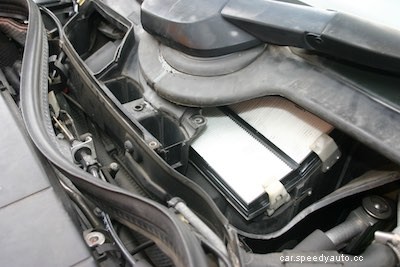 Logically, the cabin filter needs to be somewhere in the air conditioning system for it to filter incoming air. Some manufacturers place it where it can also filter recirculated air, depending on the position of the recirculation door.
In general, the cabin air filter can be found in one of three places:
Because it filters most of the air either coming into your vehicle or being recirculated in the cabin, the cabin air filter will eventually fill up with dust, soot, pollen and other particulates. But there’s no one-size-fits-all cabin filter replacement plan. Some manufacturers recommend replacement every 10,000, 12,000, 15,000 or 20,000 miles or every 6 to 12 months. How often you change yours depends on several factors:
Fortunately, inspecting and replacing the cabin filter does not require much time and little in the way of tools, if any at all. Check your owners manual for the specific location and procedure. It takes just a few minutes to remove the filter to see if it’s dirty enough to replace.
