
Typically, lube, oil and filter servicing includes an inspection of the constant-velocity (CV) joint boots. The CV boots keep grease in and contaminants out of the CV joint, whose job is to protect your axle and align your wheels. CV joint lifespan is drastically reduced if the CV boot breaks, so although CV joints tend to last a long time, it’s a good idea to learn how to grease a CV axle when you’re replacing CV boots or joints.
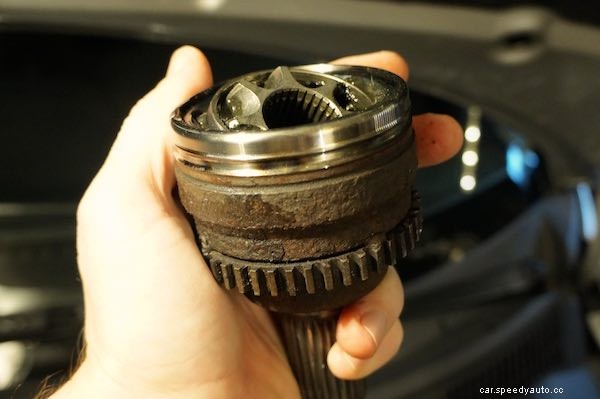
The typical CV joint boot is made of flexible rubber, which will not last as long as the CV joint it protects. Exposure is the main reason why CV joint boots fail. Oxidation, repeated heating and cooling, and constant flexing can cause the rubber CV joint boot to shrink, embrittle and crack. CV joint boot failure can also be the result of damage brought on by road debris.
Constant-velocity joint boot failure can be a messy problem for the CV joint. First, CV joint grease leaks out, stressing the remaining grease and leading to premature wear. Then, water and other contaminants can enter the joint, accelerating wear.
Whenever a CV boot is replaced, the old grease will need to be removed and new grease added. You’ll also need to grease a CV joint during rebuilding processes, such as replacing an axle stub with a broken wheel speed sensor tone ring or replacing a CV joint.
If you need to grease the CV axle, there are several ways to go about it. Here are a few of the best methods:
Timing is critical. If you wait too long to grease the CV joint, it will wear from lack of lubrication or contamination, requiring axle rebuilding or replacement. If you see CV grease all over the wheel well, shock absorber and brakes, but the axle is quiet, greasing the CV axle can prevent more complicated repairs.
