
Autumn weather means it’s time to check that your tires are properly inflated. If you think back to your high school science classes, you may remember that most objects expand when heated and contract when cooled. That’s exactly what happens with your tires and the air inside them, so even tires that were perfectly inflated in August might be underinflated by the end of September. Here’s how to make sure your tire pressure and cold weather don’t add up to a flat tire.
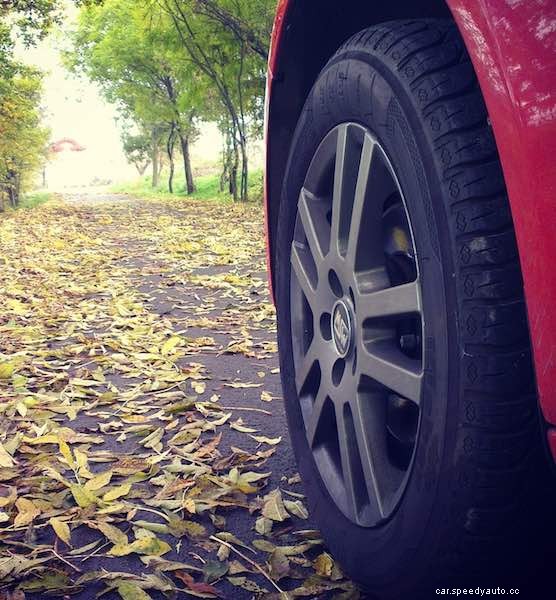
If your tire pressure is low, then your tires likely aren’t providing good traction, which is their primary job. This can result in poor handling and longer stopping distances when you hit the brakes. It can also be dangerous if tire pressure gets too low, as it can cause damage to your tires and possibly tire failure.
Tire pressure is measured as psi, which means pounds per square inch. Every automaker has a recommended tire pressure for the tires on each of its vehicles. This recommended psi ensures that the tire is inflated enough to provide the best traction and fuel economy and that it wears correctly so it doesn’t need to be replaced prematurely.
You can find the recommended tire pressure in the manual, or you can just open the driver’s side door. There you’ll see a sticker on the door or door jamb that has the correct tire pressure for your vehicle’s tires.
Once you know the recommended tire pressure, checking for the correct tire pressure is quick and easy:
That first morning when you feel like you need to put on a sweater or break out a jacket is the perfect time to check your tire pressure. If you feel the cold, then so do your tires. As the temperature continues to drop during fall and winter, you should check periodically to see if your tires need a bit more air. It only takes a few minutes, so check your tires when the cold weather arrives to make sure they’re safe for driving.
