
The radiator is the cooling house of your vehicle. It has the power to keep your engine working or leave it dead. So, if your engine starts overheating, you should probably check for bad radiator symptoms.
What do I mean?
As your engine works, it generates heat. So the radiator helps to cool it down. A vehicle’s engine soaks up the engine’s heat using a coolant (engine fluid). This hot fluid in turn is carried to the radiator by the radiator hose. Once it is cool, it takes it back to the engine.
This process occurs repeatedly enabling the engine to operate at optimal temperature and prevent engine overheating. But when your radiator is bad, it doesn’t allow this cooling to take place properly.
Identifying a bad radiator will not only save you money but time as well. So let’s take a look at common signs of a faulty radiator.
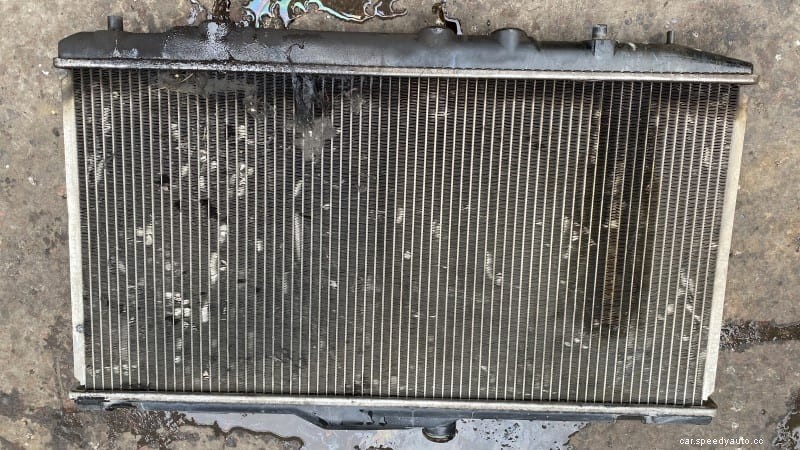
Your engine uses coolant to absorb engine heat. When this coolant becomes hot, the hose carries it to the radiator to cool. Then take it back to the engine. So if your engine is overheating, it means the coolant doesn’t get to where it’s supposed to cool.
Depending on your car make, a warning light or fluctuating temperature gauge may be an indication that your engine is overheating. If you realize this, quickly take the car off the road and call for help.
Consistent use of low-quality coolant and regular tap water causes rust on the radiator. These rusts build up over and prompt the radiator to clog. In turn, the clogged radiator brings about tiny cracks or holes in the cooling fins.
When these cracks widen to an extent, your car might start dropping coolant on the ground. As this coolant drops, your coolant level becomes low, allowing your engine to overheat. In this case, a radiator coolant top-up may be necessary. Also, have an expert check and address the cause of the leakage.
Normally, a vehicle’s fluid is shiny orange, gold, green or yellow. It can also be pink or red sometimes. It seamlessly flows from the radiator coolant to the coolant passages located in your vehicle’s engine. A bad radiator can cause debris and sludge to contaminate the coolant. When the coolant is contaminated, it changes its color. So you may need to check your coolant’s color and condition. To do this, examine the overflow tank of your coolant.
A contaminated coolant may appear thicker than usual making it difficult for the coolant to flow properly. And when it can’t flow well, it leads to a clogged radiator. If you do nothing about it at this stage, your engine will start overheating and not function well. Having your radiator flushed might be a good option in this situation.
For proper cooling, radiators need an adequate amount of airflow. Because of this, tiny fins tubes made to convey hot coolant are placed on the radiator’s front. So when you drive, the fins help to push out hot air. This is to lower the coolant’s temperature before flowing back to the engine.
Sometimes, these fins are blocked by dirt and other elements. If this happens, the airflow blocks, preventing the coolant from cooling as it should. In this situation, you will need a spray nozzle and a garden hose to remove any residue blocking the radiator’s front.
Just as debris stuck in front of the radiator can restrict airflow, bent or damaged radiator fins can do the same. Radiator fins are soft. So any moving object that hits these fins might bend or damage it.
Damage may also occur during installation or the process of washing off the dirt from fins. So when a reasonable amount of fins gets damaged, it causes a clog in the radiator which leads to engine overheating.
The heater in your passenger’s seats connects directly to the cooling system. So when you put on the heater, hot air passing through the heater’s core is blown into your car’s interior. Thus, if it’s not working well, it may be that there isn’t enough hot air. This may be because of a faulty radiator, a bad thermometer, or other issues.
A rise in temperature as shown from your temperature gauge may mean performing a radiator test. But since the radiator consists of different parts, you might need to check them out. This helps to know where the radiator problem is coming from.
For example, a faulty thermostat, low coolant level resulting from leaks, a clogged radiator, or a blown head gasket might be causes of an overheating engine. So testing your car radiator parts may be necessary before looking directly into the radiator.
Leaks come from a crack radiator hose. This reduces the coolant level and causes the engine to overheat. To test for external coolant leaks, observe the engine inlets and check for leaks that look like your engine’s fluid.
A bad radiator cap may not hold enough pressure, causing the coolant to boil and overheat the engine. To check for bad radiator cap symptoms,
The radiator hose helps to carry the coolant to the radiator. When it cools it takes it back to the engine. The symptoms of a bad radiator hose may include engine overheating, leaking, low coolant, etc. To test for bad radiator hose symptoms, look up for the above symptoms then replace the radiator hose when necessary.
The thermostat helps in regulating the flow of coolant throughout the radiator. When the radiator is faulty, it induces extra pressure on the thermostat causing a malfunction. To test for bad thermostat symptoms;
Note: Hoses can be very hot, so do not use your hand to measure them. It will burn you.
An internal or external radiator blockage prevents the free flow of air which causes the engine to overheat. To test for a radiator for blockage;
A faulty water pump does not spread the right proportion of coolant, which causes the engine to overheat. To test for bad water pump symptoms;
When the radiator fan is bad, the engine overheats. To check for bad radiator fan symptoms;
Bad radiator symptoms ignored could mean spending extra time and money. A faulty radiator causes an engine to overheat. This could be as a result of coolant leaking, damaged fins, bad radiator cap or head gasket, etc. Not Paying close attention to these signs could cause engine breakdown or permanent damage.
Thus, spending unnecessarily, funds you could have diverted to other important things. So it is ideal that you check for bad radiator signs and fix them. Replace faulty radiator when necessary to avoid engine damage. If you can’t handle it, calling an expert mechanic will be a good option.
