
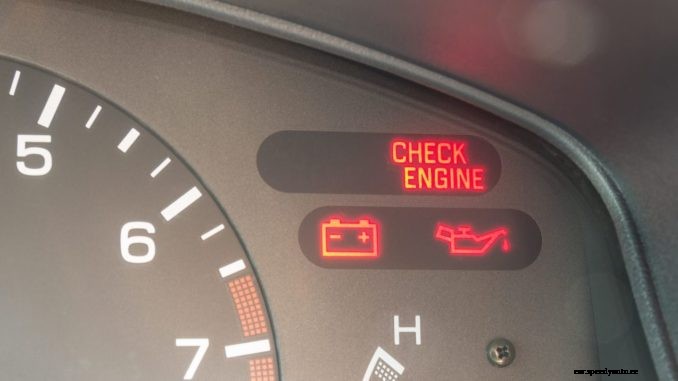
Engine troubleshooting, as early as possible is useful to prevent further issues down the road.
This page provides engine troubleshooting answers; to some of the most frequently asked questions about automotive repair and service. In comparison to wrenching, engine troubleshooting; requires a more in-depth knowledge of the workings of an engine. So, a mechanically inclined person, can easily change a part and do a good job of it. But, it takes a higher level of study; to be able to accurately determine which part needs to be changed.
Another common mistake in engine troubleshooting, is falsely condemning a part that is really just out of adjustment.
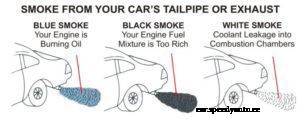
If you also notice a pinging noise, then this would indicate a pre-ignition condition. Pre-Ignition means the air/fuel mixture in the engine’s combustion chambers, is igniting earlier than it should. If you have been filling your tank with low octane fuel, this could be the cause.
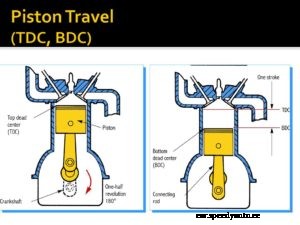
Low octane fuel burns too easily and under certain conditions; will self-ignite before the piston reaches the top:
Weak compression, due to bad rings or valves.
This is a telltale sign that the engine is misfiring, on one or more cylinders. This may be as simple as, spark plugs or spark plug wires. But, may also be a more serious internal engine problem, like a burned valve.
Why ? During the night condensation or moisture can form, on the inside of the distributor cap. Consequently, due to cold and wet weather and the fact that the engine is cold. This moisture allows electrical current; to arc inside the distributor cap and this arcing causes, the engine to misfire.
Why ? Vacuum leaks typically start out small, almost unnoticeable and gradually become worse; due to heat and pressure inside the engine. Any leak in a fuel systems vacuum will intermittently throw off the air/fuel mixture; that enters the engines combustion chamber. This results in, a hesitation or sometimes, jerking.
Why ? The accelerator pump, gives the engine the extra fuel it needs, to accelerate smoothly. A faulty accelerator pump will, either not work at all or only work intermittently. In either case, the result is usually, hesitant or jerky acceleration.
Why ? The throttle position sensor, measures how far the throttle is open and; sends this information to the vehicle’s computer. As a result, it calculates the precise amount of fuel, to inject into the engine. A faulty throttle position sensor will, adversely affect the injection of fuel into the engine; often resulting in hesitant or jerky operation.
Why ? During the night condensation or moisture can form, on the inside of the distributor cap. This moisture allows electrical current to arc; inside the distributor cap and this arcing causes the engine to misfire. During acceleration this misfire gets so extreme, it can cause the engine to stall.
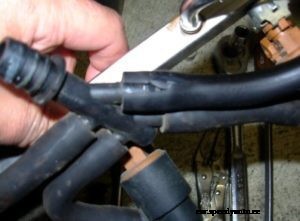
Why ? Vacuum leaks typically start out small, almost unnoticeable and gradually become worse; due to heat and pressure inside the engine.
So, any leak in the fuel system vacuum, will intermittently throw off the air/fuel mixture; that enters the engines combustion chamber. This results in a hesitation, jerking or in extreme situations, stalling. Finally, check all hoses and clamps, for loose connections or cracks.
Why ? By giving the engine more fuel when it is about to stall; you are essentially compensating for a faulty idle air bypass valve; by increasing the throttle, thus giving the engine enough fuel to stay running.
Why ? This valve gives the engine more fuel, for a richer air/fuel mixture, that is needed when the engine is cold.
Why ? The fuel pressure regulator, maintains proper fuel pressure to the fuel injectors. Problems with this device will likely result in, a fuel starved engine, thus it will stall.
Why ? By giving the engine more fuel when it is about to stall, you are compensating for too low a idle. So, by increasing the throttle, thus giving the engine enough fuel, to stay running.
Why ? The choke restricts the amount of air, going into the carburetor. Therefor, causing a richer air/fuel mixture that is needed, when the engine is cold. If the choke is stuck in the open position, then it will be creating a lean condition. Rather, than the rich condition we need, when an engine is cold and consequently stalling.
Why ? An obstruction in the fuel line or carburetor; would restrict the fuel flow to the engine resulting in stalling.
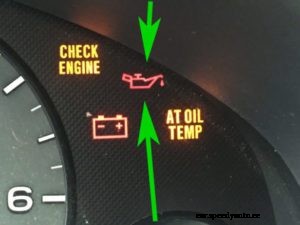
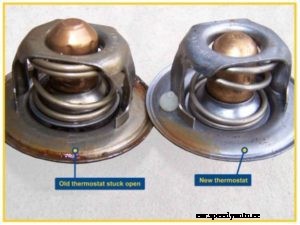
Why ? The thermostat is a valve that opens and closes; to regulate coolant flow through the engine. When the coolant is cold the valve will restrict coolant flow; allowing the heat of the engine to increase. So, as the coolant temperature increases, the thermostat opens to increase coolant flow.
A thermostat has a heat rating that dictates; how high the coolant temperature will be, before it is fully open. A common thermostat will be 195 degrees F. First thing to do is, to make sure that the coolant temperature; is up to operating temperature, 195 degrees F.
A quick check by feeling the radiator hoses, would tell you if it is hot. Using a thermometer taped to the upper hose of the radiator, will tell you exactly where you are. So, if it isn’t hot enough, change the thermostat.
Why ? A low coolant level, will reduce the flow to the heater core.
Why ? If your heater core is restricted or clogged then, coolant isn’t flowing through as it should. As a result, it is cooling down and that translates into, your heater blowing cool or warm air.
Why ? If you have a clutch fan, it may be spinning too fast, keeping the coolant temperature too low. If you have a electric fan, it may be running too long or staying on.
Consequently, you may have a blown head gasket.
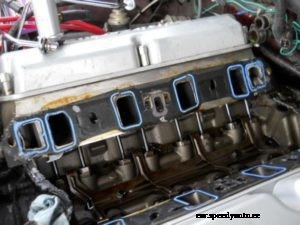
Why ? The intake gaskets seal coolant, that flows between, the two sides of your engine. Many times when these gaskets lose their ability to seal, it allows coolant to leak into your engines crankcase.
Check your oil level. If the oil level is high, then you likely have coolant getting into your crankcase. Immediately, have your mechanic inspect your engine. Do not drive or operate your vehicle, with this condition as bearing failure, will be likely. The coolant in the oil, takes away the oils lubricating properties.
Above all, being able to fix engine problems, takes years of experience. But, anyone can make an effort, to diagnose them. So, next time your vehicle has an issue, don’t rely on a mechanic, to tell you what’s wrong. Finally, try using your senses to get an idea, of what’s causing the problem.
