
Did you know that regular wheel bearings and bearing races wear out after approximately 75,000 to 150,000 miles? If you do not want to spend a lot of money in a mechanic shop, then learning how to remove bearing race and bearings, in general, is very crucial. Many vehicle owners do not know where bearings are in their vehicles let alone how to maintain them.
Moreover, some of you may be driving vehicles with worn-out wheel bearings without even knowing it. Pay attention to a change in the vehicle’s noise while driving. A strange grinding or squealing noise from the wheel while driving may indicate worn-out bearings and bearing races. Another sign that might indicate you need to remove and replace the bearing race is a shaky steering wheel.
Your steering wheel should feel stable at all times and reliable, when it becomes unreliable, it may be a sign of bad bearing races. The last indicator might be a wheel that can’t be able to move. Apart from the signs, you will need to know what the race of a bearing is, the tools needed to remove them, and how to reinstall new ones.
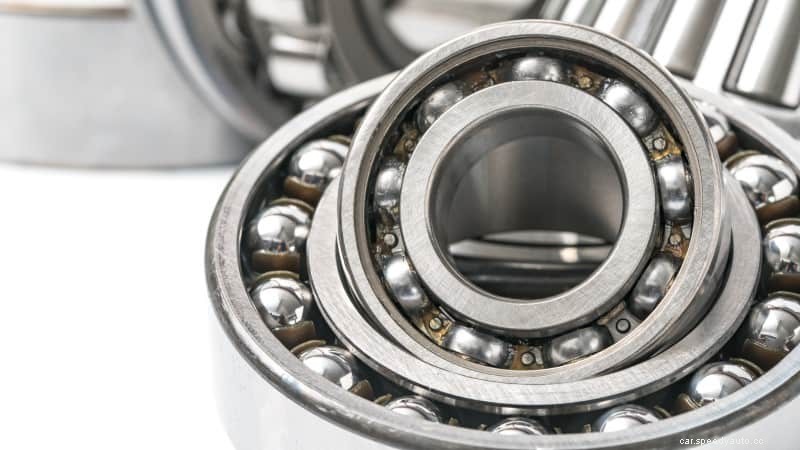
You probably know what ball bearings are, or just bearings. If not, then ball bearings are a sub-type of roller bearings. The device is made up of the parts shown above; the outer race, inner race, balls (hollow steel for vehicle wheel bearings), and the retainer.
An assembly of this sort helps in the transmission of forces to rotary parts, such as the wheels of your vehicle, without causing friction between the joint parts. This in turn helps your vehicle run smoothly, and steer with ease through the road even in rough terrains.
So, what is the race of a bearing? The inner races and outer races are essential parts of the assembly that help keep the balls in the correct alignment. These races have grooves that are shaped onto their surfaces to provide a secure path of rest and dynamic motion.
Needless to say, the material used to make such bearing races, especially ones in the wheel bearings, have to have high tensile and mechanical strength. A majority of bearing races are produced from 52100 steel, which is chrome steel with specs designed to provide good bearing quality.
The steel has an incredible threshold when it comes to hardness levels, wear resistance, mechanical, and tensile strength. As much as steel is the standard, other bearings may use less strong metals to save on costs, weight, and loads. Such materials may include silicon bronze and phosphor bronze.
The good thing about race bearings made out of light-duty materials is that they are easier to remove and reinstall. Steel is meant to be tough, heavy, and hard to shake which makes it good for heavy-duty stuff like vehicles.
The downside to using steel is that replacing the part becomes difficult and quite tedious. To remove and replace steel bearings and their races, you would need various bearing removal tools and sometimes, a source of heat plus penetrating fluids.
Therefore, most car owners will opt to leave this type of repair to professional mechanics. Despite that, we still recommend you learn how to remove the bearing race yourself so that you do not have to spend hundreds of dollars on it. The process is relatively simple, straightforward, and easy if you have the time.
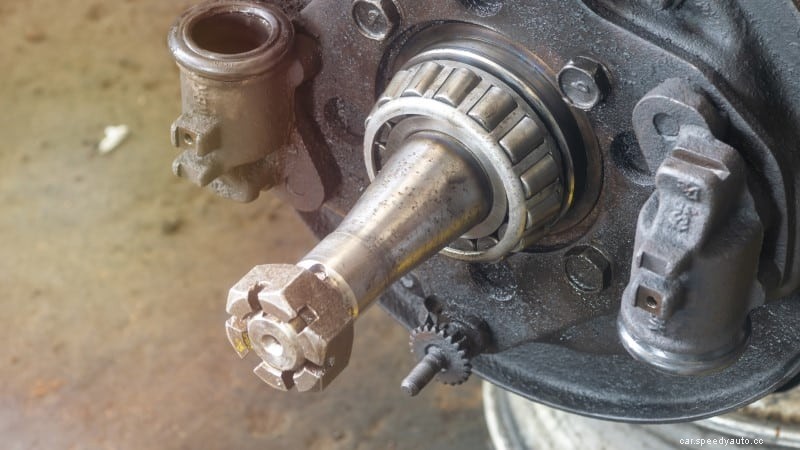
The first question you need to ask yourself before embarking on this is: what can cause you to remove a bearing race? Wheel bearings become worn out over time. Most vehicles would need a wheel bearing replacement after 75,000 to 150,000 miles.
The wear and tear are usually a result of friction in the bearing caused by poor lubrication. Some manufacturers make it easy for you to open the wheel hub and lubricate the bearings while others do not.
Adding some additional lubricant solution seems like the easiest fix. However, this does not happen often since most car owners wouldn’t notice a bad wheel bearing that needs lubrication till it starts to fail.
Make sure to always check their conditions to prevent bad wheel bearings and bearing races from totally failing. You can check them by paying attention to strange grinding or squealing noise from the wheel while driving.
Another way to check is to test the steering wheel to see if it is stable. A wheel that won’t move completely might also be another sign. In other scenarios, the wheel won’t fail to move but will have a lot of play – meaning that it can wiggle in all directions rather than remain in its straight position.
Jack up your car to check for play in the wheel. Put your hands on the nine and three o’clock position and try to shake the wheel back and forth. Proceed to do the same for the six and twelve o’clock positions. Notice any play in either of the directions or both.
You may need to remove the bearing races and bearings, especially if the joints on the wheel assembly do not move as you shake the wheel back and forth. Another way to check for bad wheel bearing or bearing races is to check the ABS light.
Some advanced vehicles use an ABS sensor on the wheel bearing that can be able to tell you if the wheel bearing is bad through the ABS light. Although this is a less common way to check for such faults, it is the quickest. ABS and traction control lights may turn on in this case indicating a problem with a wheel bearing.
You can then proceed to use an OBD scan tool to get the exact diagnostic trouble code for the problem. The code definition will indicate which wheel-bearing assembly needs to be replaced or fixed.
After making sure which wheel is affected, you can then proceed to remove and replace the bearing races. In most cases, you will need to replace the entire wheel bearing hub assembly which consists of the bearing assembly and ABS harness.
However, in this scenario, we are going to focus on the event that would require you to remove the bearing race. For this process, you will require various wheel bearing removal tools, outer race, and inner race removal tools on top of other general tools. They include the following and can be bought or rented from a mechanic store;
You will begin by jacking up your car and removing the wheel. To do this follow the following steps:
Okay, you now have your wheel hub assembly in your hands. Pay close attention to the different notches and indentations on the inside of the hub. Also, observe the various parts of the hub and locate the races. Do this to find the races and a notch that will help you pop them off.
But before you do that make sure you notice which races need to be removed, the inner or outer ones. For the inner race, you will need to use an inner bearing race removal tool like the bearing separator and puller set:
For the outer race, all you would need is a hammer and chisel. Do not worry about damaging the races, they are hardened to withstand such processes, it is, however, prudent to be gentle;
A slide hammer puller can also be used to remove the outer races. The tool has a hammering handle, jaws, and clamps that can attach to the outer races and through a hammering motion, pop off the races. It is quicker but more expensive.
Check out this video for more instructions on removing the inner race.
It depends on the bearing race, either inner or outer race since you would need different bearing race removal toolsets. For the outer race, you can use a slide hammer puller to get it out. A hammer and chisel can do the same too. Inner races are more complicated and the only easy way is to use the bearing separator and puller set.
Following the aforementioned bearing race removal procedures, you can easily remove the bearing races. To learn how to install a bearing race, you will need a bearing race and seal driver. This set is used to lodge races into the hub assemblies using the various size steel discs and displacement shaft in the box.
Pick up a new bearing, place it in the hub and hammer it into place using the appropriate size disc for alignment. The displacement shaft, which is connected to the alignment discs, is the one being hammered to position the race.
You can use the same process that you used to remove the wheel-bearing inner race. The tool needed is the bearing separator and puller set. Follow the device’s instructions to pull out the spindle-bearing race. Wondering how to remove a bearing race from a shaft? Don’t worry, the steps are similar too.
It is recommended to inspect and regularly maintain your hearings and races every 12 months. Part of this regular maintenance may include greasing the bearing races.
Old bearing races should never be reused on new ball bearings. The best thing to do is to replace the entire bearing assembly with new parts that come together. Mixing and matching will always fail sooner or later.
You can spend approximately $100 to $700 on replacing a wheel bearing and/or bearing race. The high prices are usually due to the high labor needed for this job. As you can see, these processes entail a lot of manual work that you can do on your own.
If you can’t buy the tools, you have the option of renting them out from your local mechanic store or just use a hammer and chisel, carefully. With that said, an inexperienced car owner should not attempt to do any of this since damaging the assemblies can cause more problems to your whole machine.
