
A car AC is a compartment that helps to cool the air inside a vehicle. It is made up of different parts like an evaporator, compressor, and condenser. The AC system works by circulating the refrigerant in these parts.
When you want to discharge your car AC, it means that you are removing the refrigerant from the system. This process is necessary when you want to repair or replace any of the parts of the AC.
To discharge car AC at home, you’ll need to use an AC car service kit and a cannister. Connect it to the AC low-pressure service port and open the valve to release the refrigerant into the cannister for safe disposal.
There are a few ways that you can remove refrigerant from your car AC. One way is to use a vacuum pump, which will suck the refrigerant out of your system. The following are steps for removing refrigerant using a vacuum:
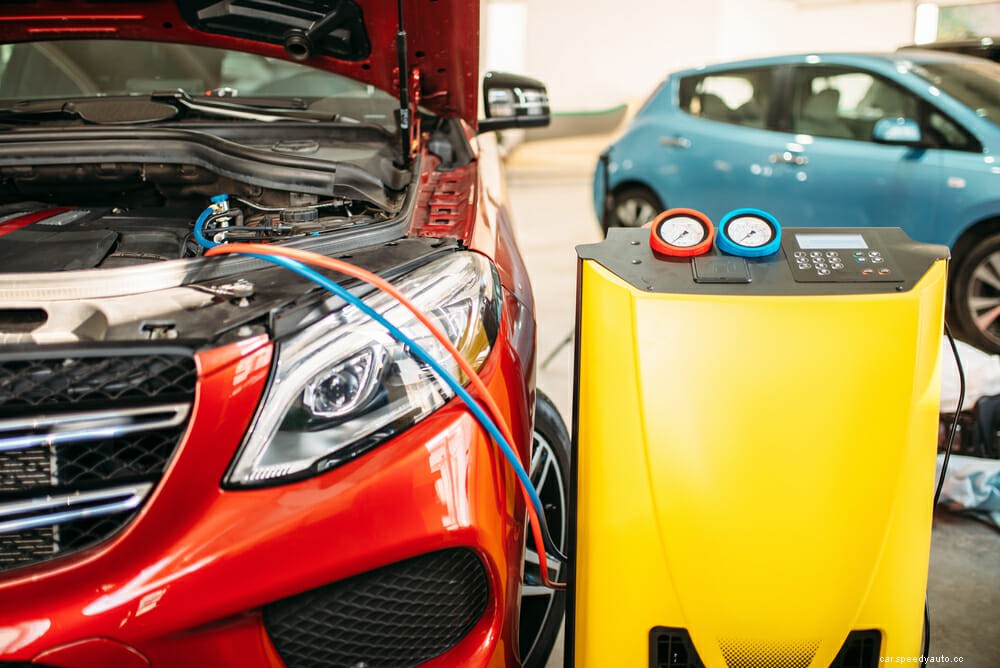
The amount of Freon you’ll need to discharge from your car’s AC system will vary depending on the size and make of your vehicle. However, you should always start by discharging about 80% of the Freon from your system.
Once you’ve discharged most of the Freon, you can then begin recharging your system with fresh Freon.
There are a few reasons why you might need to discharge your car’s AC system. One common reason is that your car’s AC compressor may have failed and needs to be replaced. In this case, it’s necessary to completely discharge the old Freon from your system before adding fresh Freon.
Another reason you might need to discharge your car’s AC is if you’re planning on performing some major repairs on your systems, such as replacing the evaporator or condenser. Again, it’s important to completely discharge the old Freon before adding any new Freon to your system.
Finally, if your car’s AC isn’t cooling as well as it used to, it might be necessary to partially discharge and then recharge your system with fresh Freon. This can help improve the efficiency of your car’s AC and make it feel cooler in the summer months.
The first step in discharging your car’s AC is to locate the low-pressure port. The low-pressure port is usually located on the AC lines near the compressor. If you’re having trouble finding it, consult your car’s owner’s manual for more information.
Once you’ve located the low-pressure port, it’s time to connect your refrigerant can to the port. Make sure that the can is properly connected and that there are no leaks.
The next step is to turn on your car’s engine. This will help move the Freon through your system and make it easier to discharge.
Once your car’s engine is running, it’s time to open the refrigerant can. Be careful not to overfill your system – you should only add as much Freon as necessary to discharge the old Freon from your system.
Once you’re finished adding Freon, close the refrigerant can and disconnect it from the low-pressure port. Make sure that all connections are secure and there are no leaks.
The final step is to start your car’s AC. This will help move the new Freon through your system and ensure that it’s properly distributed.
The entire process of evacuating a car AC system can take anywhere from thirty minutes to an hour. The actual time will depend on the size of the system, the type of compressor, and other factors. However, for every 500 microns, it takes about one minute to remove the Freon from the system.
Yes, it is possible to discharge your car AC without a vacuum pump. However, it’s important to note that this should only be done if you’re comfortable working with refrigerants and have the proper tools.
Additionally, discharging your car’s AC without a vacuum pump can be dangerous and may damage your car’s AC system.
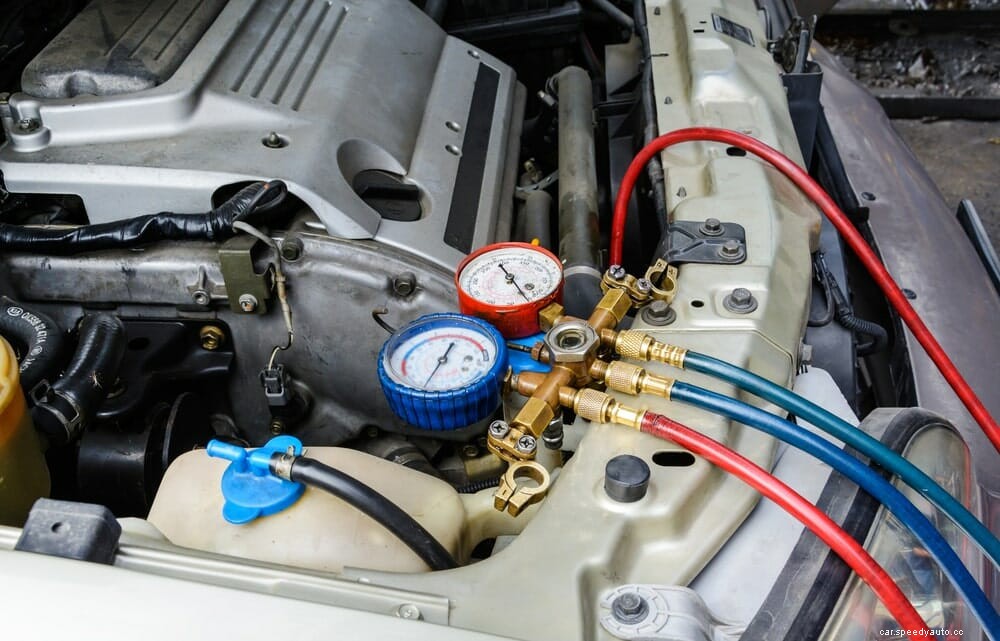
The process of removing refrigerants without a machine is commonly referred to as “discharging.” Discharging can be accomplished in a few different ways, but the most common method is by using a set of manifold gauges.
Manifold gauges are comprised of 3 hoses:
Each hose has its gauge, which will give you a reading of the corresponding pressures within your AC system.
To properly discharge your AC system, you will need to connect the yellow hose to the high-pressure side service port and open up the valve. Next, connect the blue hose to the low-pressure side service port and open up that valve as well.
Now, you will want to open up the valve on the middle-pressure hose so that refrigerant can start flowing out of your system. You will know that the process is complete when all three gauges read “0”.
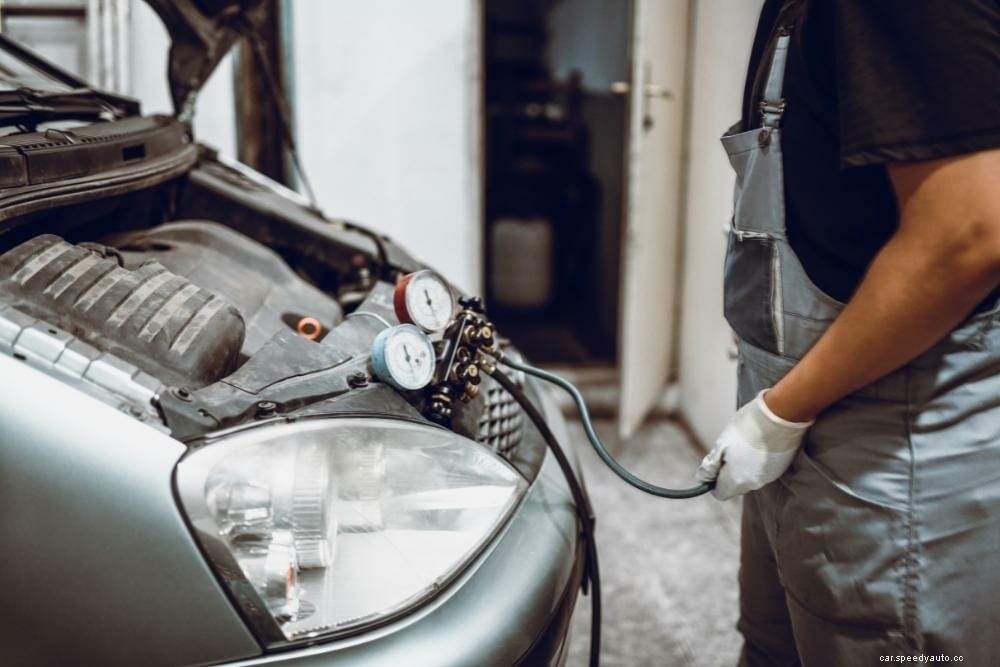
There are a few things that you need to keep in mind when discharging your car AC at home.
The CFM, or cubic feet per minute, is a measurement of the amount of air that a car AC system can move. For most systems, the CFM should be between 2100.
It typically takes about 30 minutes for Freon to cool down. However, this will vary depending on the temperature outside and the size of your car’s AC system.
To discharge a car’s AC system, you will need to connect an AC kit or an empty canister to the AC ports and release the valves. Try not to release the refrigerant into the atmosphere, as it’s not only extremely toxic, but it’s also illegal to do so.
