
Dan Ferrell writes about do-it-yourself car maintenance and repair. He has certifications in automation and control technology.
When your car struggles to start when the engine is cold, check four common sources of trouble:
A cold engine needs more power to maintain proper speed at idle and to overcome internal friction. More power helps the engine overcome internal friction, and gives oil time to circulate and heat up.
The presence of any problems listed above, will make it difficult to an engine to start. Eventually, the engine may not start at all.
Often, lack of proper car maintenance can be blamed for problems during a cold start. Worn out spark plugs and plug wires, clogging filters and corroded battery terminals are left unchecked, making it hard for the engine to start.
Whether you are dealing with poor maintenance or problems in a particular system, you can tackle many of these issues at home using a few common tools.
For this, it's a good idea to have the vehicle repair manual for your particular model on hand.
If you don't have this manual yet, you can buy a relatively inexpensive copy through Amazon. Haynes manuals include photographs, drawings, step-by-step procedures, maintenance schedule and procedures, component location and replacement instructions, and systems' specifications.
You can work on many maintenance tasks, and many of the following projects, at home and recoup your small investment in a short period of time.
| Index |
|---|
1. Fuel System Malfunction |
2. Ignition Faults |
3. Electrical Faults |
4. Video: Hard-to-start Sources of Trouble |
5. Help Resources |
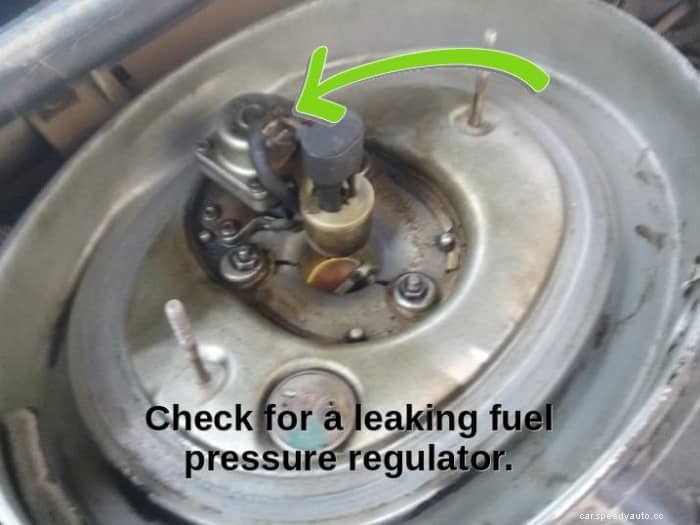
Faulty components within the fuel system may cause a hard-starting condition. An engine requires a clean, flowing source of air and fuel to start and operate correctly, according to engine and ambient temperature conditions. Here are some components you may want to check.
The air filter is a key maintenance item that is easy to forget. Car manufacturers recommend replacing the filter every year or two, depending on model, even sooner if you frequently drive on dirt roads.
Over time, the filter element accumulates dirt and debris, gradually restricting air flow until the engine starves for air. This will make your engine hard to start.
Remove the air filter and place it against the sun and your eyes, or use a bright lamp. If the light doesn't seem to go through the filter element, replace the filter.
Loose, corroded, or broken wires or connections work as resistance against proper current flow. This can interfere with relays, switches and even the fuel pump itself.
If necessary, check voltage drop at the relay(s) and, if necessary, at the pump circuit.
Vehicle fuel systems provide a way to enrich the air-fuel mixture when the driver starts the engine at below operating temperature. This usually happens after the vehicle has been sitting for several hours or when a faulty thermostat sticks open.
A fault in any of these devices usually leads to a hard-start or rough-idle condition.
A quick way to test for need of fuel during a cold start is to add extra fuel yourself.
If engine starting improves, check for a faulty enrichment device in your system, including the injector, sensor, and switches. If necessary, consult your vehicle repair manual to locate and test components at home.
Checking cold injector operation:
Check your vehicle repair manual and the Help Resources at the bottom of this post for more help.
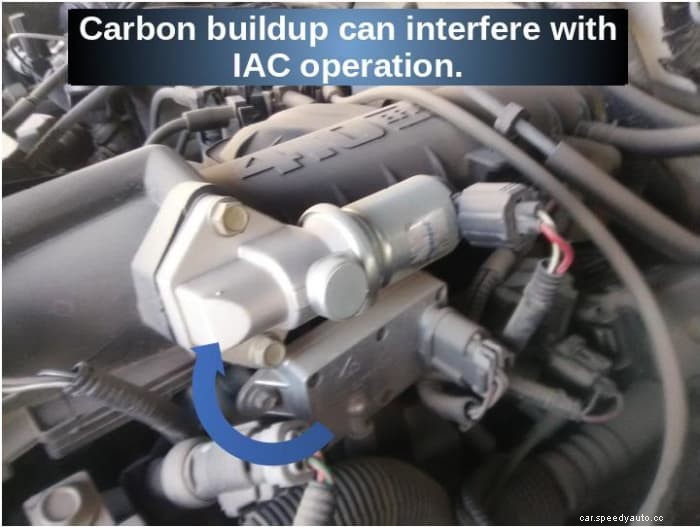
You can find an IAC motor on throttle body injection (TBI) and electronic fuel injection (EFI) systems. Basically, the IAC is a computer-controlled valve to allow extra airflow into the intake manifold.
The car's computer, or powertrain control module (PCM), uses the motor to regulate idle speed. During a cold start, for example, the PCM opens the IAC valve to increase airflow, according to coolant temperature, engine speed and load.
Two common problems affect IAC operation:
Any of these problems can lead to a hard-starting condition and a rough idle. The IAC motor is relatively easy to access on most vehicle models. Detach the motor to examine passages and remove buildup as necessary.
You can troubleshoot operation of the IAC motor at home. Check the Resources box at the bottom of this post for help on testing the motor. Also, consult your vehicle repair manual.
Car computers use the engine coolant temperature (ECT) sensor and intake air temperature (IAT) sensor to operate a cold-start injector.
You can test the coolant temperature sensor using a digital multimeter (DMM). Look for a possible short circuit.
Consult your vehicle repair manual to locate the IAT sensor in your vehicle. Some models use a mass air flow (MAF) sensor with an integrated IAT sensor.
This is another common cause for poor cold starts. A number of issues may affect fuel system pressure:
If necessary, consult your vehicle repair manual and the Resources section at the bottom for help on checking fuel system pressure, and fuel system diagnosis.
Using a Digital Multimeter
Always use a digital multimeter with at least 10 Megohms of impedance to prevent damage to your car's computer.
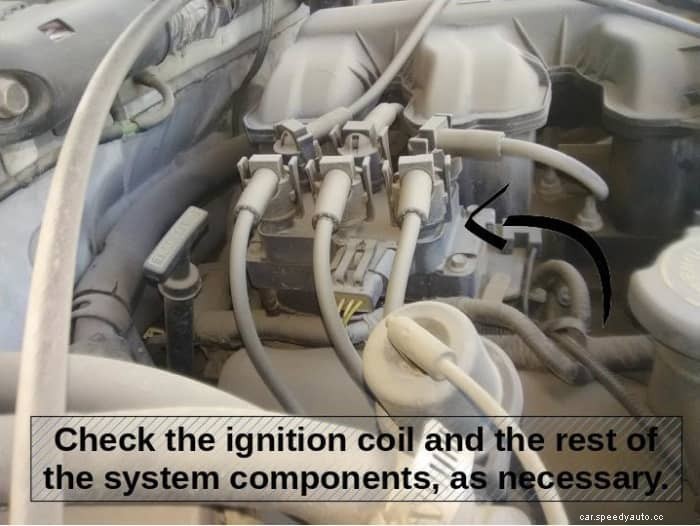
Ignition system problems are another common source of trouble that can manifest during a cold start.
What to look for:
Consult your vehicle repair manual for parts location and diagnostic; the Resources section at the bottom of this post also provides links to other posts that can help check the ignition system as well.
A failing CKP can lead to a hard-starting condition. Although not as common, a CKP sensor that fails mechanically can also damage the reluctor wheel and make it hard for your engine to start.
Usually, a bad CKP sensor will trigger a P0336 trouble code and you'll see the check engine light (CEL) illuminate on your dashboard. But this is not always the case, especially if the sensor is starting to fail and the computer still sees it as working.
Check the sensor, if necessary. And, even if you don't see the CEL light on your dashboard come on, download possible trouble codes. A pending code can give you a clue to your engine cold-start issues.
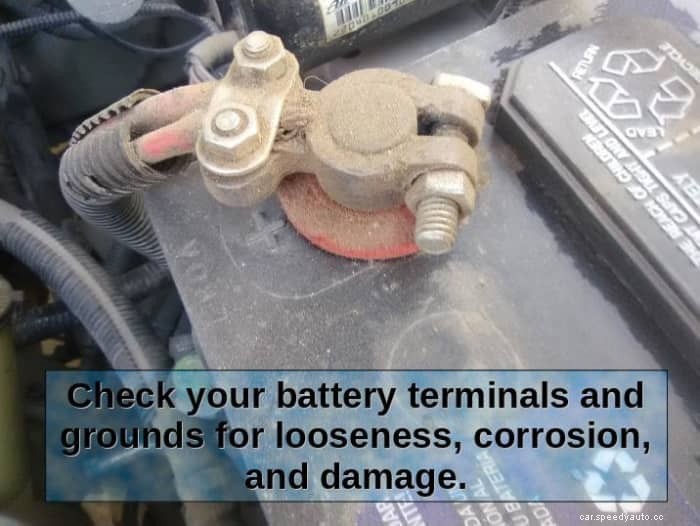
Electrical faults can cause all kinds of trouble.
Loose, corroded, broken wires or connections may:
Problems in electrical systems are sometimes tricky to deal with because you don't know there's a problem with a circuit unless you are dealing with a disconnected wire or a device that refuses to work.
But a digital multimeter (DMM) can make your job much easier. You can use your DMM to check for voltage drop around the starting circuit, charging circuit, and engine grounds; you can also check for a parasitic drain emptying your car battery overnight.
If you suspect an electrical problem, check your repair manual and the Resources section at the bottom for help on voltage drops and other circuit tests you can do at home.
The following video gives you some visual pointers discussed in this post that you can also use to make sure you got the most common sources of trouble.
5. Help Resources
This content is accurate and true to the best of the author’s knowledge and is not meant to substitute for formal and individualized advice from a qualified professional.
