
Dan Ferrell writes about do-it-yourself car maintenance and repair. He has certifications in automation and control technology.
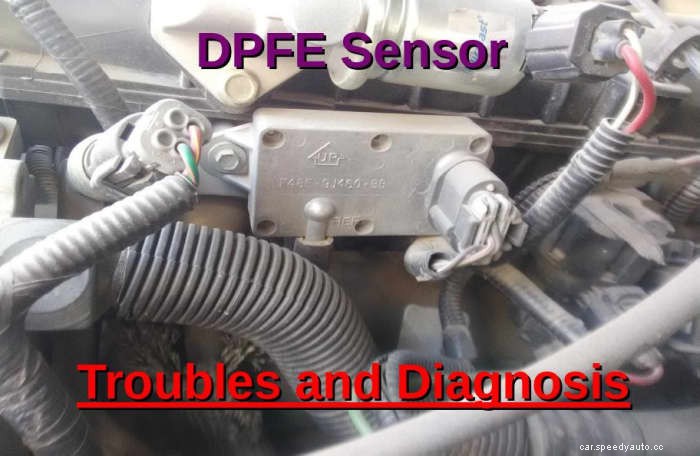
A faulty DPFE sensor can cause several problems:
However, these symptoms are not exclusive of a bad DPFE (differential pressure feedback EGR) sensor. So you need to test the DPFE sensor to make sure it's failed.
The following sections will help in your diagnostic.
The vehicle repair manual for your particular model can be of great help in dealing with your EGR (exhaust gas recirculation) system. The manual tells you how the system in your model is configured and how it works; also, it tells you what are the appropriate tests you may be able to do at home.
If you don't have this manual yet, you can buy a relatively inexpensive copy through Amazon. Haynes manual come with step-by-step procedures, system descriptions, maintenance schedules, as well as illustrations, photographs and electrical diagrams.
| Index |
|---|
1. DPFE Sensor Function |
2. DPFE Sensor Failure |
3. DPFE Sensor Testing |
Video: Testing Tips |
4. DPFE Sensor Vacuum-Voltage Relationship |
5. Dealing with a Faulty DPFE Sensor |
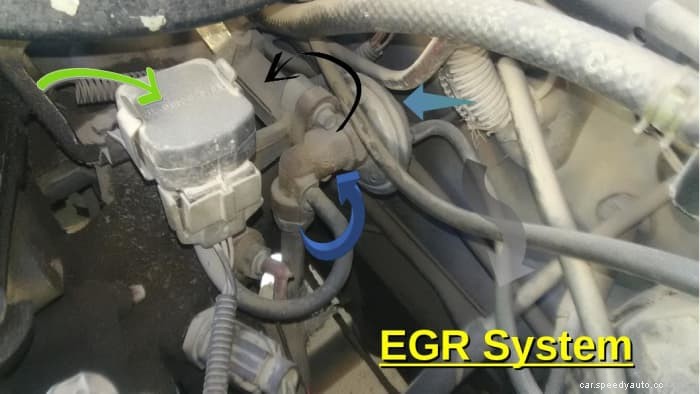
The DPFE sensor is part of the EGR system. This system allows a certain amount of exhaust gases back into the cylinders for re-burn.
This helps reduce heat during the combustion process, which in turns prevents the formation of highly toxic oxides of nitrogen (NOx) and detonation.
The powertrain control module (PCM - your car's computer) uses the DPFE sensor to monitor the flow rate of exhaust gases towards the intake manifold, which routes the gases into the cylinders.
The DPFE sensor is a transducer that detects changes in pressure in the EGR system (to know exhaust gases are flowing), and sends this information in the form of a voltage signal to the PCM.
Using the voltage signal from the DPFE sensor, the PCM decides whether to open or close the EGR valve, according to information it receives from other sensors.
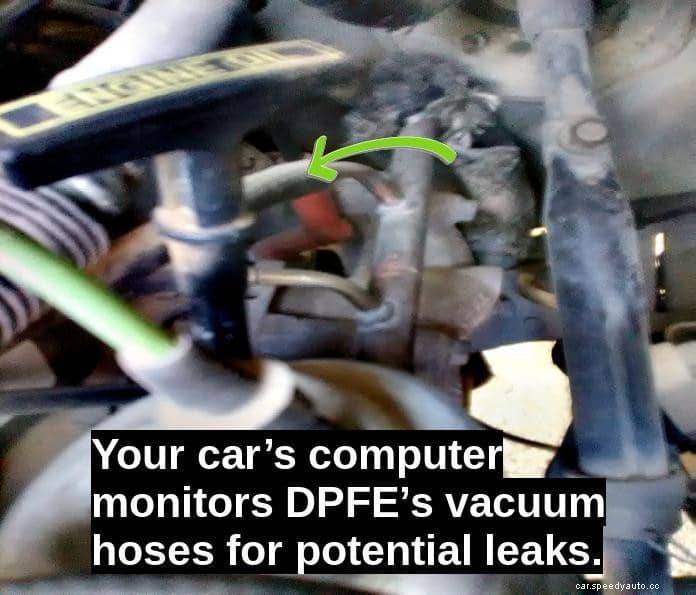
During any monitor cycle, the car's computer is continuously checking the DPFE sensor for voltage; it checks the electrical circuit for opens or shorts; and checks vacuum hoses for restrictions and leaks. A value out of range will trigger a diagnostic trouble code (DTC).
For the most part, DPFE sensors are very reliable and may work fine for up to ten years or more.
Still, a DPFE sensor may fail and disrupt engine performance. Heat and moisture content in exhaust gasses are the main DPFE's enemies. Corrosion can set inside the sensor's box, reducing the sensor's sensitivity to EGR flow. Thus, a faulty DPFE can send false information to the powertrain control module.
Most of the time, a bad DPFE sensor will trigger a P0401 code. But, if the sensor reports too little gas flow, the PCM may open the EGR valve when it shouldn't, creating a lean condition; eventually, this can trigger a P0171 or P0174 code (lean mixture), instead of a P0401 code (insufficient EGR flow). This condition may lead to misfires. You'll feel the car stumbling and hesitating while cruising.
Using a Digital Multimeter
When conducting circuit tests in your vehicle, always use a digital multimeter with at least 10 Megohms of impedance to prevent damage to your car's computer.
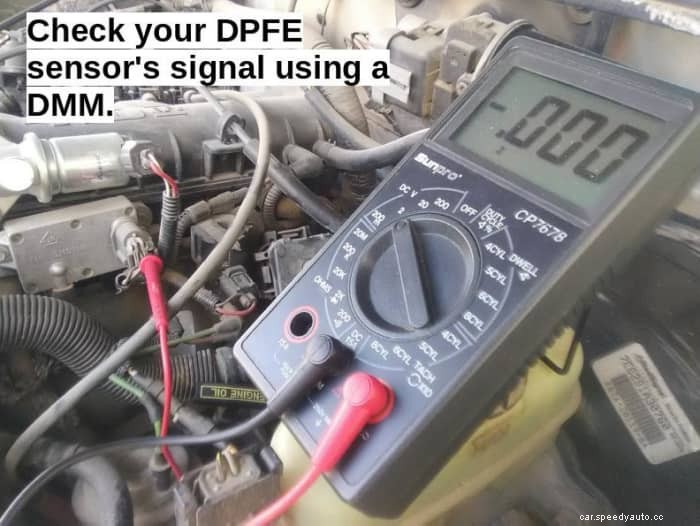
Whenever you suspect a problem with the DPFE sensor, test it first. A bad signal from the sensor doesn't necessarily mean a bad sensor. A faulty vacuum hose, a restriction in an EGR passage, or a faulty EGR valve can cause the DPFE sensor to report false information to the PCM.
This simple test may help you diagnose the DPFE sensor in your car. However, depending on your particular model, the test may not be conclusive.
Consult the sensor's calibration or voltage values for your particular model. You may get this information in the vehicle repair manual for your particular make and model.
Always consult the DPFE sensor specifications for your particular model before deciding whether your sensor is good or bad. You'll find the specs in your vehicle repair manual.
The following video shows how to test the DPFE sensor and gives you some pointers you can use as well.
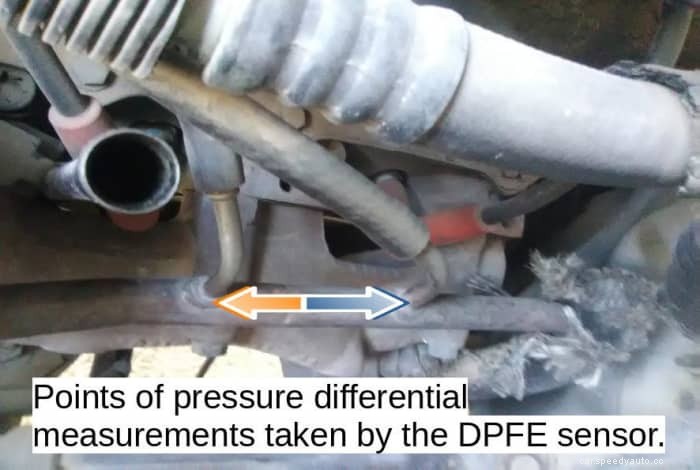
As atmospheric pressure increases in the intake manifold, so the DPFE sensor's voltage signal. The following table shows a vacuum-voltage relationship that may be produced by a common DPFE sensor. As throttle opens, a differential pressure is registered by the sensor, which increases the voltage signal.
| In-Hg | Volts |
|---|---|
8.83 | 4.58 |
6.82 | 3.84 |
4.41 | 2.61 |
2.21 | 1.58 |
0.0 | 0.55 |
A problem with the ground side of the sensor's circuit could be read by the PCM as the highest level of pressure differential (in inches of mercury [In-Hg]), generating a high voltage signal (about 4.58 voltage in our table). This may cause the PCM to command the EGR valve to stay open more than it should, depending on running conditions. This will cause the fuel mixture to become too lean.
On the other hand, a fault in the positive side of the sensor's circuit could be read by the PCM as the lowest level of pressure differential (In-Hg), generating a low voltage signal (about 0.55 volts in our table). This may cause the PCM to command the EGR valve to stay close more than it should, depending on running conditions. This will cause engine temperature to increase as well as NOx emissions.
When testing your DPFE sensor, consult your repair manual for your model specifications.
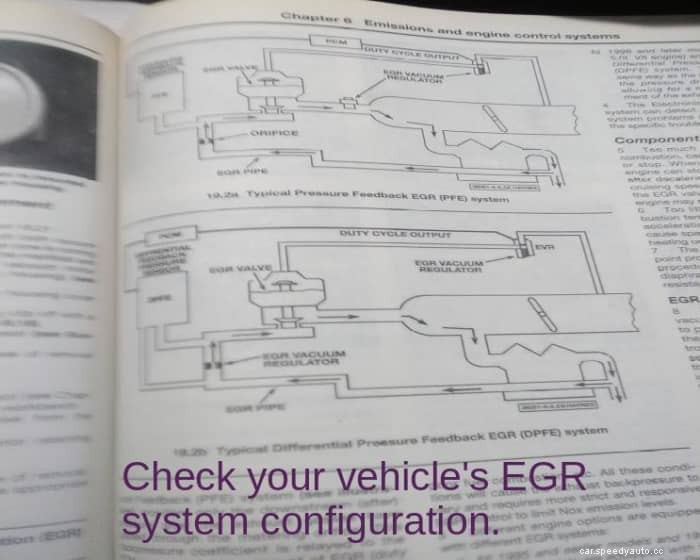
Whenever you suspect a problem with the EGR system, including the DPFE sensor, it's important to know how the system in your model is configured and how it works. This makes it easy to diagnose a system problem.
And then test the sensor, using the specifications listed in your repair manual. Also, check hoses and, if necessary, test the EGR valve as well. Sometimes, a problem in other part of the system can cause a DPFE sensor to report bad information.
Most of the time, a DPFE sensor will trigger a P0401 code. Still you need to confirm whether the sensor is bad, or a fault in the system has occurred. You may be dealing with a partially clogged passage, a faulty EGR valve or vacuum leak.
You can find most of the information you'll need in your vehicle repair manual.
This content is accurate and true to the best of the author’s knowledge and is not meant to substitute for formal and individualized advice from a qualified professional.
