
Dan Ferrell writes about do-it-yourself car maintenance and repair. He has certifications in automation and control technology.
Signs of a bad car battery may include:
However, before you blame your car battery for any of these symptoms, there are some things you need to check to make sure your battery is at fault.
One or more of these symptoms can be the work of a bad charging system or circuit, a parasitic draw, or bad ground.
The following sections describe the most common signs of a bad car battery, and the suggested diagnostics to help you find the source of the problem.
Have the vehicle repair manual on hand for your particular vehicle make and model in case you need to remove one or more components or need help identifying parts in your vehicle.
If you don't have this manual yet, you can find a relatively inexpensive copy through Amazon. Haynes manuals include step-by-step procedures, systems descriptions, how to identify and remove components, troubleshooting steps for many systems and components, instructions on how to remove and test many parts in your vehicle, a maintenance schedule, plus illustrations and photos for many projects and tasks you can do at home. So you can recoup your small investment in a short period of time.
Also, before you head over to the next symptoms sections, it's a good idea to know the actual charge of your battery at this point, so you know what steps you'll need to take during your diagnostics. The next section Open Circuit Battery Voltage Test will help you with that.
| Index |
|---|
A. Open Circuit Battery Voltage Test |
1. Headlights Are Not As Bright |
2. You Hear Clicks When Trying to Start the Car |
3. Engine Cranks Slowly |
4. Battery Dies Frequently |
5. Your Battery's Water Runs Low |
6. Engine Is Hard to Start |
Video: The Sound of a Dead Battery |
7. You Have to Jump-start the Car Every Other Day |
8. Corroded Battery Terminals |
9. Swollen Battery Case |
10. Nothing Happens When You Turn the Ignition Key |
B. How to Keep Your Battery In Top Shape |
C. Battery Diagnostic Resources |
D. Voltage Drop Test Resources |
E. Alternator Diagnostic Resources |
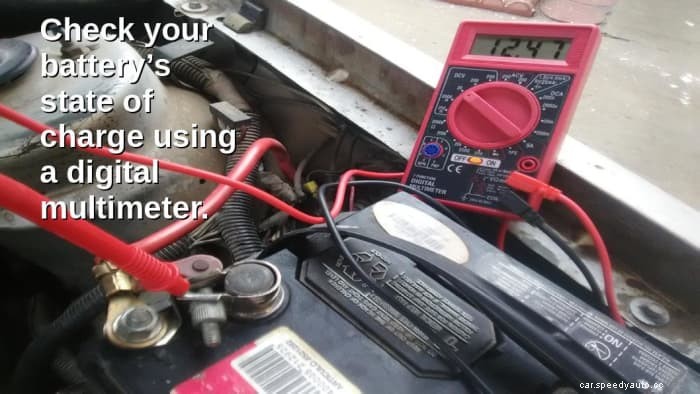
This is a simple procedure to help you know the state of charge of your car's battery. However, this test doesn't tell you whether your battery is in good shape internally, but it's a good test to start your diagnostics.
You'll need a digital multimeter (DMM) for this test.
12.6 volts or higher | 100% charged |
12.4 V | 75% |
12.2 V | 50% |
12.0 V | 25% |
11.9 V or lower | Discharged |
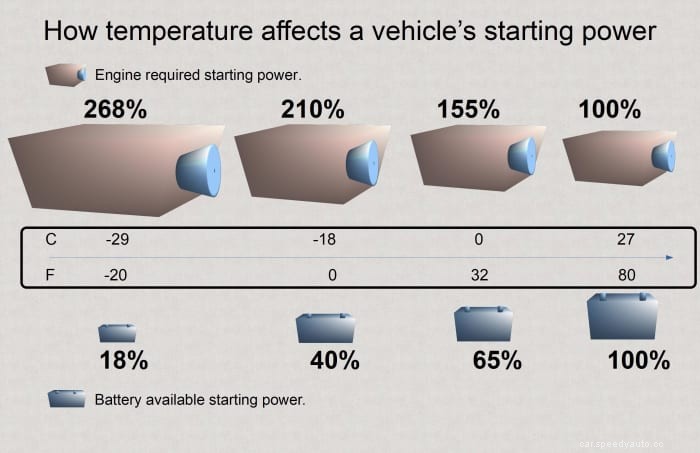
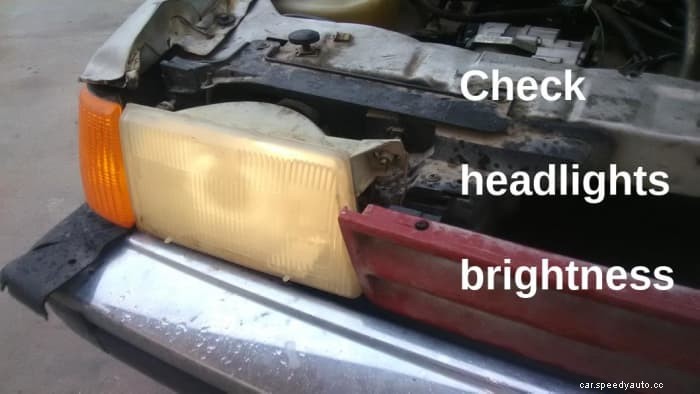
Your car headlights can give you an indication of the strength of your battery.
If you are having trouble starting your vehicle, turn on the headlights with the engine off. If they have a weak glow, your battery may be undercharged.
Of course, if you are doing this outside under bright daylight, you'll hardly see how shiny your headlights are. If necessary, do the Open Circuit Battery Voltage Test described in the previous section.
However, if you don't have a DMM on hand, you can operate your wipers or power windows for the same purpose. If any of these accessories works sluggishly or not at all, you may have a weak, undercharged, or dying battery.
Diagnostics suggested:
Any of these problems, as well as an aged battery, can interfere with proper battery charging, or prevent the battery from delivering full power to the starter motor.
Most auto parts stores will test your battery for free.
In the Resources section at the end of this post, you'll find more help on voltage drop tests for the charging circuit and engine grounds, as well as an alternator diagnostic procedure, if necessary.
If...accessories works sluggishly or not at all, you may have a weak, undercharged, or dying battery.
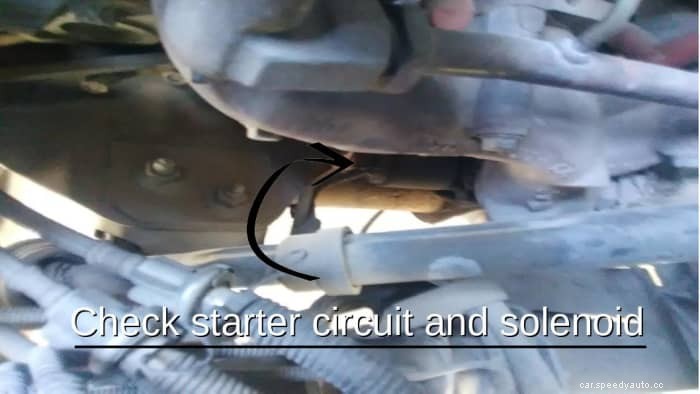
When you hear a series of clicks instead of the roaring of the engine coming to life, it's usually an indication of an undercharged battery or too much resistance in the circuit between the battery and the starter motor.
Diagnostics suggested:
First, confirm that your battery charge is low by performing the Battery Open Voltage Test described in section A above.
Then, check that your battery terminals are clean and tight.
If your battery charge is low, recharge the battery and make sure the charging system is working properly. You'll find help for this in the Resources box at the end of this post.
If necessary, test the starting circuit voltage drop as well. Check the Resources box.
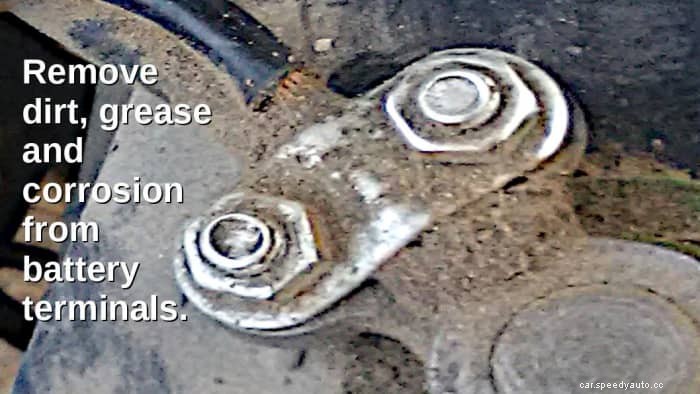
This is usually another good indication that your battery is not fully charged or there's some resistance in the circuit (corroded, loose terminals, damaged wires) between the battery and the starter motor.
Diagnostics suggested:
Do the Open Circuit Battery Voltage Test described in section "A" above. This will help you confirm your battery's state of charge.
If the battery is charged, have it checked to make sure it is operating properly, and check for clean and tight battery terminals.
Test the starting circuit for voltage drop. You'll find help in the Resources box at the bottom of this post.
If necessary, have the starter motor and solenoid checked. Most auto parts stores will check it for you free of charge.
If your car battery dies often, or you need to jump-start your car frequently, or you find yourself charging the battery every week, you may be dealing with a faulty battery or at the end of its service life.
A quality, well maintained battery, with a charging system working properly, and protected from extreme weather conditions, may last up to six years without issues.
A battery failure pattern is like a warning sign, though. Once the battery begins to fail, it may not be able to hold its charge for long.
However, try to investigate the source of the problem as soon as possible. Have the battery tested. It may be at the end of its service live.
Diagnostics suggested:
The fault may be something as simple as a loose or damaged battery terminal or cable, or corrosion buildup.
Most auto parts stores will test your battery, alternator and starter without cost. Take advantage of this free service when necessary.
If the battery tests good, check for a parasitic draw or a fault in the charging system. Test the charging system and fix the problem to prevent it from destroying your battery and other components. See the Resources box for more help.
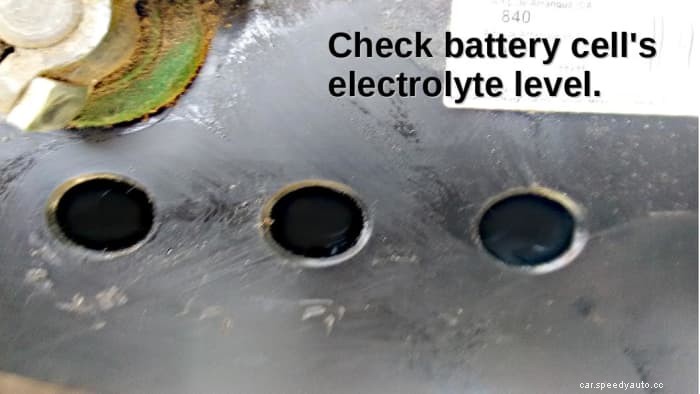
On maintenance type batteries with removable caps, you can check the electrolyte level.
If you often need to top off the water in one or more battery cells, the battery is leaking, or the charging system is overcharging your battery.
If a cell plate is sulfated, battery electrolyte can turn into hydrogen and oxygen gas during the charging process, leak through the case or bulge out.
Diagnostics suggested:
You can check the alternator and circuit using a digital multimeter. Go to the Resources box at the end of this post for more help. Check the Charging System Voltage Drop Test post. Note that a high voltage drop on the ground side of the circuit may cause the alternator to overcharge the battery.
If necessary, have the alternator and battery checked at your local auto parts store.
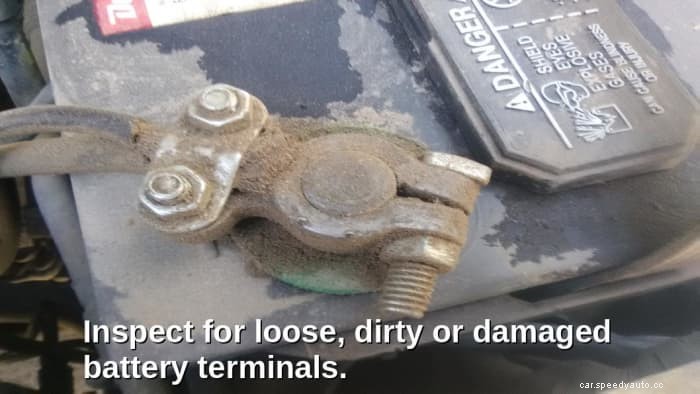
Just like when your engine cranks slowly, your battery may not be delivering the high amperage needed to the starter motor, making the engine hard to start.
Diagnostics suggested:
Inspect the battery terminals. Make sure they are clean and tight, and the cables in good condition.
Check the battery's voltage with an open voltage test as described in section A above.
Slow charge the battery, if necessary, or have the battery tested at your local auto parts store.
This other post can help you diagnose a hard-to-start vehicle.
Also, check the Resources at the bottom of this post. Here, you'll find tests to check the alternator and circuit.
In the following video, you can hear what it sounds like when you try to start the vehicle with a discharged battery.
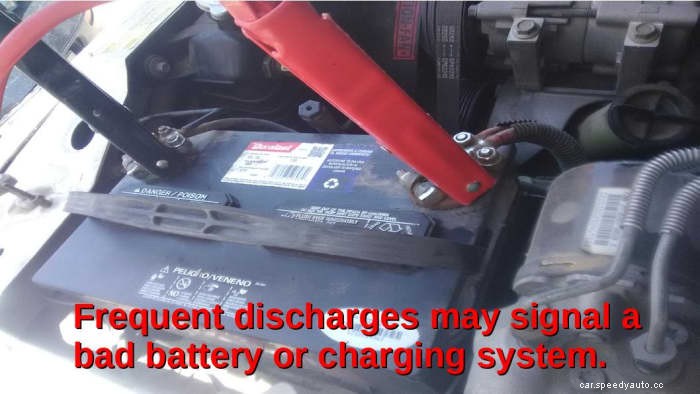
Most likely, your car battery is unable to hold a charge any more. Have the battery checked at your local auto parts store.
Diagnostics suggested:
If the battery is in good shape, though, check the battery terminals and cables for damage.
Make sure you don't have a parasitic draw draining your battery.
And inspect the charging system and circuit. Go to the Resources box at the bottom of this post.
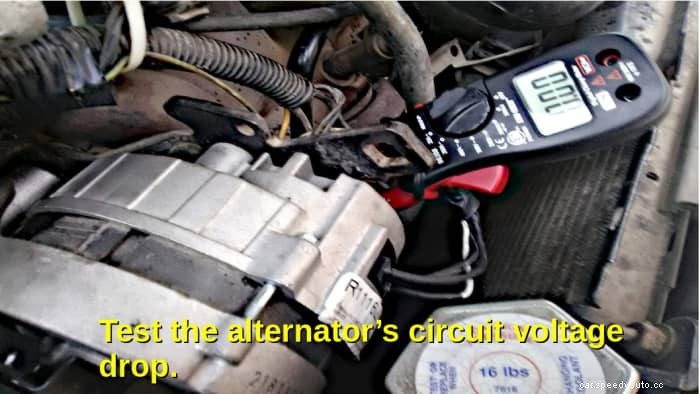
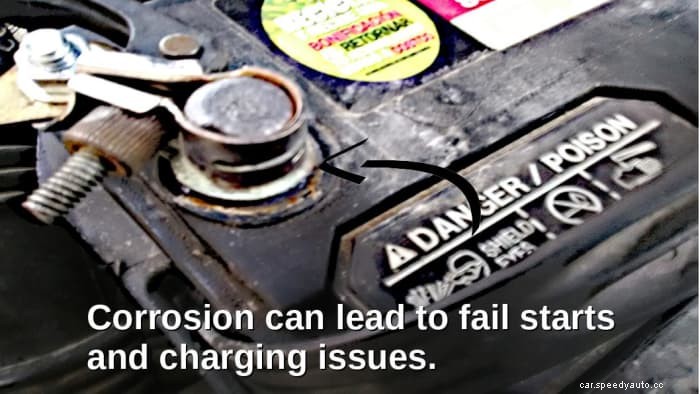
When you need to frequently remove corrosion off the battery terminals, this could be an indication of a sulfated battery, or a battery being overcharged.
Corrosion around battery terminals can lead to a hard-start condition, a battery-undercharged condition, and, eventually, a ruined battery.
Suggested diagnostics:
Have the battery checked at your local auto parts store.
Check the alternator and circuit (voltage drop), if necessary.
The Resources section at the bottom will help you diagnose the problem.
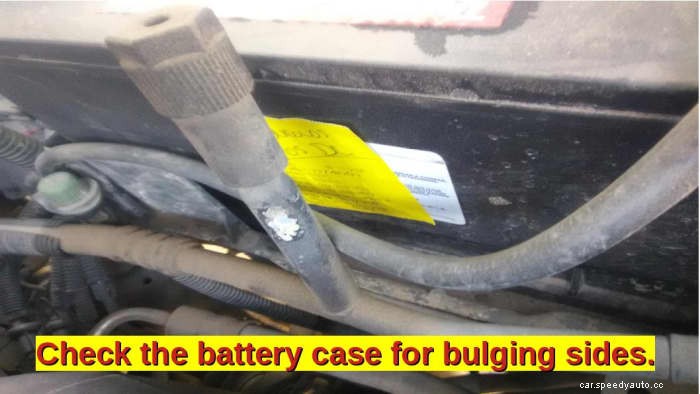
A swollen or bulging battery case can be an indication of hydrogen gas buildup (sulfated battery plates) inside the battery case or a frozen battery.
An alternator overcharging the battery can overheat the electrolyte, turn it into gas and cause the case to expand; however, a battery can sulfate towards the end of its service life as well.
Either way, the battery is most likely ruined.
Suggested diagnostics:
If the battery was not frozen, make sure to inspect the charging system for proper operation. A faulty alternator can ruin a new battery.
Check the Resources sections at the bottom of this post for help in checking your alternator, if necessary.
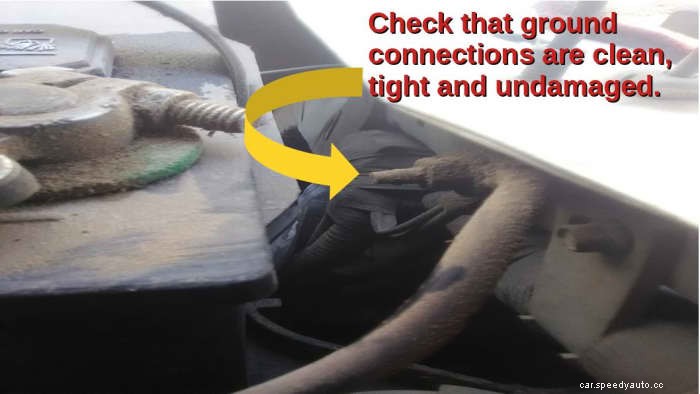
If your engine doesn't start and you hear nothing, not even a click, when turning the ignition key, either your battery has lost its charge, is not properly connected, or has reached the end of its service life.
A car battery lasts between 4 and 6 years. If you know your battery should still operate properly, follow the next recommendations.
Suggested diagnostics:
The posts listed in the Resources box will help you diagnose the problem, if necessary.
A number of faults that can produce bad battery symptoms.
The previous sections described the most common symptoms and suggested some diagnostics tasks to help you find the source of the problem.
When dealing with a car battery, pay particular attention when it looses its charge for no apparent reason. Make sure to find out why.
There could be a few reasons for this:
Charging or replacing the battery without finding out the source of the problem can leave you stranded again and, possibly, ruin a perfectly good battery. This could happen with a faulty charging system.
If you often need to recharge your battery or suspect of sulfated plates, try slow charging the battery. This can help restore battery condition.
In terms of maintenance, the ideal would be to pay attention and properly maintain every system in your vehicle. Often, though, this is hard or nearly impossible to do, especially if you don't have the time or money.
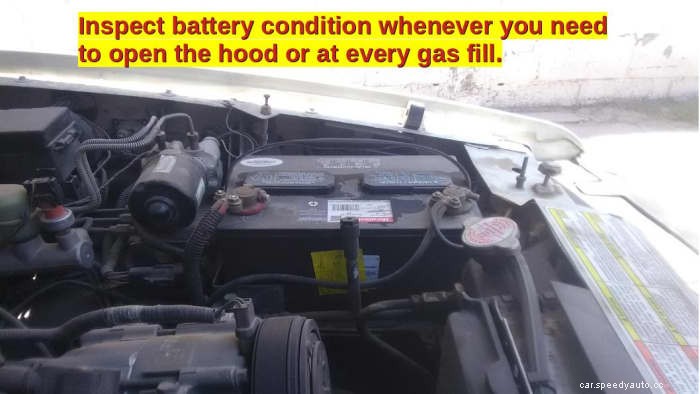
Still, simple things like taking a look under the hood once in a while to check wires, battery terminals, belts, and hoses; doing a little car maintenance on your own according to your manual's service schedule–specially oil and antifreeze changes–can go a long way to help keep your battery, and other systems, working properly much longer.
This article is accurate and true to the best of the author’s knowledge. Content is for informational or entertainment purposes only and does not substitute for personal counsel or professional advice in business, financial, legal, or technical matters.
