
Dan Ferrell writes about do-it-yourself car maintenance and repair. He has certifications in automation and control technology.
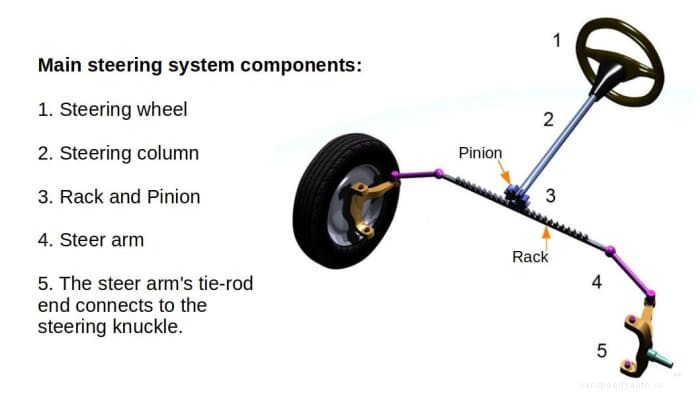
Drivers may describe steering system problems using words like:
The following sections, describe these common steering problems and the potential causes behind them. So, head over to the corresponding section for your particular issue. It'll help you diagnose the problem and possibly, with your service manual on hand and a little elbow grease, fix the problem.
If you don't have the repair manual for your particular vehicle make and model yet, you can buy a relatively cheap copy through Amazon. Haynes manuals include step-by-step instructions, images, photos and system descriptions for many maintenance, troubleshooting and parts replacement projects you can do at home. So you can recoup your small investment in a short time.
| Index |
|---|
1. My Steering Wheel Is Hard to Turn |
Video: Common Issues Leading to a Stiff Steering Wheel |
2. I Need to Over-Turn My Steering Wheel to Make a Turn |
3. I Can 'Feel' the Road On My Steering Wheel |
4. My Car Pulls to One Side of the Road |
5. My Car Wanders Left and Right |
6. My Wheels Vibrate |
7. Tires Wear Too Fast |
8. My Steering Wheel Oscillates |
9. The Steering Wheel Doesn't Return After Making a Turn |
10. I Hear a Noise at the Front of My Car |
11. Dealing With Electric Power Steering Systems |
12. Preventing Power Steering System Problems |
13. Steering System Diagnostic Resources |

You know you've got a problem with the steering system when you have to make an extra effort to turn the steering wheel.
First of all, make sure the tires are properly inflated and the steering system has enough fluid, especially if you hear a whining sound when making a turn. If the steering system is low on fluid, this could cause serious damage if left unchecked.
Other common, and not so common, system sources of trouble may include:
However, problems with the front end alignment and suspension system may also impact the steering system.
To isolate the problem:
If the stiffness goes away, check the the tie-rod ends, drive axle and suspension system components; otherwise, check other parts in the steering system.
Watch the next video for a visual rundown of common issues leading to stiffness of the steering wheel.
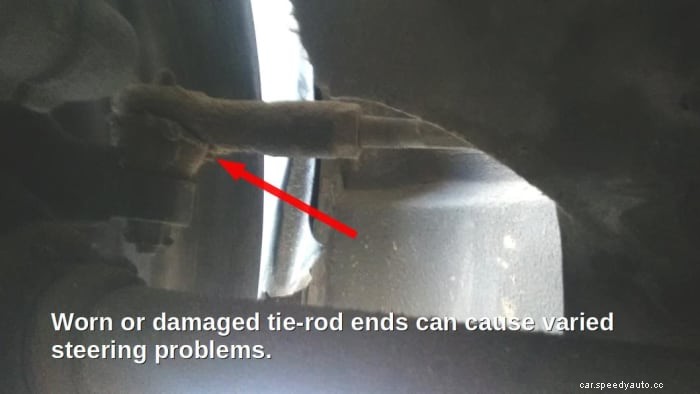
You may have noticed lately an excess of free play on your steering wheel when taking a turn.
Usually, too much steering-wheel play points to:
Sometimes, problems with the strut bearing or plate can produce the same symptoms.

Being able to get a feel for the road you're driving on is built into the steering system of your vehicle. But feeling every road imperfection on the road surface through the steering wheel, that's something else.
This is called feedback, and it may be triggered by steering system problems like:
Suspension issues may also lead to this symptom as well. Check for loose or damaged screws, bushings or ball joints.

When your car drifts, it slowly departs from the lane when you let go of the steering wheel.
When your car pulls, you exert effort on the steering wheel to keep the car straight on the road.
Both conditions may come from one or more steering system issues.
Check for:
Other potential problems include:
Warning! - Inspecting the Steering Column
If you need to check components in the power steering column of your vehicle, make sure to disable the air bag system to prevent serious personal injury. If necessary, consult your vehicle repair manual.

When you are driving down a straight and leveled road and you need to turn your wheel left and right to keep the vehicle going straight, you may have one or more problems in the steering system.
Check for:
Other potential problems:
Some system problems can cause an oscillation of the steering wheel. This is a constant and rapid left-and-right rotational vibration.
This vibration may start with a wobble or shimmy (a lateral movement) on the front tires. However, problems in other systems can cause this type of problem as well.
Check for:
Also:
If necessary, check the suspension (especially shock absorbers) for potential problems as well.
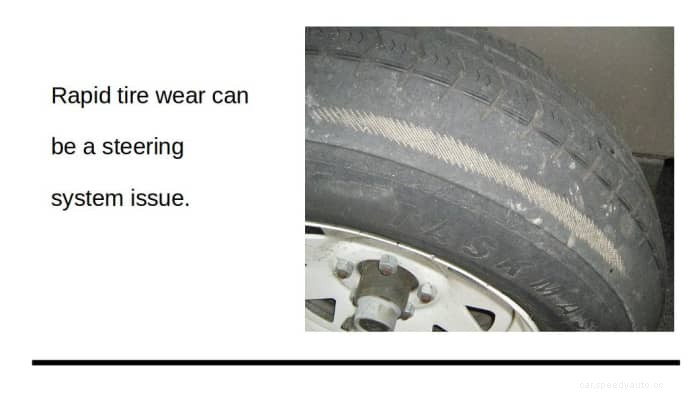
Problems in one or more systems can cause excessive tire wear.
Check for:
Other common issues may include:
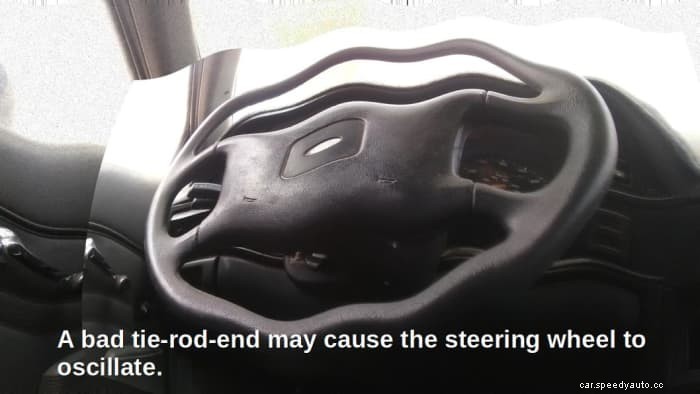
In some ways, an oscillation of the steering wheel is similar to a vibration problem. However, this problem manifests only when you drive over imperfections on the road. In this case, the tires are able to transmit this movement to the steering wheel, causing a slight rotation.
Check for:
Also:
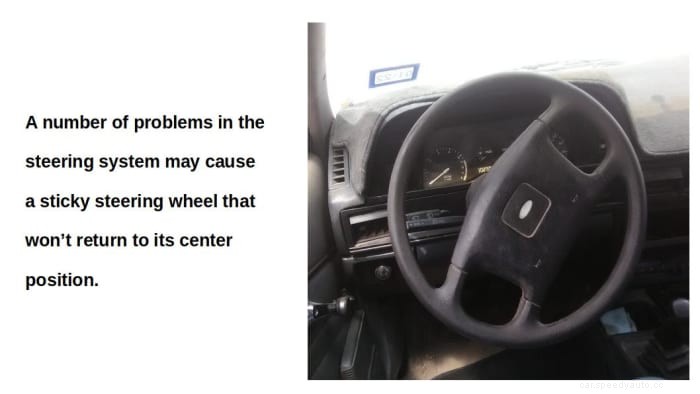
When your steering wheel doesn't return to its center position, it becomes sticky. It stays at its turning position. Pay attention to these common suspects.
Check for:
Also check for:
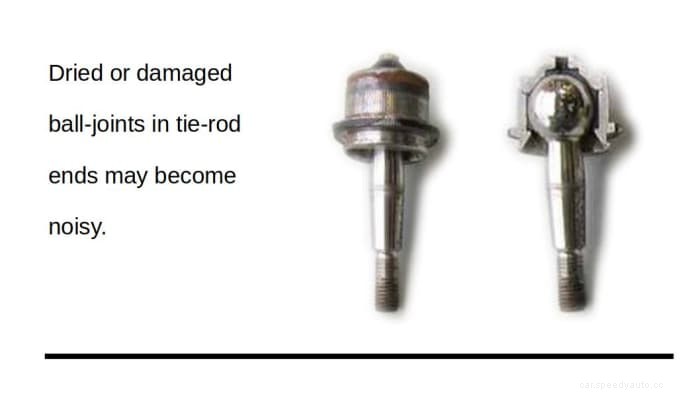
Front end noises may come from different systems, including the steering system.
Check for:
Also, check for:
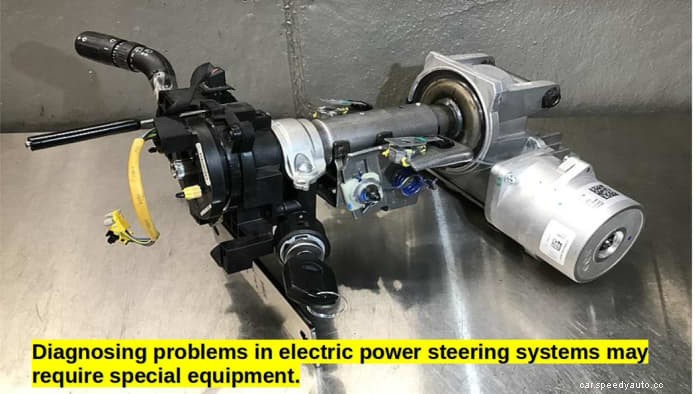
Electric power steering systems have been around for sometime now. This configuration may include a simple electric motor assisting a hydraulic steering pump or an electric motor(s) and module(s) replacing the hydraulic system completely.
Depending on your particular configuration, you may need one or more special tools to diagnose the system.
If you don't have experience with electrical systems, this may be a bit more complicated to diagnose, especially without the necessary equipment.
For example:
In many cases, you'll need to replace just a module, a position or torque sensor. However, replacing a particular assembly when dealing with a failed component is not uncommon on some models.
Make sure to consult the vehicle repair manual for your particular vehicle make and model.
Only a few components in the steering system are bound to give you the most trouble. Make sure you are giving proper attention and maintenance to the system, checking for worn or damaged parts from time to time.
Going over the system using your vehicle repair manual will give you a chance to evaluate the condition of specific components and system maintenance needs.
Outside steering components, a number of parts in the suspension system, including tires and alignment are critical to your vehicle's maneuverability. Pay attention to them as well.
When facing a potential steering issue, go over the previous sections, identify your particular steering system problem and check to appropriate components with the help of your car repair manual.
There will be a number of problems you may be able to diagnose and, possibly, fix at home, using a few common tools. If you need a special tool, check your local auto parts store. Often, they'll be able to loan you the appropriate tool for the job.
Below, you'll see a resources section with links to other posts that can help you diagnose potential problems with the steering system in your vehicle. When necessary, they include easy to follow, step-by-step procedures to make it easier to diagnose and, if possible, repair the system.
This content is accurate and true to the best of the author’s knowledge and is not meant to substitute for formal and individualized advice from a qualified professional.
