
Dan Ferrell writes about do-it-yourself car maintenance and repair. He has certifications in automation and control technology.
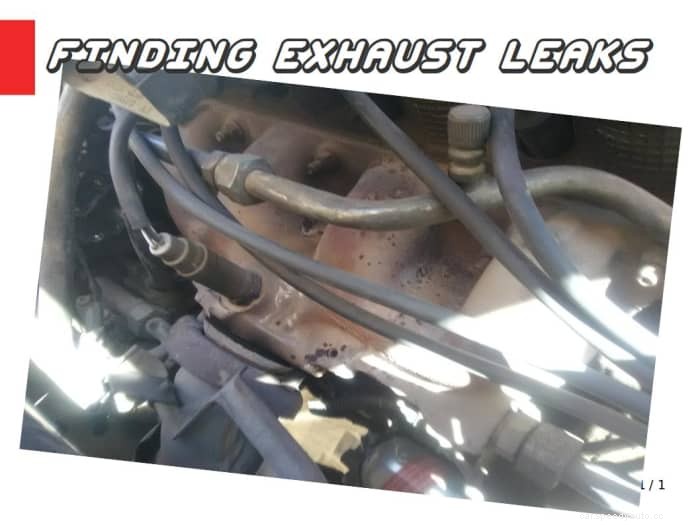
Exhaust leak symptoms may include one or more of the following:
The exhaust manifold collects high-temperature combustion gases and directs them through the downpipe, catalytic converter, muffler and tailpipe at the rear of the vehicle.
A leak may happen anywhere along the exhaust system. A cracked manifold, blown manifold gasket (used on some engines), a bad pipe gasket, or a rusted pipe may all allow exhaust gasses to escape and produce loud noises.
The following sections will help you find a potential exhaust leak. During this diagnosis, it's a good idea to have the vehicle repair manual for your particular vehicle make and model.
If you don't have this manual yet, you can find a relatively inexpensive copy through Amazon. Haynes manuals include images, pictures and step-by-step procedures for many troubleshooting, parts replacement and maintenance projects. So you can recoup your small investment in a short period of time.
And, in case your are wondering, in the following video you can hear the 'bubbly' sound coming from an exhaust leak.
| Index |
|---|
1. What May Cause an Exhaust to Leak? |
2. Inspecting the Exhaust System |
A simple method to find an exhaust leak |
3. Removing the Exhaust Manifold |
Leaking Exhaust Manifold Gasket Symptoms |
4. Replacing an Exhaust Manifold Gasket |
5. Diagnosing an Exhaust Pipe or Joint Leak |
Video: Leaking Exhaust Joint Donut |
6. Preventing Expensive Exhaust System Repairs |
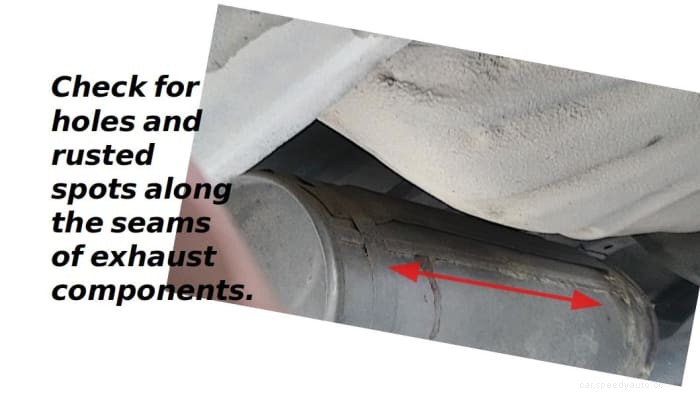
There could be several reasons why and exhaust system may start to leak. Some of the most common reasons are:
Before you begin troubleshooting the exhaust system in your car, if at all possible, try to find out in what area of the system the potential leak is located.
This may seem obvious but you can save a lot of time just by taking note of some of the evidence at hand.
Where to start looking:
1. Does a ticking, puffing or loud noise under the hood seems to stop after the engine warms up?
Start your diagnostic at the exhaust manifold, including the gasket area.
2. Can you smell exhaust fumes from inside the cabin any time you are driving?
You may be dealing with a leaking manifold, a leak in the downpipe between the manifold, catalytic converter or one of the joints.
3. Is there a loud, rhythmic noise coming from under the vehicle any time you start the engine?
Check for a leak along the exhaust pipes and joints.
4. Can you see smoke coming from under the vehicle when you start the engine?
Start the engine and take a look under the vehicle to see which part of the exhaust the smoke seems to be coming from.
5. Is the exhaust system too loud?
Check for a hole, rusted or black soot area in the downpipe, joint, catalytic converter or muffler. However, when inspecting the muffler, you may find a small hole at the back of it. That's a water drain hole to prevent rust buildup. So don't worry about that.
A simple method to find an exhaust leak:
A popular technique to locate exhaust leaks is to connect a vacuum cleaner to the tailpipe of your car. The vacuum cleaner should be able to blow air.
When the engine has cooled, connect the vacuum cleaner to the tailpipe of your car, turn on the vacuum cleaner, and start spraying soapy water around the exhaust manifold, downpipe, catalytic converter, muffler and joints.
Bubbles will form around the leaking spot.
Once you've found the leak, decide whether it's something you are able or want to fix yourself. There are several repair methods to deal with exhaust leaks.
A quick internet search can turn several videos and articles suggesting how to fix exhaust leaks.
Just keep in mind that using aftermarket products to deal with manifold cracks or broken pipes too close to a catalytic converter or muffler may not work too well because of heat expansion. Welding a crack or replacing a catalytic converter or muffler may be the best option in some cases.
You've discovered a leaking exhaust manifold or gasket. Sometimes, an exhaust manifold repair can be done in place. For example, if the damaged area is accessible, you may weld a crack without removing the manifold; other times, it may be necessary to remove the manifold for a closer examination, for repairs, or to replace a blown gasket.
These steps will help you remove the exhaust manifold:
If you are not sure whether it's necessary to remove the manifold for repairs, consult with your car shop. You may save time and money.
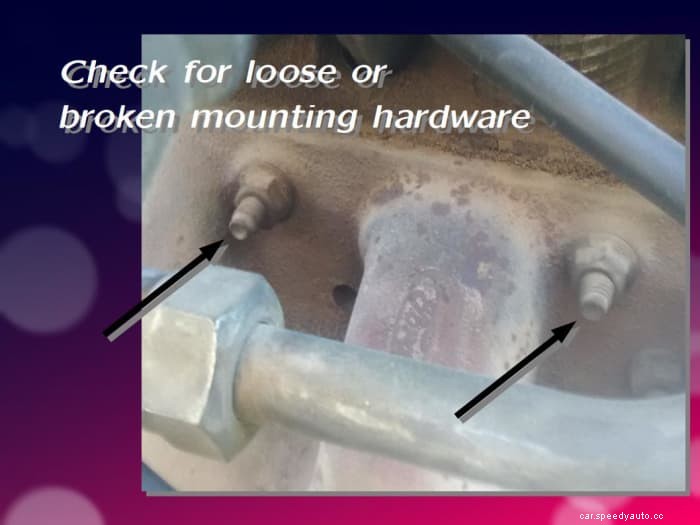
It's not uncommon for exhaust bolts, nuts or studs to break. If necessary, look for an exhaust fastener repair kit to help you remove broken or damaged mounting hardware.
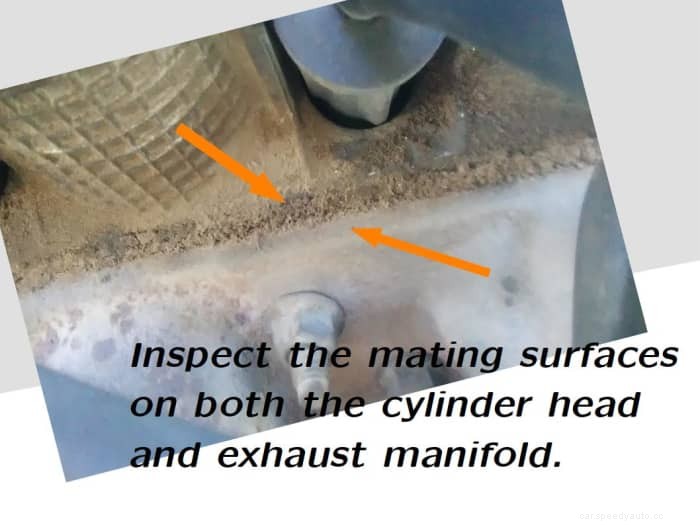
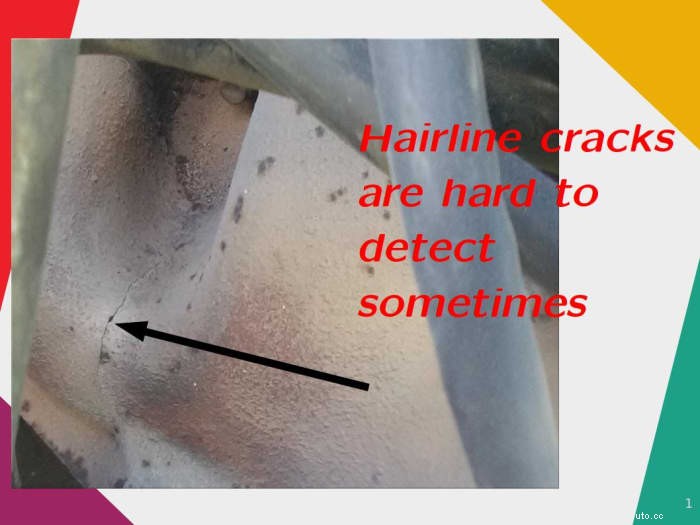
After removing the manifold, thoroughly examine the body for cracks or damage.
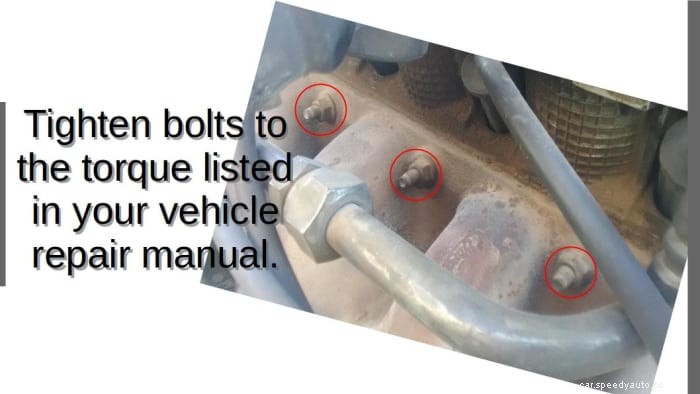
The following suggestions can help you reinstall the exhaust manifold.
Following a proper installation sequence will prevent damage to mounting hardware, gasket and exhaust manifold.
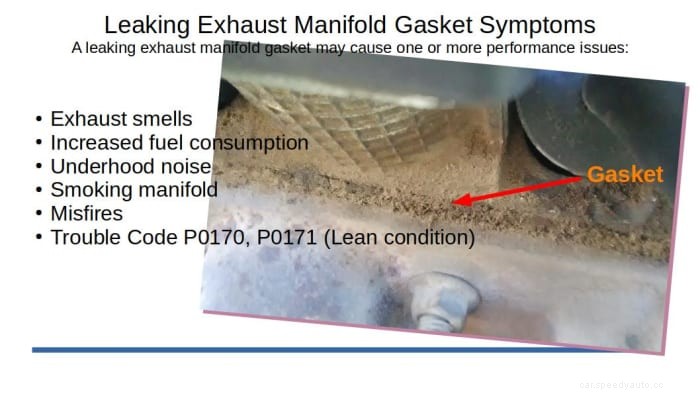
If you need to replace the exhaust manifold gasket, follow the suggestions in the previous section Removing the Exhaust Manifold. Then, proceed with the following steps.
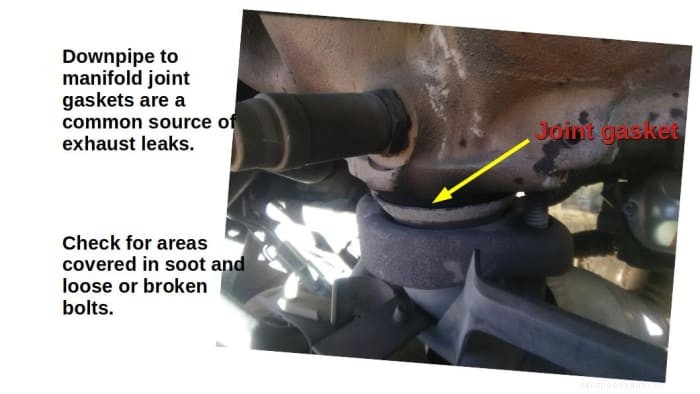
Making a visual inspection of exhaust system pipes and components.
The next video shows you how a missing joint donut was causing a loud noise in the exhaust.
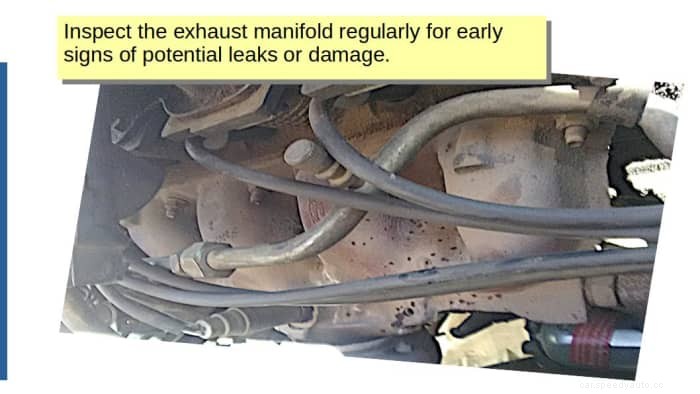
A leaking exhaust system can be dangerous, not only for your vehicle but for yourself and any other person riding with you. Highly poisonous exhaust gasses may leak into the cabin.
Diagnose your exhaust system as soon as you suspect a problem with it, and make the necessary repairs.
Sometimes, locating the source of a leak is not easy. Car shops use compressed air and smoke machines to diagnose exhaust system leaks.
However, car technicians frequently use visual inspection as well, just like the way you can do at home. That's because, in many cases, it's possible to locate leaks just by examining the manifold, joints, and pipes, if you know how and what to look for.
The steps outlined in this post will help you locate even difficult to find exhaust leaks.
This content is accurate and true to the best of the author’s knowledge and is not meant to substitute for formal and individualized advice from a qualified professional.
