
Dan Ferrell writes about do-it-yourself car maintenance and repair. He has certifications in automation and control technology.
Exhaust system problems can manifest through unusual noises and smells:
You can use these clues to zero in on the problem by paying attention to the type of sound, frequency, timing, or odor.
Below, you'll find the most common noises and smells encountered by car owners when a potential problem begins to develop in or around the vehicle's exhaust system.
So head over to the section that best describes the noise or smell in your car to identify the issue and, hopefully, avoid an expensive repair later on.
You may want to have on hand the vehicle repair manual for your particular model. If you don' have this manual yet, you can buy a relatively inexpensive copy from Amazon. Haynes manuals come with step-by-step procedures, images and photos for many troubleshooting, maintenance, and component replacement projects you can do at home. You'll recoup your investment in no time.
| Index |
|---|
1. A Humming or Ticking Noise Appears When I Start the Engine But Goes Away When Warmed |
2. I Can Hear a Constant Hissing Sound |
3. A Popping Sound Comes Out the Tailpipe in My Car |
4. My Car Makes a Rumbling Noise That Goes Faster When I Accelerate |
5. I Hear a Rattle, Buzzing or Squeak Coming From Under My Car |
Video: How a Rattling Exhaust System Sounds |
6. There's a Clunking Sound Under My Car |
7. I Smell Something Burning While Driving |
8. What is That Pinging Noise? |
9. Why Do I Hear a Vibration Coming From the Exhaust System? |
10. There's This Rotten-Egg Odor Coming From Under My Car |
11. Efficient Exhaust System Diagnosis |
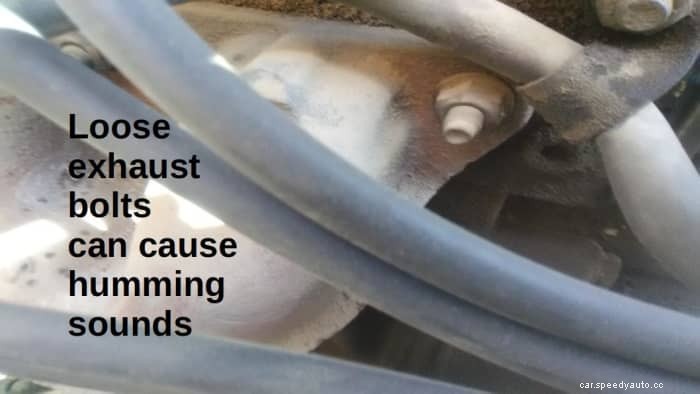
Certain noises tend to fade away when engine temperature goes up. And temperature related issues usually point to potential leaks.
Check for:
These type of problems can also lead to noises like ticking or whistling that decrease as the engine warms up.
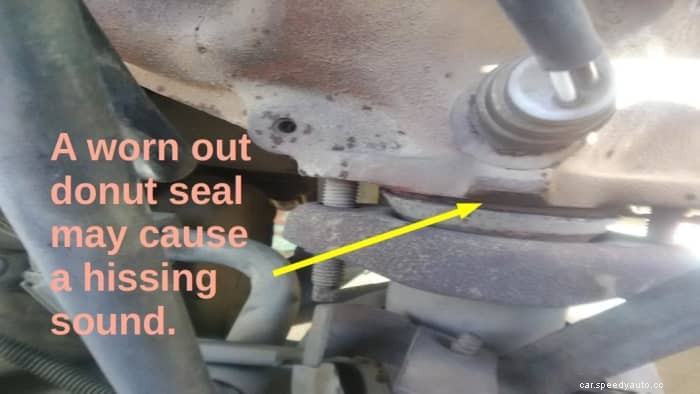
Like the humming noise, a hissing sound may also point to a potential leak or a worn out catalytic converter. However, this noise may be persistent. It may not completely go away when the engine warms up. It may also have a high-frequency quality.
Check for a potential leak:
A cracked exhaust manifold tends to increase fuel consumption, affect oxygen sensor operation or foul the catalytic converter.
If there doesn't seem to be a leak, check the catalytic converter. You may be dealing with a worn out cat that's damaged from overheating and causing this hissing sound.
Usually, problems that cause the mixture to run rich will eventually damage the catalytic converter.
Simple catalytic converter check:
Other potential signs of a clogged catalytic converter include:
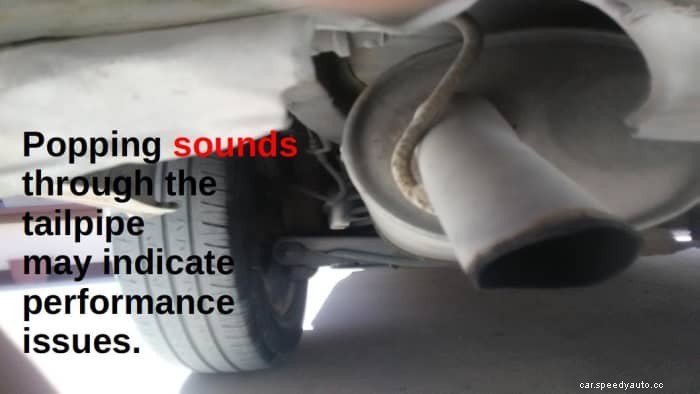
Engine performance issues can also manifest through the exhaust system.
For example, you may notice a popping or firecracker-like sound coming out the tailpipe when the engine is cold or warmed.
This usually points to fuel burning unevenly inside or outside the combustion chambers. Outside the engine, you may hear it in the intake or exhaust manifold or tailpipe.
You may be dealing with a:
or other similar problem preventing fuel from burning properly.
Exhaust System Leaks
Try to fix this type of exhaust system problem as soon as possible to avoid poisonous gases from reaching into the passenger area.
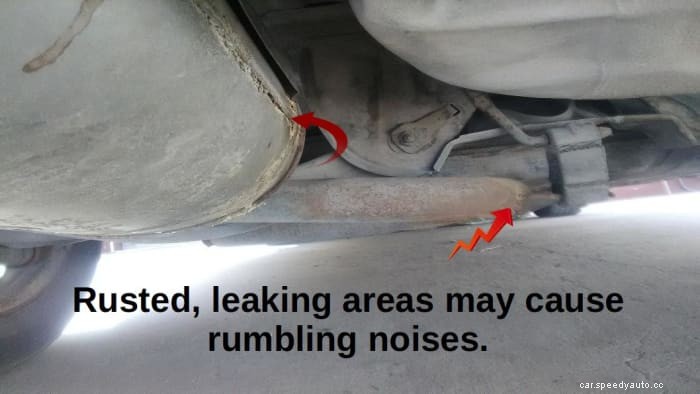
Often, car drivers describe this noise as a loud, deep, and dull noise that increases in frequency when accelerating. This usually points to a leak in the exhaust system.
It means some exhaust gases entering the exhaust manifold are not reaching the muffler. A loose or disconnected pipe or rusted area with a hole in it is allowing gases to escape.
You may even be able to see smoke coming out the leaking spot and notice a strong gas or burning odor when dealing with an exhaust system leak.
Check for:
Specially, pay attention to rusted areas along the pipes, catalytic converter and muffler that can reveal a hole on a surface.
Inspect for loose or missing bolts at pipe joints.
Try to fix this type of exhaust system problem as soon as possible to avoid poisonous gases from reaching into the passenger area.
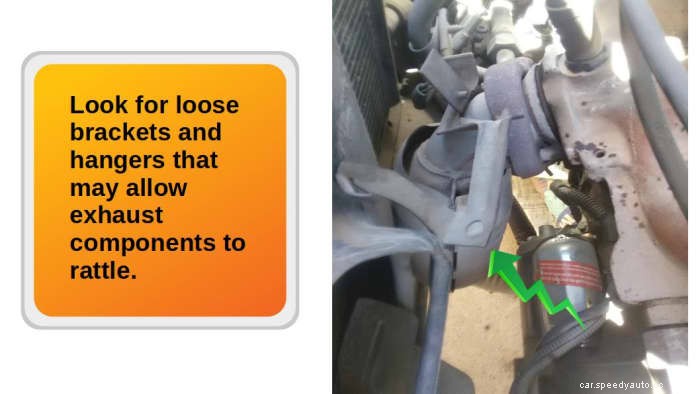
This is one of those common exhaust system complaints. Although, most of the time, this is nothing to worry much about, it can mean serious trouble as well.
Check the following:
If exhaust components are secured, check for suspension components that might need attention.
Watch the following video. You get a chance to hear how a loose exhaust component was causing a rattling noise and a leak.
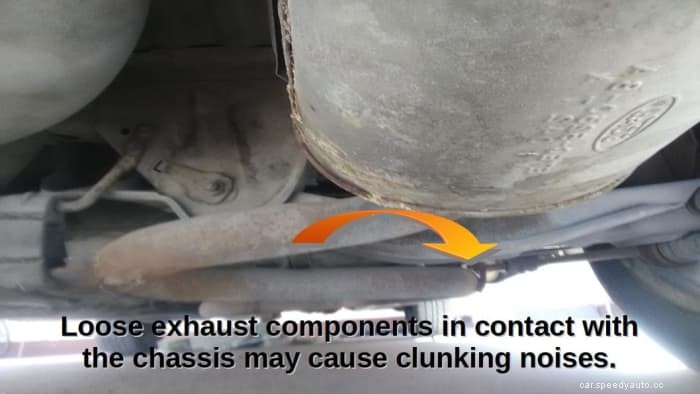
A clunking sound may also come from mechanical problems with the exhaust system.
Inspect the following:
This type of noise may also come from other systems. If exhaust system components seem to be properly fastened and secured, check steering, brakes, or suspension components.
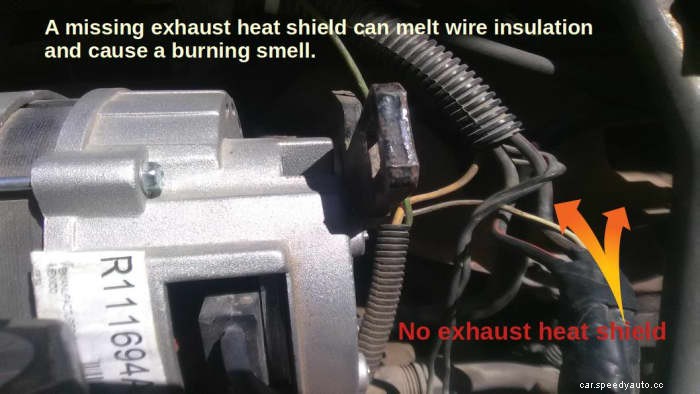
A burning smell often comes from plastic or fluids in contact with hot surfaces, like an exhaust system component, while the engine is running.
Also, exhaust system leaks allowing hot gases to escape near electrical wires or plastic components may cause these burning odors.
Whenever you detect a burning smell, investigate the source as soon as possible. You may be dealing with electrical wire insulation burning, an oil or coolant leak.
Check for:
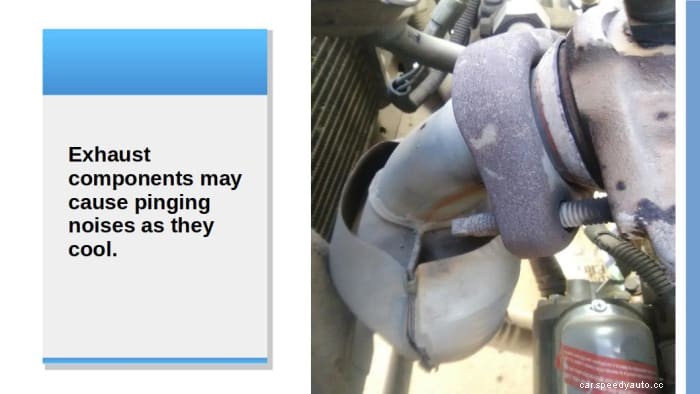
A pinging noise is often heard soon after the engine is turned off and the exhaust system temperature is high.
Actually, this may not be a problem at all. Often, this pinging noise is caused by the exhaust system contracting once it begins to cool.
Hot combustion gasses cause the exhaust system manifold and pipes to expand. Turning off the engine will cause system component to contract again, causing the pinging sound you hear when turning off the engine.
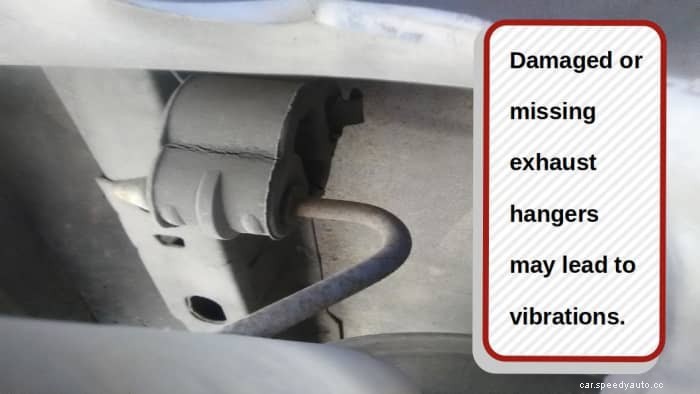
You may hear a vibration noise during engine idle or while driving at low speeds.
Usually, this type of noise points to a loose or damaged isolator or bracket used to position and keep exhaust system components in place.
Check for:
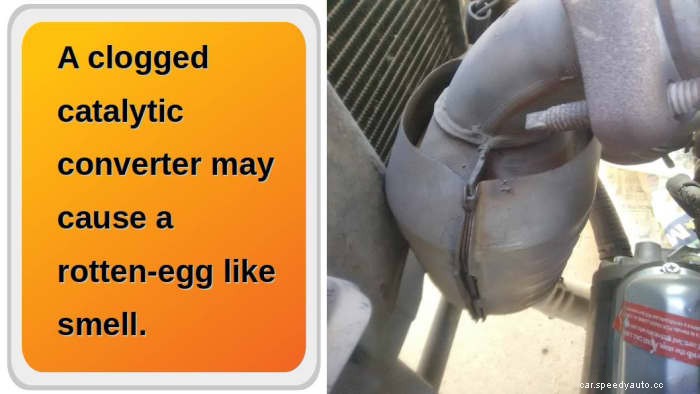
The most common reason a car driver notices a stench, rotten-egg like smell while operating the vehicle is because of a catalytic converter problem.
If the cat becomes too dirty or clogs, it may overheat and emit this characteristic rotten-egg smell. This is the sulfur dioxide in the cat that results from the hydrogen sulfide in the exhaust gases.
Often, you'll notice a decrease in engine power as well.
Sometimes, though, other engine performance issues may lead to odor problems.
Check for:
If the Check Engine Light (CEL) is on, make sure to download trouble codes from the computer's memory. The code may point you in the direction of the problem. Even if the engine light is not on, you may find a pending code that can help you diagnose the problem.
When diagnosing exhaust system problems pay attention to telltale clues: sound frequency, pitch, and changes that take place with engine temperature or speed.
Any of them can reveal the nature of the problem and help you diagnose the issue faster.
A deep rusted pipe, leaking gasket, loose or missing bolt or clogged pipe can quickly change the tone–or smell–of your car's exhaust system.
Use the symptoms described in the previous sections to quickly pinpoint the problem and make the necessary repairs.
If you know you are dealing with a leak, this other post can help you check for exhaust system leaks as well.
Attending to the problem before it becomes worst can save you money in expensive repairs later on, not to mention your health and the health of others riding with you.
This content is accurate and true to the best of the author’s knowledge and is not meant to substitute for formal and individualized advice from a qualified professional.
