
September 26, 2017
Do you want to avoid unexpected breakdowns and unwanted repair bills this winter? Prepare by reading through our winter driving tips, including checking the health and condition of your car’s battery. Batteries are more susceptible to failure when it’s cold, so a few simple checks can help make sure it’s performing at its best.
In this guide, we offer practical advice on looking after a car battery, and how to tell when yours is ready for a service.
The tell-tale signs that show when a battery is flat or failing include:
It’s not always easy to tell when a battery is low or failing, but checking it regularly will help you to avoid problems, especially if you have an older car.
Here, we list the factors which can cause car batteries to lose power:
Simple changes to how you use your car can help maintain a healthy battery. For instance, you should always switch electrical components — like air conditioning, seat warmers, heated rear screen — off before you turn off the ignition. This means that when you next use your car, there won’t be an excessive load on the battery.
If possible, keep your car in a garage when it’s cold as low temperatures make it harder for the engine to turn over, putting strain on the battery. And if you don’t use your car often, make sure you ‘exercise’ the battery every now and again by going for a longer drive as this will charge it up again.
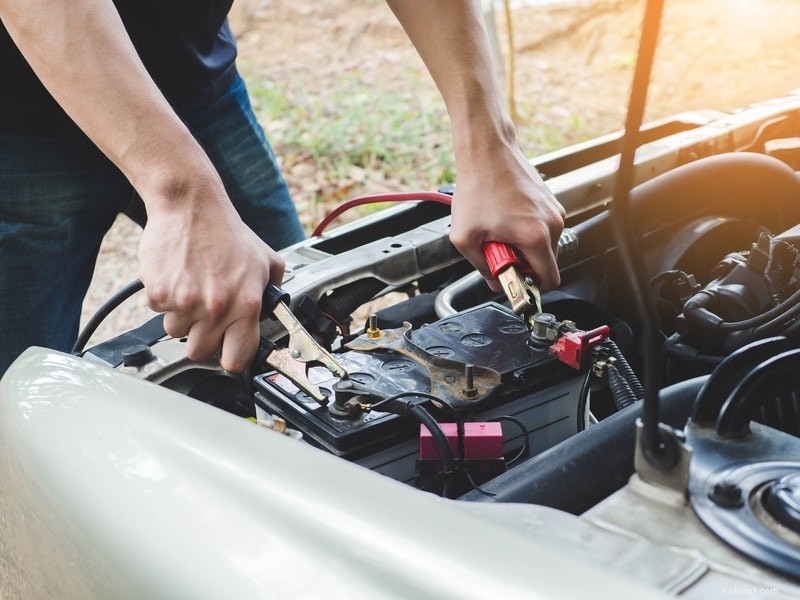
Adopting habits like this can make a big difference to the lifespan of your car’s battery and help you avoid the dreaded jump start.
You can also check the actual voltage and electrolyte levels, which will help you to spot problems and see if it needs replacing. It’s not difficult – to check the voltage just use a simple battery tester. When a battery is fully charged, and all electrical components are off, it should produce an average of 12.5V. Any reading below 12V is considered low, and you should charge the battery by going for a long drive or using a dedicated battery charger.
You can also check the condition of your car’s battery using a hydrometer, like this one. A hydrometer is used to check the mix of sulphuric acid and water in the battery’s electrolyte, which will give you a better idea of how well the battery is able to hold its charge. You won’t be able to use a hydrometer if your car has a low-maintenance battery.
To use a hydrometer, insert it into each battery cell and draw up a small amount of liquid using the pipette. Record the result for each cell, then work out the average. A fully-charged battery should have a reading of 1.265 or higher. If it’s lower, it’s time to replace the battery.
Acid and grime build-up on terminals, clamps and cables can result in poor battery performance, so you should clean and maintain the area regularly. Start by removing the hold-down clamp and the clamps from the terminals (negative first). Then, use a mixture of baking soda and distilled water with an old toothbrush to scrub acid and dirt from the terminals, clamps, and cables. This mixture will neutralise acid and make it easy to clean the terminal posts. Dry the area with paper towels, before replacing the clamps, making sure to avoid overtightening the clamps on the terminal posts.
There are plenty of inexpensive tools that can help with cleaning a car battery, including this handy terminal and post cleaner. Tools like this help you to maintain your battery to keep it working as it should, saving you time and money in the long run.
Holts DIY car maintenance products help you take better care of your car, and are perfect for emergencies at the roadside. To find out more, visit our homepage.
