
Believe it or not, your vehicle communicates with you more than you think. The most obvious manner in which your vehicle communicates and shares information is through the many built-in warnings that are part of the vehicle design. For example, if your door is not fully closed, it will trigger a warning light or a chime to alert you to check the door. Or, when it is time for an oil change, your vehicle may flash a clear reminder on the dashboard. We depend on this communication to help us know when there are problems with the vehicle needing to be addressed.
Responsible vehicle owners not only wait for warnings, but are proactive by keeping their vehicle regularly maintained. Ongoing maintenance means you are keeping up with a regular schedule of oil and fluid changes, tire rotations, brake service, etc. A solid maintenance plan helps to keep your vehicle in tip-top shape and extend its life expectancy.
Your vehicle also communicates with you in other, non-direct ways. Through smells, sounds, and certain visible clues, we can tell a lot about what’s going on with the health and safety of the vehicle.
In this blog, we share an example of a vehicle owner who did not listen to their vehicle or their service professional, which resulted in significant damage to their engine. Additionally, we provide some tips for how to look, listen, and smell and what to do when you have concerns that might need to be addressed (you may also want to view our blog article on using your senses to identify potential vehicle problems).
Let’s review a brief example to illustrate the importance of staying on top of the things that your vehicle is telling you…
The photos below are of a 2016 BMW M235 with relatively low miles. The car had a small oil leak which was getting on the serpentine belt, the drives, and the accessories (a/c, alternator, steering pump).
Upon examining the leak, the service professional recommended the replacement of the belt and repair of the oil leak. The service professional explained to the customer that if the leak issue was ignored there was significant risk of damage, especially if the belt failed. Not every vehicle will fail catastrophically but there is always the one that does…
The owner decided to leave the issue alone and weeks later, the vehicle suffered major damage. Part of the belt was wrapped around the front pulley and was driven into the front crankshaft seal ruining it and forcing debris into the timing chain area inside the motor. The service professional had to extract the debris but had no way of knowing of further damage without removing the oil pan and timing cover, which was about 20 hours of additional labor.
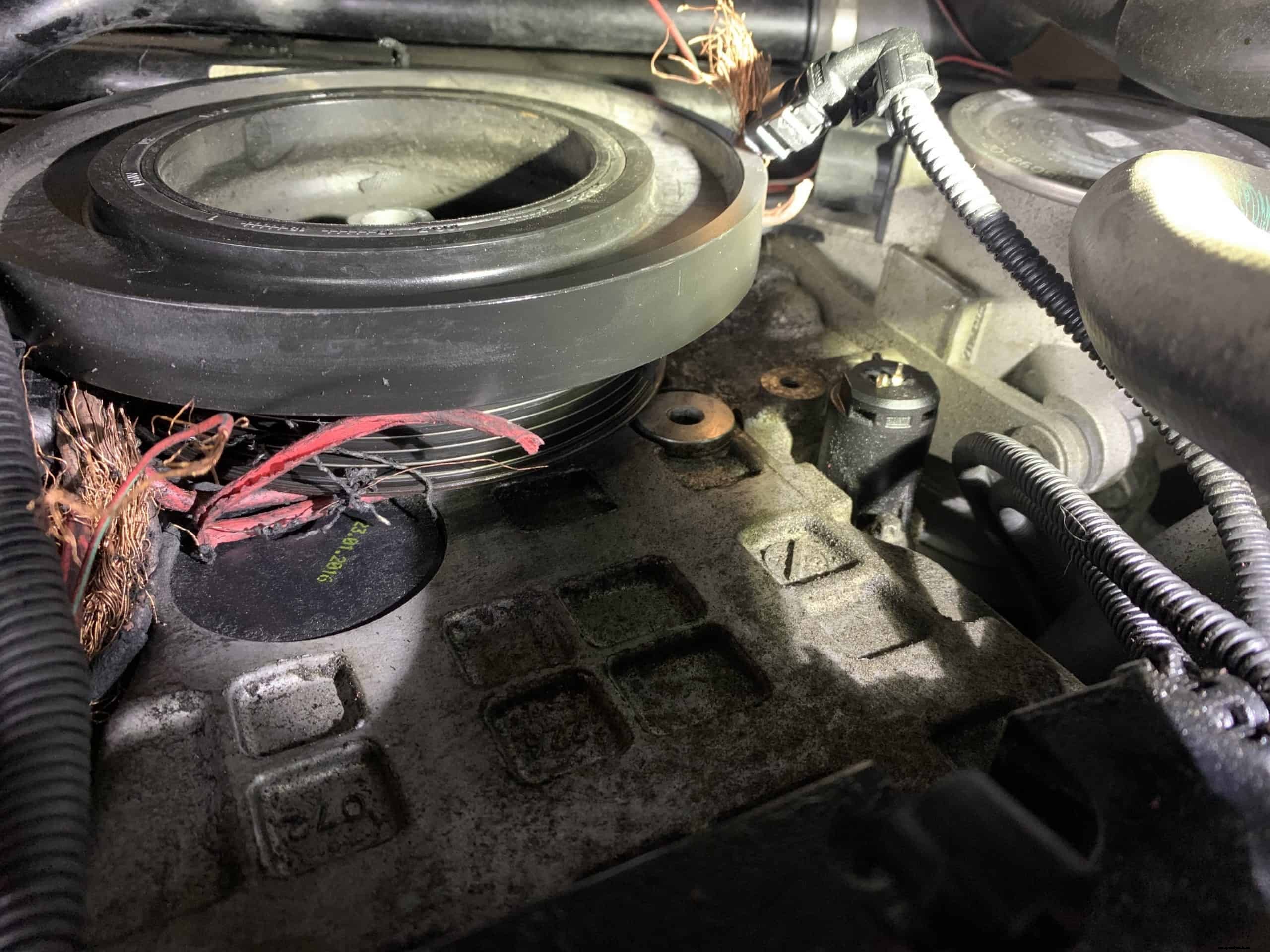
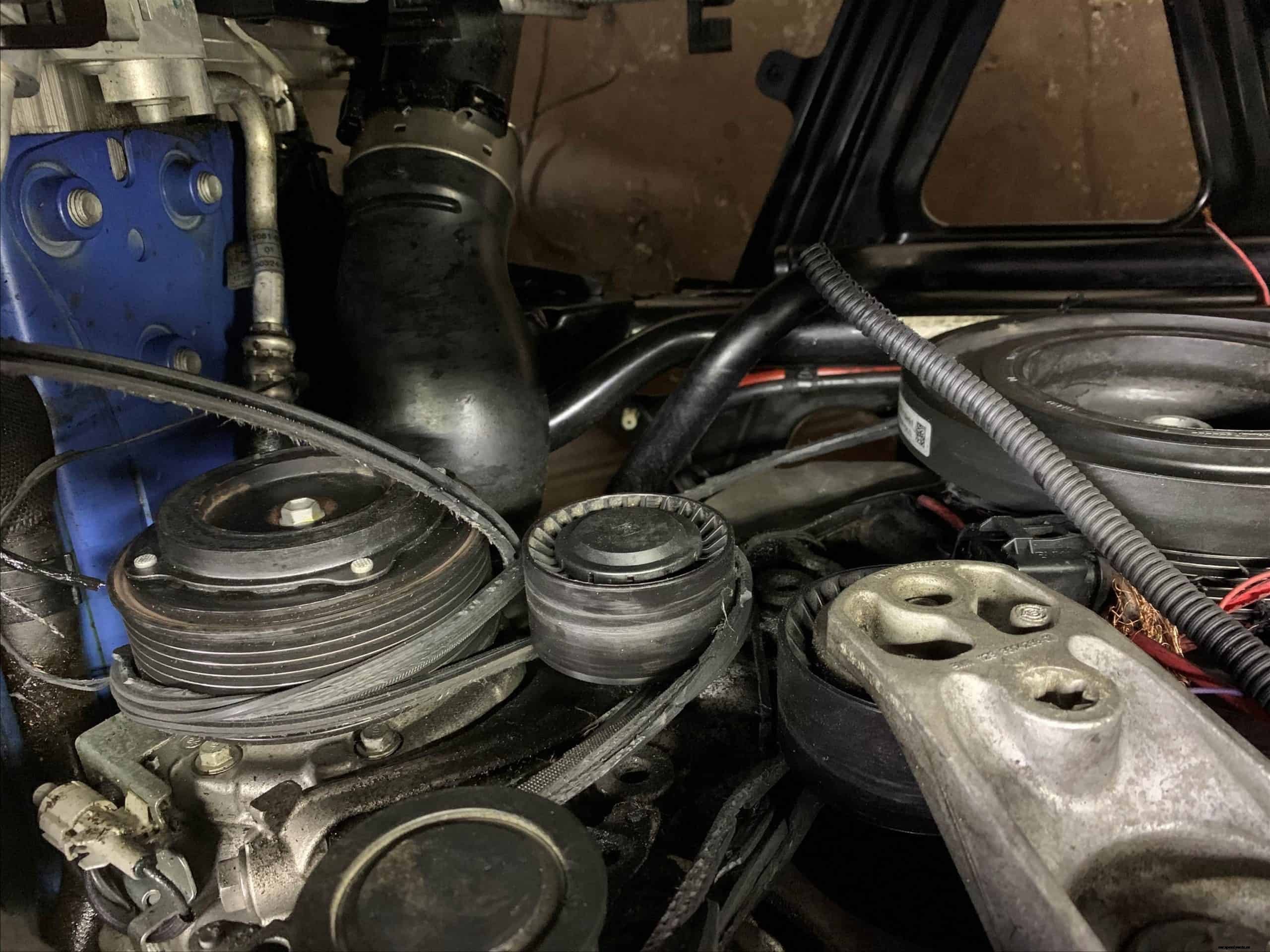
What’s the moral of the story? In the end, a small, easily repairable oil leak resulted in major damage to a vehicle that required costly hours of labor to repair. When your vehicle is trying to tell you something, or better yet, when your service professional is, take time to listen.
This is in no way an exhaustive list of things you can do to become a better listener, so always make sure to consult with your trusted service professional.
Listening to our vehicles (or service professionals) is only one part of the equation. When you listen, it’s important to respond. In the example we provided, if this owner had responded by having the oil leak fixed, their problems could have been averted. Take time to listen to your vehicle and your service professional and don’t let a small problem turn into a large headache. If you have a concern or problem that you would like inspected, contact the service professionals at Shade Tree Garage to schedule an appointment.
