
Spare tires are not always included with the purchase of a brand new car, but their importance makes them a necessary addition to the essential on-road equipment. Because it’s seldom used, spare tires spend years beneath the carpeting of the trunk or attached to the vehicle’s undercarriage, slowly deflating over time. By the time you need it, it might already be deflated beyond the point of usability, defeating its purpose.
In this guide, I’ll teach you what the standard spare tire air pressure should be, and ways to refill it on the road. So stick around and learn a few useful tricks that will certainly pay off at some point!
Space saver spare tires have to be filled with much more air than standard, full-sized tires. The smaller dimensions, especially the contact surface are the reason why spare tires need more air. The best way to find the exact pressure needed for your spare tire is to check the markings on it. If you have never used it, you’ll find a piece of paper with useful information attached to the tire.
Alternatively, you can take the dimensions of the tire and search for appropriate tire pressure. You don’t need the entire specification, just the three dimensions. Here’s an example of what it looks like: 225/70 R 16.
The first, triple-digit number tells you the width of the tire while the second is for the aspect ratio. The letter R is for radial construction, which is the widespread standard, while the last two-digit number tells you the rim diameter. They’re followed by an additional load index, which is important for full-sized tires, but not as much for spare tires.
Another way of figuring out tire pressure is to open the driver’s door and look at the plate located on the B-column (column between driver and rear passenger door). This plate can also be found on the inside of the gas cap. It illustrates different use scenarios and tire pressures you should use. Spare tire information isn’t always there, but it’s worth check as it only takes a second.
In general, space saver tires are pressurized to 60 PSI or 4 BAR. This might seem like a lot, but as previously explained, smaller tires need higher pressure to keep up with the weight. To put it in perspective, the slim tires used on professional bicycles can go as high as 130 PSI! If you were to pressurize a space-saver to the levels used by full-sized tires, you’d risk wheel damage
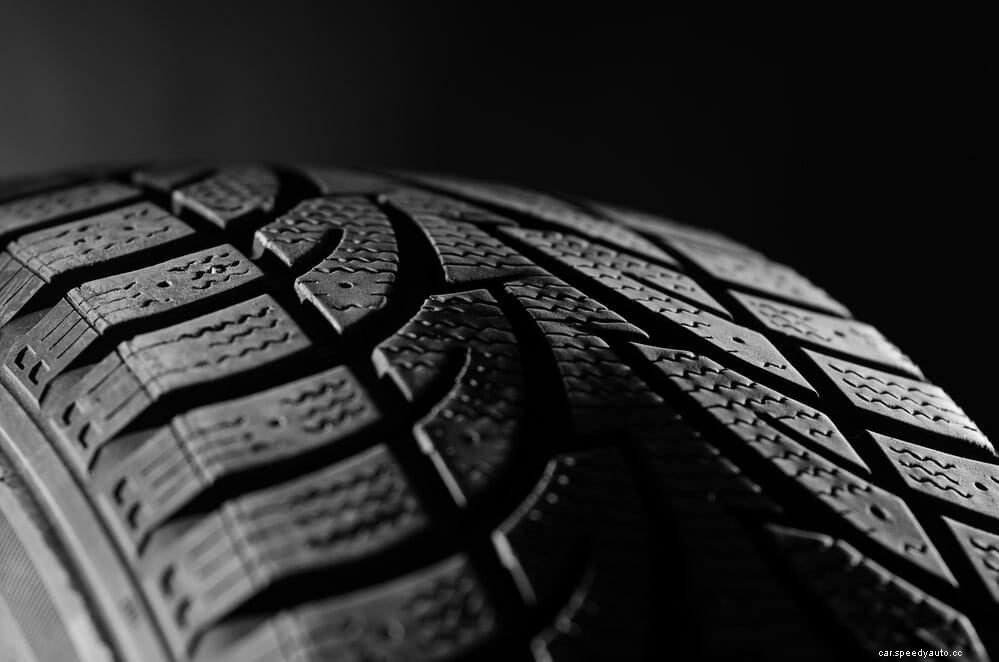
Full-sized spare tires are typically included with trucks, SUVs, and other heavier vehicles as they need to endure the extra load. If your vehicle didn’t come with a spare tire, and you’ve got room in the trunk to spare, buying a steel-rimmed wheel and an extra tire is a great way to solve the problem. If you happen to have two sets of wheels for different seasons, it’s completely okay to use a tire from an alternating set as a backup.
There’s a distinction between a full-sized spare and a regular tire used as a spare. the actual full-sized spare tire has the right diameter but is not as wide as other tires. It requires somewhere between 30 and 60 PSI, but it’s best to use markings on it to find the actual pressure. To get the best results out of a regular tire used as a spare, apply pressure equal to the amount used for front tires.
There are several methods you can use to get your spare tire pressurized to usable levels. The next time you’re at a gas stop or passing by a tire dealership, you can use their self-service air compressor to refill your spare for free or at a symbolic cost.
If you don’t mind breaking a sweat, a manual foot air pump is one of the cheapest tools at your disposal. It comes with a built-in pressure gauge so you know when to stop.
For a marginally higher price, you can get a portable air compressor that uses the power from a 12-volt output or the cigarette lighter port to fill up the tire. I strongly recommend buying a portable air compressor as it is very cheap and will come in handy at some point.
One of the worst-case scenarios when driving is passing over the same tire-piercing object with both the front and back tire. Even if you replace one tire with the spare, you’ve still got one deflated tire left. In those cases, an inexpensive can of tire inflator and sealant will save you a lot of time and hundreds of dollars. With pressure to fill a full-sized tire, you can use it to get back on the road and reach the nearest tire dealer.
The most convenient way of checking the pressure in your spare tire is by using a tire pressure monitor. However, if you already have a manual or electric air pump, attaching it to the tire valve will give you the same results.
When a vehicle is designed, tires are one of the limiting factors in terms of cornering, braking, accelerating, and enduring high speeds. This is why Formula 1 cars have massive slick tires to harness all that energy and performance. Space-saver tires go in the opposite direction. They sacrifice performance for a decrease in weight and size, which is why you should only use them to get to the nearest tire dealer and never go above 50 mph.
I do not recommend going for the upper limit of your tires, because they are not only affected by heat or cold weather but also high-speed driving and cornering. To be extra safe, pressure your tires to a few PSI below the specified amount.
A full-sized tire should be pressurized to 30 – 40 PSI, but it can endure up to 200 PSI before exploding. However, you should under no circumstances exceed the limit specified by the tire manufacturer, as overpressurizing tires can lead to serious injury, or loss of control while driving.
The space-saver spare tire isn’t built for long-distance travel nor high speeds. The rule of thumb is to drive up to 50 miles without exceeding 50 mph. Go any longer, and you risk damage to the transmission, tire itself, and other components.
If haven’t been using your spare tire, it can last up to eight years, but the storage space will also affect its lifespan. A tire stored inside the trunk can last longer than one mounted underneath the vehicle.
Pressurizing your spare tire is a really simple process and you can even do it for free. With a space-saver tire, keep the pressure around 60 psi, while full-sized spares take the same amount of air as your standard tires. Preparation is key, so always check the condition of your spare tire before a major trip, and keep a portable air compressor and a tire inflator can in the trunk.
You may find these similar articles about tire pressure useful:
Low Tire Pressure Light but Tires Are Fine: Reasons & How to Fix
Where Is The TPMS Reset Button On A Hyundai Elantra?
How To Put Air in Tires Without a Gauge
