
While we need to know how to drive and the relevant laws of the road, we’re often not taught how to maintain our own car on a mechanical level.
Instead, we rely on qualified professionals to keep our cars in working order, but they don’t come cheap. There will always be times when you need a professional but, by learning how to maintain your own car, you can save valuable time and money.
So, that’s what we’re going to learn today! We’ve separated our guide into four segments below:
Getting bad advice can be just as costly, so we’ve used references to back up any claims that we have made throughout this guide. You can also read deeper into car maintenance using those links if you’re passionate, but this guide has everything a casual car owner needs to know.
Before we get into the messy details, let’s start with what car maintenance means…
Table of contents
If you’re going to learn how to maintain your car, you need to know what car maintenance is. Put simply, it’s the act of surveying, servicing, and repairing your automobile to keep it in working order.
From there, there are different subcategories like preventative maintenance, which is aimed at just keeping the vehicle running and stopping any issues that could arise. Then there is a tune-up, where you focus on how powerful your engine runs and try to make it even stronger by cleaning or replacing parts and adding other parts.
Maintenance will always look slightly different because it depends on your vehicle, your skill level, and how deep you want to go. Since this guide is aimed at casual car owners, you’re not going to learn how to deconstruct and reconstruct your engine here. Instead, by following this guide, you can prevent heftier mechanical jobs by keeping the vitals of your car clean and fully functional.
So, why should we keep our cars maintained? There are two main goals, detailed below.
As we’ve already alluded to, practicing many of the car maintenance tips below will keep your car running smoothly. This means that your car won’t just be functional, it’ll also be pleasing to drive, which means it shouldn’t be too loud or vibrate too much while driving. Cars that aren’t properly maintained will only get worse, racking up costly mechanic bills when something goes wrong that you can’t fix, and they’ll also be harder to sell in the future.
The more serious reason you should keep your car maintained is that it’s safer. A car that isn’t maintained is often the car that will suffer malfunctions and breakdowns. If they happen on the road, they can put your life and the lives of others at risk. This is why car maintenance isn’t just something you should do to make the car sound nice, it’s your responsibility as a vehicle owner to minimize risk when out on the road.
Now that we know what car maintenance is and why it’s important to every vehicle owner, no matter who you are, let’s talk about how to properly maintain your ride.
While we have many more tips below, the next ten maintenance practices will be a great start in preventing critical failures in your vehicle.
You have a vehicle to move around and take you places, so its tires are very important. This is often the maintenance practice that most car owners are taught due to how important it is and how often tires need to be replaced when compared to other parts.
You wouldn’t accept the tread on your shoes wearing thin, it would disrupt your movement and can even cause damage to your feet and your leg joints. With that in mind, think of your tires as those shoes.
You should help to reduce the wear on those tires and replace them at the first signs of failure. To do this, we pay attention to the tire pressure and the treads on those tires.
To check your tire pressure, you need to figure out your recommended tire pressure, something that’s different for each vehicle. You can often find that information in the manual that came with your vehicle or written down somewhere on the car itself. Once you have a PSI figure in mind, you need to add or remove air inflation so that your tires aren’t over-or under-inflated. Remember to do this when the tires are cold so that you get an accurate PSI reading.
You should check your tires around 5,000-10,000 miles to make sure they haven’t deflated for whatever reason. In checking the tire pressure of your car, you can identify blowouts or flat tires. This is where the tire is penetrated and leaks air, drastically reducing your ability to drive, so it needs urgent detection and treatment. In many cases, you’ll be able to feel when a tire is deflated once you’re accustomed to driving your car.
As for the tread on your tires, you can eyeball it and see how worn they are. If the tread has been ground away and is even becoming flat, they are in dire need of replacement. In the US, tread depth is measured in 32nds of one inch and is typically around 10/32” or 12/32” depending on the vehicle. When that tread hits around 2/32”, you can get in trouble if you don’t replace the tires.
We don’t have tiny measuring sticks to pace out each 32nd of an inch, so we use other means instead. Many Americans swear by the coin trick, where you use a one-cent coin that has Lincoln’s head on it to gauge where the tread is. If Lincoln’s head disappears between the ribs of your tire tread, it’s fine. If not, you should replace the tire.
If you’re an international reader, the coin trick can work with other currencies too. For example, the British equivalent uses their 20 pence coin.
Another common and important maintenance practice is changing your vehicle’s oil. This keeps the engine running properly, avoiding issues related to engine hygiene or any malfunctions that could come from that. Oil lubricates components in the engine which, if not treated, will generate friction and cause damage.
You should check your oil every month and then change it. The oil-changing process will be slightly different between vehicle models and should be detailed in the car owner’s manual.
You can take the vehicle to a service center to get the oil changed but, since it’s a semi-regular process, it’s best you do it yourself. You’ll also need to know which type of motor oil you need to use, which relies on these three things:
Once you’ve identified which type of oil is best for your vehicle, you can then pick one of the following:
We feel Supertech Oil is a great, lower-cost alternative to the major brands that are available. As always do your own research, but Supertech oil is very highly reviewed and has been around for many years.
Along with the oil in your vehicle’s engine, you should also check other fluids. Along with engine oil, you should also check out the following:
If any of these starts leaking, it will affect how your car drives and handles on the road. Each fluid has its own color, so you should be able to identify them. Each one is also checked differently, which is detailed in the car owner’s manual.
Transmission fluid is typically checked with a dipstick, just like your engine oil, while coolant, brake fluid, and washing fluid are as simple as removing a cover and taking a look. There will typically be a line that the liquid should run over. Make sure that you don’t remove the car’s radiator cap to check the coolant because you can get burned. The refill container should be transparent, so you won’t need to open anything.
Car owners will always find themselves driving at night at some point. Even if you only drive to work and back, the winter season can make things dark earlier in the evening. Having burned-out lightbulbs or broken lights is a safety hazard that needs to be rectified. It’s often illegal to drive around with lights that aren’t properly working, so get the problem solved ASAP.
Even when the lights are working, you should take extra steps to make sure they’re in their best possible condition. Do things like cleaning the lenses often and, when the bulbs start dimming, replace them before any problems arise.
Just like your car needs to be equipped to handle the dark, it should also be able to withstand wet weather. This means the windshield wipers need to work properly. Fortunately, it’s easy to see when they aren’t because they’ll be stuttering their way across your screen, or not moving at all!
If the blades are damaged or worn through use, they won’t clear away raindrops or residual droplets from driving on wet terrain. At the first sign of reduced visibility, you should inspect the blades and swap them. Replacing them is straightforward compared to a lot of the other things in this guide.
Air flows into and out of your engine when it’s running. This action is regulated by an air filter that keeps dirt and other undesirable debris out of the engine. If allowed into the engine, the debris will make it dirty and cut the engine’s efficiency, and in worst-case scenarios, it can even cause damage requiring costly repairs. It will also make the emissions from your car worse, making your vehicle bad for the environment!
Whenever you change your oil, check out the engine’s air filter. You won’t have to replace it often, typically once or twice in a whole year, but it’s best to check it whenever you’re rooting around near the engine. If you drive a lot, you may need to replace the air filter more often.
Having working brakes is one of the most important things when maintaining your car. While many of the maintenance practices covered are where parts slowly degrade and can pose a danger to you and others, faulty brakes will endanger you. We rely on brakes to stop the car in all sorts of situations and, when those brakes don’t work and your car is going fast enough, it can be fatal.
Like with deflated tires, you can often feel any changes in how the brake pedal reacts to your touch once you’ve become accustomed to your car. If it shudders, vibrates, or makes unfamiliar noises, you’ll want to get it checked at a service provider. The brakes, more specifically the gearbox connected to it, is a very complex piece of equipment that typically requires a professional eye to diagnose and fix problems.
Here are some common sounds you should look out for:
Having mentioned how being left in humid or wet weather can interfere with parts of your car, you should always make sure your car is clean and safe from the elements. If possible, you should house your car in a garage or another form of shelter during winter to minimize harm from the elements, like ice or salt that’s spread on the roads.
Your car isn’t fully safe in the summer either, with tree sap posing a threat for cars parked under trees and bird droppings also being a problem. These can cause paint damage which can be costly to repair in a way that gels with the rest of your vehicle’s paint job. Regularly wash the car to keep it looking fresh and avoid the damage from material drying on its surface.
Many belts and hoses connect your car’s vitals to one another, so a problem with any one of them can cause great harm to your vehicle, even breakdowns. One of the most important of these is the drive belt (also called the serpentine belt) which should be kept in perfect working order. The timing belt (also called the camshaft) is also very important for keeping the engine synchronized.
Signs of belt wear are cracking, glazing of the surface material or pieces of the belt have been chipped away over time. In these cases, replace it as soon as possible. Check the belts and hoses in your vehicle every time you change your oil and replace them if they’re in bad condition.
Hoses carry coolant around the engine so that different components never overheat. An overheated engine can cause all manner of problems. If a hose is bulging or cracking, it’s becoming ineffective and should be replaced.
Lastly, we have talked a lot about the technical details of car maintenance, but that’s only part of the process. Every car on the road should be legally cleared to drive, which means you need to have a license and you need to have car insurance. Car insurance is compulsory in most states while some states don’t.
If you need the insurance, make sure that the policy coverage, limits, and any deductibles are up to date so you’re still protected. As a car owner, your driving circumstances may change over time, in which case you should review your car insurance to get the best, most suitable deal.
Once you’re doing those ten things we’ve covered above, you’ve made a good start at maintaining your car. They’ll keep a lot of mechanical issues at bay, saving you both time and money by keeping your car fully functional. At worst, you’ll need to replace dirty or worn parts when they begin failing, not when they fail and put you (and your wallet) in peril.
With that covered, check out these additional car maintenance tips. These are four things that won’t result in an absolute failure if you don’t do them, but you still need to keep them in check to remain legal and to avoid other problems further down the road.
We’ve talked a lot about your engine but, in truth, the engine is only part of the puzzle. An increasingly important component is the battery, which should be kept in check to ensure it’s working properly at all times.
Car batteries should be changed every three years, ideally. Can your battery last longer? Maybe, it depends on the individual battery, but after three years they’ll become faulty and can cause your electronics to stop working. A battery that stops working will also result in a breakdown for many vehicles.
If your car’s engine is turning slower every time you start it, or the battery warning light is flickering/lingering and not going out after the engine is started, you’ll want to take a look at the battery. You should pay extra attention to your car battery during periods of extreme weather too.
A lot of the maintenance issues we’ve outlined can be detected and solved during a car service. These are recommended for approximately every 12,000 miles that your car tackles. If your car doesn’t make that in a year, you should at least try and get your car serviced once a year. While 12,000 is an average figure, your car manual may give another, more accurate mileage goal at which your car should be serviced, so go with that.
You’ll commonly need to have software updated, special features fine-tuned such as Toyota Entune, and sensors like the TPMS reset. This would also be a good opportunity to get a key replacement if you’ve lost your backup set. You never need them until you really need them.
While you should check for coolant leaks, you should also make sure that your car engine has enough cooling liquid flowing through it. Coolant is a mix of antifreeze and water that’s available wherever car supplies are sold. It should be made with a 50/50 balance of antifreeze and water to work best.
Your car needs to have its coolant topped up over the year, not just during the winter when things get chilly. As always, your car owner manual should have all the details you need if you’re unsure of how your particular model works. Sometimes a vehicle will prefer more water over antifreeze or vice versa.
When you’re communicating with other drivers and pedestrians, your horn is typically the first thing you use. You should make sure your horn is working properly, and not just that, it should also be loud enough to be heard. It can’t be too loud, however, especially if there are laws in your area about vehicle noise pollution.
Check your horn to make sure it’s still working. Make sure you check it at a suitable time, like midday, so you don’t wake up the neighbors!
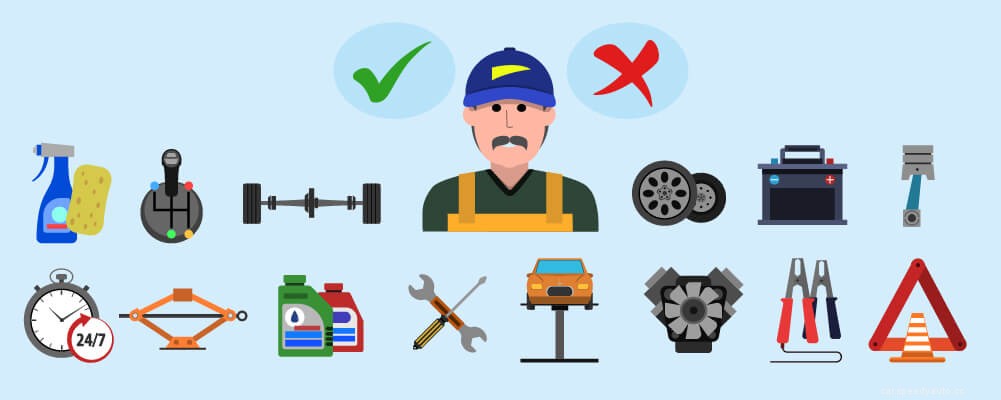
With that, we have covered the backbone of this guide! To wind down, here are some easily understood dos and don’ts that car owners should keep in mind. Keep these handy, they can be used as a checklist to make sure your car maintenance is fully covered.
Check your tires as often as possible. We’ve already detailed what to look at above, mainly their air pressure and their treads. Remember that air pressure drops approximately one pound per ten degrees and that your car owner’s manual has all the model-specific information that you need. You should also keep a spare tire around to cover piercing, blowouts, or other things that will destroy the tire and render it unusable.
To balance your tire treads, you can use your car to rotate the tires to make sure the treads are always level. Sometimes tread depth can differ between the wheels, or even on the same tire, so rotating them is great for making them equal, making it easier to monitor them in the future.
After some time in your car, you’ll be able to feel the slight nuances in how your steering wheel, brake pedals, and other parts work. While you may be able to feel when a tire is deflated, especially if it’s been pierced, you can’t add or reduce air pressure by eyeballing it. Always check the PSI and work appropriately from there.
Throughout this guide, we’ve assumed you can see what you’re doing when you’re behind the wheel. Maintaining your car becomes a whole lot harder if you’re scraping against every curb.
That’s why keeping your mirrors and cameras clean is important. Every car has mirrors and, if you have a car model with camera parking gadgetry built into it, then you need to keep them safe. Mirrors are often required by law and will reduce your car’s resale value if they are missing. The same can be said for cameras, too.
Make sure the mirrors and cameras are visible by wiping them before each journey. If there are any cracks or imperfections on them, you should take a look at getting them replaced.
If you haven’t noticed already, changing your oil is the perfect opportunity to check out your engine and diagnose any potential problems with it. Not only is changing the motor oil important itself, it’s frequent enough that you can also check up on the other fluids, belts, and hoses in your engine and take action if something is wrong.
Many problems can happen with your car that has little to no visible signs. Fortunately, rust isn’t one of them! If rust is forming on your car, something is wrong. If it’s on the bodywork, then it’s going to make the car look ugly and it’ll chip away at the paint job, which then needs to be replaced by a costly qualified professional if you want the car to look good again.
Rust isn’t just a cosmetic problem, however. Like rot on wood, it penetrates deeper into the car and causes damage to the frame and the engine. Watch out for rust and, at the first sign of it, survey the entirety of your car. You should consult a professional if you think your car has a serious rust problem.
Rust can build up if your vehicle becomes too humid. If you’re in a humid climate or somewhere that gets very cold and wet in winter, you should consider finding an interior space to house the car. At the very least, there are methods to prevent rust so that it doesn’t form in the first place, no matter where the car is kept.
A leak is a sign of a problem and problems can be scary and expensive. We can understand why it may be tempting to throw some stop-leak or leak sealant onto the problem area and continue about your day. In the short term, it might even save you some stress! In the longer term, however…
It’s a temporary solution and can cause a buildup of the leaking material inside your vehicle, which can then cause more harm than the original leak. Instead, you should try to diagnose and solve the cause of the leak.
When the engine is started, the oil pumping starts sending oil across the car’s components. This takes a little time, only about 30 seconds, but it’s a good idea to wait for those 30 seconds before slamming the pedal down. By waiting for those precious seconds, the engine can warm up and do its work when you do start driving.
In the winter, you may want to wait for a bit longer, about 2 minutes. That’s more of an inconvenience, sure, but winter is a perilous time for the components in your car and so the warmer they are when you start driving, the better.
No matter how much of a rush you’re in, you shouldn’t switch gears without stopping the vehicle first. This puts the components in your car (specifically the transmission) under more strain. It fast-forwards the natural wearing process, so parts will wear away much faster than usual.
It can also damage other parts, like the drive shafts that supply kinetic power to the vehicle’s wheels. This means wheels won’t turn as hard or fast as they did before. It can also lead to reduced suspension handling, and you can lose control over your car if it gets too bad.
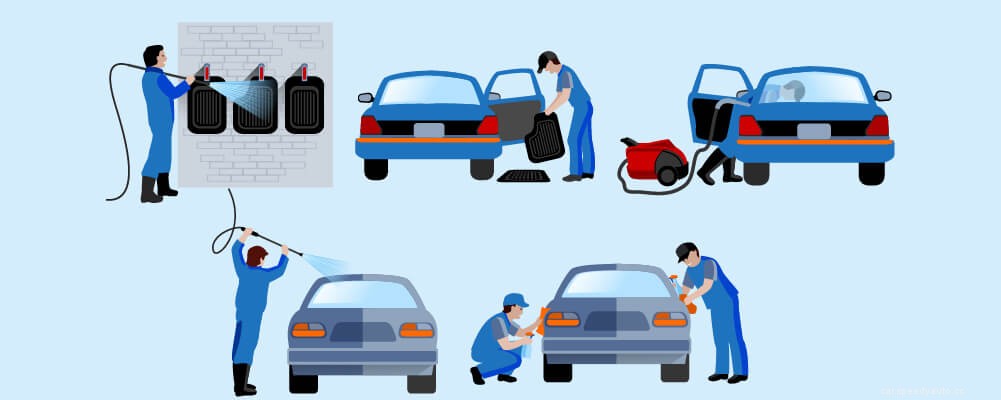
With that, you’ve come to the end of our guide on car maintenance. The mechanics of the cars we drive every day are much more complex but, using the practices and tips we’ve outlined above, any casual car owner can keep their car running clean and problem-free. You don’t need to attend a trade school to be a responsible car owner who knows their car and takes steps to make sure it’s working properly.
If a problem does arise despite your maintenance efforts, it may be something more serious that needs fixing. In those cases, don’t be afraid to consult mechanics and other car service providers that can solve deeper problems that the average car owner shouldn’t be expected to fix.
Check out other related posts for car maintenance here:
How To Keep Dust Out Of A Car – Keep That Dashboard Dust Free!
How To Clean Fuel Injectors Without Removing Them
How To Clean Oxidized Aluminum Engine Parts: Complete Guide
