
Error codes are a cause for concern, but this is especially true for Mercedes Benz vehicles. The German manufacturer is known for its unmatched comfort and technology, but also for very high maintenance and repair costs. This makes it completely understandable that you’d want to avoid acting immediately, especially if the issue is minor.
The P0128 code points towards a thermostat issue. If the coolant temperature gauge stays near the optimal running temperature, you can drive with the P0128 code indefinitely. However, if the engine is running cold, you should swap out the thermostat. Luckily, this is a very simple task, and you’ll learn how to do it in this article!
The P0128 code reads as “coolant temperature below thermostat regulating temperature”.
Coolant is forced to circulate through the engine bay by the water pump. When it reaches the engine, it absorbs the heat from the engine and moves on hotter than it used to be. Its next stop is the thermostat sensor and valve.
The sensor picks up the data for the vehicle’s computer and driver feedback, while the thermostat valve automatically regulates the flow of coolant. The hotter the coolant, the more the valve opens to allow greater flow. From the thermostat, coolant moves towards the radiator, where it’s cooled down by the massive amount of air hitting it as the Mercedes overcomes air resistance.
The most common cause of a P0128 code is a broken thermostat valve. In the “Why does the car temperature gauge go up and down” article, we’ve discussed other symptoms of a thermostat valve failure, so be sure to check that out to be aware of more potential signs.
It’s possible that the coolant temperature sensor is giving off false readings, but because it’s far less likely to fail, the standard course of action is to replace the thermostat valve, and if the error code does not go away, then replace the sensor.
I cannot give you an accurate estimate, as the problem is not as cut and dry as it seems. Instead, I’ll give you an idea of how bad the P0128 is from another perspective.
What do all athletes have in common, regardless of their sport? They warm up first. Warm-up is necessary to avoid muscle and joint injury or damage. In some ways, it’s no different for the engine.
The engine wants to get its blood going, but motor oil needs a certain temperature to reach ideal viscosity. The whole system relies on this ‘optimal running temperature’ which is usually between 180° and 220° Fahrenheit. That’s when everything comes together and allows the engine to run smoothly and efficiently for hundreds of thousands of miles.
Apart from inadequate lubrication, the cold engine also ‘runs rich’. The computer assumes the car has just started, so it gives it extra fuel to compensate until it gets up to temperature. As this never happens, the injectors will continue to overflow, resulting in increased accumulation of deposits, loss of power, and increased fuel consumption.
Technically, you could drive your Mercedes for hundreds, if not thousands of miles without experiencing any issues. However, beneath the hood, the engine is slowly wearing out, so you shouldn’t postpone the repair indefinitely.

Fixing a Mercedes-Benz at home is generally considered too complex of a job, but fixing the P0128 code should be a simple DIY job.
Some people will tell you to properly diagnose the issue before replacing parts. This is only partially true – some problems can only be diagnosed by ruling out things one by one. Since we can’t visually inspect neither the valve nor the sensor, our only options are to replace them.
Even if neither is the problem, you’ll still spend less by changing them, than by hiring a mechanic to rule them out. Use this logic whenever applicable, and you’ll end up with a thicker wallet and an engine with much healthier components.
To replace the thermostat, you’ll need the following tools and items:
| Title | Price | Buy | |
|---|---|---|---|
 Top
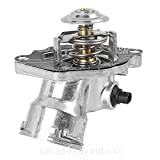
Top | X AUTOHAUX Car Auto Thermostat Housing 2722000515 for Mercedes-Bens CL550 E550 G550 | Buy Now | |
 Top
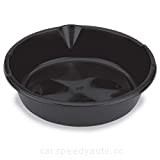
Top | Lumax LX-1628 Black 6 Quart Plastic Drain Pan. to Collect The Oil in Oil Changes. The Rugged, Oil Resistant All-Purpose Plastic Pan Will not Rust or Dent. Easy Cleaning. | Buy Now | |
 Top
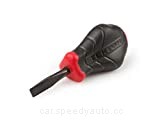
Top | TEKTON Stubby 1/4 Inch Slotted High-Torque Screwdriver (Black Oxide Blade) | 26621 | Buy Now | |
 Top
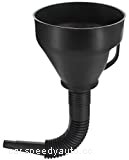
Top | Wekster Wide Mouth Fuel Funnel with Handle - Large Plastic Automotive Funnels, Long Flexible Spout Extension, Removable Mesh Screen Filter for Water, Gasoline, Coolant, Transmission, Engine Oil | Buy Now | |
 Top
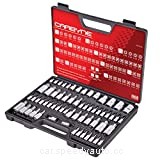
Top | CARBYNE Master Torx Bit Socket Set & Torx External Socket Set - 62 Piece, S2 Steel Bits, CrV Sockets | 1/4-inch, 3/8-inch & 1/2-inch Drive | Buy Now | |
 Top
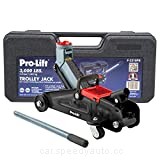
Top | Pro-LifT F-2315PE Grey Hydraulic Trolley Jack Car Lift with Blow Molded Case-3000 LBS Capacity | Buy Now | |
 Top
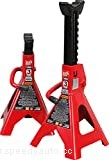
Top | BIG RED T43202 Torin Steel Jack Stands: 3 Ton (6,000 lb) Capacity, Red, 1 Pair | Buy Now |
The car jack and stands are there to allow you to get easier access to the coolant drainage plug. If you feel like you can do the job without them, feel free to do so! The oil pan is a useful item to have, but you can use any clean bucket laying around the garage. Mercedes is known to use E Torx sockets, so make sure you have a good socket set on hand. It also tends to sell its thermostat valves with complete housing, which doesn’t make much of a difference to us.
Replacing the thermostat on a Mercedes-Benz is very straightforward, and there’s not a lot that can go wrong if you follow the steps and work carefully. The only issue you might experience is that you can’t get the old amount of coolant back into the system. This indicates that there’s an air pocket in the system, which we’ll have to get out.
Leave the coolant cap open, then follow the radiator hoses around and squeeze them slowly in spots where they bend. Monitor the coolant container as squeezing a hose will cause the liquid level to rise. Once you’ve found the air pocket, squeezing it will push the air towards the coolant container and you’ll hear a bubbling sound.
If you had no success, leave the coolant container open and run the engine for a few seconds. Coolant will circulate through the system and may shift the bubble towards the cap and push it out. Repeat the whole process if it doesn’t work the first time.
To replace the coolant temperature sensor, you’ll need the following tools:
| Title | Price | Buy | |
|---|---|---|---|
 Top
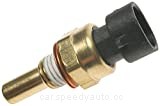
Top | ACDelco Professional 213-4514 Engine Coolant Temperature Sensor | Buy Now | |
|
Top | Wekster Wide Mouth Fuel Funnel with Handle - Large Plastic Automotive Funnels, Long Flexible Spout Extension, Removable Mesh Screen Filter for Water, Gasoline, Coolant, Transmission, Engine Oil | Buy Now | |
|
Top | TEKTON Stubby 1/4 Inch Slotted High-Torque Screwdriver (Black Oxide Blade) | 26621 | Buy Now | |
|
Top | Lumax LX-1628 Black 6 Quart Plastic Drain Pan. to Collect The Oil in Oil Changes. The Rugged, Oil Resistant All-Purpose Plastic Pan Will not Rust or Dent. Easy Cleaning. | Buy Now |
The tools and steps you’ll need to take to replace the coolant temperature sensor are nearly identical to replacing the thermostat housing. You don’t need the socket set as the sensor can be hand-mounted.
If you’re quick enough, you could even get away with not draining the coolant – just pull the sensor out and quickly install the new one. To avoid breaking something, it’s better if you drain at least some of the coolant so the level isn’t high enough to reach the sensor.
The P0128 error code shows up when coolant temperatures are below the limit, not above it. A clogged radiator would cause the coolant temperatures to increase and even result in an overheated engine. If you’re facing these issues, check out our guide on clearing up the radiator here.
Replace the thermostat valve, and if that doesn’t help, replace the thermostat sensor as well. If neither is causing the issue, then it could be the ECU, so at this point, you should seek the help of a professional.
A P0128 code won’t stop you from driving in any way, but long-term driving with low coolant temperatures can lead to permanent engine damage.
Honestly, issues like the P0128 code are fixed first, diagnosed second. A thermostat valve usually costs the same as a couple of spark plugs, so if you’re thinking yours failed, it’s more time-efficient to just replace it, rather than attempt to diagnose it.
It’s not unheard of for a stuck thermostat to start working again, but keep in mind you’re running on borrowed time. You don’t have to rush to get it fixed, but try to find spare time and replace it before it gets stuck again.
While you can certainly continue driving with a P0128 code flashing on your dashboard, leaving it unaddressed can lead to serious engine problems. The thermostat valve and the coolant temperature sensor are the most likely causes, and both are cheap and easy to replace, so instead of letting a mechanic charge you up to $250 in labor, order the parts and do it yourself!
Check out more of our Mercedes Benz articles:
How To Get a Mercedes Key Replacement For Cheap
How Long Do Smart Cars Last? (7 Important Things To Be Aware Of)
How To Put Coolant In A Car: Adding Antifreeze The Right Way
