
There are only a few cars that can match the renown and the cult following of the Dodge Charger. The current, event generation has been in production since 2011 and gives us an ideal sample size to determine how long can a Dodge Charger last.
A Dodge Charger can realistically last for 150,000+ miles or up to 10 years. We’ll break down our findings in several sections to give you a full view of the reliability and running costs of Dodge Charger, so you can get a better idea of what to expect.
It would feel wrong to talk about the Charger and not mention its rich, but somewhat controversial history.
The Charger was first introduced in 1966 as a two-door fastback with bucket seats and a 5.2L V8 or a larger 7L Hemi V8 under the hood. Even though it was an excellent-looking car, the first Charger didn’t sell well and was discontinued just one year later, in 1967.
The second generation is what makes the Charger special. Released in 1968 with a redesigned body, the initial production figures were more than doubled to meet the high demand, and 96,100 units were made in total.
The safety and emissions pushed the second generation, and the third generation took over in 1971. It retained the power and appearance of the previous model, and as Dodge discontinued the Coronet, Charger took over the two-door market entirely and saw high sales.
The fourth and fifth generations see a drastic change in the concept and design. The ’75-78 Charger tried to force itself into the luxury car segment, while the ’82-87 model went into a completely different direction, featuring front-wheel drive, hatchback design, and 2.2L engine with or without a turbocharger.
In 2006, the Dodge Charger returned after nearly 20 years of hiatus. The Charger for the 21st century is built on the Chrysler LX four-door sedan platform. It combines the practicality of an everyday car with the aggressive looks and power of the V6 and V8 engines.
The seventh-generation went into production in 2011 and it’s still in production today. The brand new design would feature a number of updates and a major facelift in 2015 to keep the design up to date.
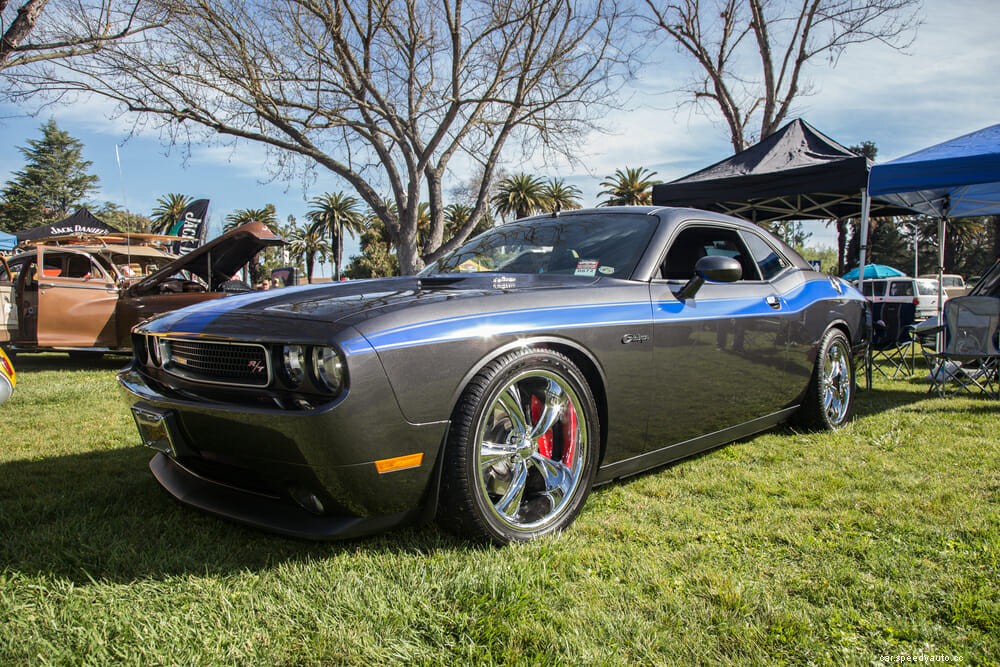
Whenever there’s a discussion about the longevity of a vehicle, mileage is always the top priority.
With the right maintenance and spare parts, Dodge Charger can up to 300,000 miles. However, a realistic limit is close to 150,000 miles.
The reason why the realistic mileage is half of the mileage the engine can do simply comes down to budget. While you can push the engine even beyond 300,000 miles, the cost of repairs will exceed the realistic value of the vehicle.
A 10-year-old Dodge Charger is worth roughly $10,000, just 25% of its original value. The cost of parts and labor does not go down with age, and you’ll have to spend several thousand on a major engine or transmission rebuild, which is an unreasonable expense.
The iSeeCars website is a reliable source of information and it claims that only 0.4% of Chargers cross the 200,000-mile mark. The low percentage isn’t strictly because of reliability, but also the general age of the car, insurance cost, and increasing prices of gas.
The factor that’s often neglected but has a significant impact on the financial sustainability of any vehicle is the insurance cost.
The annual insurance cost for a 2021 Dodge Charger depends on the driver’s age and accident history:
The following table contains figures for a safe driver that is 40-50 years old and a base Charger trim. You can use the insurance estimates from the 2021 model and adjust them according to the changes in the table.
| Model Year | Annual Cost | Monthly Cost |
| 2021 | $1,842 | $154 |
| 2020 | $1,800 | $150 |
| 2019 | $1,652 | $138 |
| 2018 | $1,630 | $136 |
| 2017 | $1,562 | $130 |
| 2016 | $1,528 | $127 |
| 2015 | $1,498 | $125 |
| 2014 | $1,558 | $130 |
| 2013 | $1,416 | $118 |
From the table, we can discern that the annual insurance cost doesn’t decline much over the years, just 23% over 8 years. However, the real story is how the insurance compares to the value of the vehicle.
The insurance cost is one of the primary reasons you’d want to sell your car early. On average, first-time Charger owners keep them for 7.6 years, which perfectly coincides with the 10-11% value spent on insurance.
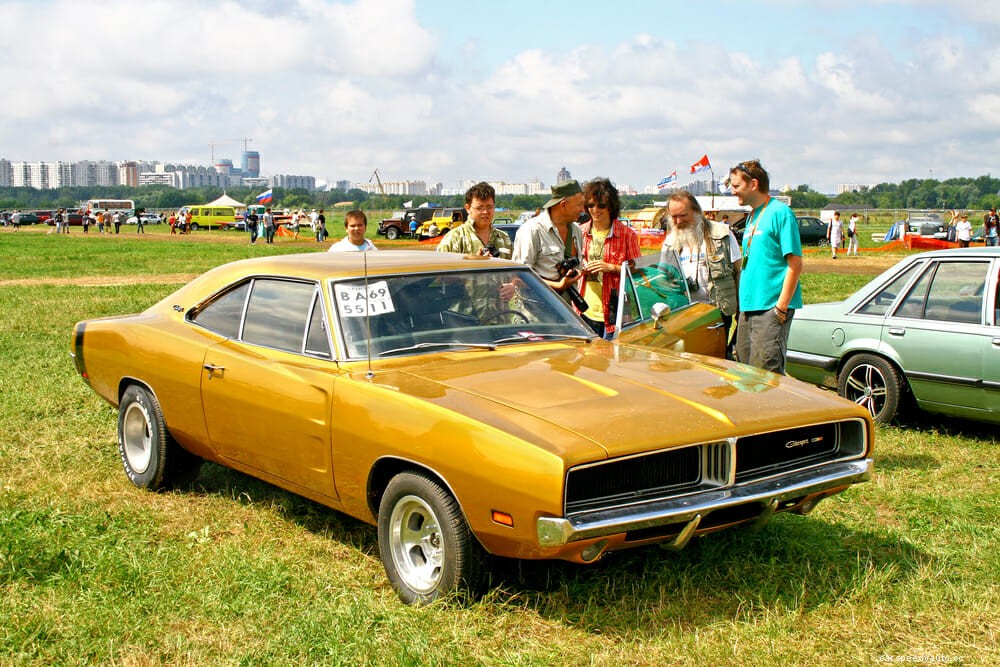
Rusting has been a consistent problem with the Dodge Charger but it seems that the post-2015 models are doing better.
To reduce manufacturing costs, almost all car brands reduced the anti-rust protection on the body panels. As a result, the Charger can develop rust spots after just five years. The problem is even worse if you buy the AWD all-weather model, as taking it out in the snow and salted roads will cause rust to form even sooner.
A lot of owners have reported no issues with their cars, but the problem is fairly prevalent and is a definite cause for concern.
The main rust spots are the front and rear wheel wells, area along with the rocker panels, edges of the doors and hood, and inside the trunk. Some owners theorize that the rust starts from within, as sound-proofing liners gather moisture and fail to dry out.
In this section, we’ll take a look at the most common problems Chargers face and how expensive they are to replace.
The EVAP canister costs up to $200, while the cost of labor goes up to $100, bringing the total cost up to $250-300.
The general vehicle diagnostic cost $50 on average. The tire pressure monitoring system (TPMS) issues are more difficult to diagnose and will set you back $100.
The labor involved in replacing the control arm isn’t significant, $100-150 on average. However, the cost of parts varies depending on how many parts you have to change.
The upper control arm retails at $250 while the lower arm costs $215. The suspension control arm is priced at $450, and as control arms have to be replaced in pairs to maintain optimal performance, you will have to double both the labor and parts costs.
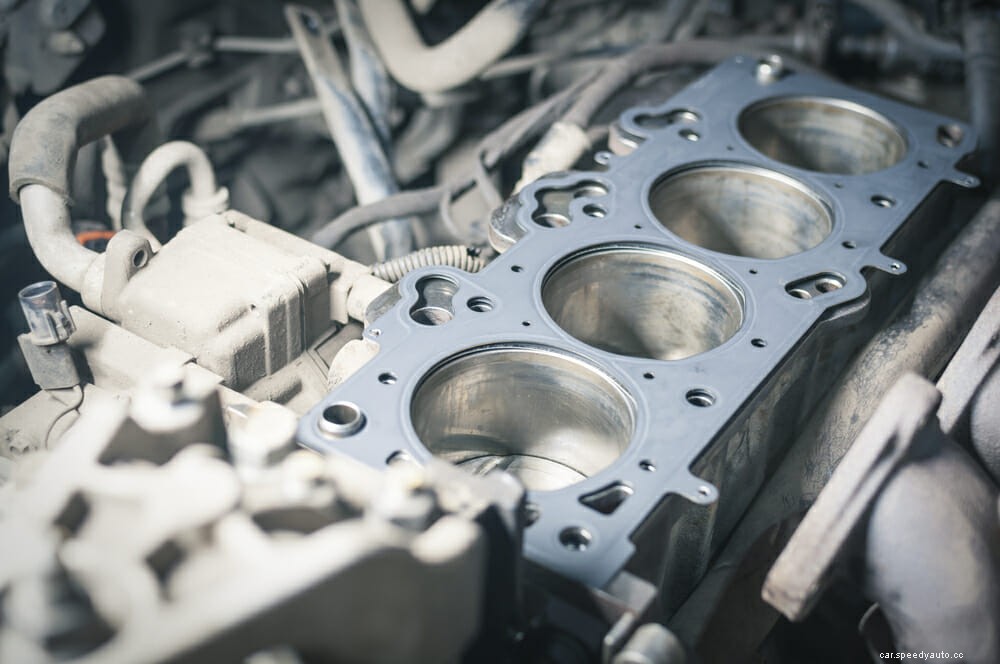
Replacing the head gasket is a major repair that takes a lot of work hours. You can expect the labor costs between $800 and $1000, while the gasket itself costs $400-600.
Swapping the radiator hose is a quick job you could easily do yourself. The labor is priced between $50-70 and the cost of the hose is negligible.
New suspension parts for the Dodge Charger are not particularly expensive at $150 apiece, but you have to replace them in pairs. The labor cost ranges between $100 and $200.
Replacing the cylinder head is one of the most expensive repairs on the Charger. The labor alone is $600-800, while the cylinder head is $1700. This brings the total to $2400, but when you’re replacing the cylinder head, you also have to change the $400-600 gasket, increasing the price to $3,000.
As you might expect, the maintenance costs increase over time. During the first few years, the vehicle will be covered by a warranty so you won’t have to worry about the expense, but after 3-5 years, you’ll have to cover the repairs yourself or apply for an extended warranty policy.
| Model Year | Maintenance Cost |
| 2021 | $279 |
| 2020 | $323 |
| 2019 | $394 |
| 2018 | $508 |
| 2017 | $602 |
| 2016 | $750 |
| 2015 | $1,051 |
| 2014 | $1,171 |
| 2013 | $1,283 |
| 2012 | $1,448 |
| 2011 | $1,469 |
When exploring the characteristics of a car that has been in production for several years, it’s important to review the owner-reported problems.
The most reported issue relating to Dodge Charger is the rough shifting and shuddering transmission. It can be solved by updating the software that controls the powertrain control and transmission control models (PCM/TCM).
Aside from software-related issues, failing thermostat valves, and rust-related problems, Dodge Charger doesn’t have any major mechanical failures, making it quite reliable.
Whether you’re buying a brand new model or looking into getting a used car, the depreciation trends are important as they can show you how much value the car is losing over time.
| Model Year | Average Price | Original Value Percentage |
| 2021 | $39,730 | 100% |
| 2020 | $31,839 | 81,74% |
| 2019 | $25,283 | 68,73% |
| 2018 | $22,919 | 67% |
| 2017 | $26,740 | 65,49% |
| 2016 | $21,256 | 52,04% |
| 2015 | $17,485 | 41,61% |
| 2014 | $13,532 | 34,28% |
| 2013 | $13,101 | 33,56% |
| 2012 | $10,538 | 25,88% |
| 2011 | $8,346 | 25% |
You might see a discrepancy between the price of a brand new Charger and the percentage value of older model years. That’s because older models had a different price when brand new – for example, the 2011 model had a price of $33,384.
The data provided in this table is useful for determining when to buy or sell a Dodge Charger. Instead of buying a brand new model, I would strongly recommend the 2019 model year, which is just two years old and has already lost 30% of its value.
You could even get a model with less than 10,000 miles for 10-20% less than the original price. Keep in mind that these cars are still in warranty period so you’ll get all the benefits of free repairs and protection for the remaining 3-4 years.
Selling the car is another story, as you want to keep the car for as long as possible, and sell it just before a steep decline in value. If you buy the Charger brand new, the best time to sell it is when it’s four years old.
From that point on, the price keeps dropping fairly evenly, so the best moment to sell the car is once you notice the early signs of major component wear.
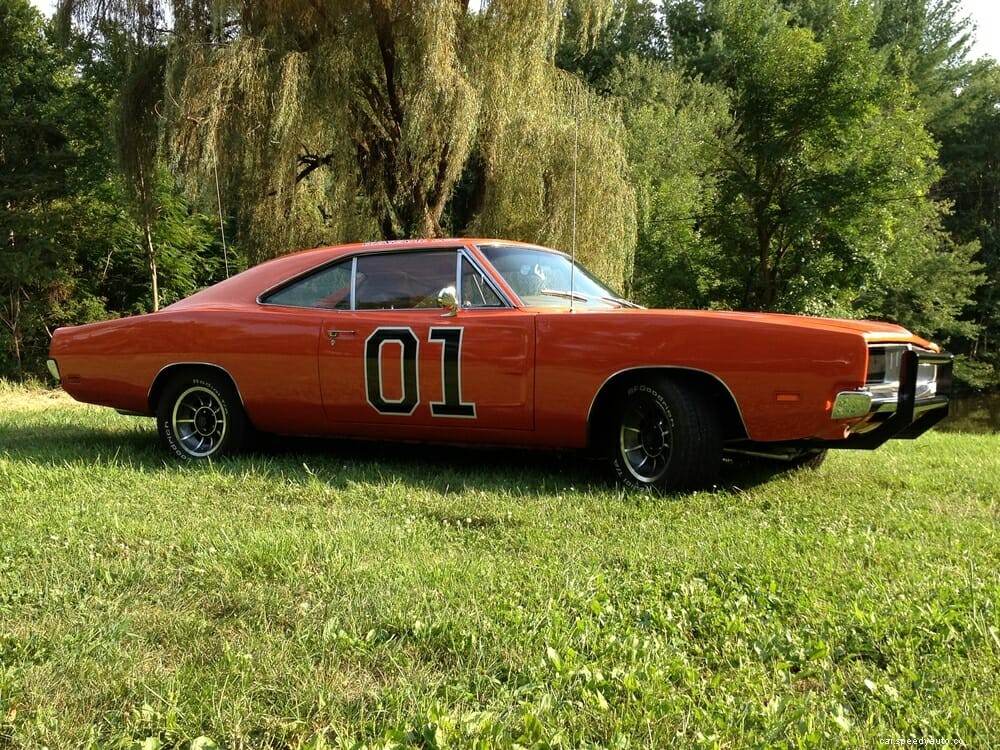
Since 2006 Dodge Charger has been recalled 37 times. The worst years in terms of recalls are 2014 with 10 recalls, 2012 with 14 recalls and 2011 with 11 recalls.
Dodge Charger belongs in the full-size car class as a 4-door sedan. Its main competitors are Nisan Maxima, Chevrolet Impala, Toyota Camry Hybrid, Honda Accord Hybrid, Ford Fusion Hybrid, Chrysler 300, and the Kia Stinger.
In terms of safety, all of the models but the Chrysler 300 received a 5-star safety rating. The IIHS complaints about Charger’s safety relate to the front small overlap on the drivers’ side and poor headlights visibility.
In a race, only the Kia Stinger with its maximum 365 horsepower would be capable of competing with the Charger, but that is only if the charger is running one of the “more sensible” engines underneath the hood.
The SRT8, SRT 392, R/T Scat Pack have 470-485 horsepower and are very close to hitting 0-60 mph in under 4 seconds. This of course is not a problem for the SRT Hellcat that reaches 60mph in 3.4 seconds thanks to the power output of 707 horsepower from the 6.2L V8 HEMI.
It’s excepted of the fastest car to use the most fuel, and Charger certainly meets the expectations. With its 19.7 MPG, it’s the least efficient of all cars.

However, if we disregard the hybrids, Toyota Camry does 28.9 miles to the gallon, Nissan Maxima does 24.6 MPG, but the Kia Stinger, Chrysler 300, Chevrolet Impala, and Ford Taurus are all within 1-2 MPG of the Charger. For the amount of power received, Charger is not as fuel inefficient as you might expect.
If you’re concerned with the effect your vehicle will have on the environment, then frankly, I don’t know why you’re even considering the Dodge Charger. Together with the Kia Stinger, it ranks the lowest on the list, with more than twice the emissions of the hybrid models.
Dodge Chargers are very reliable from a mechanical standpoint, but their biggest weakness is rusting, especially with the earlier models.
The main point to remember is that Dodge Chargers are muscle cars in a sedan body. As such, they’re not going to last as long as models made by Toyota, Hyundai, and other more sensible sedans. Still, Chargers can last a fairly long time and cross over 150,000 miles.
Dodge Charger has carved a portion of the marketplace as a practical muscle car. Its gas mileage is one of the poorest in the segment, it doesn’t last as long as Japanese large cars, but this doesn’t matter if you want a powerful ride.
Despite the looks and the impressive amount of power under the hood, Chargers are still made to satisfy all the criteria for a daily driver. They’re comfortable, ride smoothly, and have four doors. The trunk and rear headroom space are limited, but it’s a necessary trade-off to balance the power with practicality.

Major Charger repairs can be expensive, as shown in the table above. However, they rarely occur and you’ll mostly have to deal with minor issues and regular maintenance. The annual maintenance cost increases as the car ages and will set you back $750 for a five-year-old model.
Dodge Chargers can cross 200,000 miles and continue to run just fine, the only question is whether driving it for that long is cost-efficient. You’ll have to consider the cost of major repairs and maintenance, as well as relatively-high insurance costs.
The obvious answer is the 1969 model, but if we’re talking about modern Chargers, post-facelift models generally fare better than in terms of resistance to rust. Years 2017 and younger have fewer recalls, so they’re the best years to consider.
If you don’t need the V8 power of the Dodge Charger or you’re not particularly hung up on its looks, then there’s no real reason to buy it. There are more reliable, comfortable, practical, and economic cars on the market. A charger is a specific car that needs the right driver to make the purchase worth it.
Yes, Charger is considered the only four-door American-made muscle car.
Dodge Charger is very fast, as even the 3.6 L V6 engine can reach a top speed of 124mph and accelerates to 60mph in 6.4 seconds. The speed increases with the V8 HEMI engines, with the weakest 5.7 L capable of 155mph top speed and 5.1-second acceleration.
SRT Hellcat is the most powerful and the fastest Charger. The 6.2 L V8 HEMI outputs 707 horsepower and can reach 60mph in just 3.4 seconds, and has a top speed of 204 mph!
Over fifty years ago, Dodge has created a legend that many consider as one of the greatest cars ever made. Even though the new Charger deviates much from the original formula, the big-block V8 HEMI is still there, and for some people, that’s all that matters.
The Dodge Charger has a slightly steeper depreciation rate when compared to other cars in the segment. The main reasons for a less-than-ideal resale value are the increase in maintenance cost and forming of rust.
The longevity of the Dodge Charger depends primarily on its age at the point of purchase. A brand new Charger is good for about 8-10 years because of the increasing costs of maintenance and comparatively high insurance costs.
If you’re buying used, the best years to consider are 2020 and 2019 as they’re as-new but 15-30% cheaper. For $17,000, you can get a 2015 model at 40% of its original value. When it’s that cheap, you can afford to spend extra cash on higher maintenance.
The Charger is a very good car if you want a true muscle car in a sedan body. The aggressive looks are complemented by the highest power output in the segment, and despite some flaws, it offers what no other car in the segment can.
More information about Dodge cars can be found in these posts:
How Long is a Dodge RAM 1500?
Is The Dodge Journey Considered a Van or SUV?
Is A Dodge Challenger A Good First Car?
