
Gasoline is one of many flammable liquids available for purchase. If you’re interested in what color gasoline comes in, or you’ve stored some for your car or lawnmower and have now lost track of which container it’s stored in, this guide will teach you how to recognize it by color and smell!
In its natural, refined state, gasoline is clear or has a yellow hue. For safety reasons, the commercial gasoline is painted light yellow or blue.
Those that have only refueled their car at a gas station have likely never seen gasoline in person. It travels from the gas station terminal through the hose and into the gas tank.
Gasoline can only be poured in red containers, but even if you look into one, the color will be distorted by the red hue of the canister. However, there’s a clever way to see the color of the gasoline in your vehicle – through the fuel filter.
Some vehicles have a clear fuel filter which you can use to monitor its condition and the color of the fuel. Just open the hood and look at the contents of the filter – if it’s empty while the engine is off, just run it in parked gear and you’ll see the gasoline flowing.
A lot of sources state that the octane grade and gasoline color are connected, and there are three main types:
I can’t check every gas pump in the country to verify this information, but what I can tell you is that it’s definitely not the standard.
In the United States, the only regulation on fuel color relates to the tax-exempt fuel used for heating, cooking, and general off-road application. The clear filter allows a police officer to easily check whether you’re running on red fuel, which is illegal.
Because you’re generally not supposed to even see the color of fuel, painting different octane grades with a different color is unnecessary. I strongly suspect that the color matching stemmed from the colors of the gas station nozzles, not the color of the fuel itself.
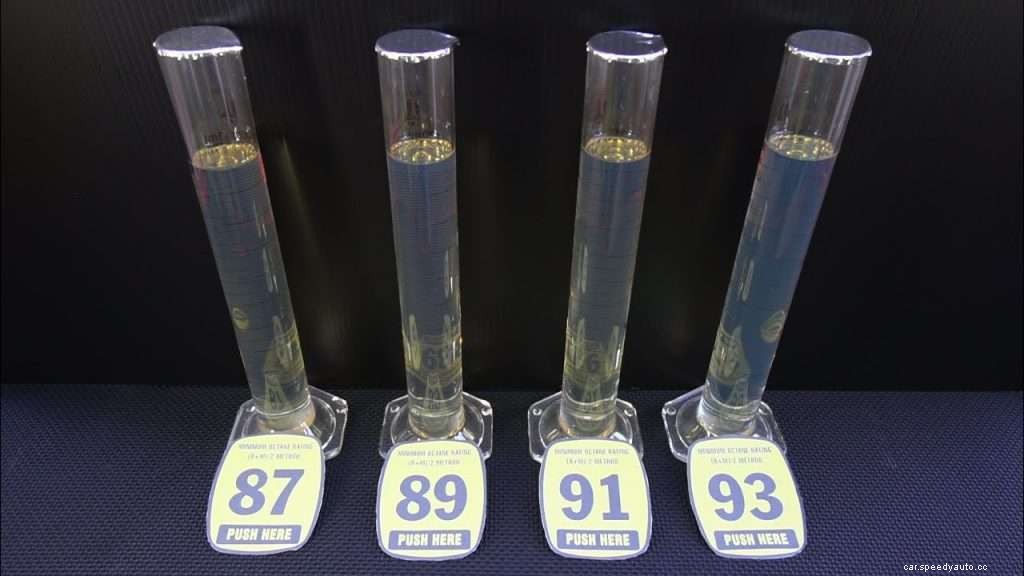
ChrisFix on Youtube has been testing different fuel types and has clearly displayed fuel types from regular to super. The slight purple tint comes from the table the vials are placed on, but you can see that all four contain a clear liquid with a yellow hue.
Let me preface this by saying that inhaling gasoline is very dangerous. The gasoline vapours are extremely toxic for the human body, and while you’ll be safe under some exposure, a deep breath can cause a headache and lightheadedness.
The smell of gasoline is caused by benzene and it’s very unique. If you’ve caught a smell while refuelling at the gas station, it will be enough to recognize anywhere. It’s a very strong scent reminiscent of pure alcohol, but with a different irritating note that makes breathing difficult.
Rather than determining the contents of a canister by looking at the color of the liquid, the smell will tell you it’s gasoline as soon as you take off the cap. Knowing what gasoline smells like can be useful in case your engine oil is mixing with gasoline.
Gasoline has a surprisingly short shelf life of up to 6 months. The lifespan can be significantly extended by a variety of fuel stabilizers, but once it goes bad, it should not be used in any application.
Gasoline degrades over time through oxidization and evaporation. You’ll notice that the smell of gasoline is much weaker and you can even breathe normally around it, although you should still be careful!
The color of gasoline will also go through changes. The original clear color with a slight yellow hue will lose clarity and as the degradation continues, it will darken. You’ll notice sedimentation at the bottom of the container as the color changes to a dark red & brown.
Bad gasoline should be safely disposed of at a recycling facility. As it’s lost most of its energy, it’s not fit for internal combustion and it can contaminate the fuel tank, fuel line, injectors, and other components.
Diesel is generally has a blue or green tint to it, making it distinct from other fuels. It also looks thicker than gasoline and has a different, weaker smell.
Depending on the refining process, gasoline can come out perfectly clear, in which case it’s dyed. However, it mostly comes out with a yellow hue and isn’t dyed further. There are no regulations in the US regarding fuel dying, other than turning off-road fuel red to make it easily distinguishable.
Red gasoline, but more commonly red diesel is regular fuel painted red to designate it for non-driving applications. Fuel used for powering vehicles is taxed to maintain roads and the environment, but the same fuel can be used for powering farming equipment and for basic necessities, like cooking or heating.
The US regulations separate the two in price but also color, to prevent people from driving on red gasoline.
Diesel often has a green hue to it, but it can also be blue. Some state that green diesel fuel comes from renewable energy sources, but there is no correlation between bio-diesel and green color, as the classic crude-oil refined diesel can also have a green hue.
Yes, jerry cans are still legal and can be refilled at the gas station. The modern plastic containers are color-coded, with red designating gasoline, but as long as the canister is fit for the application, you can fill it up with whatever fuel you’d want.
Fuel has a short lifespan and can become unusable after only a few months, even in a sealed canister. The lifespan can be increased to 24 months with a fuel stabilizers.
The gas will not explode in the sun, because it’s specifically made to house gasoline and withstand the pressure buildup from heat.
If the old gasoline is unfit for use, it will only ruin the gas you add to it. However, a canister of gasoline that’s been sitting for a few months can still be good, and by mixing it with new gasoline, especially high-octane, you can restore it and safely run it in your vehicle.
You should under no circumstances dispose of gasoline or any other toxic substance through the drain. Not only can it contaminate the sewer water, but it’s also illegal.
Pumping out gas is quite easy, you just need the right tool for the job. Get a manual fuel pump and use it to siphon fuel from the tank into a fuel canister for disposal.
Now that you know that gasoline is supposed to be clear with a yellow hue, you can easily identify it and know when it’s gone bad. Using degraded gasoline can lead to a number of system failures inside the vehicle, so I strongly advise that you dispose of it safely and refuel with fresh gasoline.
Find more interesting articles here:
Can You Pump Gas With The Car On?
What Does Gasoline Taste Like?
How to Dispose of Old Gasoline? (Step by Step)
