
The engine bay contains a series of sealed systems working together to keep the engine, transmission, brakes, hydraulic steering, and other components at the full operating potential.
We use different terminology to separate oils, hydraulic fluids, coolants, and other fluids, but commonly, people refer to all the highly viscous fluids as oils. To provide an accurate cost estimate, we’ll have to identify where the leak is coming from and what could be causing the component failure.
The engine oil has a note of amber when it’s new, but once it’s run for a while it will turn dark brown or black. The points of leakage are confined to the area directly beneath the engine block. You can touch the stain and smell it to confirm it’s engine oil or compare it to the smell of oil on the dipstick to make sure.
The engine case consists of three primary components: the cylinder head, the engine block, and the oil pan. To create a seal, gaskets are placed between the parts. If you see leaking around the top of the engine where the cylinder head meets the engine block, that’s a clear sign that the head gasket has worn out.
| Mechanic Shop | Warranty | Cost |
| DIY | N/A | $200 – $800 |
| Your Mechanic | 1 Year | $1000 – $2260 |
| Midas | 1 Year | $1050 – $2900 |
| Mr. Tire | 1 Year | $1100 – $2500 |
| Pep Boys | 6 Months | $1300 – $3150 |
The head gasket itself is not all that expensive, just $50 – $200 for a set. However, the labor is what really drives the price up – to replace the head gasket, you have to remove a lot of the components surrounding the top of the engine.
The worst-case scenario is that you actually have a cracked cylinder head, which pushes the repair price towards the upper limit. Fortunately, the cost of labor doesn’t increase too much, because the same steps are involved in replacing the gasket and the head itself.
A lot of precision and knowledge are required to replace the engine head, and a simple tutorial may not be enough to cover all the bases. Unless you’re driving an older, cheaper vehicle, let a professional handle this task.
The engine block and the oil pan are connected at the bottom with a gasket sandwiched between them. Unlike the cylinder heads, this gasket is a lot easier to replace because it can be accessed directly from beneath, which significantly reduces the replacement cost.
The gasket leaks are easily identifiable through the oil stains coming off the sides of the oil pan. The oil pan damage is quite obvious and accompanied by a sudden loss of all engine oil.
| Mechanic Shop | Warranty | Cost |
| DIY | N/A | $50- $200 |
| Your Mechanic | 1 Year | $150 – $470 |
| Midas | 1 Year | $170 – $500 |
| Mr. Tire | 1 Year | $170 – $430 |
| Pep Boys | 6 Months | $140- $440 |
As long as you have room to maneuver, you could replace the oil pan and the gasket at home. If the oil pan has been damaged or ruptured, you could replace it with a used or scrapyard option and save some cash.
The rear main seal, otherwise known as the rear crankshaft seal is located towards the bottom half of the engine, where it meets the transmission. The cost of the seal is $20-50, a trivial expense in comparison to the labor required to reach the part.
| Mechanic Shop | Warranty | Cost |
| DIY | N/A | $20 – $1000 |
| Your Mechanic | 1 Year | $700 – $1650 |
| Midas | 1 Year | $650 – $1800 |
| Mr. Tire | 1 Year | $630 – $1830 |
| NAPA | 2 Years | $700 – $1560 |
The DIY cost of replacing the rear main seal depends on how many tools you have for the job. It’s one of the toughest tasks to work on, which is why I’d recommend taking the vehicle to a mechanic.
The front crankshaft seal is a lot easier to replace than the rear seal, as long as there’s enough room to access it without taking out the engine. It’s positioned behind the crankshaft pulley, so if you see oil forming beneath that area, you should inspect the seal. The cost to replace the front crankshaft seal is between $150 and $800.
If you’ve performed the oil change at home, it’s possible that you haven’t tightened the drain plug or the oil filter properly. These leaks are trivial to correct, as all you need to do is use a socket or an oil filter wrench to make them tighter.
As issues with the head or the oil pan gasket require you to also do an oil change, I’ll include the average cost of service in the following table.
| Mechanic Shop | Warranty | Cost |
| DIY | N/A | $15 – $70 |
| Your Mechanic | 1 Year | $25 – $80 |
| Midas | 1 Year | $20 – $90 |
| Mr. Tire | 1 Year | $25 – $60 |
| NAPA | 2 Years | $30 – $60 |
The oil service cost is relatively inexpensive, but I’m fairly confident that these estimates are for labor only. Five quarts of Valvoline Full Synthetic Oil costs $50 and an average oil filter is $10-20, bringing the DIY cost to $70 without tools.
The transmission leaks are slightly more difficult to identify because of their housing. Sometimes, an engine oil leak can spill towards the transmission – either from the head gasket or the rear main seal. Clean the surfaces with a cloth and check the area more often to see where the leak is coming from. Another hint is the color of the transmission fluid which has a red note to it.
Like the engine, the transmission has an oil pan and a gasket to keep the connection sealed. To identify a leak, look for staining on the transmission pan left by the seeping fluid. If the pan has been damaged, the leak will be more obvious and accompanied by flashing dashboard lights.
| Mechanic Shop | Warranty | Cost |
| DIY | N/A | $30 – $150 |
| Your Mechanic | 1 Year | $100 – $230 |
| Midas | 1 Year | $120 – $240 |
| Mr. Tire | 1 Year | $110 – $250 |
| NAPA | 2 Years | $110 – $230 |
Replacing the gasket isn’t particularly difficult, but adding the right amount of oil to the transmission after the repair can be challenging to get right. The costs presented in the table do not include an oil change, but that service will be cheaper if paired with a gasket or transmission pan replacement.
The transmission doesn’t have a coolant system to keep the temperature down. On some models, the transmission will be fine without cooling, but some vehicles run cooler lines towards the radiator to dissipate heat from the transmission fluid. To locate the leak, you’ll have to trace the lines and find a rupture or a rusty spot, with the connection points being the most likely sources of leakage.
| Mechanic Shop | Warranty | Cost |
| DIY | N/A | $20 – $150 |
| Your Mechanic | 1 Year | $50 – $200 |
| Midas | 1 Year | $50 – $200 |
| Mr. Tire | 1 Year | $70 – $200 |
| NAPA | 2 Years | $60 – $210 |
Just like with an engine oil change, a DIY job could go wrong. Maybe you haven’t tightened the plug or you’ve added too much fluid which overpressured the gasket, and now need the assistance of a mechanic. The transmission fluid service costs more than an engine oil change, but keep in mind that if you’re doing it at home, it’s easy to overfill the transmission.
| Mechanic Shop | Warranty | Cost |
| DIY | N/A | $50 – $80 |
| Your Mechanic | 1 Year | $150 – $400 |
| Midas | 1 Year | $160 – $350 |
| Mr. Tire | 1 Year | $150 – $400 |
| NAPA | 2 Years | $140 – $550 |
The estimates have a wide range, but on average, the cost of shop service should be $100 – $250 at most. The transmission fluid filter is around $15 and the average cost of fluid is $50, so paying someone the extra $50 – $100 is not a bad idea if you’re not certain that you can do the job right.
Power steering fluid is contained in the pump, reservoir, and lines leading to the steering wheel and rack. The pump and reservoir are easily identifiable, and the lines can be traced through the system.
It might be difficult to determine whether the fluid is coming from the brake or the power steering system, but the check engine light will help you pinpoint the location. If you spot a leak, check the color of the brake fluid too, as some cars are designed to use the brake fluid for power steering.
The power steering pump is the most likely source of the leak in an otherwise very reliable system. It’s easily identifiable as a part of the drive belt system, with lines going towards the power steering reservoir.
| Mechanic Shop | Warranty | Cost |
| DIY | N/A | $150 – $250 |
| Your Mechanic | 1 Year | $250 – $650 |
| Midas | 1 Year | $230 – $560 |
| Mr. Tire | 1 Year | $290 – $680 |
| Pep Boys | 6 Months | $140 – $390 |
If you have some DIY experience, replacing the power steering pump on your own is the best way to save some cash. The process isn’t particularly difficult and even if you need to buy all the tools for the job, the total expense will be less than what a reputable mechanics shop or a dealership will charge.
The lines leading from the power steering pump to the reservoir and steering wheel hardly ever fail, but it’s a possibility. Run a white cloth over the lines to see if catches any red fluid. That will help you identify the leak spot. Double-check the area around the power steering pump as the connecting points are usually the weak spot.
| Mechanic Shop | Warranty | Cost |
| DIY | N/A | $150 – $250 |
| Your Mechanic | 1 Year | $180 – $400 |
| Midas | 1 Year | $190 – $410 |
| Mr. Tire | 1 Year | $170 – $400 |
| NAPA | 2 Years | $170 – $410 |
Replacing the power steering lines is not as simple as connecting a hose at two ends. You could replace the seals and washers at the ends of the lines if that’s causing the problem, or try to seal the leak in the hose. However, for a proper replacement, it’s best to consult with an expert.
The brake system should also be considered as the hydraulic fluid it uses has the viscosity of the oil. Because of its crucial value in maintaining the safety of the vehicle, the computer will warn you of the first signs of issues. You’ll also experience a lack of response to the brake pedal as the hydraulic pressure drops.
The master cylinder is located directly beneath the brake fluid reservoir, in front of the brake booster. When the seals fail, they will start leaking fluid and reduce the effectiveness of the brakes.
| Mechanic Shop | Warranty | Cost |
| DIY | N/A | $100 – $200 |
| Your Mechanic | 1 Year | $190 – $500 |
| Midas | 1 Year | $172 – $530 |
| Mr. Tire | 1 Year | $220 – $570 |
| Pep Boys | 6 Months | $230 – $700 |
The master cylinder costs around $100 and can be replaced easily, but the problem is that the brakes have to be bled afterwards. When inquiring about prices at your local mechanic, make sure to check if the bleeding is included in the price as it’s well worth it to get the service done by a professional.
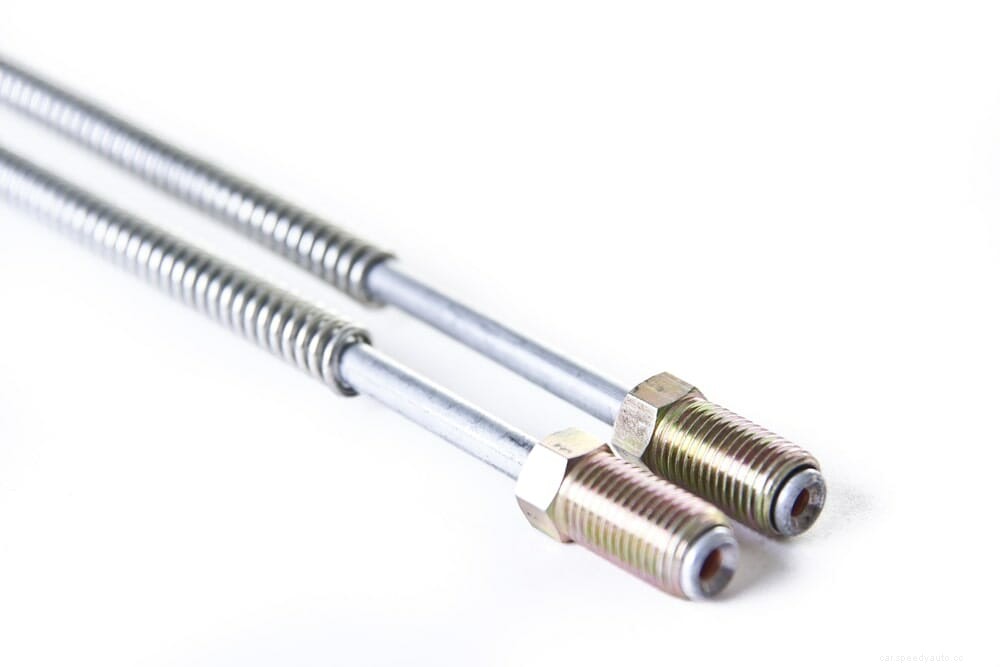
Brake lines typically fail in the section next to the calipers. Older vehicles used metal piping made of one piece that would run towards the brakes, but modern cars separate the portion of the pipe that’s most likely going to break so it’s more easily removable.
| Mechanic Shop | Warranty | Cost |
| DIY | N/A | $30 – $100 |
| Your Mechanic | 1 Year | $120 – $270 |
| Midas | 1 Year | $110- $250 |
| Mr. Tire | 1 Year | $130 – $220 |
| NAPA | 2 Years | $130 – $265 |
The calipers are also prone to leakage, which is easily identifiable by staining on the wheel from the leaking fluid. When swapping out a caliper you should also change the brake pads on both wheels of the axle to keep them balanced.
The price varies greatly based on the type of vehicle you’re driving, but the process of changing the calipers and pads is the same regardless. A set of brake pads for a Honda Civic is $35 while a single brake caliper costs $60. Once again, the biggest issue with a caliper replacement will be the bleeding of the brakes, which has to be done right to prevent a loss of braking power.
A shop will charge you between $100 – $200 per caliper, and if the bleeding is a separate expense, add another $100 to the final cost.
The dashboard warning lights won’t always turn on at the first signs of oil leaks, but if the check engine or any system-specific light comes on, you should check what the error code says with an OBD2 scanner.
The best way to find a leak is to get underneath the vehicle, but what if it’s a slow drip that takes hours to show? Place a large piece of cardboard underneath the vehicle and mark where the bumper or radiator starts. Leave it overnight and pull it out tomorrow to see where the leak spot has formed. You can use the position as a reference while searching inside the engine bay.
I’ve spoken briefly about the colors of different vehicle fluids, but there’s a lot better way of color-matching. Power steering and brake fluids are contained in reservoirs that you can simply open and check the color. The same applies to the coolant and washer liquid. As for the engine and transmission oil, use a white cloth to wipe the dipsticks, and you’ll get the perfect sample for comparison.
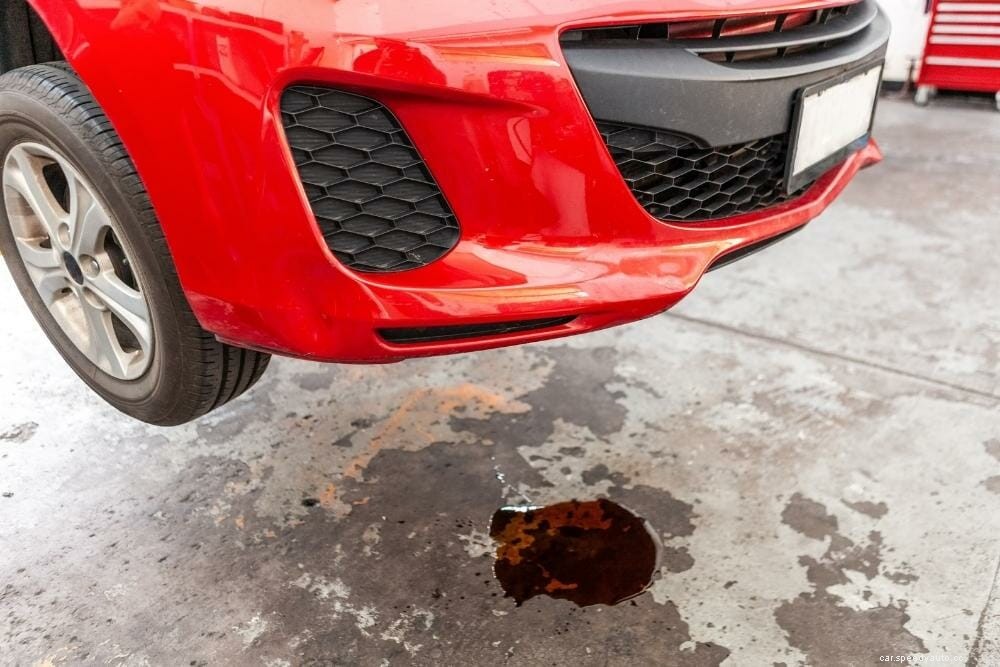
Oil leaks are always a sign of more serious problems to come. Engine and transmission will wear out quickly if they don’t have enough lubrication, and once they’re damaged, the repair cost goes into thousands of dollars.
The answer really depends on what part of the engine the oil is coming from. The oil pan gasket costs a few hundred dollars to replace, while the head gasket surpasses a thousand. The rear main seal is also a $1,000+ repair, while the front seal costs a few hundred. If the cylinder head is damaged, the cost can be even higher.
Technically, you could continue driving with a leak and just add more oil, but the problem is that you’re neglecting a serious problem, and creating an environmental hazard by releasing toxic oil on the asphalt. Knowingly driving and parking a vehicle that is leaking fuel, fluids or oil is prohibited and punishable by a severe financial penalty.
If we disregard the human error of an improperly secured drain plug or the oil filter, the head gasket is the most likely cause of an oil leak. Keep in mind that oil leaks are a very rare occurrence and that cars can run for years if not decades without parts deteriorating to the point of leakage.
It’s difficult to answer this question without knowing the exact terms under which the vehicle is being sold. A vehicle with oil leakage should not pass the “implied warranty of merchantability” and therefore should not be sold without at least stating that there’s a problem.
Yes, and in fact, the head gasket is one of the more likely sources of an oil leak. It acts as a seal between the cylinder head and the engine block, and over time it can crack and let oil escape.
It’s risky, but it can be worth it if you do the math. If the vehicle is sold for cheaper than comparable models, take the repair cost of the worst-case scenario – a cracked cylinder head, worn head gasket, or worn rear main seal and compare it to that price difference. That way, at least you’re partially safe, and after repairs, you’ll have a vehicle in better condition.
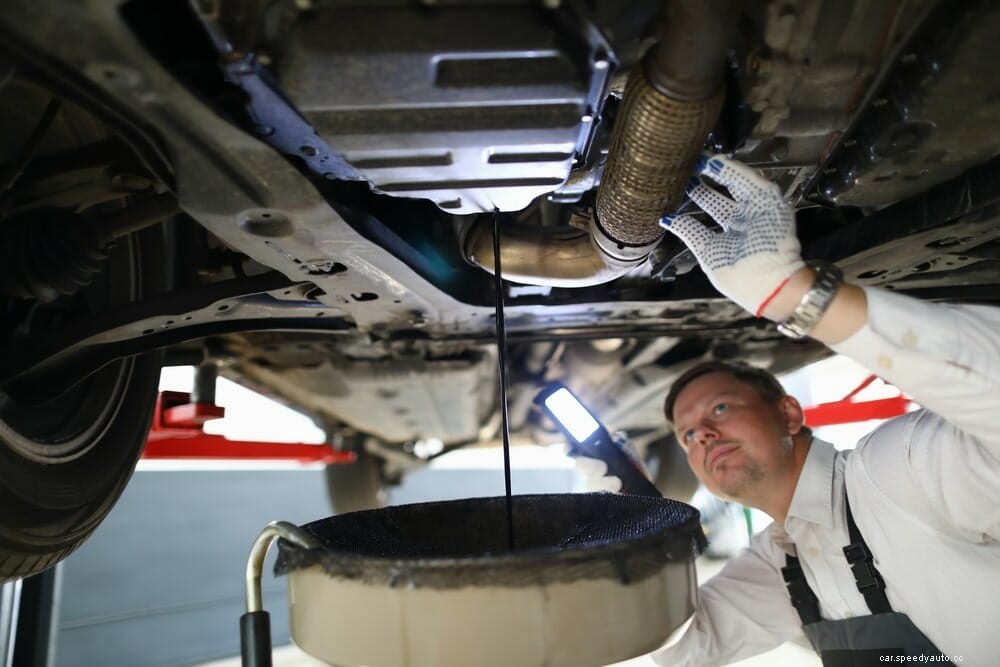
Depending on the cause of the problem, it might be worth it to fix the issue and keep the oil leak from reducing the value of your vehicle. The Head gasket or the rear main seal should be left alone, but you could replace the oil pan gasket for a few hundred bucks.
Knowing where this question is going – do not put thicker oil into your engine. Yes, thicker oil will drip more slowly, but the engine of your vehicle requires oil of certain viscosity to run properly, otherwise, it’s going to be at risk of damage.
Oil leaks are covered by most powertrain warranties, even on used vehicles. Read your warranty policy and check with the insurance provider to get a confirmation.
Oil leaks are generally a problem that needs to be addressed as soon as possible. The main reason is the inherited risk of damage, but leaving an oil leak unattended will also result in a fine. The cylinder head gasket and the rear main seal are very expensive to repair, so consider selling the vehicle if that makes more sense financially.
Here are some other relevant topics you may want to read:
What Causes a Crankshaft Seal to Leak? Symptoms And How To Fix
Transmission Fluid Leak When Parked: Causes and Fixes
Oil In Intake Manifold: What Causes It And How Do You Fix It?
