
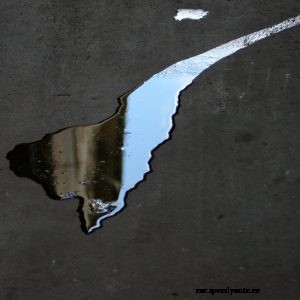
 Oil leaks in your car or truck can often go unnoticed. Unless you like to regularly look under the hood, or crawl under your car, oil leaks can often sneak up on you. For most of us, we notice an oil leak when we start to smell it burning or we start to see puddles under our vehicle after it has been parked for a while. The problem is, once you’ve got a leak that is causing drips or puddles, you have a pretty serious problem.
If you do your own maintenance or oil changes then you probably spend enough time under the hood to catch oil leaks before they get to be a real problem. If you have a trusted mechanic that does your work for you, hopefully they are doing a quick inspection every time you have your car in with them to make sure you don’t have any leaks starting. Even if you trust your mechanic it might be worth taking a quick look around your car every time you get the oil changed.
The best way to do an inspection for oil leaks is to do one from the top and one from the bottom of your engine. Start by popping the hood and taking a look around. If you have a newer car, chances are there is some plastic covers you’ll have to remove to see everything you need to see. Make sure you look around the top of your engine and just below the valve covers. You should also check around the front of your engine, near the pulleys and the timing cover if your engine has one. Next, secure your vehicle well, then crawl underneath and look for more leaks. Start by looking as low as you can on your vehicle for drops, leaks or shiny spots where oil has been leaking. If you find a leak, go up from there to find the gasket or seal the oil is coming from.
In doing these regular inspections, you can help catch an oil leak before it becomes a problem and starts leaving puddles on your driveway. Once you’ve found the leak, the next step is to figure out how to fix an oil leak. You have an oil leak because there are different components in your engine that needs to be bolted together and shafts that need to exit the engine block. Each shaft, like your crankshaft or cam shaft, has an oil seal around it, and each component that is attached has a gasket on it to seal the oil inside your engine. As shafts spin, components shift, and temperatures swing from below freezing to hundreds of degrees, these seals and gaskets can start to deteriorate, crack, shift, or tear. These problems can allow oil to start to leak. Usually, this is a slow process and the leak starts out as a seep that can be caught during your inspections.
One of the ways you can fix an oil leak is by replacing the worn out seal or broken gasket. When it comes to replacing gaskets, you have to start by unbolting the two components the gasket is in between. To replace a seal, you often times have to remove a significant amount of other equipment like timing gears or pulleys. Replacing these worn seals or gaskets can often times require a significant amount of time and energy even though the parts themselves are relatively inexpensive. Many mechanics will put in a new seal or gasket any time they are doing work in that area of your engine just because it is so much work to do later.
A second way to fix an oil leak is to use BlueDevil Oil Stop Leak. Simply add BlueDevil Oil Stop Leak to your engine oil and it will seal you leaks from the inside out. BlueDevil Oil Stop Leak isn’t a particulate sealant and will not clog or harm anything in your engine. Instead, it is a liquid seal and gasket conditioner that mixes with your engine oil and will help bring your old seals and gaskets back to their original size and shape sealing the leak in your motor and getting your car back to working like new.
For more information about BlueDevil Oil Stop Leak, visit our product information page here: Oil Stop Leak
When you’re ready to seal your oil leak the easy way, stop by any of our partnering local auto parts stores to pick up a bottle of BlueDevil today!
Pictures provided by:
fix_an_oil_leak.jpg – By Jenny Downing – Licesned By Creative Commons Via Flickr – Original Link
