
This is a common topic, and before I answer it, I’d like to quickly explain what balance and alignment are and why they’re essential.
In order to have your wheels aligned properly, you must make certain that they are all facing the same direction and are precisely straight up and down the road. Your tires will wear out more quickly if your wheels are out of alignment, and they will need to be changed sooner.
In addition, a car that is out of alignment might have a detrimental impact on its handling, which can be quite hazardous.
Correcting for any flaws or discrepancies in the design or construction of the tire is what we mean when we talk about “tire balancing.” When the tire is spinning, it must be correctly balanced so that it does so smoothly. Tires that aren’t correctly balanced may be clearly felt when driving.
Is there a certain frequency at which you should get your tires and wheels aligned?
It is recommended that you rotate your tires every six months or 6,000 miles to keep your tires in optimal condition. You’ll be able to prevent highway-speed vibrations and uneven tire wear if you follow the advice given to you by your technician.
It is necessary to align tires in order to ensure that their contact surfaces are aligned properly. A tire balancer may help you achieve a more uniform distribution of weight across all four wheels and tires.
Make sure you pay close attention to your car for signs that your tires need to be examined, such as vibrations in the steering wheel or seat. Routine tire maintenance, such as rotating your tires or performing repairs on a flat, necessitates tire balance checks. Detecting vibration in a particular place might help you decide which tire needs to be examined.
Damage to your car’s suspension, wheel bearings, and balance, as well as the reduced gas economy, might result from potholes and repair holes that are not covered. As a result, your wheel may be misaligned if the driver doesn’t notice small damages.
For safe driving, wheel alignment is critical since it decreases vehicle suspension components’ loads and stresses while also enhancing vehicle performance.
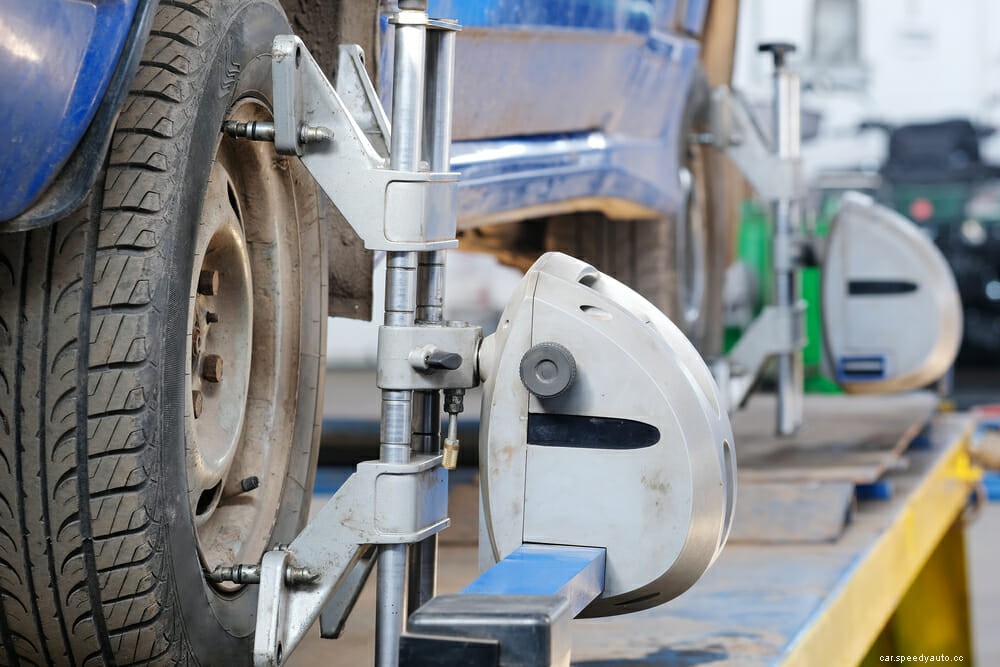
Vibration in your steering wheel, floorboard, or seat, along with uneven tire wear might indicate that it is time to get your tires balanced. In addition, you may choose to have your tires balanced during or after a tire rotation, after a flat tire repair, or as part of your regular maintenance program.
Contrary to popular belief, the component of your car that trembles might indicate whether the front or rear wheels need to be balanced. If the problem is with the steering wheel, it is most likely with the front tires. If the problem is with the seats, the problem is with the back wheels.
Tires may fall out of balance due to unequal tire wear or because a wheel weight is lost as a result of hitting a curb or pothole while on the road. If you leave your automobile parked for a lengthy period of time without moving it, it is possible that the tires can develop flat patches, which will cause the vehicle to become unbalanced.
The cost of an alignment is typically between $65 and $100. (some brands, of course, are more). At that amount, it should be a regular component of your vehicle’s maintenance schedule.
Some auto maintenance facilities offer lifetime alignment packages for as little as $200, which further reduces the cost of an alignment even more.
You may go as far as you want. However, you will wear out your tires at a much quicker pace, and you may also wear out your steering/suspension parts at a faster rate as a result of the increased stress exerted on these components. It may also have an influence on your ability to maintain control of the car in certain circumstances. It’s best to have everything aligned!
Depending on your region, there are many locations that will be able to perform this service, among the larger tire and suspension workshops like Discount Tire, Point-S, Les Schwab, Midas, Jiffy Lube, and Pep Boys who will be able to do this service, all at varying rates.
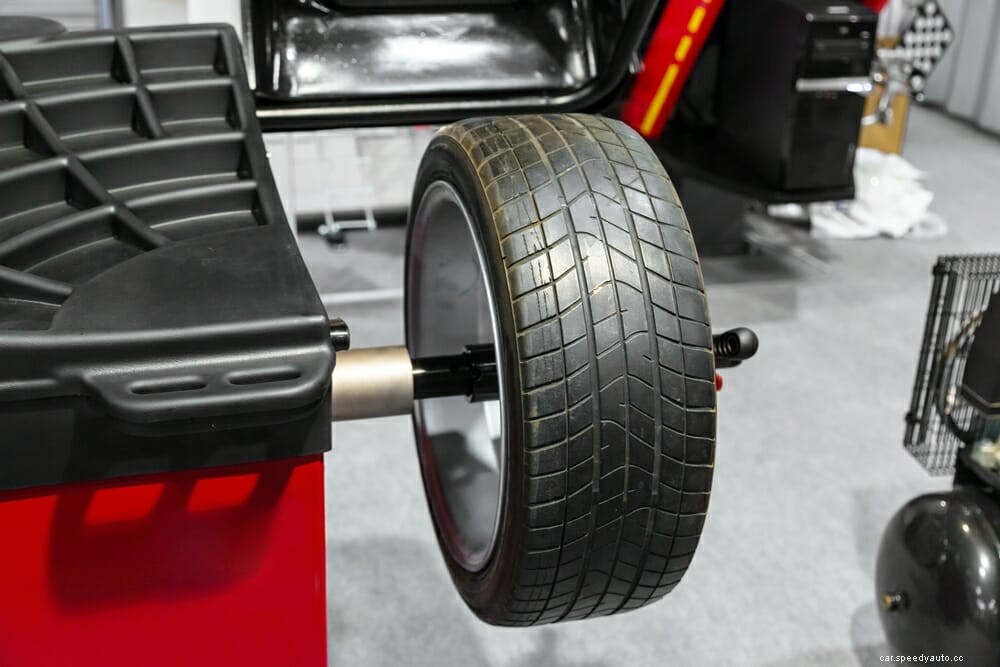
Tires and wheels do not always arrive from the factory in perfect working order and are ready to be installed. Tires and wheels, despite the fact that they seem uniform to the naked eye, can contain weight fluctuations throughout their construction.
Normal wear and tear might also cause the balance of your wheels and tires to shift. When your wheels are not properly balanced, your tires will not spin smoothly as they should. As a result, your vehicle’s handling is affected.
The mounted tire and wheel go on a tire balancing machine, which spins and measures vibrations from the rotation. You can add or adjust weights to even out the imbalanced tire and help with weight distribution.
Technically, yes, but you need a tire balancer and other heavy, expensive equipment.
You might be able to tell if your steering wheel is off-center, you feel a pull when driving at higher speeds or you may notice your tires are wearing unevenly. It is best to see an alignment technician if you think you may need an alignment.
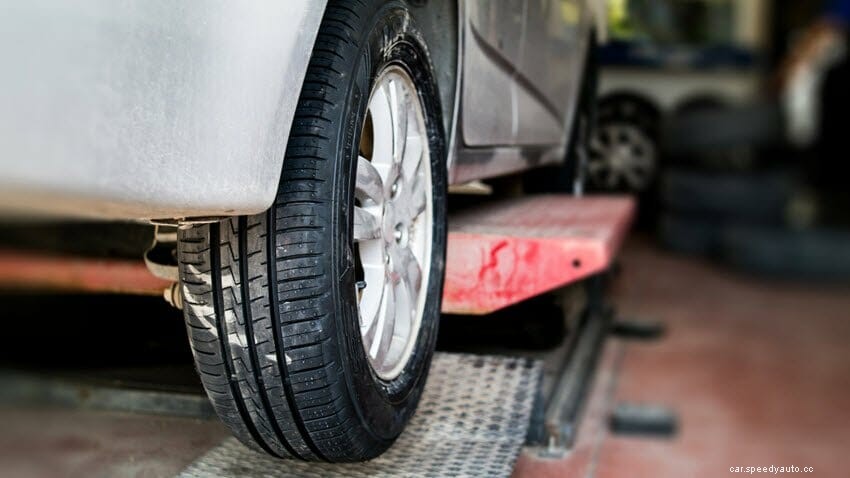
The short answer is, yes. If the edges of your tires are worn or scuffed, they are not spinning smoothly. This means the tires’ angle is off.
It’s recommended that you rotate your tires every six months or 6,000 miles to keep your tires in optimal condition. If you prefer the DIY route, a tire balancer may help you achieve a more uniform distribution of weight across all four wheels and tires.
For safe driving, wheel alignment is critical since it decreases vehicle suspension components’ loads and stresses while also enhancing vehicle performance.
Vibration in your steering wheel, floorboard, or seat might indicate that it’s time to get your tires balanced. Tires may fall out of balance due to unequal tire wear or because a wheel weight is lost as a result of hitting a curb or pothole while on the road.
And you will find that the cost of an average alignment is typically between $65 and $100.
Here are some other guides that may help you:
Why Do My Tires Make a Humming Noise?
How Long Does it Take To Change a Tire?
Why Does My Car Feel Bumpy When Driving?
