
Dashboard lights were originally just a few warnings for oil, coolant, and electrical problems. As the number of features increased, so did the complexity of the system, and the dashboard had to accommodate an increasing number of indicators.
It’s unreasonable to expect a driver to know the meaning of every dashboard light, as there can be hundreds of them. Modern digital displays will give some more information about the problem, but it may not be enough to know exactly what’s happening.
This article will give you a quick explanation for every warning, alert, and indicator light on the dashboard. We’ll break them down into sections, and include images to help you compare them to the lights of your dashboard, so keep reading to learn more and know how to react in case one of these lights turns on!
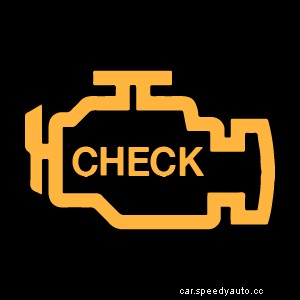
Check engine light activates when there’s a problem with one or more engine parts. The issues range from trivial periodic errors to serious mechanical faults, especially if the light is flashing.
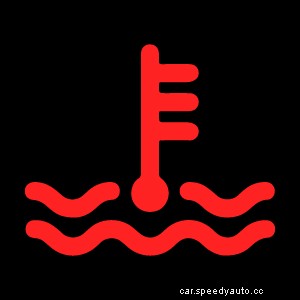
This warning appears shortly before the engine overheats. If you see it, blast the heater (not AC) at full power and stop the vehicle as soon as possible.
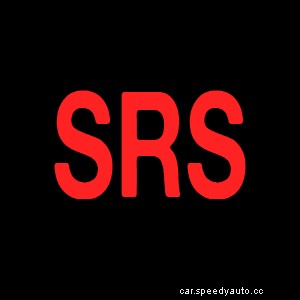
An amber or red airbag warning indicates the problem with one of the airbags, which will not deploy in case of an accident.
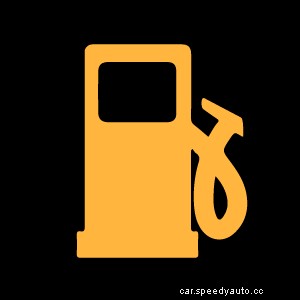
Almost everyone knows what the low fuel indicator means and looks like. If the fuel level drops below 1/6th or 1/8th of the tank, the light will turn on.
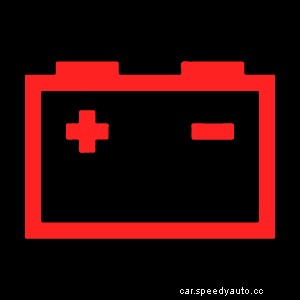
Battery alert informs you that the battery isn’t getting charged while the engine is running, indicating a problem with the alternator.
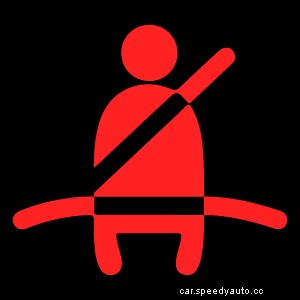
Seatbelt reminder uses sensors within seats to register passengers and will continue to flash until everyone has fastened their seatbelt.
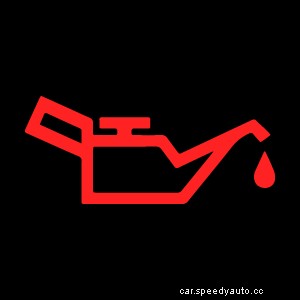
This is one of the most serious warnings you can get. If you see this light, stop as soon as possible to prevent damage to the engine.
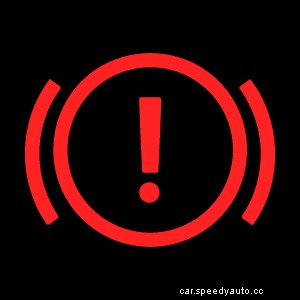
When the parking brake is engaged, the light will always come on to remind you to disengage it before driving off.
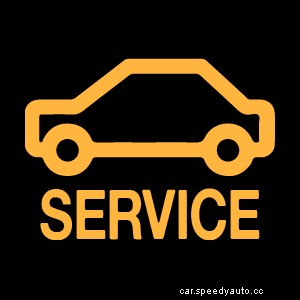
Your vehicle monitors the number of miles you’ve crossed, and when the oil service is nearly due, the indicator will turn on to remind you it’s time to change it.
Red warnings indicate a problem that requires your immediate reaction. The solution can be something as simple as disengaging the parking brake or closing the door properly, but others require you to stop immediately and call a towing service. In this section, we’ll go through all the red warnings, so you’re aware of what to do when they appear.
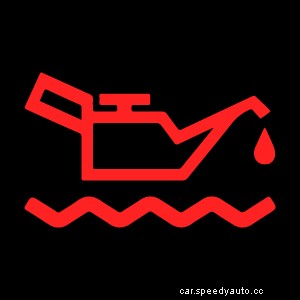
This is one of the most serious warnings you can get. If you see this light, stop as soon as possible to prevent damage to the engine.
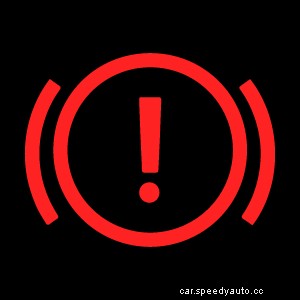
When the parking brake is engaged, the light will always come on to remind you to disengage it before driving off.
The coolant system keeps the engine at optimal temperature. Keep an eye on the temperature gauge, and if the warning light comes on, turn the engine off and let it cool.
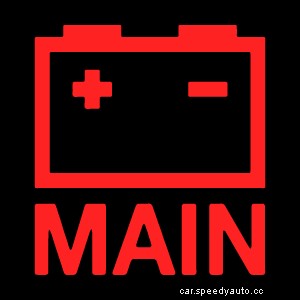
A simple illustration of the car battery warns you that the battery is not receiving any charge and will deplete soon.
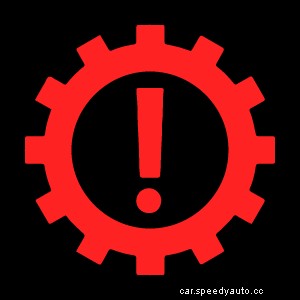
Transmission problems are serious, so if see this symbol, stop as soon as possible and get your vehicle to a mechanic for repairs.
When the A/T oil temp light turns on, it means the transmission is about to overheat. Park the vehicle and let it cool, then drive or tow it to a mechanic.
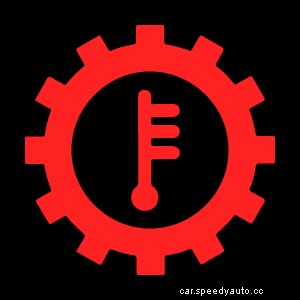
An alternative to A/T oil temp, this warning also indicates an overheating issue with the transmission.
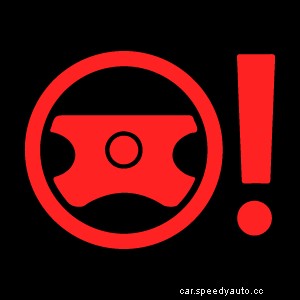
The steering wheel with or without an exclamation point next to it warns you of low fluid levels or imminent problems with the power steering system.
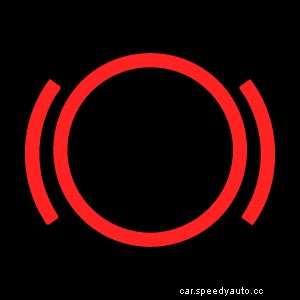
Pay attention to the exact shape of the warning light. Word “BRAKE” or a circle with two solid lines around it represents a general brake system problem.
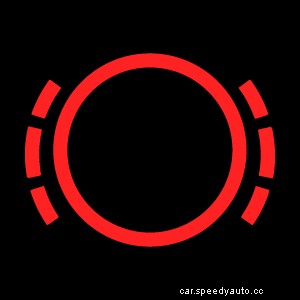
Brake pads wear out over time, and when they’re past the point of effectiveness, the circle with the short lines on each side will appear on the dashboard.
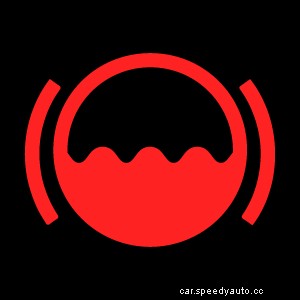
Brakes operate on a sealed hydraulic system, so if the fluid levels drop too low, the brakes will cease to function. Check every wheel for signs of fluid leaks.
A Brake system symbol with either a “P” or a “!” inside it reminds you to disengage the parking brake immediately or risk wearing out the brakes.

This illustration, “SRS” or “AIR BAG” lighting up warns you that one or several airbags will not engage in case of an accident.
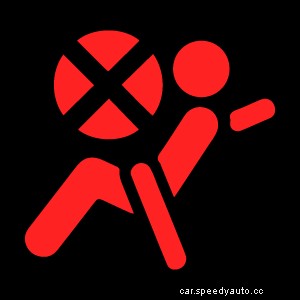
The icon for airbag off is similar to the airbag problem but the difference is the hollow airbag with an “X” through it. It means the airbag has been turned off manually.
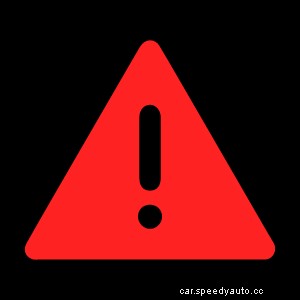
On older vehicles, the number of warning lights was limited, so the red triangle indicated a problem that is more severe than the amber check engine light.
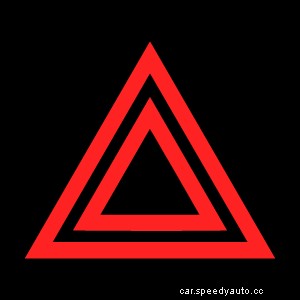
Driving with hazard lights on is illegal, and the dashboard light will remind you to turn them off before joining the traffic.
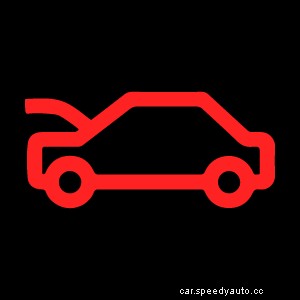
If the hood hasn’t latched properly, the warning will appear to remind you to close it before driving off.
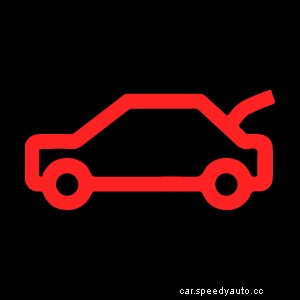
The trunk latch works the same way as the hood latch, but it can be ignored if you’re safely hauling cargo that prevents you from closing the trunk.
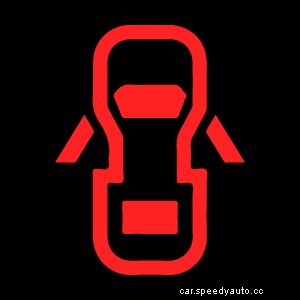
Leaving the doors partially closed is dangerous which is why the warning appears on the dashboard.
If the vehicle detects a passenger without the seatbelt on, the seatbelt warning will turn on.
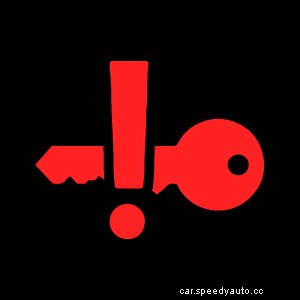
Vehicles with a keyless start and entry will remind you to place the FOB key close to the ignition for safety reasons.
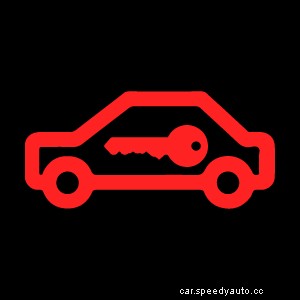
Anti-theft measure that prevents you from starting the vehicle if the doors are locked. Simply unlock the doors to continue driving.
Amber or yellow warning lights do not require your immediate attention as red warnings do, but the problems can become very severe if unaddressed. It’s important to identify the cause as soon as possible, and then you can decide whether or not to fix the problem immediately.
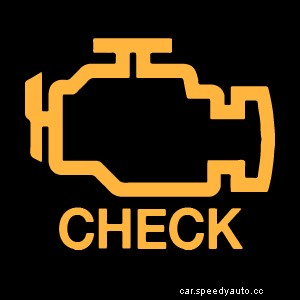
The most common amber warning is the check engine light that indicates a problem with the engine or auxiliary systems.
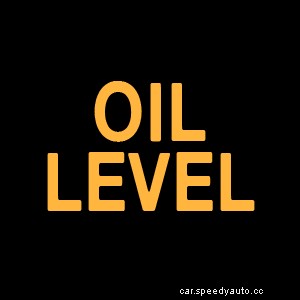
If your car doesn’t have a red oil warning, then treat the amber warning with the same severity. Otherwise, it’s an early indicator that the engine is running low on oil, or has too much of it.
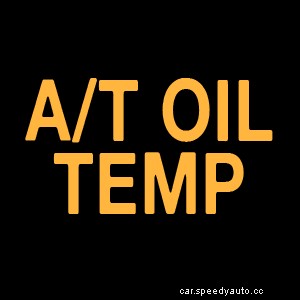
As the oil level warning, A/T oil temp can also be either amber or red. Treat it as a serious problem regardless.
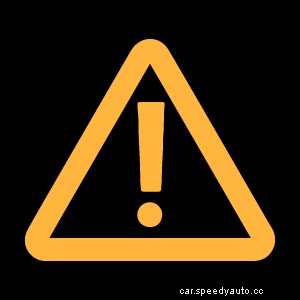
The amber warning indicates a general problem with the vehicle and is usually present on older vehicles.
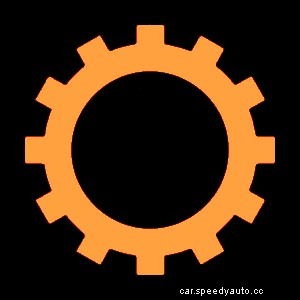
Problems with the transmission are almost always serious, so consult with a mechanic as soon as you can.
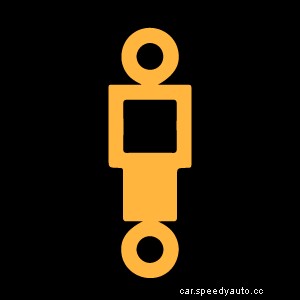
If the suspension dampers have gone bad, you’ll see this symbol on the dashboard as a warning to replace the parts when possible.
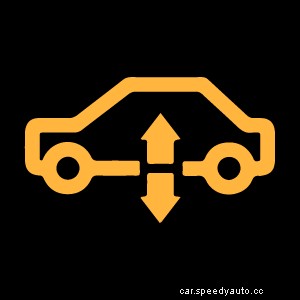
A vehicle running on air suspension may have a different symbol that indicates a problem with the system.
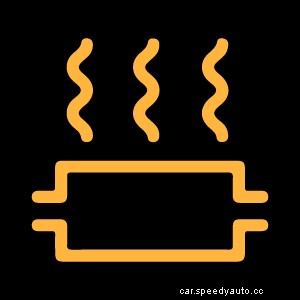
A clogged catalytic converter will prevent exhaust gases from leaving the engine fast enough, causing a pressure build-up in the exhaust manifold and loss of power.
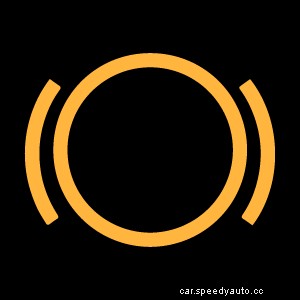
The general brake warning can be red or yellow and indicates an issue with the system.
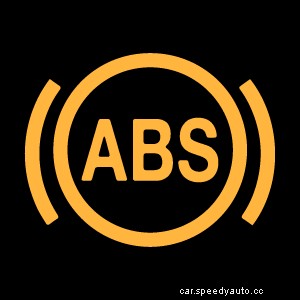
The ABS system allows you to steer the vehicle while braking and prevents skidding. The warning indicates that it’s not functioning.
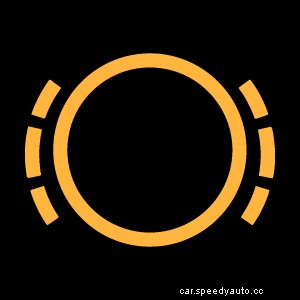
The worn brake pad warning can be red or yellow and informs you that the braking power is insufficient for a safe drive.
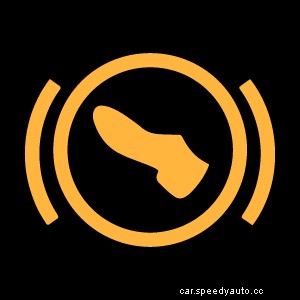
Vehicles with automatic transmission won’t start unless you press the brake first.

The electronic stability system is not functioning and will not assist you during hard braking and cornering.
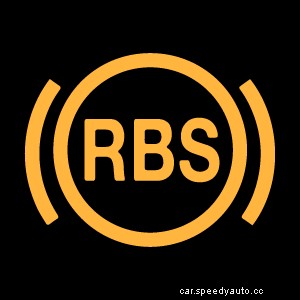
RBS light informs you that there’s a problem with the recuperative brake system on a hybrid vehicle.
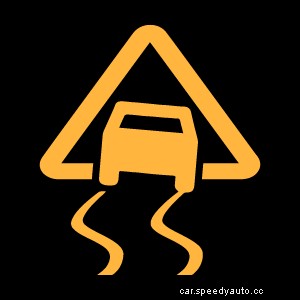
The term traction control system can be used interchangeably with ESP, and when the warning light is on the system will not assist you on the road.
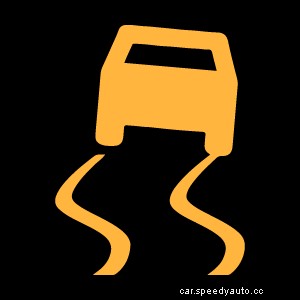
If you briefly see this icon appear on the dashboard, it means the TCS system had activated to keep the vehicle stable.
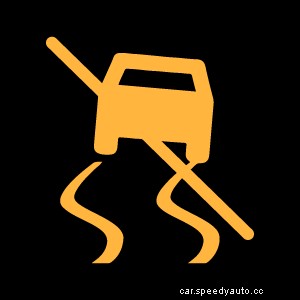
This dashboard light will remind you that you’ve turned off the traction control system.

The problem with the PCS will prevent it from activating and preventing a frontal crash.
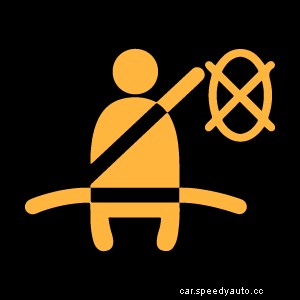
Side airbags won’t activate in case of an accident if this warning is turned on.
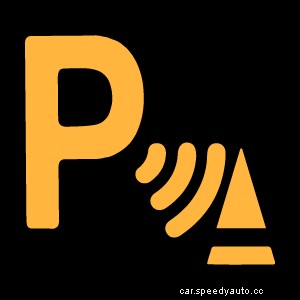
The parking sensor warning light means there’s a problem with the sensor’s functionality.
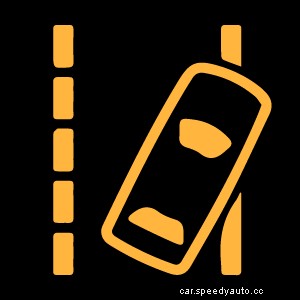
The lane assist icon will appear if the system had engaged to prevent the vehicle from drifting out of its lane.
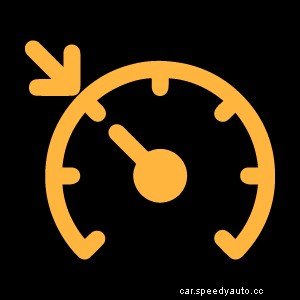
If you activate the cruise control, this reminder will light up on the dashboard.
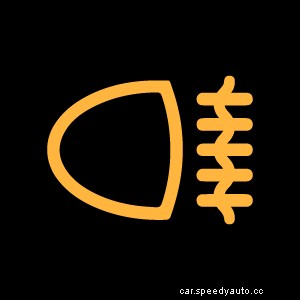
The fog lights shouldn’t be on at all times, so this indicator acts as a reminder to turn them off once you’re out of the foggy area.
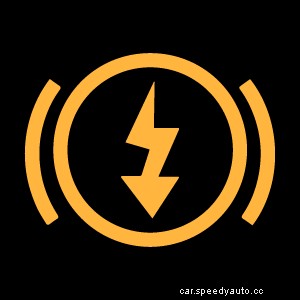
Hybrid vehicles use the energy created by braking to recharge batteries and a problem with the system will prevent that from happening.
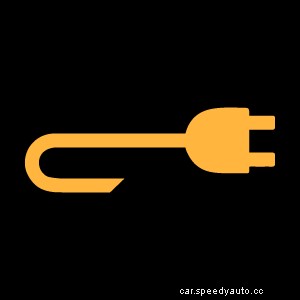
In plug-in hybrid or electric vehicles, this icon reminds you that the vehicle is still plugged into a power source.

In electric vehicles, this warning tells you that the vehicle will run in power-saving mode to allow you to reach the closest recharge station
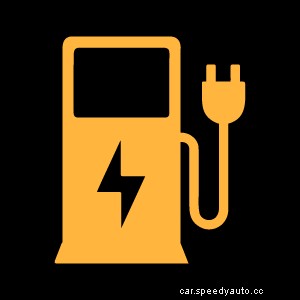
The alternative indicator for electric vehicles indicates low battery power.
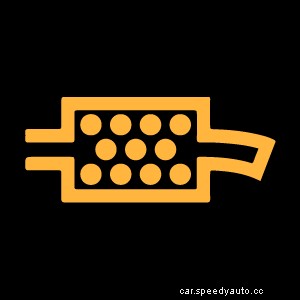
This light indicates a problem with the diesel particulate filter (DPF) which is specific to diesel cars and trucks.

When the engine is too cold, glow plugs activate to heat up the engine to a safe temperature.
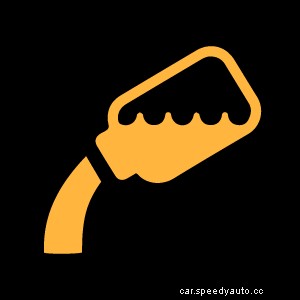
Modern diesel engines use AdBlue to cleanse exhaust gases. This icon is a reminder to refill AdBlue.
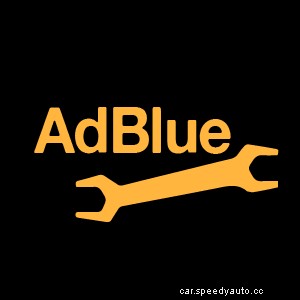
This warning looks similar to the low AdBlue levels, but in fact indicates a problem with the AdBlue injection system.

The transmission is sending power to only one axle, usually the rear.

A reminder that the transmission is sending power to all four wheels.
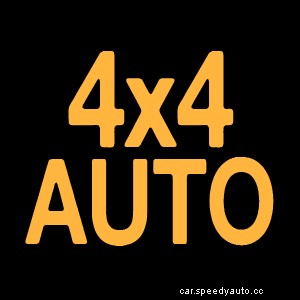
The vehicle is set in an automatic 4×4 mode where the computer adjusts power as needed.
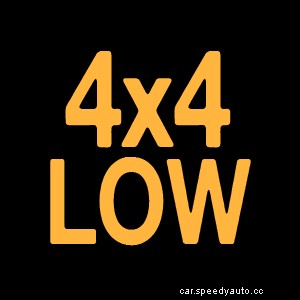
The low range mode is engaged for a slow crawl over rough terrain.

The high range mode uses regular transmission gears for regular on-road driving.
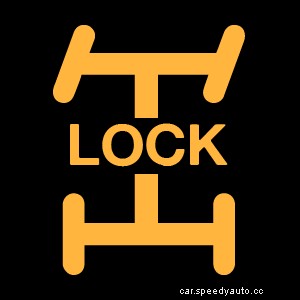
This indicates that the center differential has been locked for better off-road performance.

This indicates that the rear wheels will spin at the same speed now that the rear differential has been locked.
Conventional warning for low fuel levels for diesel and gas powered vehicles.
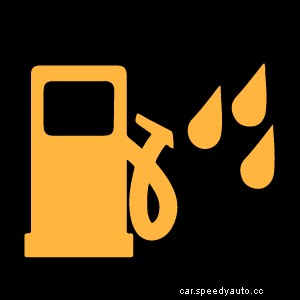
If there’s water in the fuel tank, you should drain it and check it for water or coolant to identify where the fluid is coming from.
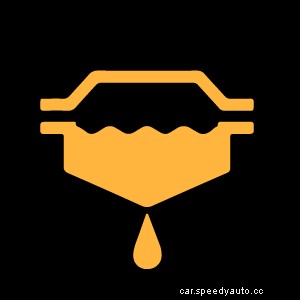
A faulty fuel filter will either let particles through or fail to supply the engine with enough fuel.

A generic indicator that informs you to take a look at the vehicle’s information screen for more details.
This icon reminds you that your regular oil service change is due in less than 500-1000 miles.
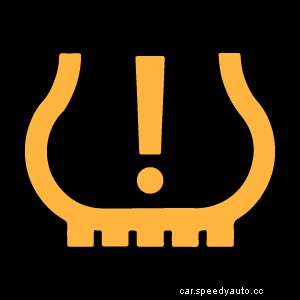
The tire pressure monitor system (TPMS) will warn you if one of your tires is overinflated or running flat.
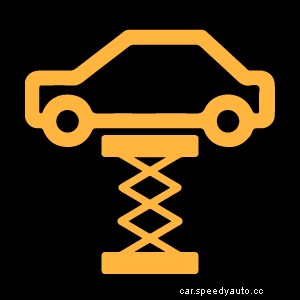
This is warning is a part of the anti-theft system and also a reminder not to drive off the elevated position.
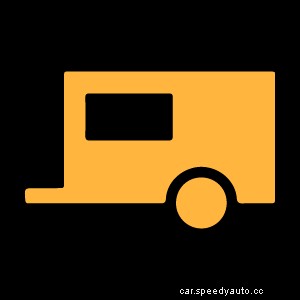
The trailer icon is a constant reminder that there’s a camper or a trailer attached to the back so you can drive accordingly.
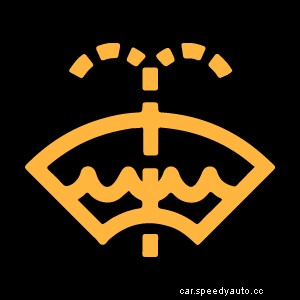
Without washer fluid, it will be difficult to keep the windshield clean, so this serves as a reminder to refill it.
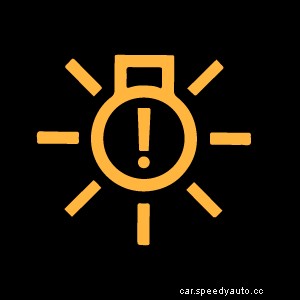
When a light bulb goes out, this warning will tell you to check the headlights and taillights and replace it.
Informational lights come in three colors: white, blue, and green. What could be an informational light in one vehicle may be a warning in another, but as the course of response is the same, this doesn’t make too much of a difference. For example, the parking brake light can be red, yellow, or green, but it all signifies that you should lower it before driving off.
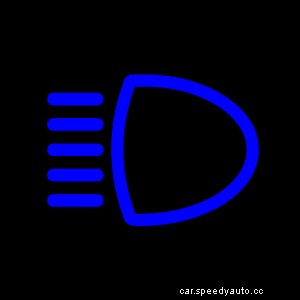
The blue indicator light is most commonly associated with high beams and reminds the driver that they’re on.
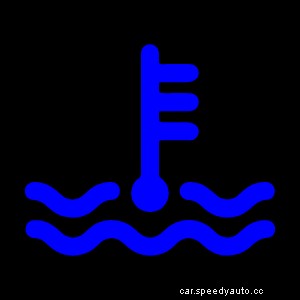
The low coolant temperature indicator uses blue to illustrate cold, as the same symbol in red illustrates high coolant temperature.
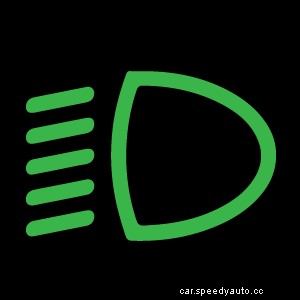
Informs you that the low beam lights are turned on, useful for remembering to turn them off once you’ve parked and turned the engine off.
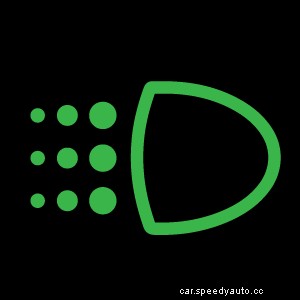
DRL or daylight running lights can be on by default on some vehicles and can be a separate unit from low beam lights.

This indicates that an interior light is on somewhere in the vehicle, most likely caused by a door not fully closed.
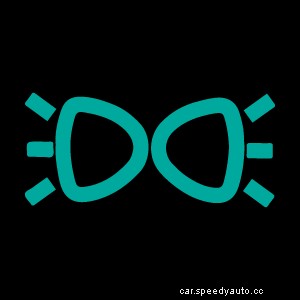
Side or parking lights reminder, or in some vehicles, a DRL indicator.
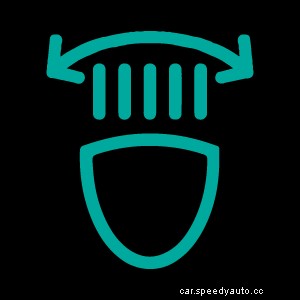
Informs you that directional headlights are on and will follow the road as you corner.
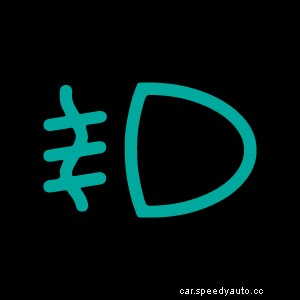
A reminder that fog lights are on, so you can turn them off once the fog dissipates.
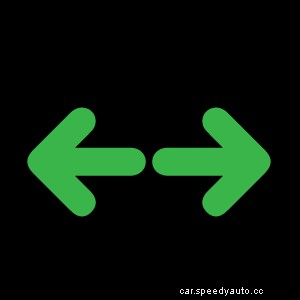
Well-known turn signal blinkers for left and right directions.
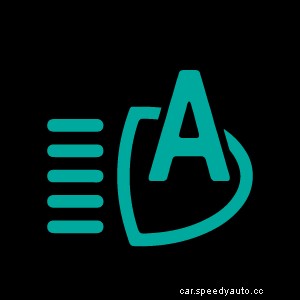
An indicator that the headlights are adjusting to the appropriate beam height.
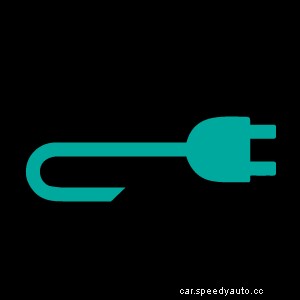
The electric vehicle charging symbol reminds you that the vehicle is connected to a power outlet.
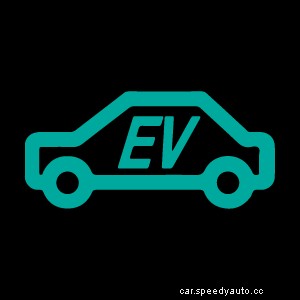
This symbol lights up when a hybrid vehicle enters electric-only mode.

The vehicle enters an eco mode that could indicate optimal electric power operation or low-emission output on a hybrid.
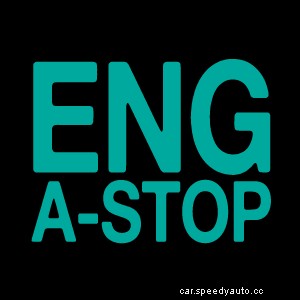
When the engine shuts off at a red light, this symbol tells you that it’s is ready to start as soon as you need to go.
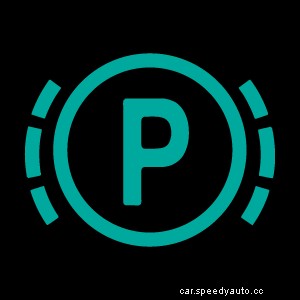
This symbol is present on some vehicles that have an automatic parking brake. It disengages when the brake pedal or gas is pressed.

The amber parking sensor could indicate a warning, but a green light means it’s operational.

Rain-sensing wipers will turn on automatically if water or snow touches the windshield, and this symbol will appear on the dashboard.
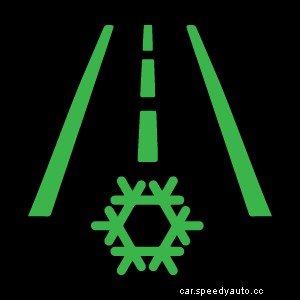
If you’re traversing heavy snow, your vehicle may adjust to the conditions by limiting transmission gears and automatically adjusting acceleration.
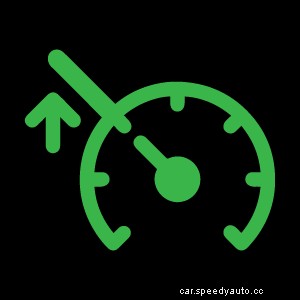
Turning the speed limiter on will engage the dashboard light to keep you aware of why the vehicle isn’t accelerating.
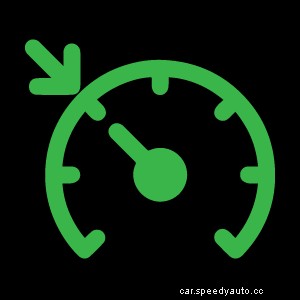
By engaging cruise control, this dashboard indicator will appear as a reminder.
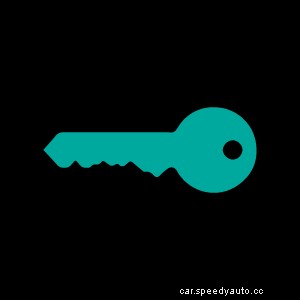
This symbol will appear when the engine isn’t running to remind you not to leave the key inside the vehicle.

An informational symbol that indicates there’s a security problem, most likely caused by an attempt to start the engine with locked doors.
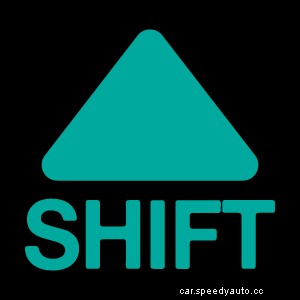
Some vehicles with manual and semi-automatic transmission have a gear shift advisor that’ll help maintain optimal fuel economy.
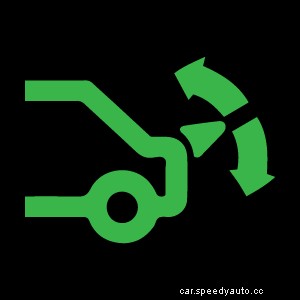
You will see this symbol if the rear spoiler is manually engaged or if it fails to retract.
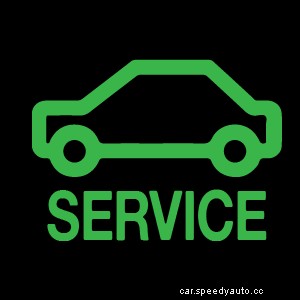
Service reminders can appear in a variety of colors, including green. It gives you a prompt warning to perform regularly scheduled service.
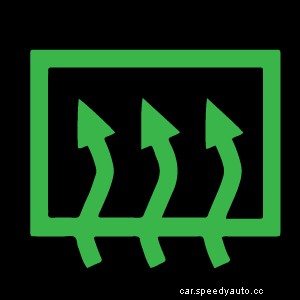
If you turn on the rear window defroster, you’ll get a dashboard reminder to turn it off when the deicing process is done.
Ventilation indicators do not show up on the driver’s dashboard, but rather on the center console. Typically in white, or the backlight color of the manufacturers choice.

This indicates that the ventilation has been turned off.
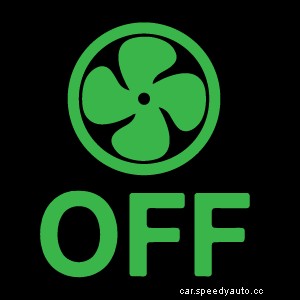
This icon will briefly appear as a notice that the ventilation has been turned off.

Ventilation is flowing towards the upper part of the seats.

Ventilation is flowing towards the lower part of the seats.

This symbol indicates that the airflow will pass through lower and upper ventilation ports.
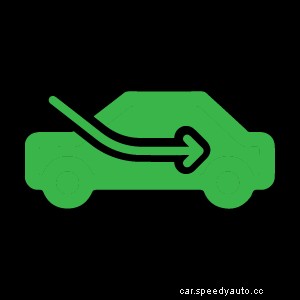
The presence of this symbol indicates that outside air is used for ventilation, not AC. In some vehicles, like Audi, it’s called “ECON”.
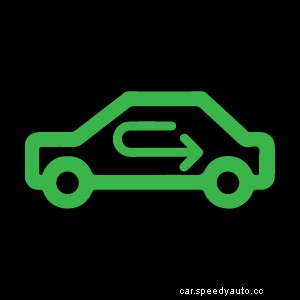
Air recirculation will only use the air inside the cabin, rather than draw in fresh air from outside.
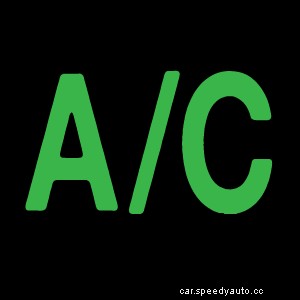
AC symbol indicates that the AC is turned on rather than fresh air ventilation.
You may find more interesting VehicleFreak topics here:
What Does O/D Off Mean In A Car Dashboard?
What Causes a Clicking or Knocking Noise in the Dashboard?
How To Keep Dust Out Of A Car – Keep That Dashboard Dust Free!
