
We all know how important oil is for our cars. Having the correct oil levels can improve the efficiency of our vehicle and also help to keep our car in tip-top health. But at some point, we may find ourselves in a situation where we have no choice but to mix the oil we usually use.
Whether the store doesn’t have the brand you usually use or if you have two weights that you are thinking of using, it could be a time where we are thinking “Can you mix different weights of oils? Will it harm the engine on my car?”
Essentially mixing oils is thought to be ok but only if you are desperate, I mean any oil is better than running a car without oil. However, it is important to understand that when it comes to mixing oils it is not recommended and drivers should try and stick to the same weight of oil that is recommended by the car manufacturer.
Your car engine runs with a large number of parts all of which are metal. These parts need to be constantly lubricated to ensure that they function effectively and that your car engine has a long and happy life. The only way that this constant lubrication can take place is with the use of oil.
However, not all oil is going to be good for your engine and this is why it is always recommended that you use the type of oil that your car manufacturer recommends. This will help to keep your engine running smoothly and efficiently.
But sometimes it isn’t always possible to get the recommended oil and motoring emergencies may leave you with no choice but to mix different oils. So what different types of engine oil are available and what do all those numbers on the bottles mean?
There are many different types of oil on the market and it is easy to get confused as to which one you should be using in your car. Should you be using regular oil, semi-synthetic or pure synthetic oil?
Each blend of oil has its own advantages and will be best suited to certain engines. But they also have their disadvantages as well and can often vary in price hugely.
The term ‘weight’ of oil is based on viscosity. Viscosity is how well the oil will flow at certain temperatures. The higher the number on the oil bottle the thicker the oil. The thickness of the oil will determine how it behaves inside an engine and how well it will lubricate the engine parts.
An oil with the number ’30’ will be faster flowing but have a lower protection barrier than oil that is classified as a ’50.’ A ’50’ oil will generally work better under higher heat intensity.
Mixing oils with the same weight number is definitely better than mixing a 30 oil with a 50 oil. However, this is only recommended for top-up situations and not for a complete oil change.

It is recommended that you only use the oil that is specifically for your make and car model. Always check the driver’s manual for the best oil to use. Using an oil that is too thick could potentially cause damage to your car.
In some cases, you may find that you have no choice but to mix oils but it is important to understand that this is only ok in emergency situations. Semi and pure synthetic oils are compatible if you need to mix them with only a slight difference in the additives.
There is also no known source to say that when these two are mixed that they would cause harm to your engine. Just remember that when mixing these two your oil change may come around quicker than expected.
There is nothing worse than finding you are out of the brand of oil you usually use. When you get to the store you realize that they too are out of the brand you prefer for your car.
If you are in need of a top-up of oil then using a mix of different brands is thought to be ok and won’t cause any damage. It is best not to make a habit of this and when you can complete an oil change return to the oil that you usually use.
I recommend buying more than you need so you always have some leftover in emergencies. Different brands of oil have different chemical makeup so it is important to recognize that this should only be done in situations where you have no other option.
Mixing oils can affect the overall efficiency of your usual motor oil and hence affect your engine’s performance. It is recommended to stick to the oil recommended by your manufacturer.
This is thought to be ok to do but you need to be aware that the viscosity will be in between the two. This is determined by how much of each oil is put into your car.
Using a thicker oil in your engine will affect your fuel consumption, doing this as a short-term change won’t damage your engine. However, using a thicker oil on a regular basis will shorten its lifespan. Using a thinner oil than recommended can cause excessive wear on your engine.
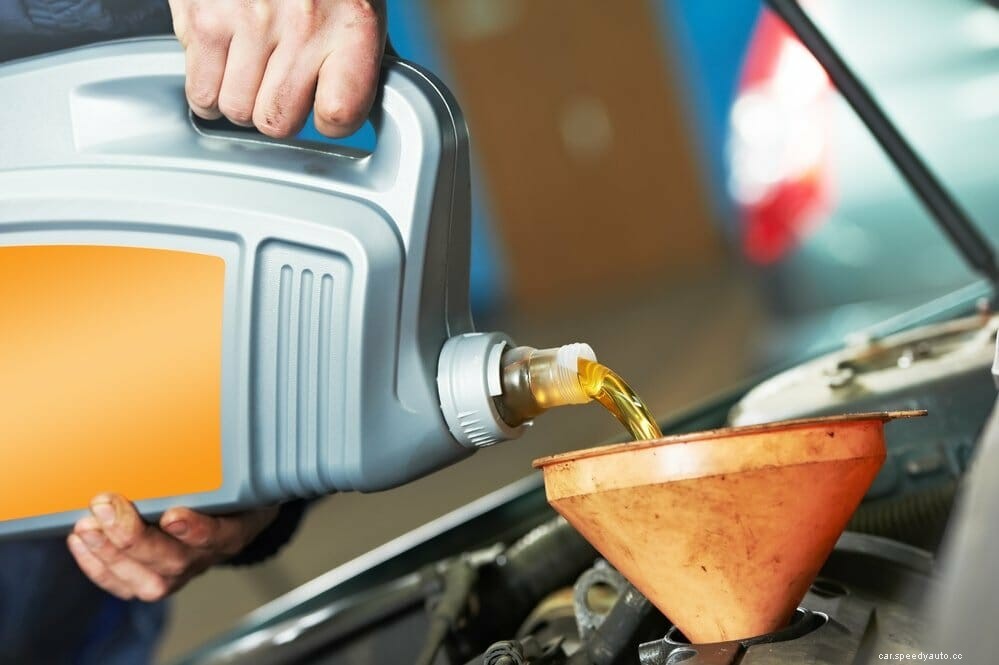
0w20 and 5w30 are known to be the best oils in their group. They are known as multi-grade oils and are available in many stores. Using one of these oils instead of the other will not affect your car’s performance.
Overall it is strongly recommended that you try to stick to the oil that your car manufacturer advises. Oils differ in viscosity and where many grades are compatible to mix it will not improve your engine’s performance and if mixed regularly it can hinder the life span of your engine.
Mixing oils should only be done if you’re in need of a top-up. You shouldn’t notice a difference in your car’s performance in the short term but you will if left running for a long journey or if mixing oils has become a regular occurrence.
After all, some oil is definitely better than no oil but your engine and wallet will thank you for sticking to the correct viscosity oil for your car.
