
If you’re like most drivers, you probably don’t think about your car’s power steering fluid until there’s a problem. And if you’re like most drivers, you also don’t know how to fix it if there is a problem. So the first question you ask yourself is: can I mix power steering fluid?
You may mix different brands or types of power steering fluid as long as they comply with the same specifications. It’s preferable to utilize the same type of fluid that was in your automobile originally to avoid any issues.
Fortunately, this article will teach you everything you need to know about power steering fluid, including what it is and how to mix it.
Power steering is a system in a vehicle that helps drivers steer by using hydraulic fluid pressure. A pump supplies the pressure, and hoses direct the fluid to the steering gear.
A belt from the engine usually drives the power steering pump. When you turn the steering wheel, a piston in the steering gear multiplies your input force, making it easier to steer.
Power steering systems make it easier to steer at low speeds when the turning radius is small and when tires have high rolling resistance (like when they are new or cold). They also help reduce driver fatigue on long trips.
So, how does this work?
When you turn the steering wheel, it turns a shaft that goes down into the steering gearbox. The steering gearbox contains a piston that is connected to the shaft. The piston has an opening in its middle that gets smaller as the piston moves.
The power steering pump is constantly pumping hydraulic fluid under pressure into this opening. When the opening is small, the fluid can’t flow through very easily, and so it has to be under a lot of pressure to get through. That’s what gives you the extra force to help you steer.
As you turn the wheel back to the straight-ahead position, the opening in the piston gets bigger again, and so there’s less resistance to the fluid flowing back out.
You might have noticed that it takes a bit more effort to turn the wheel when you first start driving after your car has been sitting for a while. That’s because the fluid in the power steering system has had a chance to cool down, so it’s not as thin as it normally is.
You might also notice that when you’re driving in cold weather, your steering feels a bit heavier than usual. That’s because the temperature affects the viscosity of the hydraulic fluid, making it thicker and more difficult to flow through the system.
Power steering is a great safety feature that makes driving easier and less fatiguing for drivers. It’s important to keep your power steering system in good working order by checking the fluid level regularly and having it serviced according to your car manufacturer’s recommendations.
Most carmakers recommend changing the power steering fluid every 30,000 to 50,000 miles, although some do not have a recommendation.
If you frequently drive in stop-and-go traffic, tow a trailer, or drive in mountainous terrain, you may need to change it more often. You also may need to change it sooner if the steering feels spongy or if you hear whining or grinding noises when turning.
Some mechanics flush power steering fluid as part of routine maintenance. Flushing involves removing all the old fluid and replacing it with new fluid. It’s generally not necessary to do this unless you have steering problems or are changing the type of fluid.
Most power steering fluids are compatible with each other, so you can mix different brands or types if they have the same specifications. However, it’s best to use the same type of fluid that was originally in your car to avoid any potential problems.
If you do need to add fluid to your power steering system, make sure you add the correct amount. Too much fluid can cause foaming and air bubbles, which can reduce the efficiency of the system and cause noise. Not enough fluid will make it hard to steer.
It’s also important to use the right type of power steering fluid for your car. There are different types of fluids, depending on the make and model of your car. Some fluids are compatible with all types of power steering systems, while others are not.
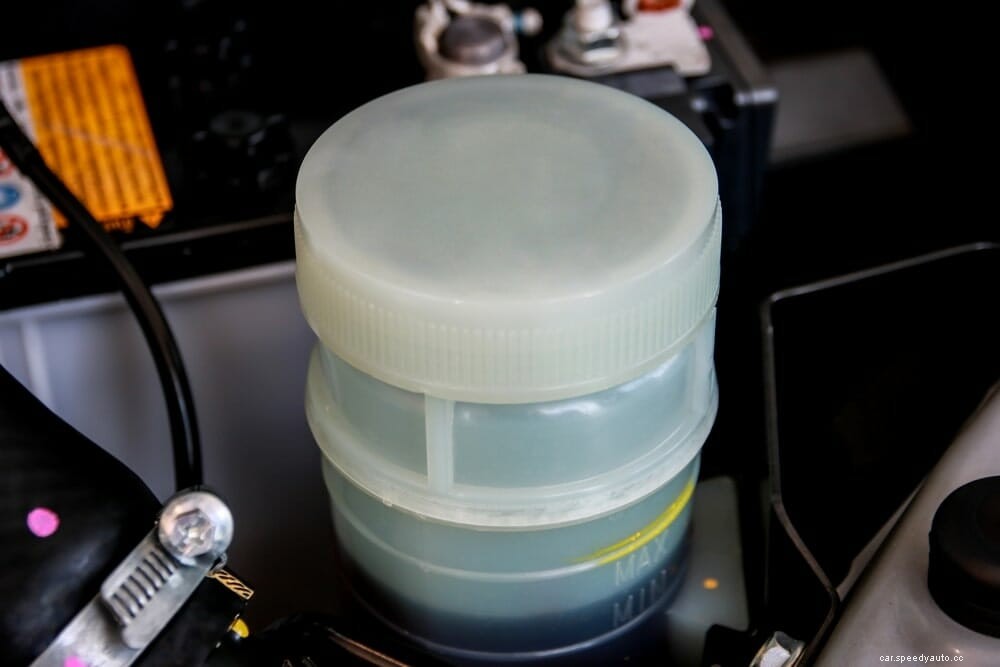
If you’re not sure what type of fluid to use, check the owner’s manual or ask your mechanic. You can also usually find this information on the power steering reservoir.
If your car is starting to have steering problems, or a mechanic has told you that you need to flush the power steering fluid, it’s not a difficult task to do yourself.
You’ll need about two quarts of power steering fluid, a catch basin, and some rags. You’ll also need a turkey baster or syringe if your power steering reservoir doesn’t have a drain plug.
First, locate the power steering reservoir. It’s usually found near the front of the engine bay on the driver’s side. Once you’ve found it, remove the cap and set it aside.
If your reservoir has a drain plug, skip to the next step. If not, use the turkey baster or syringe to remove as much fluid as possible from the reservoir.
Next, locate the power steering pump. It’s usually on the passenger side of the engine, near the front. Once you’ve found it, trace the high-pressure hose back to the power steering reservoir. This is the hose that you’ll be flushing.
If your car has a return line, it will also be attached to the power steering reservoir. You don’t need to flush this line, as new fluid will automatically flow through it when you start the car.
Now, put your catch basin under the high-pressure hose where it attaches to the power steering reservoir. Use a pair of pliers to loosen the hose clamp and then remove the hose.
If fluid starts to spill out, quickly put the hose back on and tighten the clamp. You may need a helper for this step.
Once the hose is removed, place your finger over the end of the hose and have your helper turn on the ignition. The power steering pump will start, and fluid will flow out of the hose. When it starts to get close to empty, turn off the ignition and put the hose back on.
Tighten the clamp and then check the power steering fluid level in the reservoir. Add more fluid if necessary.
Repeat this process until you’ve flushed all the old fluid from the system. Once you’re finished, start the car and check for leaks. If everything looks good, you’re done!
There are a few different things that can cause power steering problems. Here are some of the most common:
One of the most common causes of power steering problems is low fluid levels. If your fluid levels are low, then your pump won’t have enough pressure to generate the hydraulic force needed to assist in steering.
Another common cause of power steering problems is leaking. If there’s a leak in your system, then fluid will slowly leak out, causing your system to lose pressure and making it harder to steer.
Another potential problem is air in the system. If there’s air in the system, it can cause cavitation, which is when bubbles form in the fluid. Cavitation can cause your pump to work less efficiently and make it harder to steer.
Over time, parts of your power steering system can wear out. This can include the pump, the hoses, and even the rack and pinion. When these parts start to wear out, they can cause steering problems.
If there’s a problem with the electrical system that powers your power steering, then it can cause steering problems. This could be due to a problem with a fuse, a relay, or even a wiring issue.
If you’re experiencing power steering problems, then it’s important to take your car to a mechanic and have them take a look at it. They’ll be able to diagnose the problem and let you know what needs to be done to fix it.
If you’re experiencing any of the following symptoms, then it’s time to take a look at your power steering:
If you’re experiencing any of these symptoms, then it’s time to take your car to a mechanic and have them take a look at it. They’ll be able to diagnose the problem and let you know what needs to be done to fix it.
There are a few different ways that you can fix power steering problems. Here are some of the most common:
If you have air in your power steering system, then you’ll need to bleed the system. This involves opening up the power steering system and letting air out until there are no more bubbles.

It’s important to note that bleeding the power steering system is a messy job. You’ll likely get power steering fluid all over your hands and clothes. So, it’s a good idea to wear gloves and old clothes when you do this job.
Yes, a bad power steering fluid can damage the pump. The pump is designed to work with specific types of fluid, so using the wrong type of fluid can damage it. Additionally, if the fluid is old and degraded, it can also damage the pump.
Power steering is a hydraulic system that helps drivers steer their vehicles. The system uses fluid to generate pressure, which then aids in the wheel turning.
Changing the power steering fluid every 30,000 to 50,000 miles is advised by most carmakers. You may need to change it more frequently if you drive in stop-and-go traffic, tow a trailer, or drive in hilly terrain on a regular basis. You may mix different brands or types of power steering fluid as long as they meet the same specifications. It’s preferable to use the same type of fluid that was in your car originally to ensure there are no problems.
You may mix different brands or types of power steering fluid as long as they contain the same specifications. To avoid any problems, use the same type of fluid that was originally in your automobile.
If you’re not sure what type of fluid to use, check the owner’s manual or ask your mechanic.
