
Have you ever noticed strange water sloshing sounds coming from your car’s interior? If so, then you might be wondering what it is and how to stop the noise.
The sound of water sloshing in your car is commonly caused by a failing windshield wiper motor. It can also be caused by a leaky sunroof, damaged seals on windows or door frames, or a cracked windshield. Depending on where you are hearing the sound, there can be several different causes and different steps to solve them.
We’ll discuss methods of troubleshooting this issue and how to fix it.
There are many possible causes for water leaks in a car’s interior, but some of the most common ones include:
If you are experiencing a water leak in your car, there are several steps that you can take to troubleshoot and fix the problem. Some of these steps include:
The water sloshing sound may also come from the passenger side of the car. There are drain holes on both sides, so don’t assume that this is water sloshing only from the sunroof. It may come from anywhere, which means it can be multiple locations with clogged drain holes.
The following are possible causes for this issue:

You may hear the sound if the drain holes are blocked. This is easier to detect as you can inspect the drain lines and see if the water is clogged. Simply clear the drain lines if there is any dirt or debris stuck inside.
Some vehicles are poorly designed with a reservoir around the sunroof’s perimeter. This reservoir collects water when it rains, and the small drain holes cannot be put up with the water.
As a result, it gets clogged, and that’s why you hear the water sloshing sound when you drive. The water will be collected on the passenger side of the vehicle.
You may also hear this sound if there is a loose connection to the sunroof assembly, and the water is collecting and sloshing around as you drive.
It’s possible that the drainage system was designed with smaller diameter holes; however, we haven’t seen anything like that with any manufacturer in our experience.
If there are gaps in your door seals, or if there is compromised weather stripping on either side of your door, then water will get into the cabin when it rains; this can cause many cosmetic concerns such as mold in carpets and seats which must be addressed.
After decades of use, dirt, and particles may get into the drain holes. This can slowly clog them up, resulting in this sound when it rains. You sometimes hear if there is a worn-out rubber gasket around the perimeter of the sunroof which moves back and forth with temperature changes.
It’s normal for these gaskets to be replaced every few years because they get hard over time due to exposure to sunlight. By replacing your old gaskets with new ones, you get rid of this water sloshing problem.
If not related to any other parts above, this defect limits the efficiency of your sunroof’s drainage system, resulting in water sloshing sound when you drive under rainy conditions.

Sometimes, when you turn on your car’s engine, you may notice that there is water sloshing in the radiator.
This occurs due to air bubbles in the coolant. When you start the car, these bubbles get pushed to the top of fluid along with any additional trapped air. In turn, they form a mixture that causes a sloshing sound heard from inside your cabin.
Once the mixture gets forced out by the engine, it dissipates. This is similar to shaking a bottle of soda before you open it; only here the air bubbles are creating some noise inside your cabin.
However, if you continue to hear this sound after starting your car or notice signs like puddles or water droplets on the ground beneath your vehicle after driving, then there may be an issue with your heater core.
If that’s the case, you should see a mechanic immediately to get it inspected and repaired as soon as possible because this can turn into an expensive problem in the future.
You can follow these steps before taking your vehicle for inspection at a service center:
Note: This sloshing sound is normal during starting. However, if you continue to hear it or see signs like water droplets underneath your car after driving, then there may be an issue with your heater core.
The sunroof is a good solution for those who drive in hot climates and like to keep their car cool. But as time goes by, the seal between the sunroof and the surrounding roof may wear out.
If this happens, water will drain into your vehicle every time it rains or you wash your car. As the water drains down to the drain holes, it may not all be able to get out right away – which can cause sloshing sounds when driving.
The clogging of these drain holes can also lead to water leaking onto your headliner eventually leaving stains on your ceiling and falling into the interior if left alone for too long. If this happens to you, here’s how you can diagnose and unclog your sunroof drain holes.
Materials you need
Estimated Costs
Difficulty level out of 10 (1 being easy and 10 being difficult)
Tools required
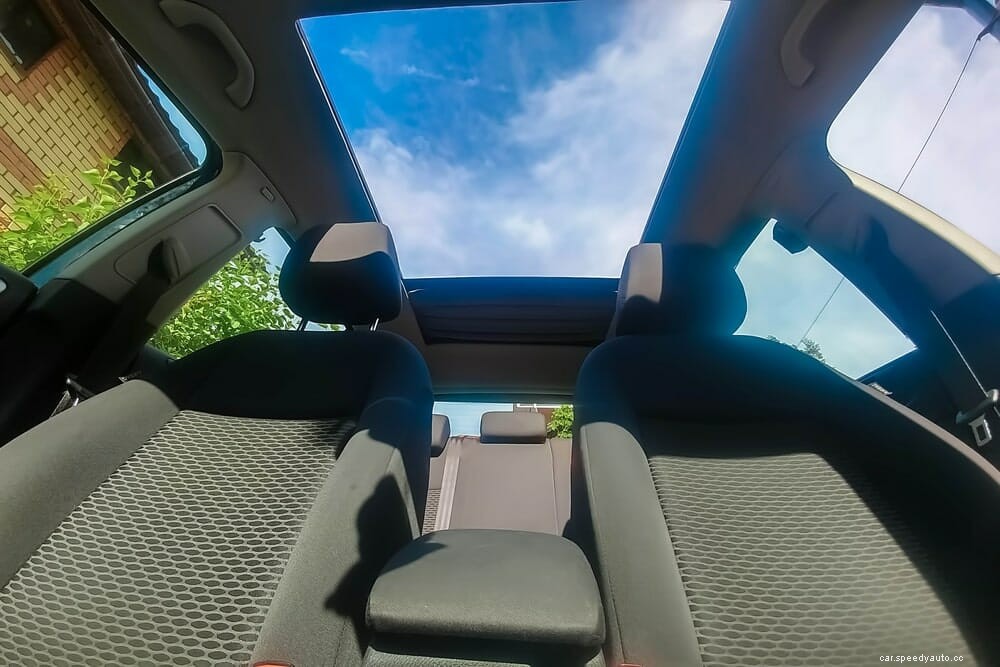
Open the sunroof and locate the screws that hold down your headliner around your sunroof opening. There will be one screw on each side of the window. Remove these two screws using a Phillips head screwdriver, being careful not to drop them into the car’s interior.
With a flat head screwdriver, pry open the plastic cover where you just removed those two screws by opening it like a clamshell along all of its seams until you can pop it out of there completely (see image). By popping this off, you can access all four corners as well as underneath your car’s headliner (see images).
Pull down the headliner so you can see underneath it and locate a small drain hole that is at least 4-5 inches in diameter (see image). This will be your main focus, but if you have more drain holes from other places around your sunroof area, make sure to check them all.
In order to unclog the sunroof drains, you’ll need a bucket of hot water, a sponge or towel for wiping out any debris stuck inside the holes, and scissors/a sharp knife for cutting off excess pieces.
The best way to do this will be to fill up a bucket with hot water and dip your towel into the hot water before squeezing it out over the top of where the drain holes are. Make sure to do this around the entire circumference of the drain holes so you can find any hidden clogs that may exist (see image).
If you do not have a long enough hose for your garden, then go out and buy one. The cheapest option will be the blue type used for window cleaning. Get your hose ready to reach down into the hole (if it doesn’t already) and start rinsing away until all the debris is gone from the hole.
You might want to use some soap or shampoo mixed with water to make it foam up if you’ll be using a bucket rather than a hose to rinse off the suds (see image).
Once you’re confident that no debris is stuck in your drain hole, you can dry off your car’s interior with a towel and replace the clamshell plastic piece over the top of it by popping it back into place.
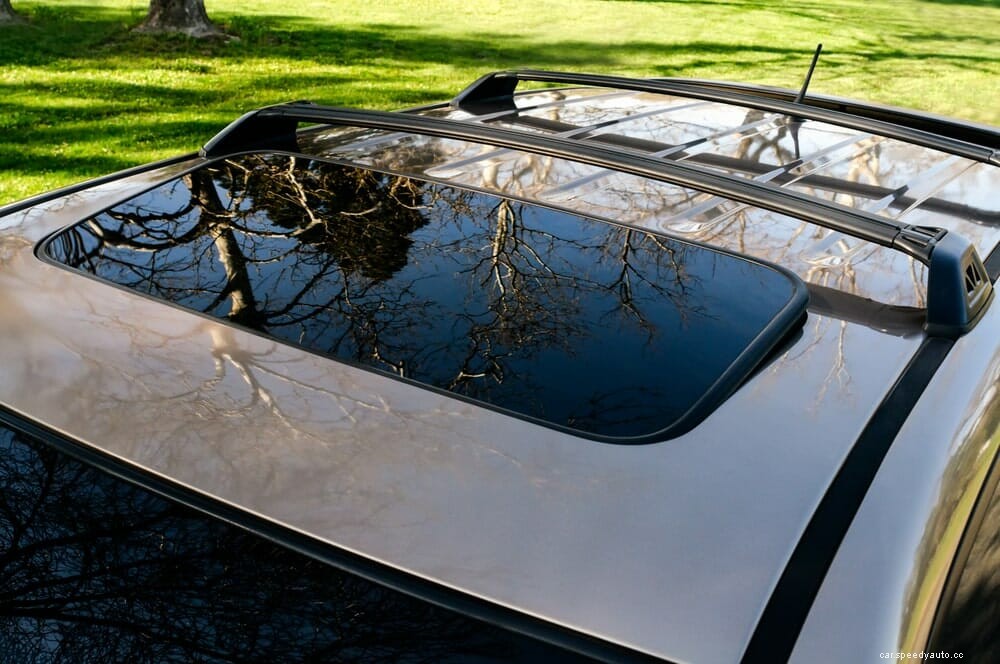
The sunroof should be operational again and all dried-out water stains on the headliner should come right out after using some glass cleaner. If they don’t, then just use a wet towel to clean those areas as well.
While you’re up replacing that headliner cover if needed, pull down any excess material that has not been cut away from the sides of the window.
Once everything looks good around your car’s sunroof opening, reinsert the two screws that you removed earlier back where they came from to hold your headliner in place.
That’s it! You’re all done. Now the only problem that may exist is if water starts dripping into your car during another rainstorm; then, you’ll need to find the source of the leak and repair it right away before too much damage can occur.
But for now, you’ve successfully unclogged your sunroof drains and restored them back to good working order!
One of the symptoms of problems with the air cooling system in your car is water sloshing around when you accelerate. Sometimes sloshing sounds can be addressed by refilling the coolant reservoir to a low level, then having it filled properly during an oil change or service visit.
In most cases, however, this isn’t enough to get rid of the noise entirely.
Here are the steps to take:
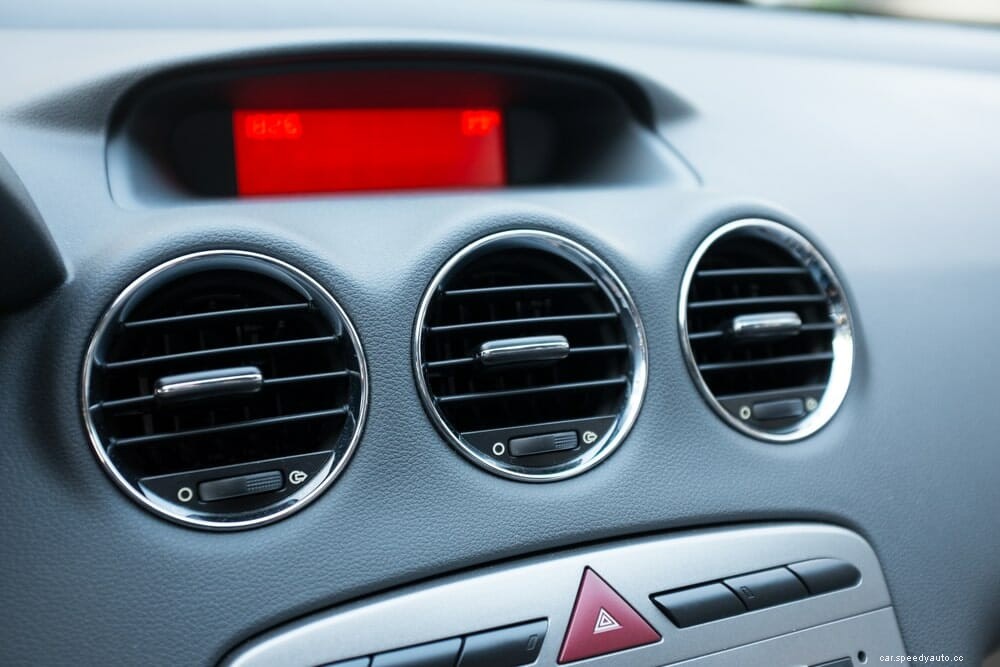
Start your engine and let it idle for two minutes to get both the oil and coolant in your car moving around. You will be able to hear the water sloshing more in this time frame than when the engine is cool.
Remove any overflow bottle that you have on your car; then, turn off your car’s engine. If there is no overflow bottle on your car, skip this step.
The air conditioning system has air bubbles in it. This might be what you are hearing (and not water).
Using a shop vacuum, suck the coolant from your radiator and heater tubes. This will remove most of the air bubbles in a proper cooling system that is properly functioning.
Once you’ve removed all of the air from your cooling system with the vacuum, refill your car’s radiator with brand-new antifreeze/coolant (use half water and half antifreeze). After refilling it up to its maximum levels, let the engine idle for two minutes. If it gets hot, shut the engine off and let it cool down.
Once the engine has cooled, repeat step one and take your car for a test drive. If you do not hear the sloshing sound again, then this process worked for you. Otherwise, if the noise persists, come back to this article and follow these steps until they work.
If all else fails and you still hear water sloshing around when you accelerate after doing all of the above, there is a good chance that your air cooling system is no longer working properly (and may need to be replaced).
However, please note: If an overflow bottle exists on your car, you might hear the sound when it is full. This does not mean that your air cooling system isn’t working properly; it just means that this is likely what you are hearing.
If your car overheats or starts running hot, try these steps again to see if they work. If they do not work, then you will need to bring them into a shop for servicing and repair (and possibly replacement).
You can follow all of these steps above to remove most of the water sloshing around inside the heater core, but if done too many times with no success, there is a very high chance that your car is very near the end of its life.
Determining the sloshing noise being caused by your air cooling system can be difficult since there are so many other factors that can cause it as well (such as engine problems). If you come across multiple issues with your car at once or do not know what’s causing all of these symptoms, visit a professional.
Yes. An under-filled cooling system can cause water sloshing in the interior of your car when you accelerate or go up a hill because there is not enough coolant to handle the heat being generated by the engine and nothing left over to keep things from overheating.
A common reason for this problem is that people forget about their radiator until it’s too late. Another reason could be that the car was not completely filled with coolant when you bought it, or due to an accident at some point in time where fluid leaked out of your radiator and went unnoticed.
If either one happens a few times over many years, there might only be enough coolant left inside the system to keep things running when you drive very short distances or sit in one place.
As the coolant level gets lower and lower over time (if it’s not being checked), there will come a point where water sloshing can start to be heard inside your car. Once that happens, the problem is just going to get worse until eventually the engine overheats and will need to be replaced.
If you are hearing water sloshing inside your car, it’s a good idea to get some coolant added as soon as possible so that this problem doesn’t develop any further. This is especially true if the sound gets louder when you accelerate or go up hills (due to lack of coolant).
The reason that the water sloshing sound is so loud in some cars (while barely audible in others) has to do with how much noise canceling material exists within your car’s interior. Some vehicles have very little or no noise cancellation, while others have a lot of it.
If the interior noise-canceling material does not do its job adequately, there will be a greater chance for you to hear the sloshing sound in your car when you accelerate or go up hills. Again, this is especially true if coolant levels are low and/or the engine has overheated at some point in the past.
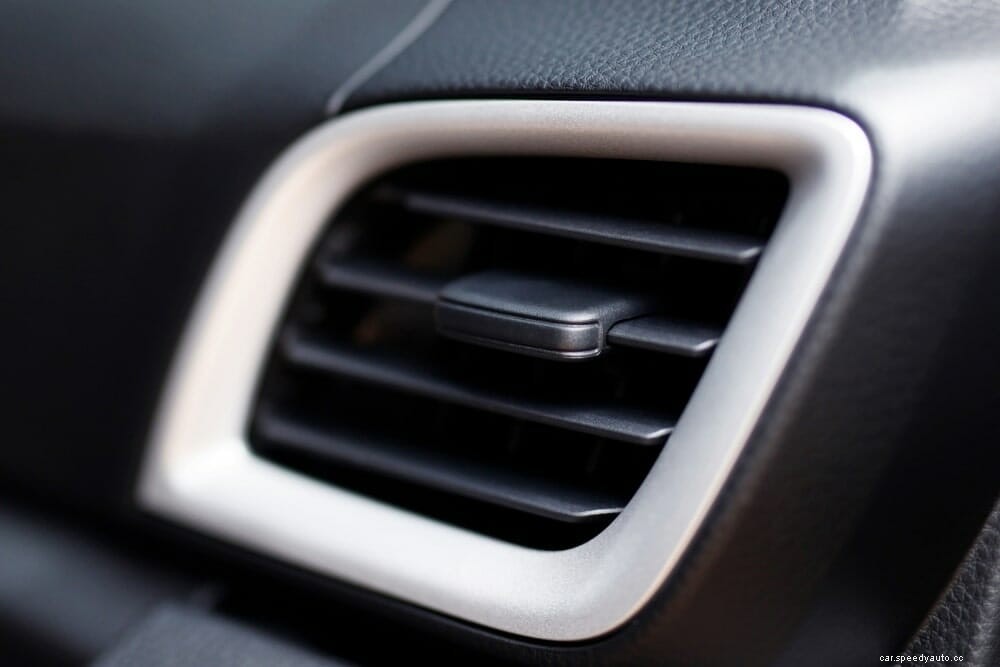
It is possible for a bad car AC compressor to cause water sloshing sounds inside your vehicle, but this would be due to that particular part not being able to handle the heat. In most cases, it’s the engine overheating that causes the water noise and not the AC compressor itself.
If you are hearing a water sloshing sound inside your car, it’s a good idea to take it in for a diagnostic to determine the root of the problem. You might have multiple issues with your car at once or do not know what’s causing all of these symptoms. In either case, visit a professional.
There are a few different reasons why you might be hearing water sloshing in the back of your car. One possibility is that there is a problem with your washer fluid reservoir, which could cause leaks and subsequent water accumulation on the ground.
Another reason for water accumulation in the back of your car could be a clogged drainage system. This can often be caused by leaves, dirt, or other debris getting caught up in the drains over time and preventing proper drainage from happening.
If you are noticing water accumulation in the back of your car, it’s important to clean out the drainage system as soon as possible so that further damage does not occur. You may need to get underneath your car to do this yourself or take it to a mechanic if you’re not comfortable with doing it yourself.
If there is still water sloshing even after cleaning out the drainage system, then you might have a bigger problem on your hands and should take it in for a further diagnosis.
There are a few possible reasons why you might be hearing water sloshing in your car’s trunk. One possibility is that there is a problem with the drainage system, which could be caused by leaves, dirt, or other debris getting caught up and preventing proper drainage from happening.
Another reason for water accumulation in your car’s trunk could be due to a damaged seal on the lid. This can oftentimes happen as a result of an accident or improper storage (leaving the trunk open for an extended period of time).
If you are noticing water accumulation in your car’s trunk, it’s important to clean out the drainage system as soon as possible so that further damage does not occur. You may need to get underneath your car to do this yourself or take it to a mechanic if you’re not comfortable with doing it yourself.
If there is still water sloshing, even after cleaning out the drainage system, then you might have a bigger problem on your hands and should take your car in for further inspection by an experienced technician.
While water sloshing sounds in your car might be annoying, it’s important to know that there are ways to fix it. Pay close attention to where you are hearing the sounds and that will help you narrow down the possible causes. If you’ve tried to solve the issue yourself and are not having much luck, you can always take it to a local mechanic to get the issue resolved.
