
If you own a car, you already know that the battery powers the ignition system of your car. And if your battery fails, you won’t be able to start your car. But if the lights and radio work, it indicates that the battery is working right.
This statement is not entirely true. So if you are wondering why my car won’t start but the radio and lights are working, a dead battery could also be the reason.
Apart from that, there are many other components that need to work in sync to start your car. Whenever one or more of the components fail, you won’t be able to start your car.
The ignition system in your car is one of the most complicated systems. The battery generates the power, but many other components work towards starting your car. A lot of people assume that a working battery is enough to start your car.
All the components need to properly function as well in order to start your car. During ignition, fuel is burnt inside your engine. This powers the engine and starts your car.
The ignition system comprises an ignition coil, distributor, distributor cap, rotor, plug wires, and spark plugs. Once the fuel is delivered to the ignition chamber, the ignition coil produces the current that is sent to the spark plugs. This ignites the fuel which starts your car.
The whole process is powered by the battery. So obviously it is necessary to start your car. But just because your battery works doesn’t mean that your car will surely start.
The most common reason why your car might not start is due to a dead or dying battery. If you are thinking that your battery is in pristine condition just because the lights and the radio works, you are wrong. This observation is not enough to conclude that your battery is working.
A dead battery will not be able to maintain a charge. It will work, but it won’t produce enough current. The radio and lights don’t require a huge amount of power to operate. It only needs about 30 amps to power up.
Compared to this, your engine needs around 10 times more current to start. So, there is a chance that your battery has a charge, but not exactly adequate to start the car.
If your lights and radio are working it means that there is still a small charge in your battery. That is a good thing. The first thing to do is a physical inspection. Look for damage, corrosion, or leaks in or around the battery.
There is not a lot you can do if your battery is damaged or leaking. In this case, the best option is to replace the battery. But if the terminals are corroded, you can use sandpaper to remove the rust and try starting your car.
Rust in the terminals can affect the current flow in your battery. Removing the rust might be all you need to start your car.
A physical inspection will not give you a conclusive answer on whether your battery is dying. So, to accurately check whether your battery works, you need to test it with a multimeter.
First, you need to prepare for the job. Make sure you are not wearing any jewelry or any other conductive material. Choose a dry workspace, when you are working on electrical components in your car.
Now, set your voltmeter to the 20V setting. Connect the multimeter’s red probe to the positive terminal of the battery. The black probe of the multimeter goes to the negative terminal.
Now the multimeter will immediately display a reading. If the reading is less than 12.6V your battery is not in working condition. This indicates that you have a bad battery and need to get it replaced.
The current it produces might be enough to power the radio, lights, and other electrical components, but it won’t be enough to start your car.
There are numerous reasons why your car won’t start. The problem could be in the engine or the ignition system. But by assessing the symptoms, you can narrow your list of culprits. Here are some possible reasons if you are asking, why your car won’t start but the radio and lights work.
As we mentioned earlier, the battery is the most probable reason why your car might not start. Batteries do not have an extended lifetime as other components in your car. So as your battery gets older, it loses its ability to produce enough power to fire up the engine.
Often people tend to mistake a working light and a working radio for a functioning battery. Then they tend to go into a rabbit hole examining other possible causes, only to come up empty-handed.
If your battery is in perfect condition and is generating enough power to start the engine, the next components to check are the fuses and the ignition switch. The location of the fuse box varies from car to car. So use the owner’s manual to locate the fuse box.
Once you locate the fuse box, look for damage. The wires can be damaged or corroded. This might be the reason why your engine won’t turn over. If the fuses are damaged, they need to be replaced.
If the fuses are fine, move on to the ignition switch. Accessing the ignition switch is a bit more complicated than the fuse box. The ignition switch is the electrical switch that is activated as you turn your key. It is situated in the key housing. This switch turns when you turn the key on ignition.
If the switch is damaged the entire system will be useless. The circuit needs to be complete for your battery to sen power. So, even if your battery is working properly, if your ignition switch is faulty, your car won’t start.
There are a few common symptoms that you might notice when your ignition switch is about to fail. It will directly affect the electrical supply to your car.
You might notice that all the electrical components might not come online as they are supposed when you turn the key. Your car could even stall mid-drive if your ignition switch is faulty.
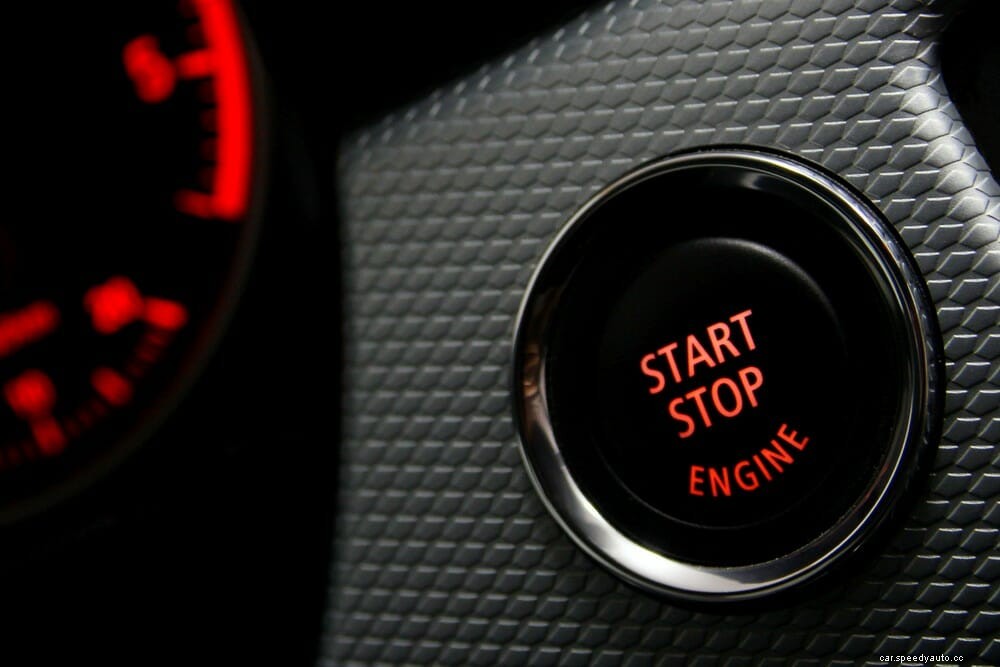
If the electrical accessories are working fine, but the car is not starting, this is the prime suspect. The started motor is powered by the battery and cranks the engine by providing torque when you start the engine.
Once the engine fires up, it will work without the assistance of the starter motor. But to get it started the starter motor is necessary.
Usually, when the stater motor is about to fail, you will hear grinding noises as it operates. That is when you turn the key in your ignition. The motor might remain to crank even after the engine fires up if the starter motor is about to fail.
If you hear a whining noise when you turn the key, that could also be caused by a bad starter motor.
This is often caused by wear. The pinion gear inside the motor wears out, and instead of engaging the engine’s flywheel, it starts to spin freely. This is also called freewheeling.
Diagnosing the starter motor is pretty easy. Let someone else turn the key, and you stand neat the engine with the hood popped open. When the key is turned, observe the noises created. If you hear clicking noises, that is a sign that your starter motor is working fine.
But if you hear a single clicking noise or no clicking noises at all, then it is an indicator that you have a bad solenoid in your starter motor. You would have to pull out the voltmeter if you want to check whether the solenoid is functioning.
This might sound stupid, but this is not as rare as you think. Often people tend to overlook simple solutions. So before you blame the engine, battery, or any other component, ask yourself, do you have enough fuel?
You probably have an idea of how much fuel you have remaining due to the fuel gauge in the dash. Since this indicates the fuel level in your tank, if you are empty, you should be able to get notified quickly. But is your fuel gauge accurate?
Faulty fuel level readings aren’t unheard of. An electrical malfunction could provide incorrect readings.
If you have an older car without a fuel gauge, you will have to check the fuel levels using a dipstick. Before you panic in a situation when your car is not starting, check the fuel level.
Okay, maybe you have a full tank of gas. But are you sure that the gas is reaching the engine? The fuel pump sends fuel into the fuel injectors, which send the fuel into the engine. Any faults along these fuel lines could be the reason why your car is not starting.
Usually, the fuel pump and other parts of the fuel line last more than 100,000 miles. They are even known to last over 200,000 miles. But it all depends on maintenance.
While a well-maintained unit will last upwards of 100,000 miles, if the fuel pump and the fuel injectors are ignored during maintenance, then they could give out at around 50,000 miles.
So, how can you test whether fuel lines are working? It is simple. Turn your key to the ACC position. This will start the fuel pump. When the engine is not working, you will be able to hear the fuel pump working clearly.
If you start to hear a hum from the rear end of your car, it indicates that your fuel pump is fine. If the fuel pump is working properly, inspect the bottom of the car for fuel leaks. Maybe a fuel leak is starving your engine from getting an adequate amount of fuel.
In cold regions, sometimes the fuel may freeze. When this happens it won’t be able to flow into the engine. So you need to let your fuel turn back into a liquid before using the car.
To check the fuel injectors, the best option is to check the fuel pressure. Check for the fuel pressure that is pumped by the fuel pump. If the reading is 40 to 45 psi, it is fine.
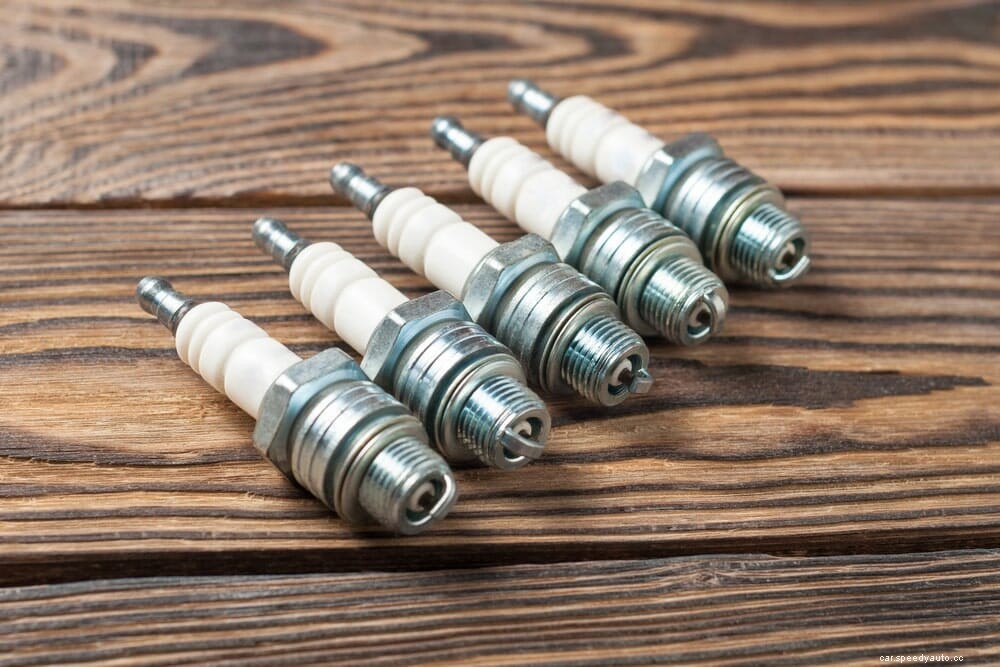
Spark plugs are the actual component that ignites the fuel inside the piston. So when the spark plugs fail, your car won’t start.
But this is quite an unlikely event. For your spark plugs to be the cause, a bunch of your spark plugs needs to fail at the same time. If you ignore the signs of a faulty spark plug, this could happen.
Usually, when one spark plug fails, you will notice that your engine is misfiring. Driving a car that is misfiring is not a good idea. So you need to get your car checked if it misfires.
If the misfires are caused by a faulty spark plug, it will induce the rest of the spark plugs to fail. So this could cause a bunch of your spark plugs to fail, and your car won’t start.
To test the functionality of spark plugs, you need a multimeter to test their resistance. If the test proves that the spark plug is faulty, you need to get it replaced immediately.
The easiest way to check whether your ignition coil is working is to run a spark test on it. This will test whether the coil produces enough electricity to produce a spark.
Most modern cars use a coil-on-plug system. This can be tested using a coil-on-plug spark tester.
These are the most common reasons why your car might not start.
After going through the possible causes mentioned above, you should know that there can be many reasons why your car might not start. So, starting a car that is resisting fire up is not going to be straightforward.
First, by using the methods mentioned above, you need to correctly identify why your car is not starting. Start troubleshooting with the most likely cause to the rarest. Along the way, you’ll be able to find out the component that failed.
Once you find the bad component you need to get it replaced.
The replacement cost depends on the component that has failed. if you are wondering, why my car won’t start but the radio and light are working, troubleshooting and replacing the faulty component is the only option. The cost could range anywhere between $100 to $2000 or more.
If the ignition system is the component that has failed, replacing it will cost around $300. The switch cost around $100 to $200. You should expect to pay around $100 more for labor.
If your starter motor failed, the repair could be more costly. Starter motor replacements cost around $400 to $600. But if the flywheel is damaged, then the repair costs will be higher. A damaged flywheel could set you back around $1500.
Ignition coils and spark plugs are some of the cheapest things to replace. These are easy jobs that you can do yourself. By doing so you would be able to save some extra cash.
Ignition coils cost is in the neighborhood of $300. If you do pay for labor, you should expect to pay around $150. Spark plugs cost around $20 apiece. If you buy it as a set, it would be even cheaper. This is also a repair that does not require a professional mechanic.
Worst case scenario, your fuel line has failed. If the filter needs to be replaced, it will cost around $150. A failed fuel pump is even costlier. It costs around 800 to replace.
The fuel injectors are the costliest component to replace. It could cost upwards of $1200 to replace.
Before you decide on any of these repairs, make sure your car battery is actually working. If not get it replaced before you submit your car to an auto repair shop. Or maybe all you need is some fuel.
Here are some of the most common questions regarding, why my car won’t start but the radio and lights work?
The price of the battery might vary from place to place and the type of car owned. Generally, a car battery costs between $200 to $400.
The life of a battery depends on many factors. With time the battery will get oxidized. This is the white powder that gets deposited under the terminals. This needs to be cleaned regularly. This is just one aspect of maintaining a battery. A well-maintained battery should last up to 6 years.
Used car batteries should be submitted to recycling at well-equipped facilities. This means you should drop off your batteries at your local junkyard, garage, or recycling center.
If you are buying a new battery, usually, you can submit your old battery where you are buying the new one.
If you need to start a car with a dead battery, the best way to do so is by jump-starting your car. If the battery is good, jumpstarting and driving your car will recharge your battery. If not, you can use the jumper cables to start your car during emergencies.
First, you need to choose a good pair of jumper cables. Choose a thick heavy-duty cable. open the hood and locate the battery.
The other ends should be connected to a good working battery. Another car would-be deal. Park the other car in front of yours but leave enough room to move around between.
Now connect the red cable to the positive terminal of your battery and the other end to the positive terminal of the working battery. Do the same with the black cable as it connects to the negative terminal.
Let the car with the good battery stay idle for a while and then try starting the car with the dead battery. Once the car starts, leave it idle for a while so that the battery can charge.
Jump starting is slightly hazardous to the battery. The better alternative is to use a jumper pack also known as a booster pack or a juice pack. The battery in the jumper pack provides power to the dead battery at an appropriate voltage.
This is the best way to protect the electronics in the car while still providing enough energy to jump-start the car.
There are some symptoms that you keep an eye out for to identify when you need to replace your battery. The engine will start to crank slowly and you might hear clicking sounds when you turn the key.
The electrical system of your car will also be affected. The light will be dimmer and you might have problems with other electronic accessories. Above all, the battery warning light in the dash will illuminate.
Your car’s ignition system is one of the complicated systems in your car. A lot of components need to work in sync to fire up your engine. All these components need to function properly so that you can start your car. It depends on a lot more than a functioning battery.
Just cause your radio and lights work doesn’t mean that your battery is fine. Starting the car requires 10 times more power than the power required for the lights and the radio. So, there is a chance that a dying battery is why your car is not starting.
Other than the above, there are many other reasons why your car might not start. All these are unique. The symptoms they emit will allow you to correctly identify the failed component. Once you correctly identify which part needs replacement, you can take step towards fixing your car.
