
First formulated in 1953, WD-40 has become a staple in most mechanics toolkits. From lubrication, loosening rust, displacing water, and more, WD-40 has proven to be a useful tool in a variety of circumstances. However, you may wonder if it is safe to use WD-40 on car paint. Does WD-40 damage car paint?
WD-40 will not hurt a car’s paint. This is due to WD-40 being a petroleum-based solvent, similar to waxes used to polish and protect your car, which is safe to use on car paint.
Furthermore, WD-40 is an excellent tool to use to clean sticky, hard-to-remove items such as tar, sap, and bugs.
WD-40 can be a handy tool to use on your car, but there are precautions to know while using the product, plus other benefits and uses of WD-40. Read on if you want to learn more!
Yes, you can safely use WD-40 on your car’s paint. WD-40 will not damage the paint or the clear-coat layer above due to its petroleum-based formula. The petroleum distillates and paraffin found within WD-40 are also often used in car waxes to create a deep, lustrous shine.
While WD-40 can be used on car paint safely, it should not be used as a substitute for things such as waxes. This is due to WD-40’s quick evaporation time.
While WD-40 can fill small chips and scratches within the car’s paint and clear coat, it will eventually evaporate and not last as traditional waxes would. Furthermore, WD-40 residue is rather sticky, which can lead to a buildup of debris and grime in the sprayed area.
No, WD-40 will not hurt your car’s clear coat. Just like the car’s paint, WD-40 is safe to use on a car’s clear coat because of the petroleum-based formula. However, make sure to remove any residue from your clear coat to prevent a buildup of grime.
While the exact contents of WD-40 are a closely guarded secret, the folks at Wired sent a sample to a laboratory to have it analyzed.
They found that WD-40 is mainly composed of mineral oil, isoparaffinic aliphatic hydrocarbons (think kerosene), flammable aliphatic hydrocarbons, a mix of alkanes, and carbon dioxide (for pressure).
While these chemicals can all be damaging by themselves on car paint, the mix of their sums in WD-40 makes it safe to use on car paint.
Yes, WD-40 is toxic to humans. Some of the chemicals present, such as the flammable aliphatic hydrocarbons, are toxic to both your organs and nervous system. That is why it is important to use WD-40 in a well-ventilated area and to try and minimize any possible inhalation of WD-40.
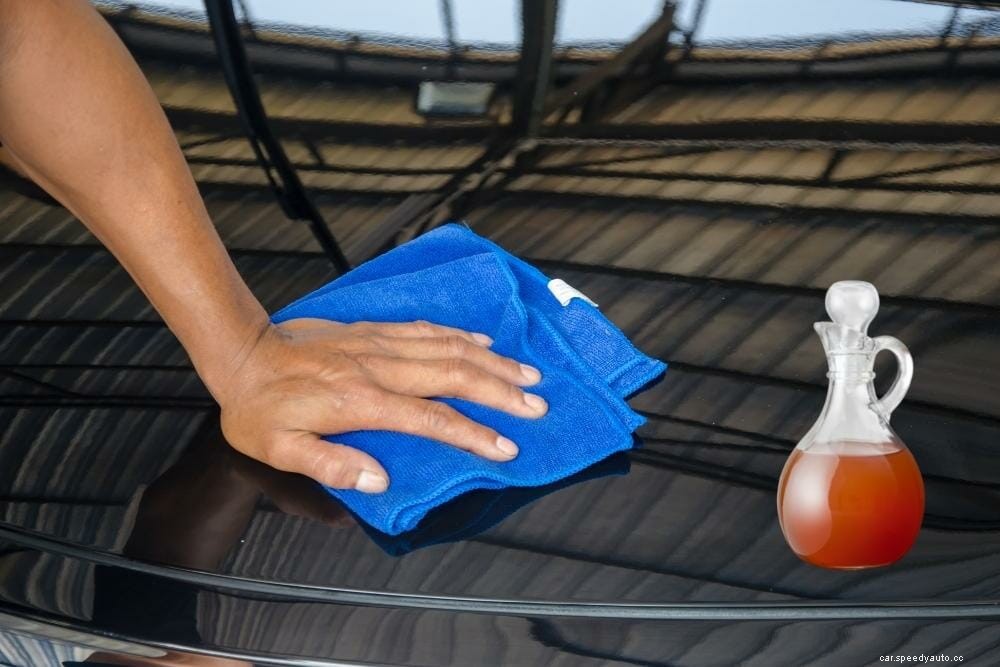
While WD-40 can be a great tool to use, removing the residue from your car paint is important as well. Although not harmful to the paint, leaving the residue can attract more grime within the area or, if waxing a car, dissolve the chemicals within the wax, leading to imperfections.
In order to safely remove WD-40 from your car’s paint, one can use any basic degreaser, such as Goo Gone, Simple Green, or Naphtha.
No, WD-40 should not be used to clean car paint. Although it is safe to use on car paint to help remove sticky residues, WD-40 does not contain any cleaning agents that clean your car paint.
Never mind the expense of dousing your car in WD-40, it will leave a greasy residue that can attract more grime and debris that can cause harm to the car’s paint. Because of this, it is recommended to use water-based cleaners instead when detailing your car.
WD-40 is useful for a number of things. One of WD-40’s main advantages is that it displaces moisture. As such, you can use WD-40 on areas that are not covered in paint that are prone to rusting to add a protective, preventative layer, such as tailpipes or other unpainted material.
WD-40 is also useful to help lubricate and free seized parts. Use WD-40 in areas such as hood latches, keyholes, or door handles to ensure smooth operation.
You can also safely use WD-40 in the wintertime on wiper blades to prevent ice from sticking to them.
WD-40 can be used in a variety of other ways, other than just helping remove stubborn residue. The WD in WD-40 stands for water displacement, which is especially important in the maintenance of electrical components.
Use WD-40 in areas such as spark plugs, distributors, and batteries to displace water and inhibit corrosion to help further their service life.
If another car got a bit too close to yours and left a small paint scuff, WD-40 can be used to remove these blemishes from your car paint. While WD-40 is not recommended for use on large areas, small amounts of paint transfer can be easily cleaned using WD-40.
Although WD-40 is oil-based, it works great in cleaning off oil as well. If you need to clean oil from your hands, engine bay, or even the driveway, WD-40 will wash it right off. Make sure to clean up the sprayed area afterward with water and soap.

Yes, WD-40 can be used to remove stickers from a car safely. WD-40 works especially well to remove the residue left behind by stickers. However, there are better products to use to remove stickers.
Goo Gone is a great alternative to use instead of WD-40 to remove stubborn stickers. Another good alternative is using glass cleaner and a razor to cleanly remove stickers. Just be cautious to not scratch your paint.
Yes, WD-40 can be used to fill scratches within the paint and clearcoat. However, be aware that this is not a permanent solution. While WD-40 does fill the microscopic gaps in a scratch, it will not last forever.
Once the WD-40 has evaporated, the residue left behind does not conceal the area, plus creates more scratches later by attracting dirt and grime to the area.
Instead of using WD-40 to remove scratches in the paint, use waxes and polishing compounds to create a deeper, more permanent removal of paint scratches.
While WD-40 is safe to use almost everywhere on a car, the one place it is not safe to use is anything with rubber. Places such as door seals, rubber hoses, and rubber boots should not be sprayed with WD-40.
This is because petroleum-based products such as WD-40 will rot away the rubber. Use silicone-based products instead to clean and lubricate these areas instead.
Another place to not use WD-40 on a car is your window tracks. If your windows are difficult to open and close, do not use WD-40 to lubricate these areas due to the rubber components inside. Instead, use products such as silicone or dry Teflon to ensure smooth operation.
It is not recommended to use rubbing alcohol to clean your car paint, especially at >70% concentration. At this level, rubbing alcohol works very well as a solvent, leading to damage to your car’s clear coat and paint.
However, if alternatives such as WD-40 are not available to you, diluting rubbing alcohol to 10-15% concentration is safe to use on car paint, just be sure to clean the area afterward with soap and water.
Yes, Goo Gone is safe to use for car paint. As written by the manufacturer themselves, Goo Gone is designed to be used on car paint, just be sure to wash down the affected area afterward with soap and water.
Goo Gone works best when it is used to remove residue from stickers and other sticky material. However, Goo Gone is not recommended to remove rust and grime from your car. Use products such as WD-40 or Simple Green to clean the area.
WD-40 has a wide variety of uses on cars, from lubrication, freeing seized parts, and displacing moisture. WD-40 is safe to use on your car’s paint to clean sticky, hard-to-remove items. However, be aware that WD-40 cannot replace all the chemicals on your shelf.
WD-40 does not work well as a dedicated cleaner, nor should it be used to lubricate rubber parts. WD-40 is also not a replacement for waxes to cover scratches in your car’s paint. Remember to use WD-40 in a well-ventilated area to avoid any irritation.
