
In our everyday lives, vinegar serves a variety of functions. Laundry, cleaning, cooking, and even skincare are all examples of uses for this ingredient. And more and more, vehicle enthusiasts have been using vinegar as an additive.
As they disinfect automobiles and remove watermarks from inside and outside surfaces, most car owners utilize it for cleaning purposes.
A rule of thumb is to always check the ingredients before using any product on your automobile. One of your car’s most delicate components is the paint. In other words, it’s at the most risk of coming into contact with these items.
Of course, you want your car’s outside as well as its inside to be spotless. Is it OK to use vinegar to wash your car? Perhaps the same DIY approach that you used for the inside of your automobile would work here as well?
It’s not a good idea to use vinegar on your car’s paint job. As a result of vinegar’s acidic nature, over time the clear coat might get damaged, resulting in a dull appearance. The lack of lubrication provided by vinegar, compared to car shampoo or rapid detailer, will result in scratches when used for handwashing a vehicle.
Avoid putting vinegar or anything acidic on your car’s paint, as a result.
If you leave vinegar on your automobile in the sun, it will cause the greatest harm to the paint. If this is the case, the vinegar’s water evaporates, leaving just the acidic component, which will eat away at the paint much faster when exposed to warm sunshine.
It’s true that if you fully rinse your vehicle after a hand wash, the vinegar solution will be washed away, so this problem may not seem like a big deal at first. You’ll be OK if you don’t leave the vinegar solution on the automobile, right?
Wrong! In addition to damaging the paint if allowed to dry, using a DIY vinegar solution as an alternative to a vehicle wash or a rapid detailer might damage the paint if any type of human force is given to it.
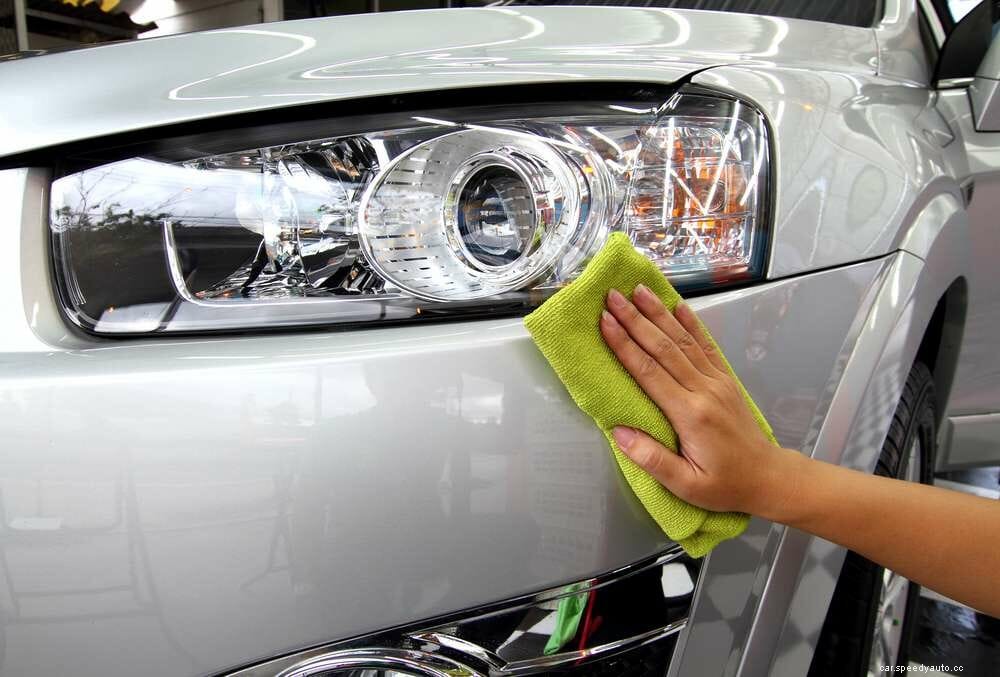
Lubrication is a major issue. You can’t safely wash your automobile without shampoo or a detailer that has an incredibly high degree of lubrication in order to prevent the clear coat from being scratched while doing so.
If you wash your automobile with a non-lubricating solution, the dirt on it will behave like sandpaper on your wash mitt. Once the dirt is removed, you will have sanded away some of the clear coat, leaving your automobile with some dull areas and blemishes that will take some time and effort to remove.
Using vinegar as a fast detailer to remove bird droppings or other small dirt from your automobile follows the same reasoning. A lack of lubrication from the vinegar prevents safe hand force from being applied to the dirt particles.
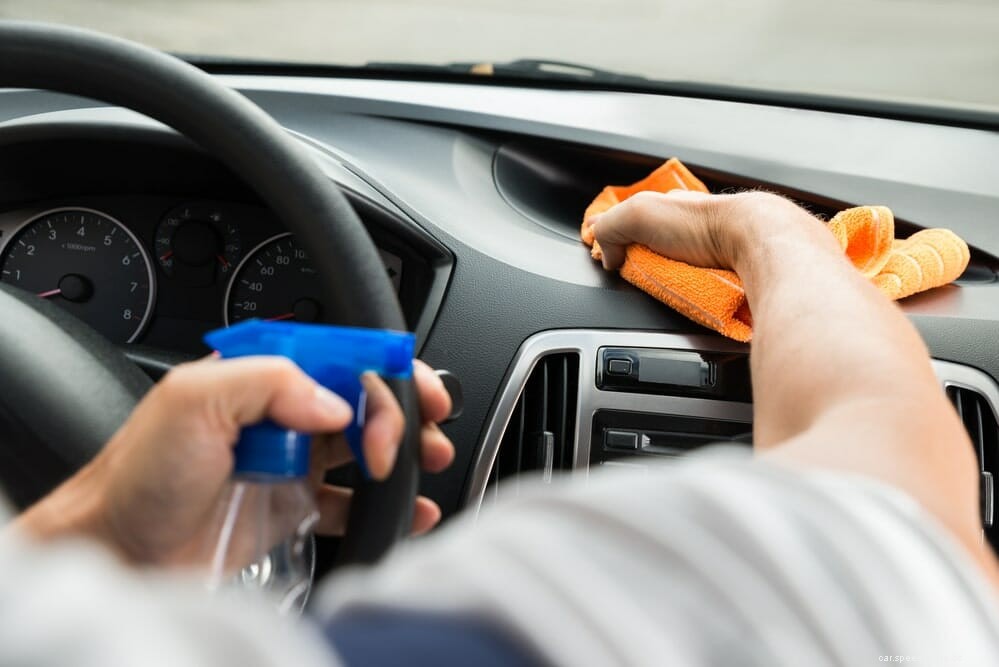
Vinyl, plastic, and wood surfaces inside your vehicle may all be cleaned using a solution of white vinegar and water. Spray them on after mixing them together. If the cloth isn’t clean, don’t put it in the water. It is possible to use a tiny bit of the cleaner on any surface made of plastic, wood, or vinyl (such as the dashboard).
In this scenario, vinegar is acidic. Vinegar with a pH of 2.5, such as white vinegar, is the most widely used in domestic cleaning, but now people are starting to use it for cleaning vehicles.
A strong stream of vinegar on your car’s paint might cause corrosion or even burn. As a reminder, vinegar can wreak havoc on automobile paint.
Spraying vinegar on your car’s paint will undoubtedly harm it, despite the fact that it isn’t very corrosive. Unless you’re ready to risk etching your paint in order to have your automobile shiny and clean, it’s not worth the risk.
If you spray vinegar on your vehicle and then leave it in the sun for an extended period of time, the bad effects will be exacerbated. The etching process is accelerated by the additional heat.
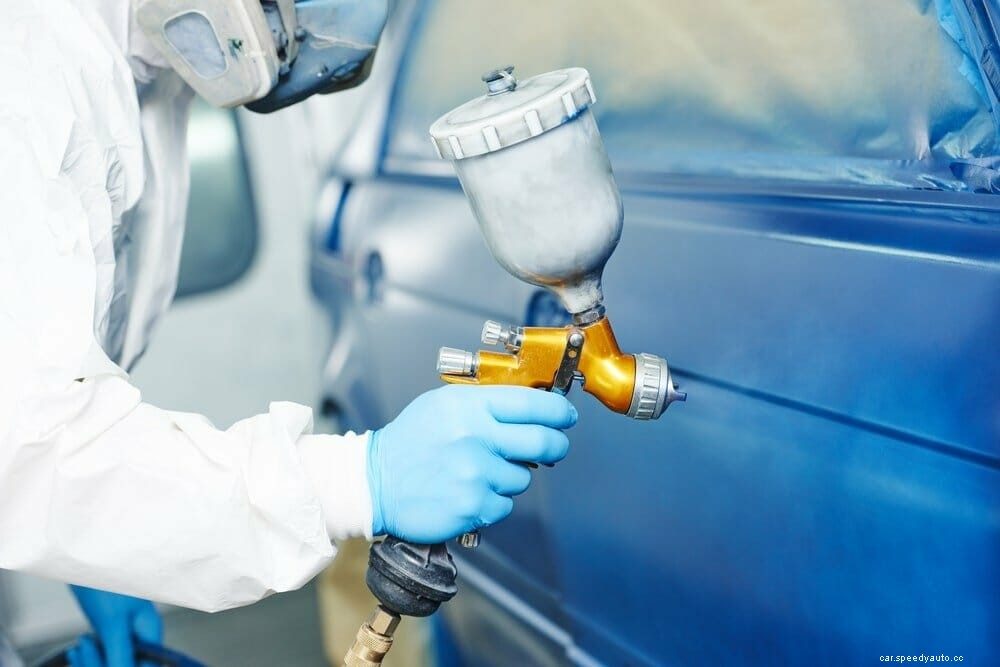
Do you use water from the hose to wash your car? Do you find it difficult to remove the dried water stains afterward? Hard water has certain drawbacks, such as this. In addition to the fact that it doesn’t build lather readily, it also leaves behind irritating patches that are so difficult to remove.
Switching to soft water is the easiest way to prevent this. For those who must use hard water, there’s a workaround: Vinegar.
In this specific case, vinegar can be an agent for good, as it can dissolve calcium and magnesium deposits left behind by hard water when sprayed on paint and gently scraped off with a microfiber cloth. Afterward, your vehicle will be spotless and devoid of white spots.
When it comes to eliminating hard water stains, vinegar works well. Just remember, however, it can be tough on your car’s paint. And for many automobile owners, this is the most pressing issue.
Regardless, vinegar’s acidic power is substantially diminished when it’s diluted with water. And it still works well enough to eliminate stains.
Sugar is converted to ethanol (ethyl alcohol) and subsequently to acetic acid via a two-part fermentation process including yeast and bacteria. Vinegar is acidic because of its high acetic acid concentration.
Costs start at $300 and go into the thousands. Sanding the body and getting rid of rust are often included in regular paint jobs, which are typically more expensive. For a full-service paint job, you could expect upwards of $4,500.
If your car’s vinyl, plastic or wood surfaces require a good cleaning, mix equal parts white vinegar and water and spritz it on. Take a clean cloth and wring it out to remove any remaining residue.
You can buy a gallon of white vinegar for around $4.
Warm water or vinegar may be used to clean dead bugs off your windshield (or any other glass). Once they’re pliable, use a microfiber cloth to gently wipe your windshield with glass cleaner until it’s clean.
Vinegar can be used to disinfect automobiles and remove watermarks from inside and outside surfaces. It’s not a good idea to use vinegar on your car’s paint job. The lack of lubrication provided by vinegar, compared to car shampoo or rapid detailer, will result in scratches.
Vinegar can wreak havoc on automobile paint. It is possible to use a small amount of a vinegar-water mixture on any surface made of plastic, wood, or vinyl.
Vinegar with a pH of 2.5, such as white vinegar, is the most widely used in domestic cleaning. Spraying vinegar on your car will undoubtedly harm it, despite the fact that it isn’t very corrosive. Unless you’re ready to risk etching your paint, it’s not worth the risk.
If you want to risk it, vinegar does in fact dissolve calcium and magnesium deposits left behind by hard water on a paint job.
We have more posts about car paint. Check them here:
How Long Does Car Paint Take to Dry?
Does Bleach Ruin Car Paint?
How Long Does it Take to Repaint a Car?
