
Toyota Tundra is a truck that needs no introduction. Placing the overlapping ellipses that form the Toyota symbol on the hood of an SUV or pickup truck has a weight to it, even today.
There’s no denying the build quality and reliability of the Tundra, but now can stop with the praise and get into a proper durability breakdown. In this article, we’ll go through all the relevant points that a current or a potential owner might be interested in.
Toyota Tundra is one of, if not the longest-lasting pickup truck in the USA, capable of running for several decades or at least 300,000 miles, but 500,000 isn’t uncommon. It’s a truck well worth the cost and more than lives up to the Toyota standard.
Trying to accurately gauge how long a vehicle will last is one of the most challenging parts of this review. The record-breaking mileages you see some owners put on their Tundras are a result of 99% maintenance and driving style, and 1% luck. If you treat any truck right, it’s going to last more miles than you’ll ever cross.
Still, we need to put some numbers on paper and see how the Tundra performs, especially in comparison to other vehicles in the full-size truck segment. Not all trucks are built the same, and Tundra is definitely one of the best.
In the 200,000+ mile category, it has the highest presence on the road with 3.7 percent. This may not seem like a lot, but the average for all light-duty pickup trucks is 1.9 percent! We’ll compare the data with other trucks later, but a Ram 1500 has only a 1.2% presence.
The previous data only deals with vehicles with 200,000 miles or more, but what if we want to know the final limit of the Tundra? For that, we can turn to forums and owner discussions and see what people say.
The majority of owners have crossed 300,000 miles and some are pushing over 400,000. There’s a particular owner who is already pushing 240,000 miles on a late 2019 model and claims Tundra has been the best truck he’s owned.
Before we draw our conclusion, I want to point out the million-mile Tundra. The 2007 model crossed a million miles just like any truck would, with a lot of highway miles, towing, and hauling. When the Truck was put apart, and the 4.7L V8 engine was put on the dyno, nobody expected it to perform as well as it did.
One of Toyota’s employees even said it performed better than the new engines, likely due to being broken in. Still, for an engine that had a million miles, it certainly outdid all expectations.
When the engine was opened up, the parts were in impeccable condition, with a small amount of carbon buildup and no significant wear marks.
To learn that this Tundra crossed a million miles is surprising, but to know it did it on the original engine, transmission and paint is even more of a shock.
The truck racked up the mileage in a span of 9 years, and as we know, age can be a significant factor in terms of wear, but everything this Toyota achieved is worth the praise.
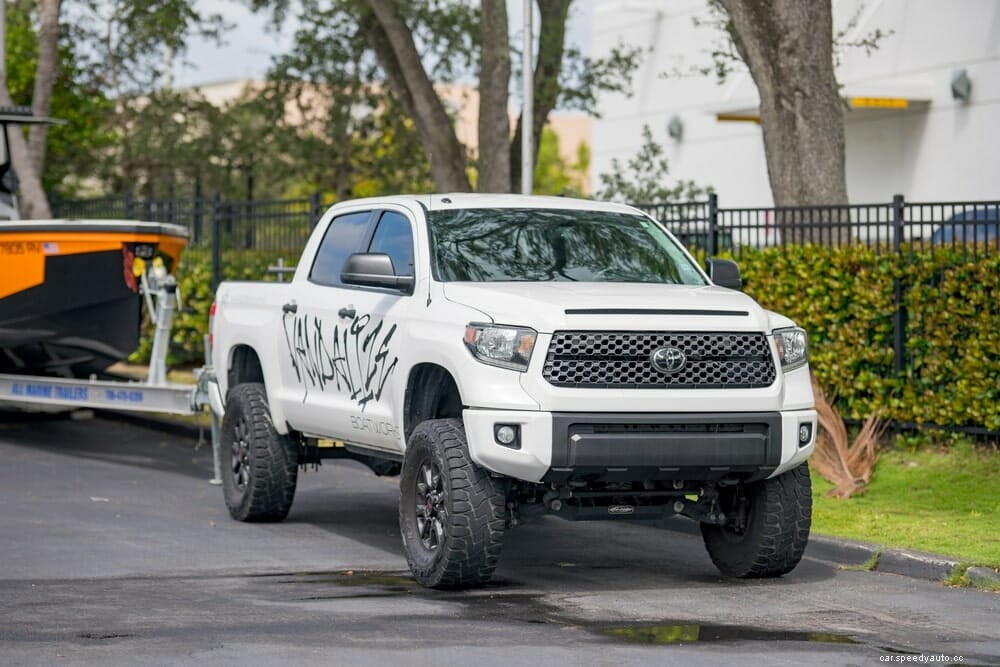
To conclude, Toyota Tundra is nearly guaranteed to last 200,000 miles. Those buying new should expect more than 300,000 miles, but the same applies to used truck buyers that get a model with a full-service history.
As someone who is perfectly happy with driving the same vehicle for over 10 years, my expectation would be at least 400,000 miles out of a Thundra with minimum maintenance. Even if something significant were to break, if I could replace it without spending too much, it would be worth it as I know how well I maintained the rest of the components.
To form an accurate image of how reliable the Toyota Tundra is, we’ll look at user reports on some of the most credible car data websites. The reports generally come from either overly satisfied or dissatisfied owners, but the overall rating should even out.
The J.D. Power creates a reliability score based on the data provided by verified owners, which gives it a lot of credibility. The overall score is based on four categories, but I’ll only cover the scores relevant to reliability.
There are significant gaps in J.D. Power’s data, caused by an insufficient amount of user reports. The ranking is based on thousands of user reports, and too small of a sample could skew the result in a certain direction.
We’ll see other reliability scores based on a smaller data sample, but consider J.D. Power rankings as the most reliable.
The scores, although limited, are extremely good. The overall score is based not only on quality & reliability and driving experience but also on resale value and dealership score. To see a vehicle score 80+ on quality & reliability as well as the overall score is very impressive and speaks volumes in favor of Tundra.
The RepairPal reliability rating is 3.5/5 which is above the average of 3.0/5 for the full-size truck segment. The rating is based on the cost, frequency, and severity of unscheduled service. Even though the overall rating isn’t as detailed as we might hope for, it’s a good indicator that Tundra has above-average reliability.
The annual cost of maintenance is $606, much better than average for full-size trucks ($936) and even all vehicles ($652). The frequency of unscheduled repairs is 0.3 times a year, better than the average of 0.4 times a year.
Lastly, the probability of an unexpected issue and major repairs is 18%, the same as the average for the segment.
The Edmunds hosts vehicle reviews per model year and has covered Tundra for years. Their expert ratings have some credibility, but their user reports are way too small in numbers to be considered valuable by any measure. Now that I’ve made the disclaimer, I’ll still include them to give you the most data possible.
Edmund’s expert rating has been introduced in 2019 and is a broad review of the Tundra, not just the reliability. The user ratings, albeit small in numbers, show a general satisfaction with the truck.
The brand new Toyota Tundra comes with a 3-year or 36,000-mile limited warranty coverage. There is no fine print, but I would still advise you to confirm the benefits if you plan on buying a Tundra that’s still in warranty.
Toyota offers 36 months or 36,000 miles on all components other than normal wear and maintenance items. The engine, transmission & transaxle, front-wheel-drive system, rear-wheel drive, seatbelts, and airbags have a 60 months or 60,000 miles warranty.
The rust-through corrosion coverage protects for 60 months or unlimited miles.
I would like to see a better guarantee on the powertrain of at least 80,000 miles, preferably 100,000 as you get with a Nissan Titan. Still, 60,000 beats 36,000 miles and shows Toyota’s confidence in their product.
The primary condition to reach high mileage with any vehicle is regular and proper maintenance. However, the annual cost of maintenance has to be affordable, or at the very least reasonable to financially justify driving a specific vehicle.
The disadvantages of driving a truck are the high amount of oil necessary for an oil change, more spark plugs, and larger tires, but these factors don’t bear a lot of significance when compared to the value a truck brings over a subcompact car or other passenger vehicles.
One of my go-to sources for information on specific models is CarEdge as they have a great maintenance calculator. However, it’s usually overly rigorous as it makes the oil service interval just 5,000 and adds regular tire rotation.
Even with all of that, the 10-year maintenance and repair cost for a Toyota Tundra is just $6,738 and the 5-year projection is even better at only $1,916. The chance of a breakdown that will cost more than $500 to repair is just 18.51% over the 10 year period.
The figures might seem intimidating but about it from another view – your monthly insurance cost will be around $150 and calculate the amount of gas you spend. In the broad picture, the maintenance will be a small fraction of the overall value lost annually.
RepairPal estimates that the cost of maintaining the Tundra is $606 per year, while YourMechanic has the estimate of $633. These figures fall in line with CarEdge and in my opinion form a reliable picture of maintenance costs.
Of course, these costs can be reduced significantly by performing some of the maintenance yourself. An oil change will set you back up to $200 at the shop, but it will be at most $100 at home. Other small repairs, like changing bulbs, filters, and the battery will also add up in the long run.
The last thing I want to point out is while the average cost is $600, most of the years you’ll drive a Tundra will be maintenance-free aside from the engine oil change. For most owners, 2-3 oil changes will be enough in a year, and they can be just $200 if you buy oil in bulk.
Unless you plan on driving a vehicle into the ground, the value depreciation is likely the most important factor in buying a vehicle, used or new. For that reason, I’ve used the data collected by various data tracking sites to provide you with an estimate and show how much value the Tundra loses over time.
| Model Year | Original Price | Current Price | Decline (Dollars) | Decline (Percentage) |
| 2021 | $52,623 | $53,623 | $0 | 0% |
| 2020 | $52,875 | $45,095 | $8,528 | 15.9% |
| 2019 | $51,380 | $41,187 | $3,908 | 8.67% |
| 2018 | $50,102 | $37,552 | $3,635 | 8.83% |
| 2017 | $50,524 | $36,102 | $1,447 | 3.85% |
| 2016 | $49,885 | $31,279 | $4,826 | 13.37% |
| 2015 | $49,809 | $28,865 | $2,415 | 7.72% |
| 2014 | $47,550 | $26,152 | $2,712 | 9.4% |
| 2013 | $45,463 | $22,123 | $4,030 | 15.41% |
| 2012 | $43,118 | $20,751 | $1,372 | 6.2% |
The Toyota Tundra has one of the best value retentions among all vehicles, not just pickup trucks. In 5 years it will lose only 39% of its value and have a 5-year resale worth of $33,000.
For those buying used, the 1-year old models generally offer the greatest savings, but the depreciation curve is fairly consistent so you can buy or sell a Tundra at any point.
Considering that the next-generation model has been released in 2022, all of your options will be from the 2nd generation restyle (2014-2021). Without frequent generation switches, the Tundra retains consistent production and by extension retains an even price drop over the years.

The insurance cost is always worth mentioning, as it represents the largest long-term cost you’ll face with any vehicle.
The monthly or annual rate is primarily affected by driver’s age, with younger drivers getting extremely higher estimates. The rate also has to do with equipment. The Tundra SR Double Cab 2WD costs $1,458 to insure per year, while the Capstone Crew Max 4WD costs $1,784, which is a significant difference.
| Driver | Age 20 | Age 30 | Age 40 | Age 50 |
| 2022 | $3,240 | $1,720 | $1,630 | $1,480 |
| 2021 | $3,020 | $1,600 | $1,520 | $1,380 |
| 2020 | $2,970 | $1,570 | $1,490 | $1,360 |
| 2019 | $2,820 | $1,480 | $1,410 | $1,280 |
| 2018 | $2,730 | $1,430 | $1,370 | $1,250 |
| 2017 | $2,600 | $1,360 | $1,300 | $1,250 |
| 2016 | $2,760 | $1,360 | $1,300 | $1,260 |
| 2015 | $2,570 | $1,340 | $1,290 | $1,180 |
| 2014 | $2,650 | $1,370 | $1,330 | $1,1220 |
| 2013 | $2,440 | $1,260 | $1,220 | $1,220 |
I cannot give you a precise image of how expensive Toyota Tundra maintenance is, as it depends on the model year, where you’re getting the part, and who’s performing the repair.
Still, we can take a look at the average costs of replacing certain parts and see where Toyota Tundra stands. Considering the fact that annual maintenance is very cheap and none of the parts are priced unreasonably, the Toyota Tundra won’t surprise you with expensive repairs.
| Service | Cost |
| Air Filter Replacement | $40 – $60 |
| Ignition Coil Replacement | $150 – $210 |
| Windshield Wiper Motor Replacement | $280 – $330 |
| Transmission Leak Inspection | $40 – $60 |
| Engine Coolant Temp Sensor Replacement | $390 – $450 |
| Engine Front Cover Gasket Replacement | $390 – $450 |
| Brake System Inspect | $85 – $120 |
| Vibration Diagnosis | $80 – $110 |
| Exhaust Muffler Replacement | $950 – $960 |
| Transmission Oil Pan Gasket Replacement | $300 – $340 |
| Exterior Door Handle Replacement | $220 – $370 |
| Engine or Transmission Mount Replacement | $790 – $1400 |
| Throttle Body Replacement | $900 – $1680 |
| Oxygen Sensor Replacement | $1280 – $2460 |
| Turn Signal Switch Replacement | $300 – $520 |
Knowing how Tundra compares to other options in the full-size truck segment can be extremely valuable. In this section, I’ll rank the most popular trucks in a number of important categories, so make sure to read along.
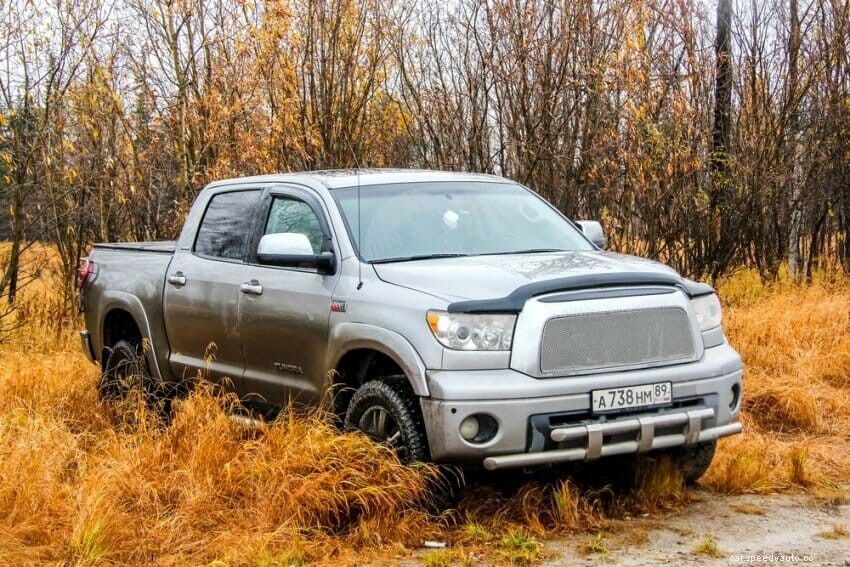
The top positions of the longest kept category are dominated by Ram, Chevrolet, and Ford models. However, this is not a fair comparison, as these are heavy-duty trucks and are a completely different beast to the Tundra. In reality, Tundra is the second longest-kept truck, trailing slightly behind the Nissan Titan.
The durability is based on the percentage of trucks with more than 200,000 miles that are still registered. This category is dominated by Toyota in general, with 6 out of 10 vehicles among all segments.
The full-size truck segment is no different – Toyota Tundra wins by a significant margin, outperforming even some of the heavy-duty trucks.
The horsepower output is directly linked to the truck’s capabilities as a tow and haul vehicle, so it’s important that we compare the options and see how Tundra holds up. The Nissan Titan takes first place, but Tundra isn’t far behind, creating a sizeable gap between the Japanese and the American brands.
The towing capacity is based on an average between trim levels, and in this category, Toyota Tundra is the best, with Nissan Titan offering nearly identical capabilities. The Japanese brands are significantly ahead of the GM & Ford lineup, with Ford F-150 taking third place with nearly 2,000 pounds of towing difference.
The safest truck overall is the F-150, and Tundra falls short in this segment with the lowest score and position in the lower bracket. The more recent models are much safer, but this rating is based on a broader spectrum of model years and trim levels.
This category is Toyota Tundra’s weakness, as it’s the biggest gas guzzler out of all the options. The Ford F-150 is the best truck at 18.4 mpg, but Tundra manages just 13.9 mpg. Granted, Tundra has a very reliable and much more powerful engine, so it’s a reasonable trade-off.
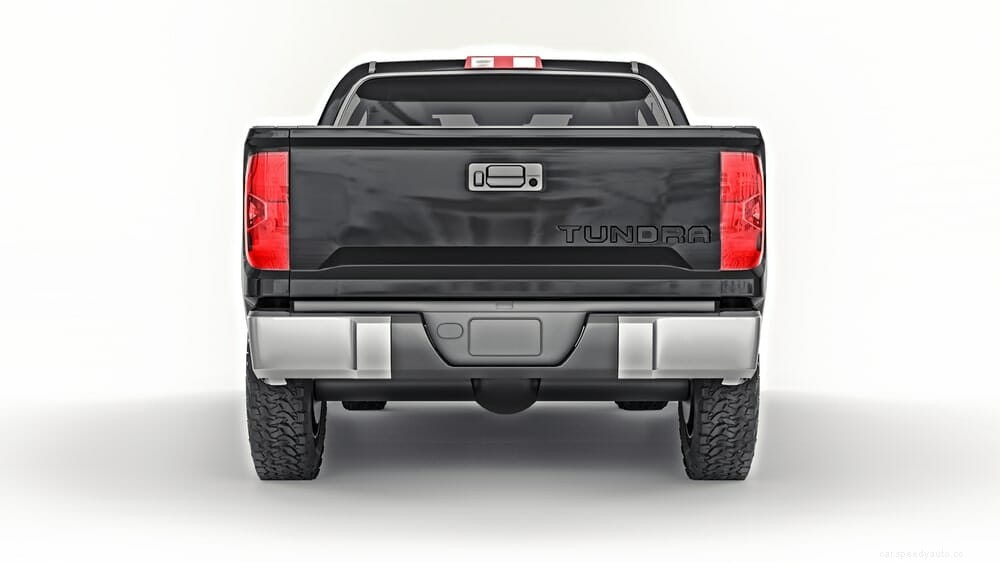
No matter how green the Tundra’s engine is, more fuel consumption will always result in greater pollution, which is why the Tundra is again dead last.
Pickup trucks in general are in a league of their own when it comes to the resale value. The Toyota Tundra has excellent value retention, but it’s still beaten by some of the other trucks.
Toyota is a Japanese brand, but the Tundra is an all-American truck, at first built in Princeton, Indiana, and then in San Antonio, Texas in 2009. Entering its third generation in 2022, the Tundra lacked the more frequent generation switches done by the other truck manufacturers.
However, this has proven to be a great strength of the Tundra, as it was manufactured with more consistency and significantly fewer issues caused by changes in design and technology.
For a luxury passenger car, this would be a problem, but Tundra is a capable work vehicle and in that line of business, reliability and low-cost maintenance always trumps fancy features.
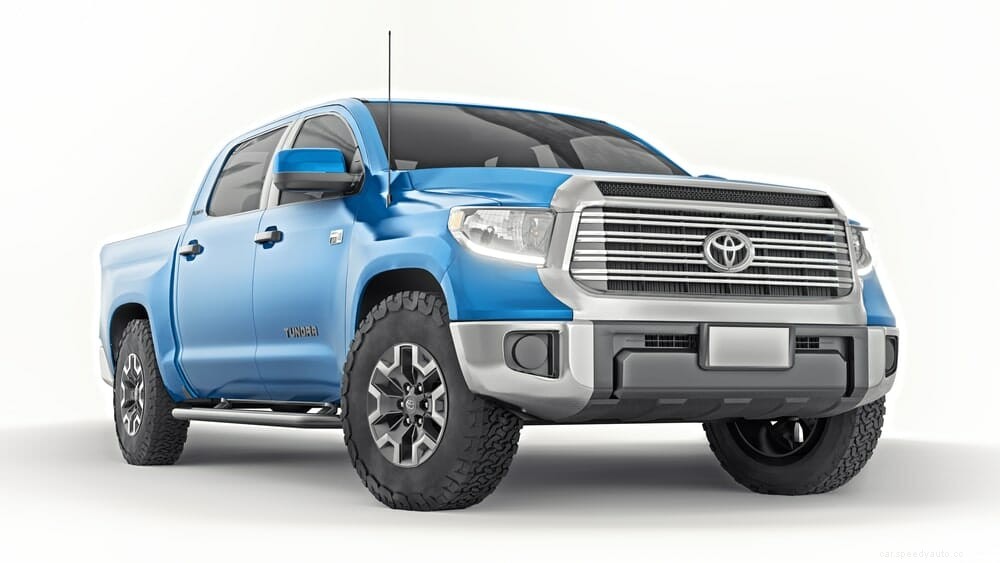
Toyota has made the moves on the American pickup truck market with the T100, a full-size pickup built exclusively for the US between 1992 and 1998.
With the Tundra, they have decided to go all-in, and invest in a new production facility in Princeton, Indiana. The original choice of powertrain was a 3.4L V6 or a 4.7L V8, the first for a Toyota pickup.
The first generation proved to be a great success, selling between 100,000 and 125,600 units annually, which is nowhere near the figures of the F-150 but is still a respectable figure. The total sales amount to 773,000 units.
The 2nd generation Tundra had been in production for 14 years, which is an incredibly long period, especially in the 21st century. Toyota did refresh the Tundra in 2014, but the changes focused on the interior and exterior design, with some optimization of the mechanical parts.
When it originally came out, the 2nd generation was a significantly more capable truck than the American competition. The truck has a towing capacity of 10,000 pounds and produces 381 horsepower from its 5.7L V8, which is still good by today’s standards.
Toyota offered a full range of wheelbase, cab size, bed lengths, and other options – a total of 31 configurations. The truck was made available with 4.0L V6, 4.7L V8, 4.6L V8, and the most powerful 5.7L V8.
With the refresh, the 4.0L V8 engine was discontinued, while the rest were continuously optimized to increase power and reduce emissions & fuel consumption.
The 2nd generation had some ups and downs in terms of sales but retained an overall successful production. The total sales sum up to roughly 1.7 million units, making the Tundra one of the most popular trucks in America.
The brand new model has only started to make its way into the hands of customers, and there are a ton of detailed reviews you can look at if you’re interested in the brand new Tundra.
The significant deviation from the previous models is the discontinuation of the V8, with the only engine option being the twin-turbo 3.4L V6 in standard or hybrid variants.
No vehicle is without factory flaws, but the Toyota Tundra has managed to keep the number of issues to a minimum. The number of NHTSA safety recalls since 2000 is just 16, a figure some of the domestic trucks rack up in a single model year.
When all things are considered, the Tundra has been built to a consistency rarely seen in the automotive world, and it’s no wonder why it can endure crossing so many miles.
The Tundra is one of the most reliable trucks you can get, and there are no real years you should avoid, except for the standard rule of thumb to avoid the first year of a facelift or new generation.
Toyota is a company that has been consistently making reliable vehicles for over 50 years, and it needs to maintain that image to boost sales.
In regards to Tundra, in particular, I put the emphasis on the fact that the second generation has been in production for 14 years, while other truck manufacturers changed 2-4 generations in that span.
By sticking to what works and improving it slightly with minimal risk of messing it up, the Tundra manages to offer superior reliability when compared to domestic trucks.
Diehard F-150 fans will swear by their truck, but based on the research, I believe that the Tundra is a more reliable model.
The maintenance cost, the chance of major failure or rust are better than the average for the full-size truck segment, and as we’ve seen in the comparison section, it beats the F-150 in almost every category.
The Toyota Tundra is one of the best, and some would say the best truck on the American roads. If you were to ask me which truck I would buy, the Tundra would definitely be my first choice.
It doesn’t have any of the drawbacks of a Japanese import – mainly the expensive parts, as it’s manufactured in Texas. In the same line, it still manages to retain superior quality control and production over the domestic brands, and a guaranteed good purchase for you.
