
The check fuel inlet error code may surprise you as it’s not something that happens to all cars. The problem is most common with Ford vehicles, specifically those with the capless fuel filler system.
The issue is so widespread that there are a lot of people asking how to solve it so in this guide I’ll take you through the steps of methods proven to work.
The check fuel inlet error appears when the capless fuel lid doesn’t properly close or the sensor fails. The simplest solution is to use the gas station nozzle to break in the lid by cycling it in and out of the fuel inlet several times.
In the context of Ford vehicles, the Ford Easy Fuel capless fuel filler, as the name implies, gets rid of the twist-on cap and uses it as a spring-loaded lid that automatically closes once you’ve extracted the gas nozzle.
The system tries to achieve two goals:
The added benefits of the capless fuel filler system are excellent fuel theft protection and splashback prevention. The system has been installed across Ford’s fleet and can be found in Fusion, F-150, Explorer, Mustang, Escape, and other vehicles.
The truth be told, Ford’s capless system isn’t designed very well, especially in the early models. While the regular fuel cap screws in and have the added rubber seal to prevent vapors from escaping, the Easy Fuel system relies on the spring-loaded hatch and the seal around the fuel door.
Combined with a few other design flaws, the capless system can cause more trouble than convenience.
The fuel door mechanism is also under spring tension to keep it flush with the body, but as we all know, the tension decreases over time and sometimes the door sits loosely flush to the body.
This would not be a problem with the regular system, but Ford’s Easy Fuel relies on the tight seal to keep the vapors contained, so the sensor will throw an EVAP leak or the check fuel inlet error code.
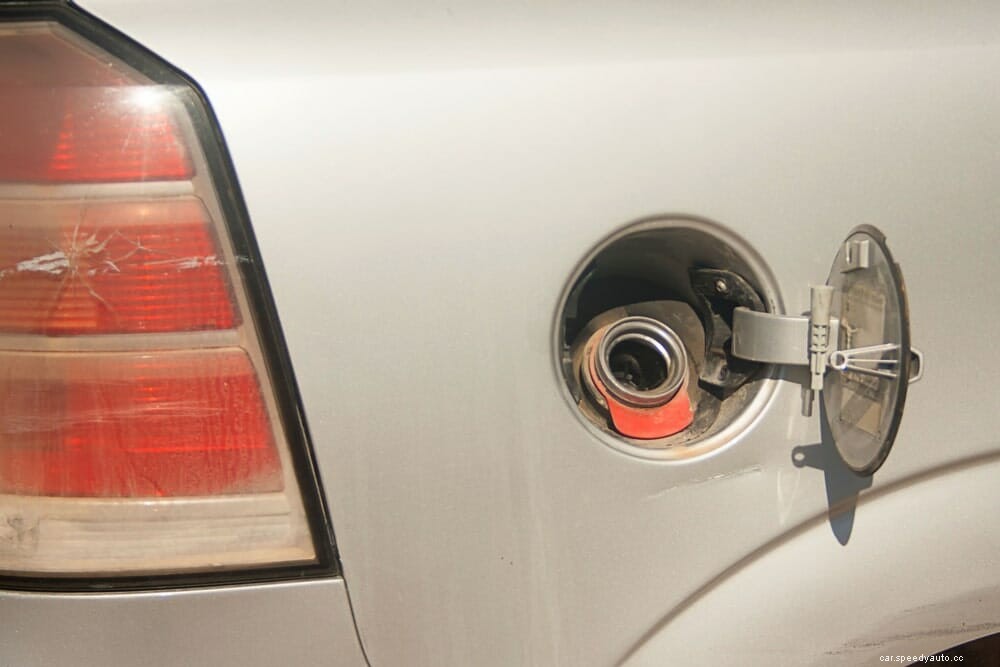
The capless system relies on a flawless seal of the fuel door to keep water, debris, and other contaminants away from the gas tank.
While it does have a bleed-off channel to divert the contaminants from entering the fuel tank, the capless fuel inlet forms a downward-facing funnel that is a magnet for everything you don’t want to enter the gas tank.
Tiny rocks and debris can wedge between the spring-loaded lid and the walls, creating an EVAP leak. This issue was addressed with newer models by adding an additional flap at the very beginning of the inlet, but as the fuel door, it’s also prone to losing tension and can allow debris to enter.
The final piece of the puzzle is the sensor that detects vapors and reports the error if they’re escaping from the gas tank.
These sensors are very precise, but they’re also sensitive and can fail. When this happens, the sensor might report the error randomly or fail to report the problem while it’s happening.
The fuel inlet code usually describes an annoying problem that poses an environmental risk but doesn’t necessarily affect the functionality of the vehicle. Still, you should try to fix the issue and restore your car, truck, or SUV back to 100%.
There are a few ways you can clear the code, so use the one that is the easiest and cheapest for you. As you’ll see, three of the methods use a very similar process, and the only thing that’s different is the cleaning solution.
This method is by far the easiest, which is why I’ve placed it at the top of the list. To clear the error code, next time you’re at the gas station, push the gas nozzle into the fuel inlet repeatedly, and occasionally spray some fuel at the top of the spring-loaded lid.
Do the process steadily and without much force, as you’re creating metal-on-metal contact. In about 10 to 20 cycles, you should be good to go. The last step is to clear the error code, which can be done by disconnecting the battery or using an OBDII scanner.
When it comes to auto repairs, WD-40 is a miracle worker. This is a 5-minute job that can be done at home with no special tools, just a couple of cleaning products. The Easy Fuel Funnel is located at the same place as the portable car jack, but if you don’t have one, I’ve listed an inexpensive replacement.
| Image | Title | Price | Buy |
|---|---|---|---|
 | AOIT Fuel Filler Funnel for Ford | Buy Now | |
 | WD-40 Smart Straw Spray Lubricant, 11 oz Aerosol Can | Buy Now | |
 | iDuster Compressed Air Duster, Disposable Keyboard Cleaner, 2-Pack | Buy Now |
Steps To Clean The Fuel Inlet:
The last step is to clear the error code with an OBDII scanner or by unplugging the battery, which I will explain in a separate section.
This method is my favorite as it involves Seafoam, one of the best fuel stabilizers and cleaning agents. The process is risk-free and quite similar to the previous method.
| Image | Title | Price | Buy |
|---|---|---|---|
|
Top | AOIT Fuel Filler Funnel for Ford | Buy Now | |
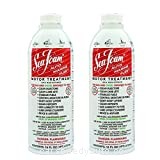 | Sea Foam SF-16-2PK Motor Treatment Multi-Use, 16 Ounce, Pack of 2, 16. Fluid_Ounces | Buy Now | |
|
Top | iDuster Compressed Air Duster, Disposable Keyboard Cleaner, 2-Pack | Buy Now |
Steps To Clean The Fuel Inlet:
You can be as generous with Seafoam as you’d like because it’s usually mixed in with fuel in a 1 ounce per gallon ratio. Still, if you go overboard, you can compensate by simply filling up the tank.
In case the filler pocket is damaged or the fuel door doesn’t secure firmly, you’ll have to change the entire fuel filler pocket. The process is relatively easy and even a beginner DIY mechanic can successfully complete it, but it’s important not to push or force things, otherwise, you might damage parts or the paint.
The steps described in this section are for the F-150 truck, but the process is similar for all of Ford’s vehicles with the Easy Fuel inlet.
| Image | Title | Price | Buy |
|---|---|---|---|
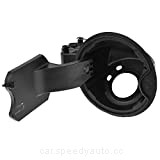 | Fuel Filler Neck Housing Gas Door for 09-14 Ford F150 - Replacement Part Best for OEM 9L3Z-9927936-B Tank Hinge Pocket Assembly Doors Spring Cap Lid Cover - Truck Accessories Replaces 9L3Z9927936B | Buy Now | |
 | EPAUTO 45 Pieces 3/8" Drive Socket Set with 72-Tooth Pear Head Ratchet | Buy Now | |
 | Klein Tools 605-6 1/4-Inch Cabinet Tip Screwdriver, Heavy Duty, 6-Inch | Buy Now | |
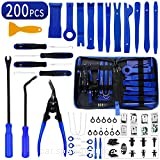 | Wetado Trim Removal Tool, 200PCS Trim Tool Auto Removal Kit, Plastic Panel Fastener Removal Tool, Trim Removal Kit for Car/Trim/Panel/Door/Audio,Auto Clip Pliers (Blue+ Orange-200PCS) | Buy Now |
The previous methods will help you solve the underlying issue, but the code has to be manually cleared to complete the process.
The first method of clearing the error code is to disconnect the battery terminals and leave them for a minute. That will allow the ECU to fully drain and once the power is reconnected, it’ll do a new diagnostic cycle, and if the problem has been solved, the fuel inlet error code won’t appear again.
To disconnect the battery, use a wrench or a socket to disconnect the negative (black) lead first, and then the positive (red) lead. When you’re reconnecting the battery, attach the positive lead first, then the negative.
The downside of using this method is that it might clear your radio stations and other data that are not permanently stored. There’s a much more convenient method of clearing the fuel inlet error code or any other code for that matter, and it’s done with an OBDII scanner.
The OBDII scanner is an inexpensive tool that plugs into the OBD-2 port of your vehicle and allows you to read and delete error codes. It’s a convenient tool that saves you the trip to the mechanic and potential fees.
Before you reset the fuel fill inlet error code, you should make sure that the problem isn’t severe and that no vapor or gasoline is escaping from the gas tank or the lid.
To reset the light, take the ground (negative or black) lead off the battery, then the positive (red) lead. Leave the vehicle to fully discharge, and then reconnect the battery – first the positive, then the negative lead.
Another way of resetting the error codes is through an OBD2 scanner. These handy tools are inexpensive and provide a lot of value, especially when it comes to identifying issues.
The check fuel inlet code is most commonly caused by an ineffective seal that’s allowing gasoline vapors to escape. The problem poses some safety risks, as those vapors could ignite, but it’s also an environmental hazard that pollutes the air.
The bright side of the fuel fill inlet problem is that the repairs are very cheap. Sometimes, the issue can be solved for free, just by inserting the gas station nozzle in and out of the inlet. Even if you have to replace the entire filler pocket, it costs $10 – $50 and requires basic tools to replace.
The fuel inlet restriction plate prevents you from filling up a vehicle running on unleaded gasoline with leaded fuel. It was a system used in the past when both types of oil were used. At a certain point, the leaded fuel was banned, but the fuel inlet restrictor remained for a while longer.
The fuel tank contains gasoline, gas vapors, and air. Those gases can’t escape the vehicle as they’re a serious environmental hazard. However, this creates a problem – you cannot fill up the tank to the brim as a large volume of space is occupied by gasoline vapors and air.
To solve the problems, engineers incorporate the evaporative emissions system, which traps vapors until they can be burned off in the engine. There is also a secondary connection between the fuel tank and fuel filler neck for excess vapors to flow through, but not escape.
Combined, these two systems allow you to maximize the volume of fuel inside the fuel tank.
There’s nothing preventing you from placing an additional cap over the capless gas tank system. You won’t find any OEM or aftermarket options, but you can easily make one out of an enclosed end of a PVC pipe.
A 2″ PVC pipe from Home Depot will cost you a couple of dollars and is perfect for the job – just cut it to size, and it’s good to go!
The best way to clean a capless gas tank inlet is to use compressed air. You can use an air compressor or canned air to get dirt and even moisture out.
Siphoning gasoline out of newer cars is generally not possible, and the prevention of gas theft isn’t the only reason why. The emission standards have become increasingly strict over the years, and auto manufacturers have to do whatever they can to reduce the emission output.
Systems like Ford’s capless Easy Fuel inlet are made with emission reduction as the primary goal, but also to make the fill-ups more convenient, as well as keep the fuel safe through a tamper-proof mechanism.
The spring-loaded caps close as soon as the gas station nozzle is pulled out which significantly reduces the volume of gasoline vapors escaping from the gas tank.
Vehicles with the capless gas tank system always include a funnel either next to the car jack or the spare tire, which is the only safe way of opening the spring-loaded lid and pouring in gasoline from a canister.
The issues with the capless gas tank have been reported by a large number of drivers, but it seems like the system is here to stay.
The methods provided in this article should be enough to solve your problems, and at least temporarily stop the check fuel inlet error code from appearing on the dashboard.
Remember to be safe and careful when working around the gas tank, because even though there are next to no risks involved, you’re dealing with a container filled with a very dangerous liquid.
