
A lot of people are curious about motorcycle alternators- do motorcycles have them, how do they work, where are they located?
Most motorcycles have alternators, while some use generators instead. They have the same job as car alternators, to convert mechanical energy into electrical.
In this article, we will answer all of those questions and more! We will explain what an alternator is, how it works, and why it is so important for a motorcycle. Plus, we will give you some tips on how to maintain your motorcycle’s alternator.
So read on to learn everything you need to know about motorcycle alternators!
The answer to this question is a bit more complicated than a simple yes or no. While most motorcycles do have alternators, there are some that do not. This usually has to do with the make and model of the motorcycle in question, as well as the year it was manufactured.
There are some motorcycles that don’t have alternators, but they’re usually older models. These motorcycles often have to be kickstarted in order to get them going. Additionally, these types of motorcycles typically have a generator instead of an alternator.
So, while most motorcycles do have alternators, there are some that don’t. It really just depends on the make and model of the motorcycle in question.
A generator is a device that produces electricity. It uses mechanical energy to create an electrical current. On the other hand, an alternator is a device that converts mechanical energy into electrical energy.
An alternator is more efficient than a generator because it doesn’t waste as much energy. Additionally, an alternator can charge a battery while the engine is running, whereas a generator can only charge a battery when the engine is turned off.
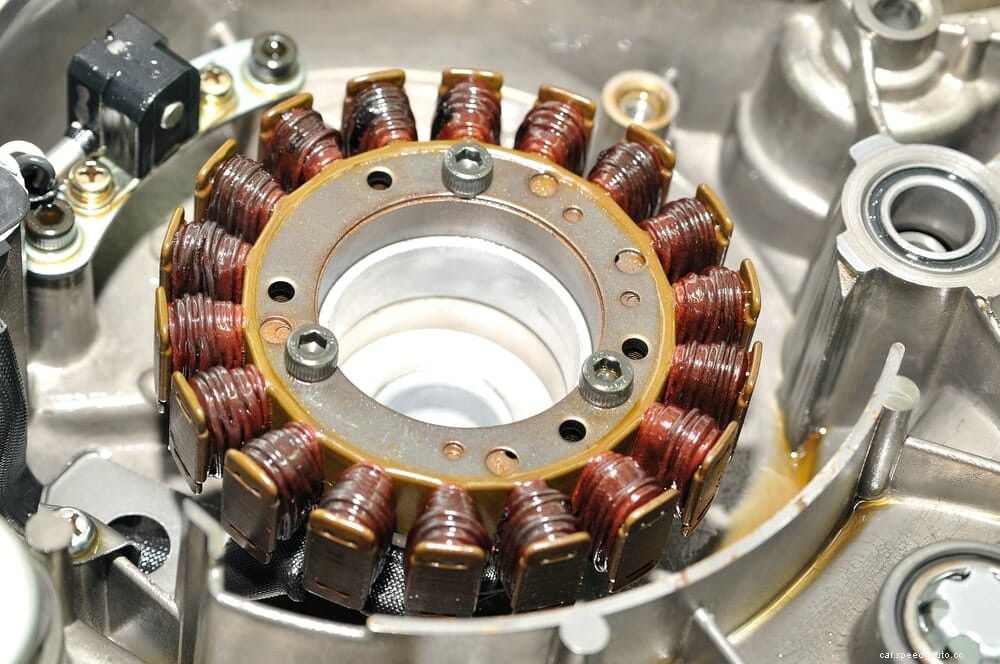
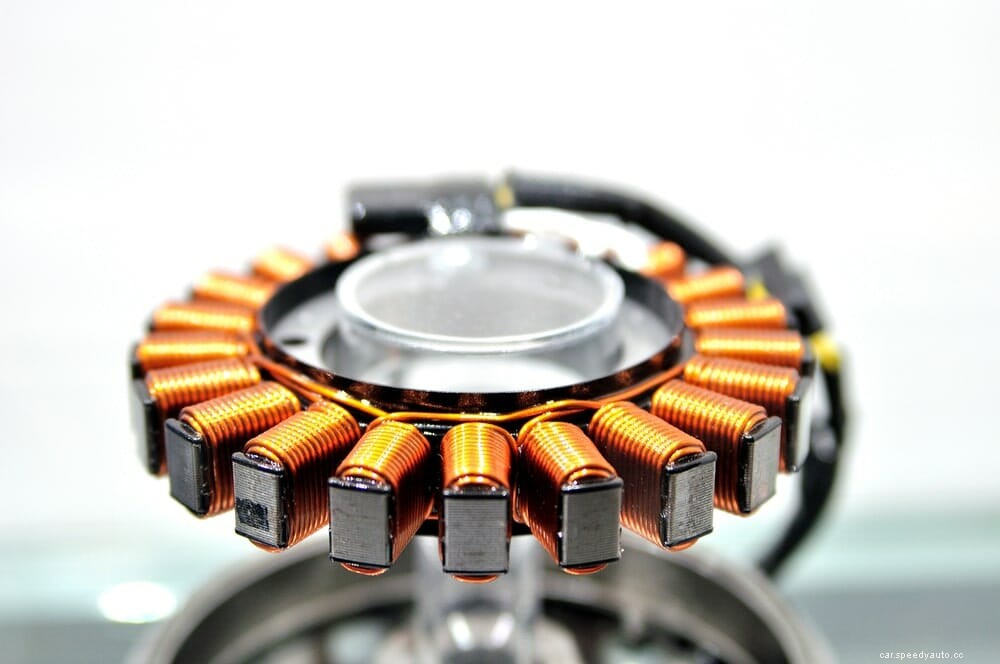
Alternators work by using electromagnetic induction to create an electric current. This process occurs when there is relative motion between a conductor and a magnetic field.
As the conductor moves through the magnetic field, an electric current is generated in the conductor.
This electric current can then be used to power electrical devices or charge a battery. Additionally, the generated electricity can be used to help run the engine itself.
The alternator is usually located on the right side of the motorcycle, near the back wheel. It is often mounted on the frame of the motorcycle or on the engine itself.
If you’re having trouble finding your motorcycle’s alternator, consult your owner’s manual. This will have all of the information you need about your specific motorcycle and where its various parts are located.
You might be wondering if motorcycle alternators are different than those on other vehicles. The answer is yes and no. Alternators on motorcycles can be slightly different than those on cars or trucks, but they serve the same purpose: to generate electricity to power the vehicle’s electrical systems.
The biggest difference between motorcycle alternators and those on other vehicles is usually the size. Motorcycle alternators are often much smaller than their counterparts on cars and trucks.
This is because motorcycles generally have smaller engines than other types of vehicles, so they don’t require as much power to run. Additionally, many motorcycle manufacturers try to save weight by using smaller and lighter components wherever possible.
Overall, motorcycle alternators serve the same purpose as those on other vehicles, but there are some slight differences between them.
There are a few things you can do to maintain your motorcycle’s alternator. First, make sure to keep the area around the alternator clean and free of debris. This will help ensure that the alternator can function properly.
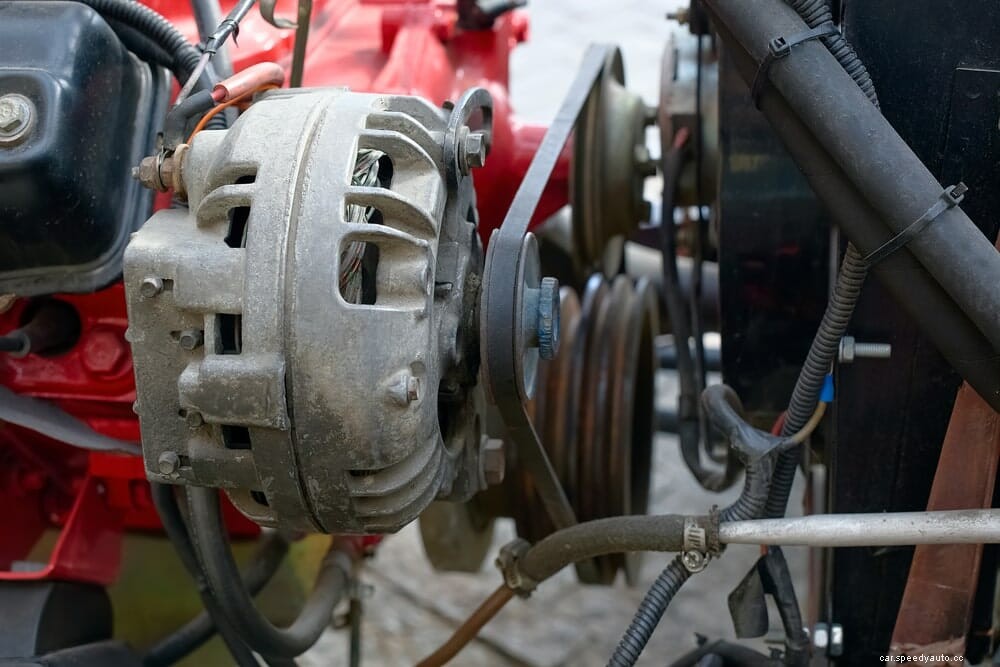
Additionally, it is important to check the belt that powers the alternator regularly. Make sure that the belt is tight and in good condition. If it seems loose or damaged, replace it as soon as possible.
Finally, be sure to test your motorcycle’s alternator regularly. This will help you catch any problems early on and prevent them from becoming more serious later on.
Alternators are an essential part of many motorcycles. By understanding how they work and where they’re located, you can ensure that your motorcycle is always in good working condition.
Additionally, by regularly checking and maintaining your alternator, you can prevent serious problems from occurring down the road. So don’t wait – get out there and start learning about motorcycle alternators today!
If the alternator is not working properly, it can damage the motorcycle. The alternator is responsible for charging the battery and powering the electrical system. If the alternator is not working, the battery will slowly discharge and eventually die.
Additionally, if the electrical system is not getting enough power, it can cause problems with engine performance.
So if you notice that your motorcycle’s battery isn’t holding a charge or that the engine is running rough, it could be a sign of a problem with the alternator. Be sure to take your motorcycle to a qualified mechanic to have it checked out as soon as possible.
There are a few symptoms that can indicate that your motorcycle’s alternator is going bad. One of the most common symptoms is dimming headlights.
If the alternator isn’t charging the battery properly, the battery will slowly lose power and the headlights will become dimmer over time.
Another symptom to watch out for is engine trouble. If the electrical system isn’t getting enough power, it can cause all sorts of problems with engine performance. So if you notice your motorcycle running rough or stalling, it could be a sign of a problem with the alternator.
If you notice either of these symptoms or any others that seem unusual, be sure to take your motorcycle to a qualified mechanic as soon as possible. They’ll be able to diagnose the problem and let you know if the alternator needs to be replaced.
If your motorcycle’s alternator needs to be replaced, it’s important to take it to a qualified mechanic. Replacing an alternator is not a difficult task, but it does require some knowledge of motorcycle engines and electrical systems.
Additionally, replacing an alternator can be dangerous if it’s not done properly. So if you’re not sure how to replace an alternator, or if you don’t feel comfortable doing it yourself, always take your motorcycle to a qualified mechanic.
They’ll have the tools and experience necessary to get the job done quickly and safely.
You can replace your motorcycle alternator yourself if you have some basic mechanical skills and knowledge. This article will provide a step-by-step guide on how to do this.
If you think your motorcycle’s alternator might be going bad, there are a few ways to test it. One way is to use a voltmeter to test the voltage output of the alternator.
To do this, first, make sure the motorcycle is turned off and the battery cables are disconnected. Then attach the positive lead of the voltmeter to the positive terminal of the battery and touch the negative lead of the voltmeter to the alternator’s output terminal.
The voltmeter should read around 14 volts if the alternator is working properly. If it reads lower than that, it could be a sign that the alternator is not charging properly.
Another way to test an alternator is by starting the motorcycle and listening for strange noises. If the alternator is going bad, it will often make a whining or grinding noise.
If you hear any unusual noises coming from the motorcycle, be sure to take it to a qualified mechanic as soon as possible so they can diagnose the problem.
Motorcycle alternators can last anywhere from 30,000 to 60,000 miles. However, if your motorcycle is frequently used in stop-and-go traffic or for short trips, the alternator may need to be replaced more often.
Additionally, if you frequently ride in dusty or wet conditions, the alternator may not last as long.
There are several things that can cause a motorcycle alternator to go bad. One common cause is a worn-out drive belt. If the drive belt is worn out, it can slip or break, which will prevent the alternator from working properly.
Another common cause of alternator problems is a faulty voltage regulator. The voltage regulator is responsible for regulating the voltage output of the alternator. If it goes bad, it can cause the alternator to overcharge or undercharge the battery.
Finally, a bad battery can also cause problems for the alternator. If the battery is old or has a bad cell, it can put a strain on the alternator and cause it to fail prematurely.
The cost of replacing a motorcycle alternator will vary depending on your bike’s make and model. However, you can expect to pay anywhere from $200 to $600 for parts and labor.
Additionally, if your motorcycle is still under warranty, you may be able to get the repairs covered by the manufacturer.
Yes, you can drive a motorcycle without an alternator. However, it’s not recommended. Without an alternator, the battery will eventually drain and the motorcycle will shut off. Additionally, riding without an alternator can damage other electrical components on your bike.
If you need to drive your motorcycle without an alternator, be sure to start with a fully charged battery and avoid using any electrical accessories like lights or turn signals. Additionally, make sure to check the battery regularly to ensure it doesn’t get too low.
If you disconnect the alternator while the engine is running, the engine will run for a few minutes before dying. Additionally, if you try to start the engine without the alternator connected, it likely won’t start.
It’s also important to note that disconnecting the alternator can cause damage to other electrical components on your motorcycle. Therefore, it’s best to only disconnect the alternator if you’re experienced with working on motorcycles and you know what you’re doing.
There are a few ways to test your alternator to see if it’s charging properly. One way is to use a voltmeter. To do this, start the engine and let it idle for a few minutes. Then, turn on all of the lights and accessories on your motorcycle.
Finally, measure the voltage at the battery with a voltmeter. If the voltage is above 13.0 volts, then the alternator is working properly.
Another way to test the alternator is to start the engine and let it idle for a few minutes. Then, turn off the engine and remove the negative (-) terminal from the battery. Next, touch the positive (+) terminal of the battery to the negative (-) terminal of the alternator.
If the engine starts, then the alternator is working properly. Finally, you can also take your motorcycle to a mechanic and have them test the alternator for you.
Motorcycles do have alternators and they are located near the engine. Alternators serve an important purpose in keeping the electrical system running smoothly. If you think your motorcycle’s alternator might be going bad, there are a few ways to test it.
Always take your motorcycle to a qualified mechanic if you’re not sure how to replace an alternator or if you don’t feel comfortable doing it yourself. Thanks for reading! Ride safe!
