
Fix-a-Flat is a handy tool to have at your disposal, even if you have room to carry a spare tire. It’s much quicker than changing the tire and requires no physical labor, but we all know that the downside is that Fix-a-Flat doesn’t last forever.
The original Fix-A-Flat solution lasts up to 100 miles or 3 days of use. It’s recommended that you drive to the nearest tire shop or home to install and install a good tire immediately.
We’ll focus not only on the Fix-A-Flat solution but also on the alternative options and see how long they can last. We’ll also talk about how Fix-a-Flat is used and whether it’s actually worth it, so keep reading if you’d like to learn more!
Fix-A-Flat is the most popular emergency tire repair solution. The company offers four different single-use that are used for different tire sizes.
The Compact Tires can is suitable for subcompact and compact cars. Standard Tires can is good for the compact, wagon, and midsize sedans cars. The Large Tires can is great for larger wagon and sedan cars, crossovers, and SUVs. The X-large Tires can is designed for bigger trucks and SUVs.
| Image | Title | Price | Buy |
|---|---|---|---|
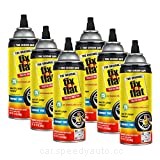 Top
Top | Fix-A-Flat S60410-6PK Tire Inflator with Eco-Friendly Formula, 6 Pack (12 oz Cone Top) | Buy Now | |
 Top
Top | Fix-A-Flat Tire Sealant and Car Tire Inflator 16oz (2-Pack) | Buy Now | |
 Top
Top | Fix-A-Flat Tire Sealant and Car/SUV Tire Inflator 20oz | Buy Now | |
 Top
Top | Fix-A-Flat Tire Sealant and Truck Tire Inflator 24oz | Buy Now |
The solution is capable of inflating a flat tire and sealing punctures up to 1/4″. Fix-A-Flat is a tried and true method of quickly sealing a tire, and it’s a relatively inexpensive solution that may help you when you’re in a hurry or missing a spare tire.
However, there are a few drawbacks of Fix-A-Flat and similar solutions that we need to address. Before we do that, let’s talk about how to use Fix-A-Flat.
Fix-A-Flat is a very simple solution to use and takes a few minutes to get the tire inflated. Just follow these steps and you’ll be able to inflate the tire and reach the nearest mechanic:
As I’ve mentioned, using Fix-A-Flat isn’t difficult, but there are a lot of DOs and DON’Ts involved in its use that can lead to unwanted results.
Changing a tire is a much longer and more difficult process than using Fix-A-Flat. In extreme weather, like cold, rain, or hot summer day, spending 5 minutes outside with the can of Fix-A-Last is going to be much better than spending half an hour on a tire change.
Fix-A-Flat and similar solutions are also quite cheap and handy to have, especially if, by some chance, you happen to puncture more than one tire. It’ll also save you from calling a towing service – even if it’s included in your AAA membership, waiting for the tow truck can take a while.
That’s why I’d recommend having a can of Fix-A-Flat in the trunk regardless of whether you have a spare tire or AAA membership.
The first issue with Fix-A-Flat and other aerosol tire inflating products is that they’re pressurized and can explode in the heat. Fix-A-Flat says that the limit is 120 degrees Fahrenheit, a temperature that can easily build up in a closed car on a hot day.
These solutions are also corrosive and must be cleaned out from both the tire and the rim during the tire change. Leaving Fix-A-Flat on the rim will cause it to corrode and deteriorate at a rapid pace.
This also means that the process of fixing the tire is going to be more time-consuming and expensive.
While a typical nail puncture can be fixed in 5 minutes with a plug, when Fix-A-Flat is used, the mechanic will have to take the tire off the rim, clean both of them, plug the hole, mount the tire back on, balance it and only then is it ready for use.
Another thing to pay attention to is whether the solution is TPMS safe. Fix-A-Flat is safe for use on wheels with a tire pressure monitoring system, but some of the other solutions may not be.
The disadvantages of Fix-A-Flat make it more of a last-resort option rather than option A. It’s convenient to use but causes a lot of inconveniences later on, so it’s really a trade-off solution.
There are a lot of tire-inflating solutions in a can out there, so while we’re on the subject, let’s take a look at the most popular options.
| Image | Title | Price | Buy |
|---|---|---|---|
 Top
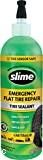
Top | Slime 10011 Flat Tire Puncture Repair Sealant, Emergency Repair for Highway Vehicles, Suitable for Cars/Trailers, Non-Toxic, eco-Friendly, 16 oz Bottle | Buy Now | |
 Top
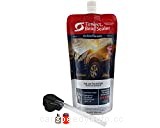
Top | TireJect Automotive Full-Size Truck/SUV 2-in-1 Tire Sealant & Bead Sealer Kit for tire Repair of leaks and punctures | Buy Now | |
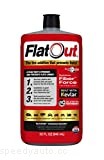 | FlatOut Multi-Purpose Tire Sealant - Prevents and Repairs Flat Tires, Seals Leaks, Contains Kevlar, 32-Ounce Bottle, 1-Pack | Buy Now |
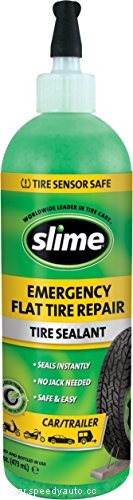
Slime sealant is a very popular solution for fixing flat tires. The product can be found in a variety of containers, with the classic 16 oz can providing enough of a charge to seal a passenger car or a trailer tire.
To use the product, you’ll have to position the tire valve towards the top. With the provided tool, unscrew the valve core and let the tire deflate. Remove the foreign object if possible, then attach the hose and squeeze it into the slime.
Once you’re done, reinstall the valve core. The drawback of the Slime sealant is that it requires a portable air compressor to inflate the tire, while Fix-a-Tire is an all-in-one solution.
Other than that, Slime sealant works just as well, with the capability to seal up to 1/4″ puncture, work in extreme temperatures and cause no damage to the tire pressure monitoring system (TPMS).
Check Price
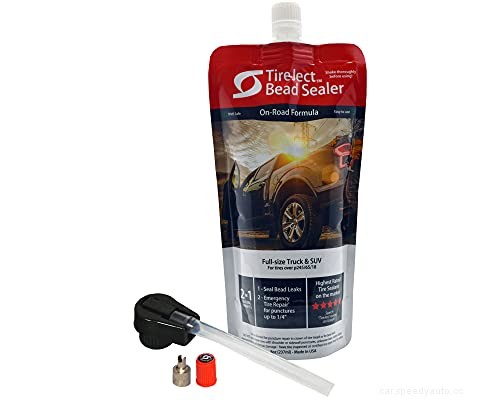
TireJect sealant stands out as the solution that is the most capable of sealing bead leaks. The process of using the TireJect is simple and similar to how Slime sealant works.
You’ll have to remove the valve core and push the sealant through the valve stem into the tire. Reinstall the valve core and attach the portable air compressor to reinflate the tire. The seal will take effect within five minutes and will hold for long enough to reach the closest tire mechanic.
TireJect solution fixes tread punctures that are up to 1/4″ in diameter, doesn’t cause tire vibration or balancing issues, and is completely safe to use with TPMS sensors.
Check Price
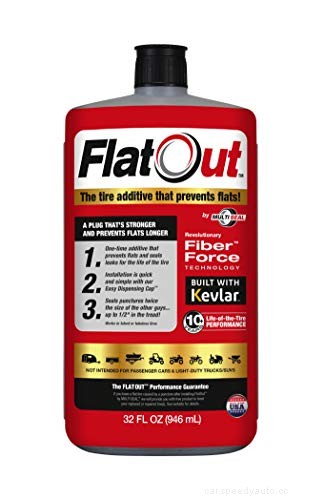
FlatOut is another standout solution that has a different marketing scheme. While other solutions are temporary fixes, FlatOut is a one-and-done product that will seal leaks for the entire lifespan of the tire.
Not only that, but the manufacturer claims that FlatOut can seal punctures up to 1/2″, which is twice the standard.
The solution can be used for any application from motorcycles and lawnmowers to trailers. It is not recommended for passenger cars, SUVs, and trucks, which is most likely the reason why it can work so effectively, as it’s only used on light-duty wheels.
The application is straightforward. Take the valve stem out, pour the required amount of FlatOut, return the valve stem and inflate the tire.
FlatOut may not be compatible with all tire pressure monitoring systems, but as most trailers and bikes don’t have them, that shouldn’t be a problem.
Check Price
Fix-A-Flat actually works for the amount of time specified on the can – 3 days or 100 miles. You should remember that after the 3 days, the Fix-A-Flat has to be cleaned off the rim, or it can cause damage to the metal.
Fix-A-Flat is the opposite of a permanent solution. It’s only intended as a quick fix to get you to the nearest tire shop, or to work and back so you can swap the tire at home.
Yes, you can. While it’s not recommended to use other sealant solutions along with Fix-A-Flat, adding in more air is completely safe and recommended.
Fix-A-Flat is completely safe to use with a tire pressure monitoring system (TPMS). The only thing you need to do is tell the tire mechanic to properly clean Fix-A-Flat from the tire and the rim before mounting the tire back on the car.
The answer to this question depends on what exactly we’re talking about. If you have large tires and standard-size Fix-A-Flat cans, then it’s fine to use more than one can on a single tire.
Using a single can of sealant on multiple tires is not okay. Also, prolonging the effect of one can by using another in a couple of days is not recommended. At that point, you should get the tire repaired or replaced.
When all things are considered, Fix-A-Flat is a handy product to have. It has a long shelf life and is very affordable, so you can keep one in the trunk of your car and forget about it until you really need it.
Using a spare tire is objectively a better solution, but it’s not always possible to safely and quickly replace the wheel. Fix-A-Flat will be the fastest method of getting to your destination, and then you can sort out the issue at a tire shop.
If possible, you should remove the nail before applying Fix-A-Flat. While it may seem logical to leave it in and let the sealant close the gap around it, the constant movement of the tire and the pressure applied to the puncture spot will never let the sealant properly take effect.
No, Fix-A-Flat will have no negative effect on the tire or the rim as long as it’s cleaned within the specified amount of time. Leaving Fix-A-Flat on the rim may cause corrosion and structural damage, and render the rim unusable.
Fix-A-Flat needs to stay above 32 degrees or it will freeze. To use it, you should warm it up to room temperature. During the colder months, you can use the interior heater on the can to warm it up before applying it.
The downsides of Fix-A-Flat are apparent only after you’ve gotten to the tire shop. The technician will have to perform extra steps and clean out the Fix-A-Flat thoroughly, which is most certainly going to increase the cost of tire repair.
That’s the only reason against using Fix-A-Flat, but the benefits are far greater in certain situations, especially when installing the spare is not possible.
The story about mechanics hating Fix-A-Flat because it ruins tire pressure monitoring sensors has no grounds in reality. Fix-A-Flat is TPMS-safe, and I don’t see why a mechanic would complain about making an easy buck replacing it.
The real reason why they hate it is that they hate cleaning it. It’s tedious and time-consuming, but they have to do it or else you’ll be a dissatisfied customer. That shouldn’t concern you, but you should expect a higher service fee because of it.
Before you can patch a tire, generally you have to clear out the foam from the tire and more importantly from the rim to keep it from affecting the metal in the future.
Fix-A-Flat is without a doubt a useful asset in your on-road toolkit. Changing the punctured tire for a spare will be better, but time, weather, and safety may make it inconvenient or impossible. In those situations, the Fix-A-Flat is going to pay for itself several times over.
