
Batteries are a necessary part of the powertrain system, as they store a massive amount of energy needed to crank the engine and get it started before fuel combustion takes over. Next to tires, batteries are one of the bigger expenses you’ll have to account for, so you should know how long it can last.
On average, car batteries can last up to 5 years. However, extreme temperatures, problems with charging, and complete drains can significantly reduce its lifespan.
In this article, aside from reviewing how batteries function, we’ll take a look at the main causes of reduced battery life and explore ways to fix them.
The standard car batteries are primarily made using lead and acid. A common misconception is that car batteries store electricity, which is not the case. Lead-acid batteries store chemical energy that is converted into electricity on demand. To reverse the chemical reaction and recharge the battery, the alternator supplies the battery with power once the engine has started.
Car batteries have two tasks. The first is to deliver the massive amount of power necessary to crank the engine. The second involves powering the electronic computer unit, interior lights, remote lock, radio memory, or anything electrical that continues to operate after the engine has been turned off.
In an electrical system without faults, the electronics use a marginal amount of power over time, leaving the majority for the task of powering the starter. With the engine running, the battery stops being used and is gradually recharged by the alternator.
Car batteries are very resilient and last up to 5 years, but there are a few ways their lifespan can be significantly reduced.
This has probably happened to all of us. In a rush, we forget to turn off headlights, stereo, or leave an interior light on overnight, only to realize our mistake the next time we turn the key.
The car battery is designed to power these electric consumers for short periods of time, but hours of use will not leave enough for the battery to crank the engine. Most modern cars have some warning or automatic shutdown system to prevent this from happening, but nothing beats creating a routine of checking your dials and knobs before exiting the vehicle.

Because heat is a factor in the chemical reaction happening inside the battery, hot weather can affect the battery’s lifespan. The only way of preventing this from happening is to park in a garage or shade, which is also a good way of preserving your vehicle.
Cold is rarely mentioned as a problem, but those who’ve driven a diesel-powered car in the winter should know what I’m talking about. In cold weather, more power is required to start the engine, placing a larger strain on the battery.
This problem can be solved by installing a more powerful battery. However, take into consideration that the increase in power demand also increases the time for the battery to recharge. This is why a series of short commutes during the winter can significantly affect battery life.
Once the engine is running, the alternator takes over from the battery as the main source of power supply. Failure of the alternator stops the recharging of the battery but also cuts off all power supplies to ECU, electric steering, headlights, and everything else you’re commonly using while driving.
If that happens, the battery will take over from the alternator and supply those systems for a short period of time. When this happened to me during the night, I managed to drive for another 40 minutes before I was forced to stop.
Whether it’s inside the vehicle or stored in the garage, the battery will gradually lose its power over time. Leaving the car inactive for weeks, or a storage battery for months will drain it, but this is not as drastic of a problem as active power leaks or failure to recharge.
Vibrations have a strong impact on all parts of the vehicle, including the battery. If the captive screws aren’t tightened, the battery can vibrate and move around, which can have a negative effect on its durability.
In some ways, a car battery is the same as the one in your phone and laptop, and if you keep it well maintained, it will serve you for a long time.
The first step towards a healthier battery is to turn off all power consumers before leaving the vehicle. This includes the radio and interior lights, but most importantly headlights. Not everyone has the means to afford a garage, but even some shade from a tree or a building is enough to make a difference during scorching hot days.
For your battery, a running engine is the same as keeping the phone plugged into a power outlet. You wouldn’t want to charge your phone for a gain of 10%, so try not to do it to your car battery either.
Mix in a few longer routes in between all the short grocery trips and work commutes to create a full charge and extend the lifespan of the battery. This method should be taken more as guidance than a rule, as optimally charging the battery every time will cost you more through fuel than buying a new battery.

In our 10 Best Batteries For The Toyota Tacoma guide, we’ve discussed in great length the best car battery brands of 2021 and specs to consider when purchasing a new battery. Since all battery manufacturers create their batteries in a wide range of power ratings, I highly recommend using that article as a way to find the best battery possible.
| Image | Title | Price | Buy |
|---|---|---|---|
Top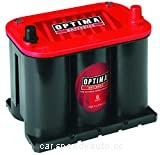 Top
Top
Top
Top | Optima Batteries 8020-164 35 RedTop Starting Battery | Buy Now | |
 Top
Top
Top
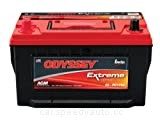
Top | ODYSSEY 65-PC1750T Automotive and LTV Battery | Buy Now | |
 Top
Top
Top
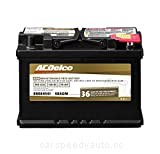
Top | ACDelco Gold 48AGM 36 Month Warranty AGM BCI Group 48 Battery, Black | Buy Now |
There are four primary factors to consider when buying a new car battery:
Ampere-hour determines the electrical potential of the battery. Every car manufacturer has a minimum ampere-hour rating requirement based on the engine size and type. Going over the specified rating is recommended in cold climates, otherwise, it won’t bring any significant benefits.
Cold crank rating or CCA is another measurement of power that scales with an ampere-hour rating. If your car has a petrol engine, you don’t have to worry about CCA but keep an eye out for this rating when buying a car battery for a diesel-powered vehicle.
Diesel requires more powerful batteries than petrol-powered engines, and cheaper batteries may not have enough CCA to adequately crank the engine.
The size of the battery scales with power, and you can’t go wrong if you stick within the power rating specified by the vehicle manufacturer. If you want to get a more powerful battery, measure the battery slot to make sure it will fit.
The terminals on the battery allow it to connect to the vehicle using battery cables. The most common terminal shape is cylindrical knobs, but there are also other types. Terminals are also positioned in a way that polarity cannot be swapped.
This means that your new battery has to have the right polarity to fit. Check the positive and negative polarity of the current battery to see which is left and which is right. If you don’t have a battery at all, then look at the wires – the red wire is for positive, while the black is for negative polarity.
You can tell there’s a problem with the battery if the engine whines when you turn the key. The battery isn’t supplying the starter with enough power to crank the engine, and you can hear the slow cycles before the engine starts burning fuel.
If you turn the key and nothing happens aside from clicking noise, it means the battery has fully drained. You may experience other problems like the unresponsive remote lock and complete lack of power when the ignition is set to the On position.
Problems with the power supply are not always caused by the battery. Sometimes, a drained battery is a symptom of another issue, and in this section, we’ll explore the most common causes.

Headlights are one of the biggest power consumers in the vehicle, and when they start to fade, it means they’re draining the car battery, rather than getting their power from the alternator. Fading headlights, distorted radio sounds, and malfunctioning instrument panels are the most common symptoms of alternator failure.
We’ve covered what happens when you leave a power consumer on for extended periods of time, but what if you’ve checked everything, yet the battery still can’t start the engine?
The current drain is a likely cause – there’s something in the system using an unnecessary amount of power even when turned on. Faulty stereo is the most common cause and I’ve seen it happen several times.
I’ve experienced a current drain from a faulty brake lights switch – it would turn the brake lights on randomly during the night, and by the time I got to my car, the battery would be drained and the brake lights turned off.
Try to rule out causes one by one – turn off all interior lights, take out the aftermarket radio, manually lock the car to avoid engaging the anti-theft system, and check on it often.
We’ve already discussed the Symptoms of Loose Battery Cables in another article, but here’s the short version. Battery cables connect the battery to the car. A loose connection may be good enough to start the car, but it won’t be capable of providing a steady supply of recharge power to the battery, causing a drain.
If the battery of your car gets drained, it’s not the end of the world. Car batteries will inevitably drain a few times during their use, without having a significant impact on longevity. To recharge the battery, you can either jump-start or use a battery charger. Both methods have pros and cons, so let’s take a look at the differences between them.
When you’re parked at the workplace, grocery store, or anywhere but your home, jump-starting is the best method of getting your car running again. Keep a set of jumper cables in your trunk – they’re very cheap and will pay for themselves in a single-use. Politely ask another driver to help you out with a few minutes of their time.
Position the two vehicles to make the batteries as close as possible. Keep the other vehicle running, then attach the red cable to the positive (+ ) terminal of both batteries, and the black cable to the negative ( – ) terminals.
The other driver should raise their RPM slightly while in neutral, and after a minute you should try cranking the engine. If you succeed, do not turn off your vehicle! Leave it running, remove the cables, and thank the other driver. I’d recommend driving for roughly 30 minutes after jump-starting to give the battery enough time to recharge.
A more expensive, but more convenient alternative to the jumper cables is the Car Battery Booster Pack. It acts as a substitute for the other car, so you can recharge the battery by yourself, which will come in handy in remote locations.
The main benefit of a battery charger is that unlike jumper cables or booster packs, it completely recharges the battery. The downside is that it has to be plugged into a power outlet, but with an extension cord, you can charge directly, or take out the battery and charge inside your home. Battery chargers can take a few hours to fully restore battery power, so it’s best if you leave it overnight.
The average lifespan of a battery is 3 years, but with the right maintenance and a battery made by a high-quality brand, you can expect up to 5 years of service from a car battery.
There’s no need to replace the battery after jump-starting the car if the battery itself is not the problem. A healthy battery can drain occasionally and get restored to full operating capacity.
Frequent and repeated drains are what permanently damage the power and lifespan, so try to fix any electrical problems you have before they permanently damage the battery.
The mileage does not affect the battery in any way. Once the engine has been started, the battery switches to recharge mode. The main factor is how the mileage is achieved – fewer long-distance trips are better on the battery than more short commutes.
Frequent start-stop situations and distances too short to allow the battery to charge are what affect its lifespan the most.
You have to drive for at least half an hour to restore a significant portion of the battery’s power. Without a wall socket to plug the battery into, the engine acts as a petrol/diesel generator and creates the electric power necessary to recharge the battery.
Two weeks is generally regarded as the longest period a car should be parked, but I have left a car with a good battery for a month and had no issues starting it.
The electric systems consume very little power on standby, so having your vehicle parked for a few weeks won’t be an issue. If you don’t plan on using your vehicle at all for an extended period of time, at the very least you should disconnect the battery cables.
The average car battery can last anywhere between 2 to 5 years. Heat and improper maintenance can seriously affect its lifespan, and if you let your battery drain often, it might not serve you for even a year.
Turn off all the power consumers before stepping out of the vehicle, and give the battery a chance to recharge by driving for at least 30 minutes when possible. If you follow these simple steps, you can ensure your battery lasts a long time!
Find more related articles here:
What Happens If A Battery Runs Out Of Water?
How Long Does It Take to Charge a Car Battery While Driving?
Who Makes Champion Batteries?
