
CV joints are an important part of your car. They help to connect the transmission to the wheels and allow the car to move. If your CV joint is damaged, it can affect the transmission and cause problems with how your car operates.
CV joints can certainly have an impact on the transmission, but they are not the only cause of these issues. If you’re having one of these problems, it’s critical to get your car looked at by a professional mechanic to figure out what’s wrong with it.
Only after that will effective repairs be possible. In this blog post, we will discuss what a CV joint is and how it can affect transmission. We will also provide tips on how to repair a bad CV joint.
An automatic transmission is a type of motor vehicle transmission that can automatically change gear ratios as the vehicle moves, freeing the driver from having to shift gears manually.
Automatic transmissions use a variety of hydraulic fluids, metal alloys, and electronic controls to function and are much more complex than traditional manual transmissions. Automatic transmissions first appeared in production vehicles in 1940.
By the 1950s, they had become standard equipment in many cars and trucks. Today, most passenger cars and light trucks sold in developed countries are equipped with automatic transmissions.
Although there are several types of automatic transmissions, the most common is the torque converter type. This design uses a fluid coupling in place of a mechanical clutch to engage the engine with the transmission.
The torque converter is a hydraulically controlled device located between the engine and transmission. It consists of a pump, turbine, and stator.
The pump is connected to the engine and drives the transmission fluid through the torque converter. The turbine is connected to the transmission and spins at a different speed than the pump. The stator is located between the turbine and pump and helps to slow down or stop the fluid flow.
As the vehicle moves, the transmission fluid is forced through the torque converter by the pump. The fluid then flows into the turbine, which begins to spin. The spinning of the turbine causes the transmission gear ratios to change, which in turn changes the speed of the wheels.
The stator helps to regulate the flow of fluid and prevents it from being forced back into the pump. It also helps to keep the fluid from flowing too fast through the turbine, which can cause damage.
The electronic controls of an automatic transmission are responsible for monitoring the speed of the engine, the speed of the wheels, and the position of the throttle. The transmission controller uses this information to determine when to shift gears.
When the vehicle is first started, the transmission will be in first gear. As the vehicle begins to move, the transmission will shift into second gear. This process will continue until the vehicle reaches its top speed, at which point the transmission will be in fourth or fifth gear.
If you need to slow down or stop, the transmission will automatically shift back into a lower gear. This provides the engine with more power so that the vehicle can slow down or stop safely.
There are several benefits of automatic transmissions over traditional manual transmissions. One benefit is that they allow the driver to keep both hands on the wheel, which can be helpful in traffic or in emergency situations.
Another benefit is that they can help improve fuel economy because the transmission can shift gears more quickly and efficiently than a human driver.
Automatic transmissions are not without their drawbacks, however. One drawback is that they can be more expensive to repair than manual transmissions. another drawback is that they may not last as long as manual transmissions.
Despite their drawbacks, automatic transmissions are still a popular choice for many drivers. If you are considering an automatic transmission for your next vehicle, be sure to do your research to find the best option for you.
A manual transmission is a type of transmission that is commonly found in cars and trucks. It uses a series of gears to change the speed and torque of a vehicle. The driver of the vehicle must manually select the correct gear for the current speed and driving conditions.
The most common type of manual transmission is the five-speed transmission. It has five gears: first, second, third, fourth, fifth, and reverse. Each gear has a different ratio of speed to torque. The ratios are designed so that the engine can operate at its optimum speed for each gear.
To change gears, the driver must press the clutch pedal with their left foot while simultaneously moving the shifter with their right hand. The clutch pedal disconnects the engine from the transmission. This allows the driver to change gears without the engine stalling.
Once the correct gear has been selected, the driver must release the clutch pedal and press the accelerator pedal to engage the engine. The engine will then provide power to the transmission, which will, in turn, provide power to the wheels.
Manual transmissions are typically more fuel-efficient than automatic transmissions because they do not have a torque converter. They are also typically lighter and cheaper to maintain than automatic transmissions.
However, they can be more difficult to operate, especially in stop-and-go traffic or in emergency situations. If you are considering a manual transmission for your next vehicle, be sure to do your research to find the best option for you.
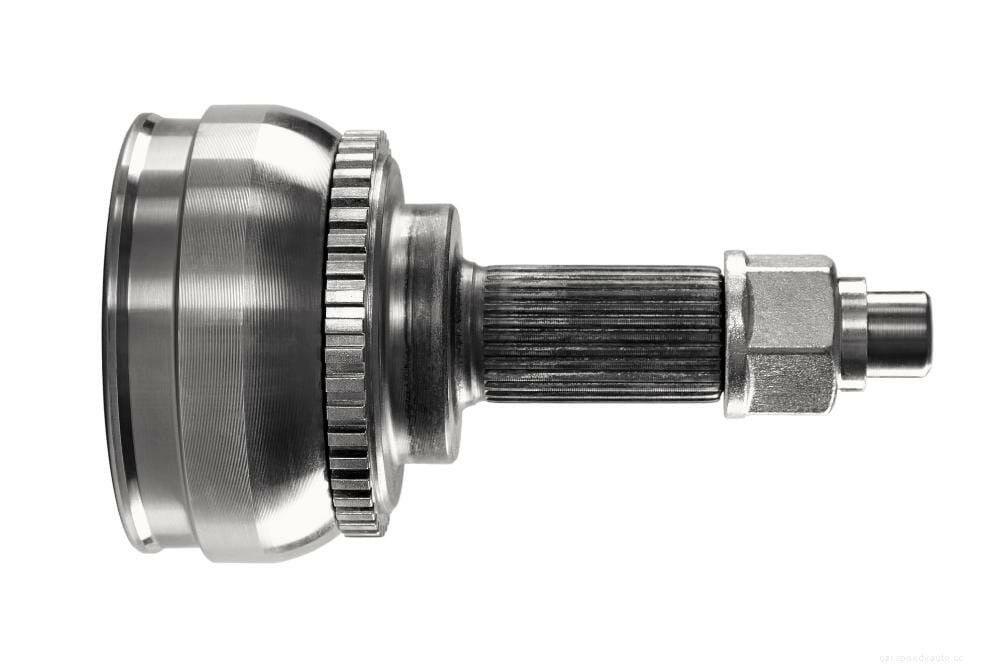
A CV joint is a type of joint that helps in the smooth transfer of torque from the engine to the wheels. This is particularly important when driving on uneven surfaces, as it helps to ensure that the wheels maintain contact with the ground and do not slip.
CV joints are typically found at either end of the drive shaft, and they work by allowing a small amount of movement between the shaft and the wheel. This allows for a smoother transfer of power and helps to prevent any damage that could be caused by sudden jerks or movements.
There are two types of CV joints: inner and outer. Inner joints are located closer to the engine, and they are responsible for transferring power from the driveshaft to the wheels.
Outer joints are located at the end of the driveshaft, and they are responsible for transferring power from the wheels to the driveshaft.
CV joints are an important part of your vehicle’s suspension system, and they should be inspected regularly to ensure that they are in good condition.
If you notice any unusual noises or vibrations coming from your suspension, it is important to have a professional inspect your CV joints to determine if they need to be replaced.
A bad CV joint can affect the transmission in a number of ways. One way is that it can cause the transmission to slip. This can happen if the CV joint is not properly lubricated or if it is damaged.
Another way that a bad CV joint can affect the transmission is by causing the driveshaft to bind. This can happen if the CV joint is damaged or misaligned. If this happens, it can cause the driveshaft to break, which will then cause the transmission to fail.
Finally, a bad CV joint can also cause excessive vibration in the drivetrain. This can be caused by either a damaged CV joint or an improperly balanced driveshaft. If you notice any of these symptoms, it is important to have your vehicle inspected by a professional to determine if the CV joint needs to be replaced.
While a bad CV joint can certainly affect the transmission, it is not the only factor that can cause these problems.
If you are experiencing any of these symptoms, it is important to have your vehicle inspected by a qualified mechanic to determine the root cause of the problem. Only then can the appropriate repairs be made.
There are a few different symptoms that can be indicative of a bad CV joint. One symptom is unusual noises coming from the suspension. This can be either a clicking, popping, or grinding noise.
Another symptom is vibrations in the steering wheel or in the seat. This can be caused by either the CV joint itself or by an imbalance in the driveshaft.
Finally, a bad CV joint can also cause premature wear on the tires. This is caused by the CV joint binding, which causes the tire to slip on the road surface.
If you notice any of these symptoms, it is important to have your vehicle inspected by a professional to determine if the CV joint needs to be replaced.
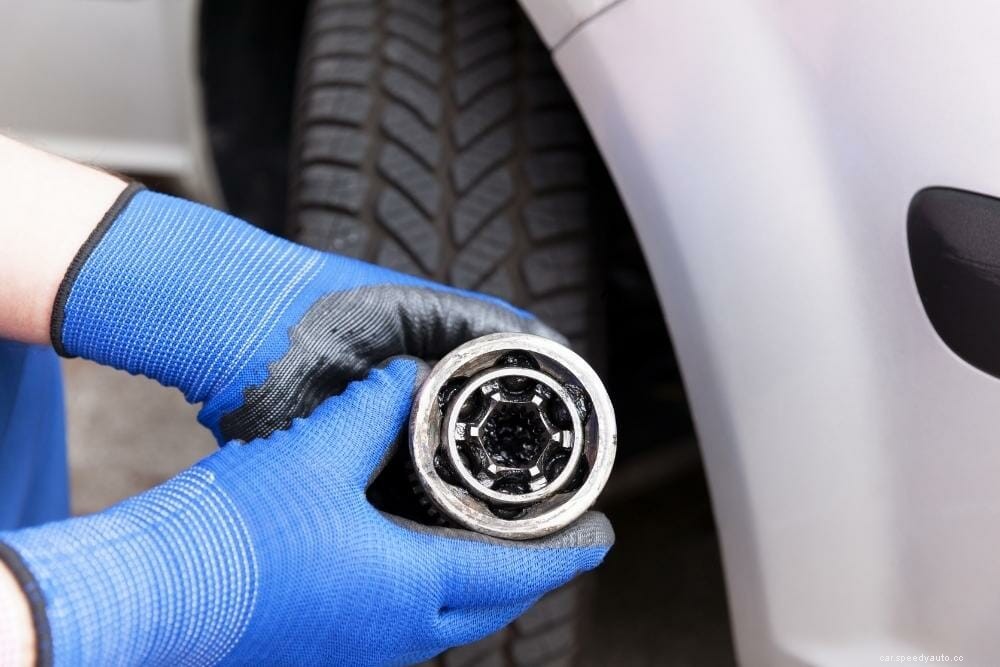
A bad CV joint will make a clicking noise when the car is turned. The sound is most noticeable when the car is turning at low speeds. If you hear this noise, it’s time to replace the CV joint.
| Image | Title | Price | Buy |
|---|---|---|---|
 Top
Top | BIG RED Torin Hydraulic Trolley Floor Jack Combo with 2 Jack Stands, 2 Ton Capacity (T82001) | Buy Now | |
 Top
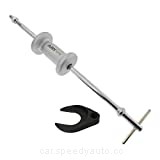
Top | ABN Inner CV Axle Removal Tool - CV Axle Puller Slide Hammer Set with 5 lb Slide Hammer and CV Joint Puller Adapter | Buy Now | |
 Top
Top | 40 Pieces - EPAuto 1/4-Inch & 3/8-Inch Drive Socket Set with 72 Tooth Reversible Ratchet | Buy Now | |
 Top
Top | DEWALT Combination Wrench Set , SAE, 8 pieces (DWMT73809) | Buy Now |
A CV joint is a simple yet crucial part of your car’s suspension. It allows the axle shaft to flex as the car turns, which helps keep the wheels in contact with the ground.
Over time, CV joints can wear out and develop problems. When this happens, it’s important to replace them as soon as possible. Otherwise, you could lose control of your car while driving.
Follow these steps to replace a bad CV joint in your car. With a little time and effort, you can do it yourself and save money on expensive repairs.
CV joints typically last between 80,000 and 100,000 miles. However, this can vary depending on the make and model of your car.
There are a few different things that can cause a CV joint to go bad. One thing is excessive wear and tear. Another is damage from an impact or accident. Finally, improper lubrication can also cause problems with the CV joint.
The cost of replacing a CV joint can vary depending on the make and model of your car. Expect to pay between $200 and $400 for parts and labor.
It is not safe to drive on a bad CV joint. Doing so can cause further damage to the suspension and may even lead to an accident. If you think you have a bad CV joint, have your car inspected by a professional mechanic as soon as possible.
If you ignore a bad CV joint, the problem will only get worse over time. Eventually, the joint will fail completely, and you will lose control of your car. This could lead to an accident, so it’s important to take care of the problem as soon as you can.
There are a few things you can do to prevent your CV joints from going bad. First, make sure to have your suspension checked regularly. This will help identify any potential problems early on.
Second, keep your car clean and free of dirt and debris. This will help extend the life of the CV joint. Finally, make sure to lubricate the CV joint regularly to prevent premature wear and tear.
If you are having transmission problems, it’s critical to have your car inspected by a professional mechanic. While a bad CV joint may contribute to transmissions issues, it is not the only thing that can trigger them.
If one or more of these symptoms appear, you should have your vehicle examined by a professional mechanic to identify the source of the problem. Only after this will repairs be feasible.
