
If you’re experiencing strange noises or vibrations while driving, there’s a good chance that you have a bad wheel bearing or CV joint. Identifying the cause can seem difficult, but there are a few ways to pinpoint the faulty part.
To tell the difference between a bad wheel bearing and a bad CV joint, listen to the noise. If you hear a grinding, growling, or rumbling noise coming from the affected wheel, it’s a bad wheel bearing. If you hear a clicking noise coming from the affected wheel when turning, it’s a bad CV joint.
A wheel bearing is a set of steel balls held together by a metal ring called a “cage.” The cage keeps the balls spaced evenly around the circumference of the bearing and prevents them from coming into contact with each other during operation.
The bearings ride on hardened steel or ceramic braces that are either pressed or bolted into the wheel’s hub.
As the name implies, wheel bearings provide smooth, friction-free rotation to your wheels while you’re driving down the road. Without them, your wheels would literally grind to a halt.
Most vehicles have four-wheel bearings – one at each corner of the vehicle – that support the weight of the vehicle and allow the wheels to rotate freely.
Over time, however, wheel bearings can wear out, causing noise and vibration that can be quite noticeable while driving. In some cases, a failed wheel bearing can even cause the wheel to come loose from the vehicle while you’re driving!
Wheel bearings are typically made up of an inner and outer ring, with the cage and balls in between. The inner ring is attached to the hub, while the outer ring is what the wheel bolts onto.
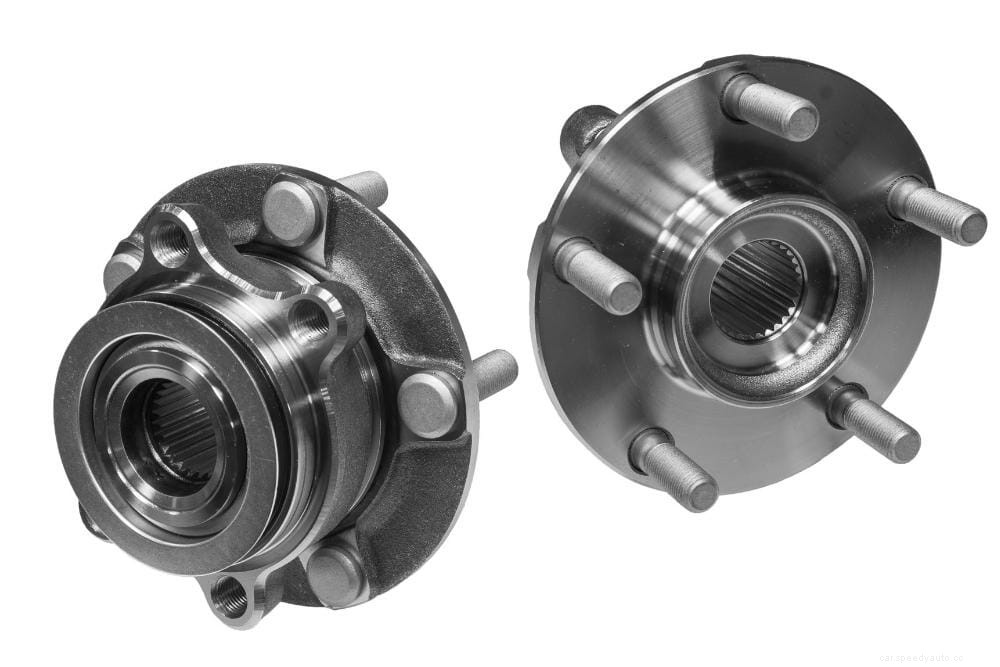
If you suspect that your vehicle may have a bad wheel bearing, there are several symptoms that you can look out for.
One of the most common symptoms is noise coming from the wheels or suspension area. This noise is usually described as a grinding, growling, or rumbling sound and is most noticeable when driving at lower speeds.
Another symptom to watch out for is increased vibration coming from the affected wheel. This can be felt through the floorboard or steering wheel and is usually worst between 15-25 MPH.
In some cases, a bad wheel bearing can also cause the affected wheel to wobble or shake. This is usually most noticeable at higher speeds (above 40 MPH) and can be dangerous if not addressed quickly.
A CV joint is a type of joint that allows the shaft to transmit power while it’s at an angle. It’s most commonly used in drivetrains, where it connects the rotating driveshaft to the non-rotating wheel axles.
The CV joint consists of two main parts: the “inner race” and the “outer race.” The inner race is attached to the shaft, while the outer race is attached to the wheel axle.
Between these two races are a number of small metal balls (called “balls”) that rotate along with the shaft. As the shaft turns, the balls slide back and forth inside the races, allowing the inner and outer races to move relative to each other.
This movement allows the shaft to transmit power to the wheels while the suspension is moving up and down, keeping the wheels in contact with the ground at all times.
CV joints are located at either end of the driveshaft and are usually covered by a rubber or plastic “boot” that protects them from dirt and debris.
If you suspect that your vehicle may have a bad CV joint, there are several symptoms that you can look out for.
One of the most common symptoms is a clicking noise coming from the affected wheel when turning. This noise is caused by the balls inside the CV joint hitting against each other as they slide back and forth.
Another symptom to watch out for is a vibration coming from the affected wheel. This is usually most noticeable at higher speeds (above 40 MPH) and can be dangerous if not addressed quickly.
In some cases, a bad CV joint can also cause the affected wheel to wobble or shake. This is usually most noticeable at lower speeds (below 30 MPH) and can be quite dangerous if not addressed quickly.
A few key differences between a bad wheel bearing and a bad CV joint can help you determine which one is causing the problem.
One of the most obvious differences is the location of the noise. A bad wheel bearing will usually cause a noise that can be heard from inside the vehicle, while a bad CV joint will usually cause a noise that can be heard from outside the vehicle.
Another difference is the type of noise that each one makes. A bad wheel bearing will usually make a grinding or growling noise, while a bad CV joint will usually make a clicking noise.
Finally, the affected wheel will behave differently in each case. A bad wheel bearing will usually cause the affected wheel to wobble or shake, while a bad CV joint will usually cause the affected wheel to vibrate.
If you suspect that your vehicle has a bad wheel bearing or CV joint, it’s important to have it inspected by a qualified mechanic as soon as possible. These components are essential to the safety of your vehicle and should not be ignored.
If you have a bad wheel bearing, it’s important to replace it as soon as possible. Replacement can be done at home with a few tools and some basic mechanical knowledge.
Before beginning, make sure that you have all of the necessary tools and parts. You will need:
First, loosen the lug nuts on the affected wheel using the lug wrench. Do not remove them completely; just loosen them enough so that they can be removed by hand later.
Next, use the jack to raise the vehicle up to get the affected wheel off the ground. Place the jack stands under the vehicle and lower it down so that it is resting on them.
Now, use the hammer and chisel to remove the hub cap (if there is one) from the affected wheel.
Next, use the punch to drive out the old wheel bearing from the hub. You may need to tap it with a hammer to get it started.
Once the old bearing is out, clean out any debris or rust from inside the hub using a wire brush or sandpaper.
Now, insert the new wheel bearing into the hub. Make sure that it is seated all of the ways in and that it is facing in the correct direction.
Finally, replace the hub cap (if there is one) and the lug nuts. Tighten the lug nuts using the lug wrench, then lower the vehicle down to the ground.
Test drive the vehicle to make sure that the problem is fixed. If you still hear noise or feel a vibration, take it back to a qualified mechanic for further diagnosis.
If you are having difficulty steering your car or if you notice a clicking noise coming from the front of your vehicle, it is likely that your CV joint needs to be replaced.
Although this is a repair that can be done at home, it is best to leave it to a professional if you are not familiar with auto repairs.
The CV joint is located at the end of the axle and helps transfer power from the engine to the wheels. Over time, the joints can wear down and become damaged, which can lead to difficulty steering and other problems.
Replacing the CV joint is a relatively simple process, but it is important to follow the instructions carefully in order to avoid damaging the new part.
The instructions are as follows:
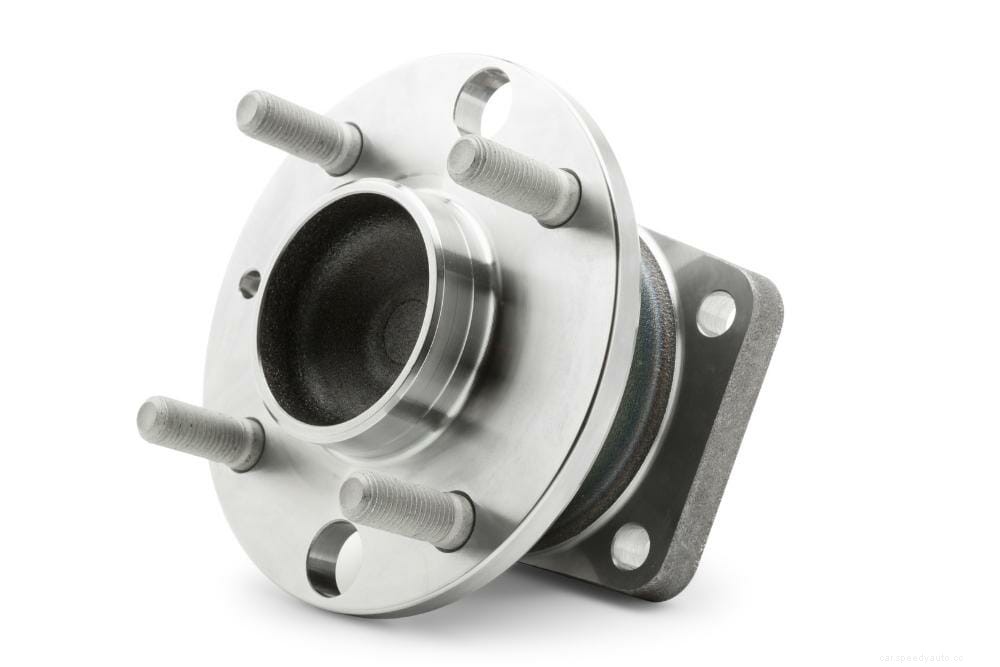
Suppose you’re wondering how long a wheel bearing last, the answer is that it depends on a number of factors. The most important factor is the quality of the bearing itself.
Cheap bearings can fail in as little as 20,000 miles, while higher quality bearings can last up to 100,000 miles or more.
Another important factor is how well the bearing is maintained. Regular inspection and lubrication will help extend the life of the bearing, as will avoiding excessive heat and moisture.
Finally, keep in mind that if any other part of the suspension or steering system is worn or damaged, it can put additional stress on the bearings and cause them to fail prematurely.
The answer to how long a CV joint lasts again depends on several factors. The most important factor is the quality of the joint itself. Lower quality joints can fail in as little as 50,000 miles, while higher quality joints can last up to 150,000 miles or more.
Another important factor is how well the joint is maintained. Regular inspection and lubrication will help extend the life of the joint, as will avoiding excessive heat and moisture.
Finally, keep in mind that if any other part of the suspension or steering system is worn or damaged, it can put additional stress on the joints and cause them to fail prematurely.
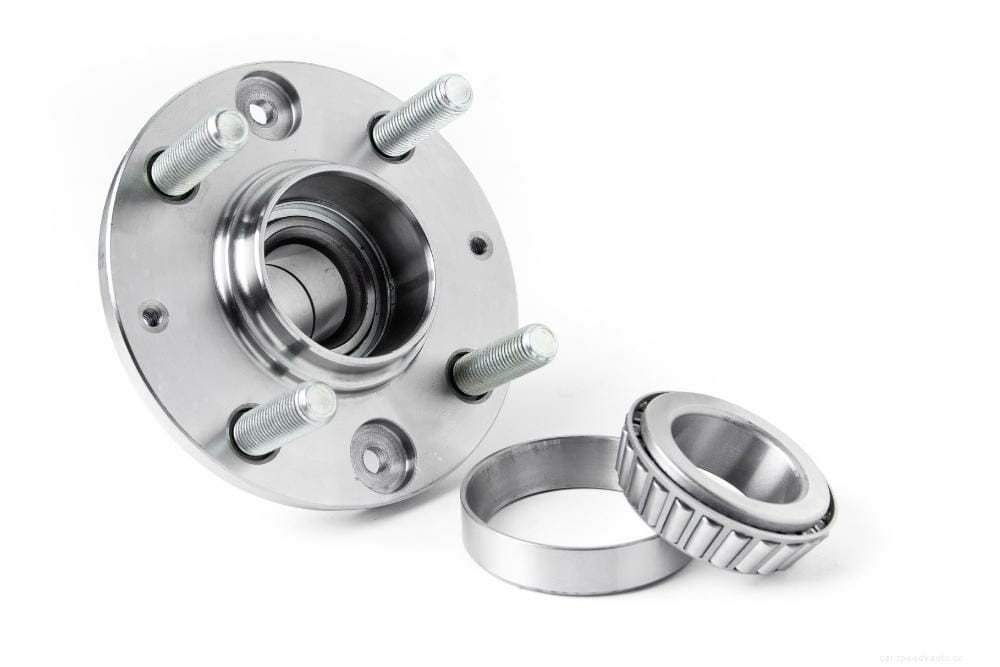
If a bad wheel bearing is not repaired in a timely manner, it can cause damage to the suspension, steering, and other components of your vehicle.
In extreme cases, it can even lead to a loss of control while driving, which could result in an accident.
For this reason, it’s important to have any suspected problem with your wheel bearings checked out by a qualified mechanic as soon as possible.
It is not safe to drive without a wheel bearing. If a wheel bearing fails while you are driving, it can cause the wheel to come loose from the vehicle. This can lead to a loss of control and an accident.
For this reason, it’s important to have any suspected problem with your wheel bearings checked out by a qualified mechanic as soon as possible.
If a bad CV joint is not repaired in a timely manner, it can cause damage to the suspension, steering, and other components of your vehicle. In extreme cases, it can even lead to a loss of control while driving, which could result in an accident.
For this reason, it’s important to have any suspected problem with your CV joints checked out by a qualified mechanic as soon as possible.
You can tell the difference between a bad wheel bearing and a bad CV joint by the location of the noise, the type of noise, and the behavior of the affected wheel. Grinding and rumbling noise signifies a wheel bearing issue, while clunking is a common sound of a bad CV joint.
If you suspect that your vehicle has a bad wheel bearing or CV joint, it’s important to have it inspected by a qualified mechanic as soon as possible. These components are essential to the safety of your vehicle and should not be ignored.
