
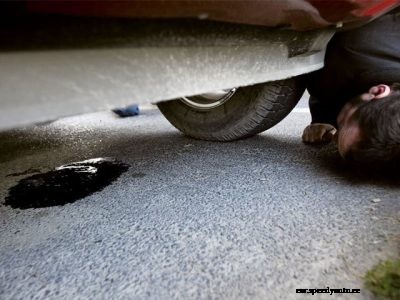
 It can often be difficult to tell what your car is leaking. The leak location, the color and smell of the fluid are some of the best indications of what your vehicle is leaking. Power steering fluid can be one of the most difficult leaks to diagnose. The Power steering system consists mainly of the pump, which is bolted to the motor, a feed and return line, sometimes a cooler and the power steering rack or gear. The difficulty is that if any of these components are leaking it is difficult to tell if it is the power steering system or an engine oil leak. The power steering pump is usually bolted to the motor below the valve cover and a valve cover leak and power steering pump leak could cause drips in the same places. Also, the power steering lines usually are run near the motor or over the back of it depending on the orientation of the engine. The steer rack also needs to be mounted between your front tires so in most vehicles is under the motor, again making it difficult to see if it is the power steering system or engine oil that is leaking.
Another method of proving you have a leaking power steering system is to determine what sort of fluid you have dripping from your vehicle. First you must determine what type of fluid your power steering system uses. It seems intuitive that it would take power steering fluid, but if things on cars were always that simple, dealerships wouldn’t be able to charge so much for repairs. Depending on the make, model and year of your vehicle your power steering system could take any variety of different fluids.
Common Fluids Used in Power Steering Systems:
Each of these fluids have different characteristics and were designed to work in different environments. Most Power steering fluids will not have the same level of friction modifying chemicals or lubricants as transmission fluid and may cause premature failure of your power steering system if incorrectly substituted. Automatic transmission fluids are often used in power steering systems because they maintain a relatively consistence viscosity throughout a wide temperature range ensuring things will work properly even at colder temperatures. Lastly, these different fluids are designed to lubricate and inhibit corrosion with different kinds of materials. Some fluids work well with polymers and exotic metals while other will have harsh reactions with the same materials.
The bottom line is that it is very important to refill your power steering system with the manufacture’s recommended fluid. The system likely will work for a short time with the wrong fluid but premature failure will soon follow.
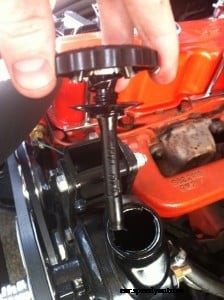 The best way to prove you have a power steering leak is to keep track of the power steering fluid level. Most power steering reservoirs will have a dip stick attached to the bottom of the cap. Check the power steering fluid reseviour level every few days using this dip stick. If you notice it dropping consistently, you have a power steering fluid leak.
To seal the leak, pick up BlueDevil Power Steering Leak Stop and add 1/3 of the bottle to the power steering reservoir and top off with the proper type of fluid. It may require a day or two of driving, but BlueDevil will stop your power steering leak quickly and permanently guaranteed!
Pick up BlueDevil Power Steering Leak Stop at your favorite auto parts store like:

You can also purchase BlueDevil Power Steering Leak Stop directly from the manufacturer here: Power Steering Stop Leak
Pictures provided by: careforcarblog.com and www.gilfether.com
