
If you want your car to perform at its best and to stand the test of time, you need to keep up with all of the important maintenance and cleaning. From time to time, car exhaust systems can become clogged up and an unresolved blockage can cause serious problems for your vehicle.
To ensure your car is performing at its best, drivers need to check that their exhaust system is clean and free of built-up dirt and debris. If your exhaust system is showing signs of blockage, keep reading this article. We have shared a step-by-step guide explaining exactly how to clear a clogged exhaust.
A clogged exhaust is often caused by built-up debris in either the catalytic converter or the muffler. To unclog the catalytic converter, drivers can either use a specifically formulated cleaning solution and pour it into the fuel tank or remove the part and soak it overnight.
If the muffler is causing the problem, it can be removed and soaked in a detergent or it may need to be replaced if there is a large amount of built-up debris.
The car exhaust system is made up of several components and each plays an important role. Without a working exhaust system, your vehicle will not be able to remove the dangerous chemicals from the combustion.
The exhaust system stops harmful carbon monoxide, hydrogen carbons, and nitrogen oxides from entering the main cabin of the car and it also ‘cleans’ the gasses as best it can before they are released into the atmosphere via the exhaust pipe.
Here are all the different components that make up a vehicle’s exhaust system:
It is not uncommon for one or more of the exhaust system components to become clogged. A lot of smoke and gasses pass through the exhaust system and drivers can often experience a clogged catalytic converter or exhaust muffler.
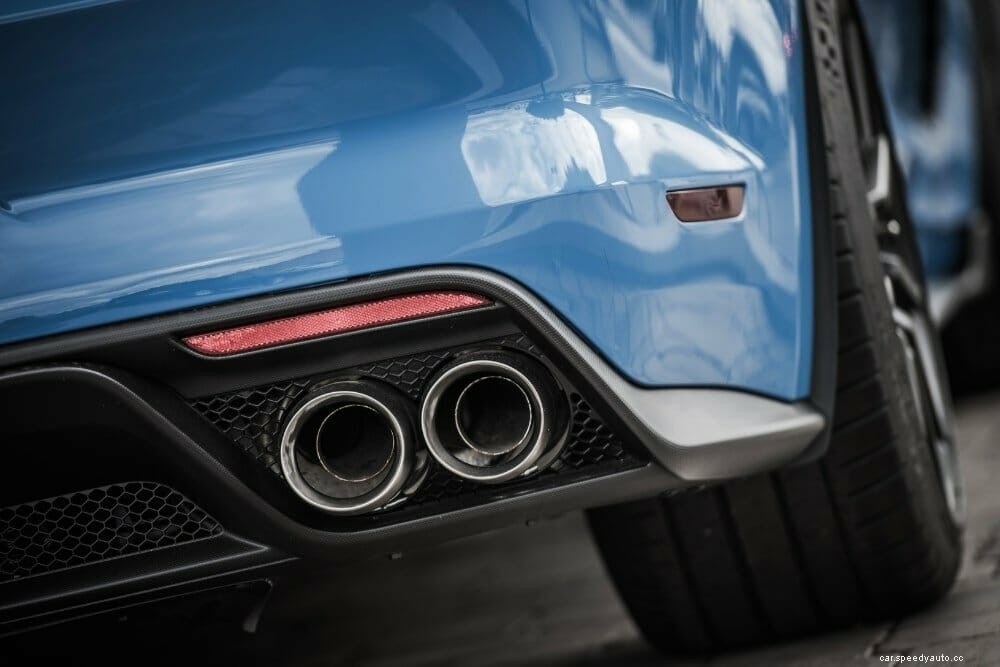
A car exhaust system can become clogged for several reasons. For example, if you live near the coast, salt from the sea can cause rust to form on the pipes and buildup inside the exhaust system.
Drivers living in colder climates may also notice rust caused by the salt that is spread on icy roads during freezing temperatures.
Drivers can also unintentionally clog up their exhaust system by using the wrong type of cleaning products for their vehicles. To prevent damage to the exhaust, it is important to always use the products recommended by your vehicle’s manufacturer.
Driving erratically on bumpy roads can damage the exhaust system which can make it more prone to becoming clogged up. If gasses and smoke can not easily pass through the exhaust, they can build up and cause a problematic blockage.
You may be wondering if you can tell when your exhaust is clogged. A blocked exhaust is usually easy to spot as there are several telltale signs.
It is important that drivers know the signs of a clogged exhaust because driving with an exhaust blockage can cause harmful emissions to stay trapped in the engine.
When emissions can not effectively leave the exhaust system, they essentially poison the engine until it fails completely. Here are the main symptoms of a clogged exhaust system:
1. Low power – If you can’t accelerate when you hit the gas, or acceleration is taking a lot longer than usual, this is a sign that the emissions are trapped in front of the catalytic converter.
2. Engine overheating – When the exhaust system is clogged up, hot exhaust fumes can become blocked inside the engine and cause it to overheat. If an engine heats up too much, this can cause the engine to fail completely and become damaged beyond repair.
3. Stalling and failed start – A clogged exhaust system can make it difficult for a car to ‘exhale’ the emissions. When the gasses are not able to pass out of the exhaust, this impacts how smoothly the car engine starts and idles. An obvious sign of a clogged exhaust is unexpected stalling and failed ignition.
4. Bad smell – A clogged exhaust system is often caused by a blocked-up catalytic converter. When this component becomes blocked it can create a bad-smelling sulfur odor. If you notice a rotten egg smell while you are driving, it will be worth investigating if there is a blockage in your exhaust system.
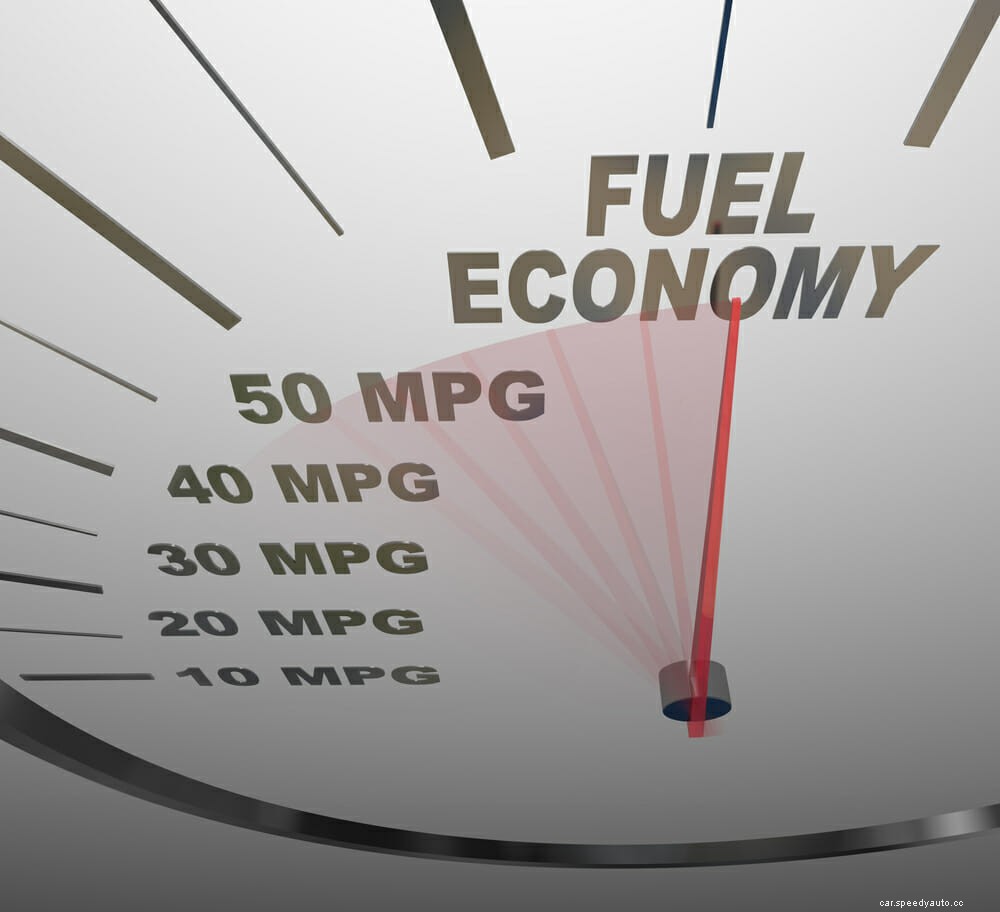
5. Poor fuel economy – Burning through fuel quicker than usual? If you notice your car suddenly has really poor fuel economy, it could be down to an exhaust blockage. Whenever you notice your car is not performing as well in the gas mileage department, it could indicate an issue with the exhaust system.
6. Engine misfire – Engine misfires are a rare symptom of a clogged exhaust but they can happen. A misfiring engine should never be ignored and further investigation may reveal that the exhaust system is blocked.
7. Unusual noises – It is not always the catalytic converter that is causing a blockage, sometimes the muffler is to blame. When the exhaust muffler is clogged, drivers will notice an usual revving sound when they start the car and when the vehicle is idling.
If you notice any of the above symptoms, you will need to get your car’s exhaust system checked. If you notice that your catalytic converter or muffler is clogged, you can try to fix the problem yourself at home. If you are not sure how to unclog an exhaust, keep reading because we have an easy-to-follow step-by-step guide for you.
Now you know the symptoms of a clogged exhaust, it is time to determine whether it is the muffler or catalytic converter that is causing all the problems. Once you have discovered where the blockage is in the exhaust system, it is time to get to work.
If your car’s catalytic converter is only moderately clogged, you should be able to remove the majority of the built-up debris by performing a deep clean. You will need to purchase a catalytic converter cleaner that is suitable for your car’s exhaust system.
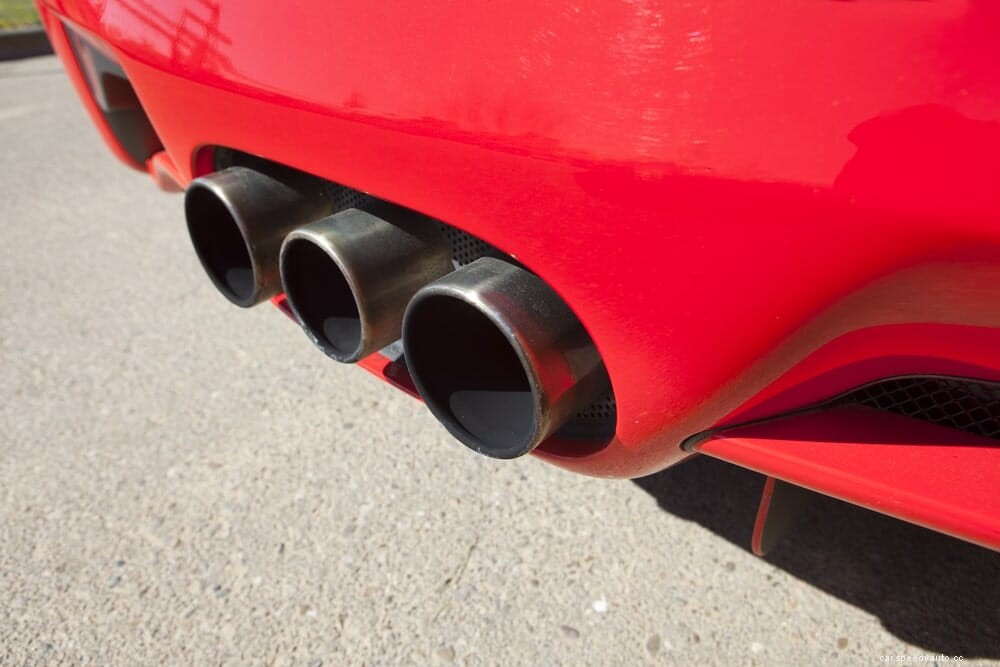
Step 1 – Check your car’s fuel levels. To deep clean your catalytic converter, you’ll need around 15 liters of fuel in the tank. Check the instructions on the catalytic converter cleaner, you need to make sure you are using the correct fuel to cleaner ratio.
Step 2 – Carefully pour the catalytic converter cleaning solution into the fuel tank.
Step 3 – Next, start the car and go for a thirty-minute drive. For the cleaner to effectively circulate around and clean the exhaust system, you will need to drive at 2500 RPMs or more.
Step 4 – Once you finish driving, if the process has been successful you will notice your car is performing as it should. If the blockage is cleared there will be no more acceleration issues, no strange sounds or smells and the whole engine performance should feel a lot smoother.
The above method usually works well when a car’s catalytic converter is only slightly clogged. However, sometimes the buildup can cause a more serious blockage that takes a little more work to clear.
If a catalytic converter cleaning solution hasn’t worked, you may need to remove the converter to thoroughly clean and unclog it.
Here is a step-by-step guide on how to unclog a catalytic converter by removing it:
Step 1 – If you have been driving, allow the engine to completely cool down. Next, jack up the car and keep it up the whole time you are working.
Step 2 – Next, locate and remove the oxygen sensors.
Step 3 – If the bolts holding the catalytic converter in place are stiff, use penetrating oil to try and loosen them. The next step is to remove the catalytic converter. If this feels out of your skill level, you may need to take your car to a mechanic to perform the task.
Step 4 – Once the catalytic converter is removed, you can now begin the cleaning process. Before you start cleaning, check that there is no rattling sound as this can mean the catalytic converter is damaged, and cleaning it won’t make any difference. If there is no rattling, feel free to continue the unclogging process.
Step 5 – Using a pressure washer, set it to the low setting and clean inside the catalytic converter.
Step 6 – Next, fill a large container with hot water, add a degreaser and immerse the catalytic converter in the mixture.
Step 7 – After soaking the catalytic converter, rinse it again with the pressure washer. `
Step 8 – Drain all the water out of the converter and leave it to dry.
Step 9 – Once the catalytic converter has dried, reinstall it into the car.
Step 10 – After reinstalling the catalytic converter, reinstall the oxygen sensors and carefully lower your vehicle back down to the ground.
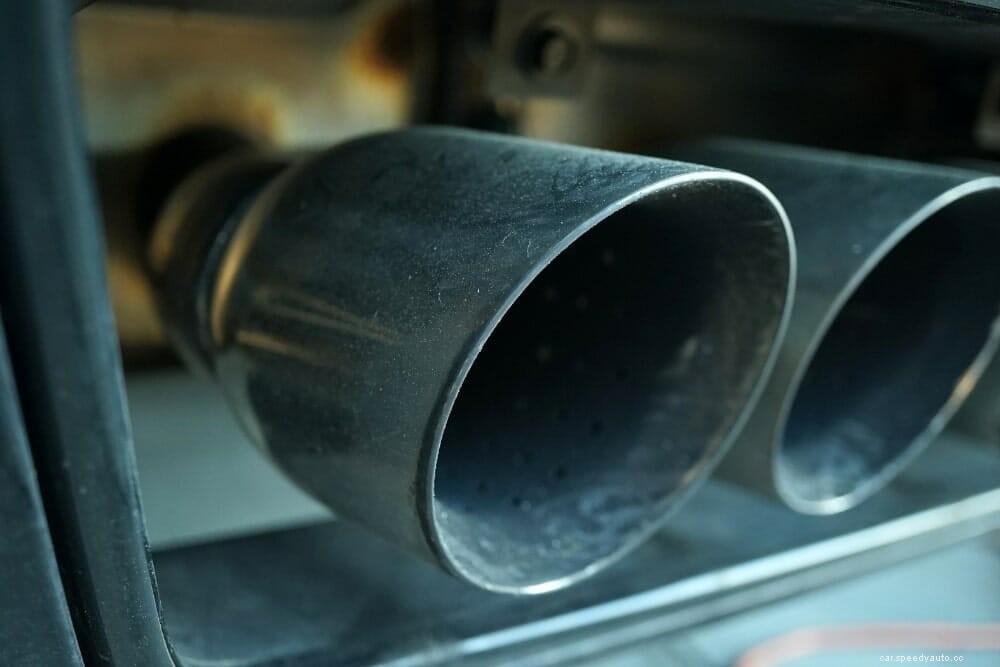
A clogged exhaust can sometimes be caused by a blocked muffler. The muffler is one of the two pipes found on the exhaust, the other is the catalytic converter.
If there are no cracks in the exhaust system, there are no loose connections and the catalytic converter is fine, it would be fair for you to assume the muffler may be clogged,
Here is a step-by-step guide on how to an unclog an engine muffler:
Step 1 – Firstly, you need to remove the muffler from the exhaust system. The muffler may be welded or bolted to the pipes. It can be difficult to remove a welded muffler and a bolted muffler may also need some penetrating oil to be successfully removed.
Step 2 – Once the muffler is removed, you will need to start the cleaning process. Fill a bucket with a degreasing detergent, they don’t need to be harsh chemicals, you will just need a cleaning solution designed to remove oil and built-up debris.
Step 3 – Soak the muffler in the cleaning solution overnight. For best results, wait at least 24 hours. As the cleaning solution works, debris can become loose and break away, you may need to shake the muffler a few times to dislodge the buildup.
Step 4 – After the muffler has been soaked for a full day, you will need to rinse it all out. Rinse the muffler until there is no degreaser left and then dry it.
Step 5 – Reinstall the muffler and start the car. If the symptoms of a clogged exhaust have eased, you have likely fixed your problem.
If after following these steps you continue to notice signs of a clogged muffler, you may need to get the muffler replaced. Before rushing to buy a new muffler, you could try separating the outer housing of the muffler and cleaning the internal parts.
A blocked exhaust is caused when debris from emissions builds up inside the catalytic converter or the muffler. Rust is also a cause of blocked car exhausts.
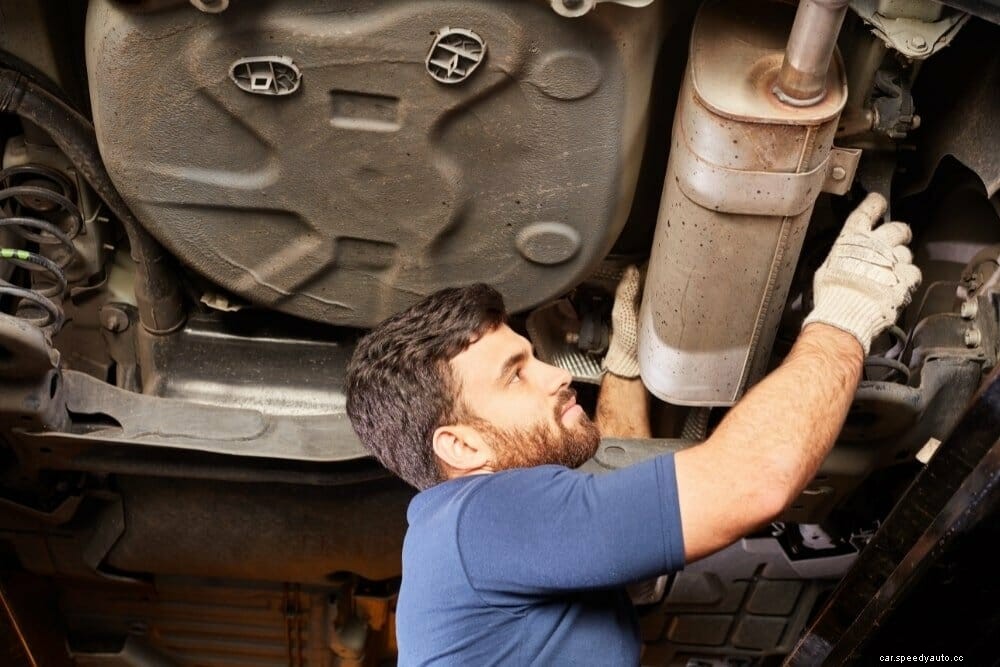
Drivers who live near the coast may be more prone to experiencing blocked exhausts due to the salt from the sea air. Cracks in the exhaust system pipes can make it easier for dirt and debris to enter the pipes and clog them up.
A clogged exhaust can cause a noticeable sound when drivers start their car. The exhaust system is noisy by nature, but any unusual sounds are always worth investigating. If you hear a loud chugging noise, this may be because there is a blockage in the system.
When the exhaust is clogged up, the emissions can get pushed back into the engine and a strange sound is created.
It is unlikely that a catalytic converter will unclog itself. You may notice a blockage in the converter resolves itself after you have driven around for a while at high RPMs. However, this method is likely to only work for very small blockages.
If your car’s catalytic converter is blocked, you will need to clean it using an appropriate cleaner. For less severe blockages, it is possible to unclog a catalytic converter without removing it. However, when there is a lot of built-up debris, drivers will need to remove the converter and thoroughly clean it all out.
If your car’s catalytic converter is clogged, the fuel emissions will not be able to safely exit the exhaust system. When the catalytic converter is clogged, harmful gasses are pushed back up into the engine and cause the car to stop working correctly.
You may notice your car is stalling frequently, is failing to start, or is making a strange sound while the engine is running. When the catalytic converter is completely blocked, your car is at risk of serious damage and you will need to fix the issue as soon as possible.
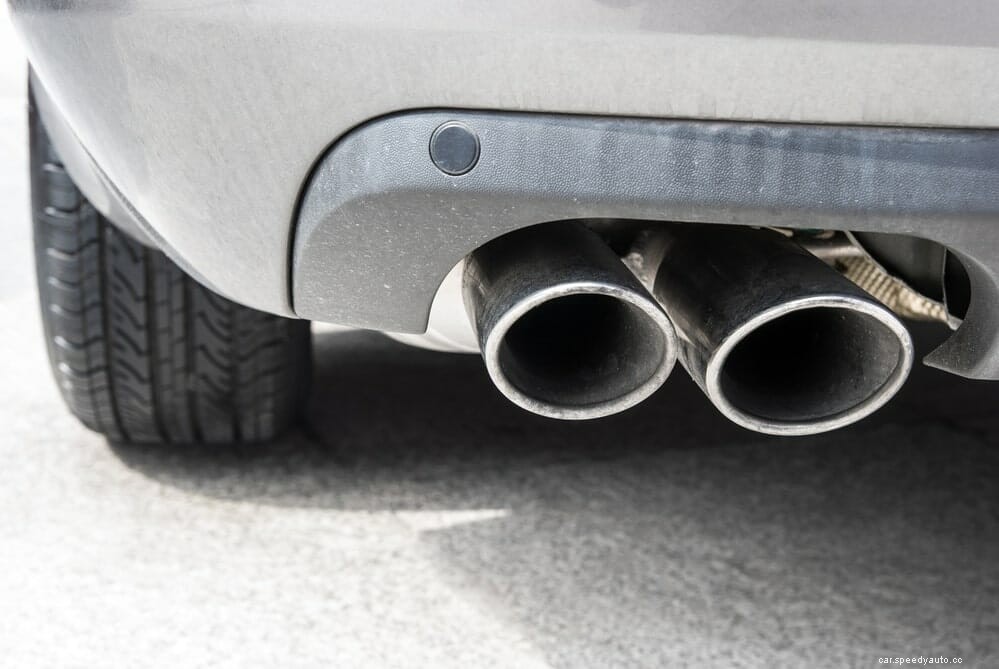
There are many signs that your car exhaust needs replacing. If you notice unusual smells or sounds coming from the engine, your car is misfiring or stalling often and the fuel efficiency is poor, there is a chance that the exhaust needs replacing.
If you have tried different methods to unclog the exhaust system, there may be a more serious issue and certain components may need to be replaced.
A clogged-up exhaust can cause serious problems for a vehicle. The exhaust system is like the lungs of the car and when there is a blockage, the car can’t ‘breathe’ properly. A blocked exhaust can cause the emission fumes to stay trapped inside the engine.
Fuel emissions are toxic and need to be cleaned through the catalytic converter and released out of the exhaust pipe. If your car has a blocked exhaust, you can resolve the issue yourself at home.
There are many signs of a blocked exhaust system that all drivers should be aware of. The symptoms of a clogged exhaust include a rotten eggs smell, a chugging sound from the engine, stalling, misfires, and failed ignition.
The engine warning light may also appear on the dashboard if there is a blockage in the exhaust system. It is important that drivers never ignore the check engine light or any problems with their car’s performance.
In this article, we have shared exactly how you can clear a clogged exhaust. There are several methods vehicle owners use to clear an exhaust blockage, including deep cleaning the catalytic converter and soaking the muffler.
We have shared detailed step-by-step guides on these methods in this article and we hope you are now able to successfully unclog your blocked exhaust system.
