
If the hood of your vehicle is stuck it can be extremely frustrating, especially if it prevents you from performing vital work under the hood. Being able to gain access doesn’t have to be costly or confusing and knowing the ways to prevent this issue from reoccurring in the future can save you from this annoying issue bothering you again.
Luckily, in this article, we will be covering everything you need to know about regaining access under your hood, as well as how to prevent it from jamming in the future and some handy information you may not have known about the inner workings of the hood of your vehicle.
Your vehicle’s hood (or bonnet) is typically constructed from aluminum or steel and its primary purpose is to protect the engine and inner workings of your vehicle. Without the full function of the hinges, you will be left without access to the engine of your vehicle which can be an alarming prospect.
Most vehicles commonly have a hook release system. The lock handle for your hood is located within the vehicle and is usually next to the driver side seat, or within the door frame, If you’re struggling to locate it in your vehicle then check your vehicle’s manual for more specific information relating to your model.
Older car models will have the hood release located behind the grille or bumper. Look through the grilles and feel underneath for a handle, button, arm, or lever you can interact with to release the hood.
This will open your hood slightly, but usually, it will still be locked by a safety feature lock or metal leaver that requires moving to one side to fully open and gain access to the engine.
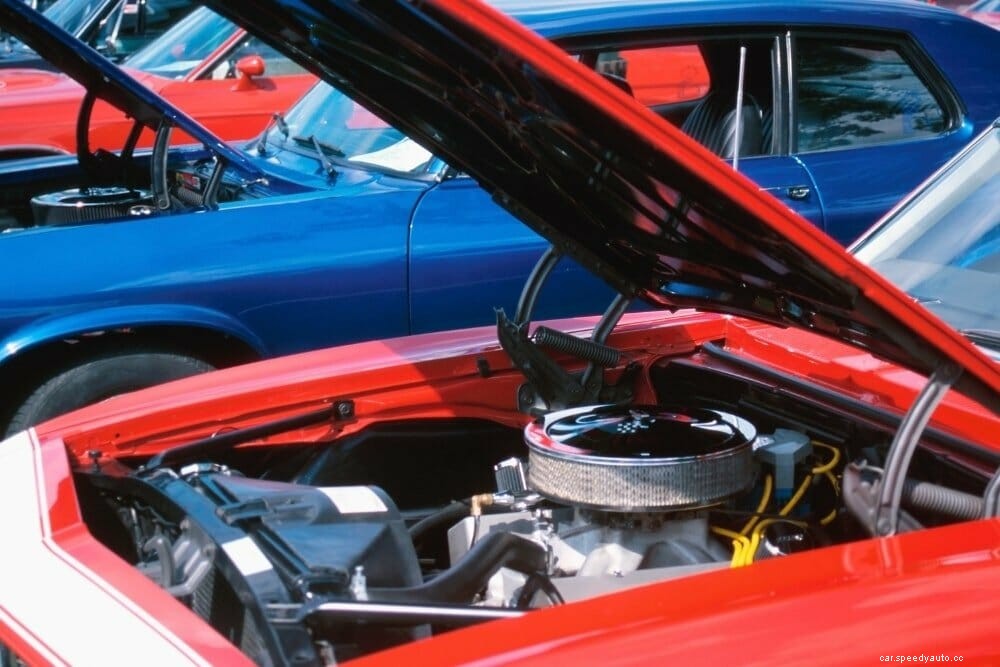
Most vehicles will have a long thin metal rod located along either edge of the vehicle that will raise and slot into a pre-cut hole to safely keep your hood open leaving you with both arms free.
Usually when your car hood won’t open you can blame one of the three basic components in any vehicle. These are the release handle, release cable, or hood latch. Here’s how to pinpoint which is to blame and get you the help you need.
The release handle will be located within your vehicle, usually around the driver’s side. They are made from plastic and will have some kind of marking indicating their use. This handle pulls on the release cable, but if the handle is loose, or broken then it won’t be able to successfully pull the cable and open your hood.
If your release cable is to blame then this could be down to a disconnection, stretching of the cable or just breaking of the cabling that does the work. The release cable is similar to that of a bike brake cable as it is made up of a protective outer casing and inner braided metal cable that has the force to pull and raise your hood latch.
Finally, the hood latch is located within the hood and most commonly isn’t where the issue lies in faulty hoods. It is spring-loaded and designed to hold and lock the hood.
Unless your car has been in an accident or you know the hood latch has a history of damage, it usually will not be causing the problem of you not being able to gain access under your hood. Occasionally your latch could be loose, stuck, or unadjusted which is a simple fix with some WD40 or tightening up.
Preventing your hood from jamming can sometimes be doable, but often it will happen when you least expect it and not have given any indicators of being close to breaking.
The three main components that are responsible for opening and closing your hood are simple as we just covered, but did you know there are a few simple ways you can make sure they are working as planned?
Firstly, make sure your latch isn’t feeling tight or sticking as you can easily prevent this by applying WD40 to loosen the mechanism. Secondly, if the handle within your vehicle doesn’t feel like it is pulling the cable as strongly as you remember then you should get the cable checked to see if it is on its way out and needing replacement.
Finally, if you notice your cable is damaged or close to breaking then always get it changed before you find yourself locked out of your hood and trying to pry it open and possibly causing further damage to your vehicle.
Now we’ve covered all the important information to help you decipher what is wrong with the hood of your vehicle, here are 3 ways to try to regain access under your hood.
If your release handle is pulling and the cable has good resistance then more than likely your hood latch is stuck or seized. Here’s how to fix that.
In colder weather, the inner mechanisms that work to open your hood could freeze up meaning you struggle to open it. Leave your vehicle to warm up and try again to see if the heat will help to un-seize the inner parts of your car.
If that doesn’t work and your release handle feels loose with no resistance then the handle may not be properly connected to the cable which can happen over time.
If you find your hood release cable is damaged or faulty you can easily change it yourself at home.
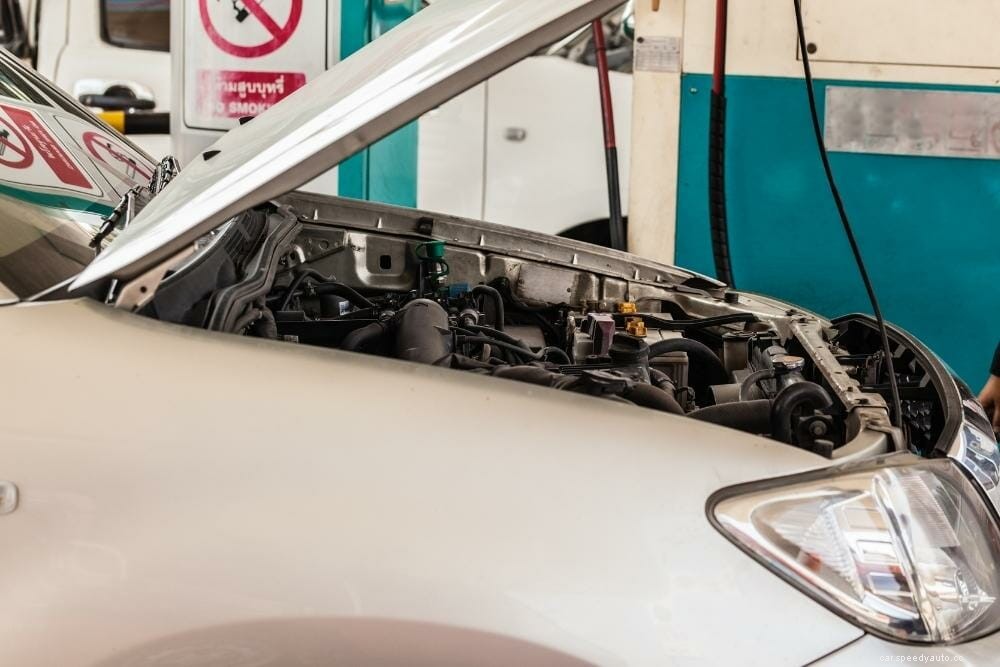
On average, the cost to replace a broken hood ranges from $90-$400. This is all dependent on the make and model of your vehicle.
If you find your hood latch is broken then it isn’t an emergency replacement, meaning you can safely drive your vehicle as long as you’re not needing access under the hood. Usually, you can wait until your next scheduled service to have the issue fixed.
The hood release cable has no exterior release meaning you need the cable to safely open your hood from within the vehicle.
Installing a hood cable is not a massively difficult job for most vehicles, but it can be tricky if you’re not aware of the inner workings of your vehicle. It requires access through the top radiator and a hole located in the driver’s side headlight.
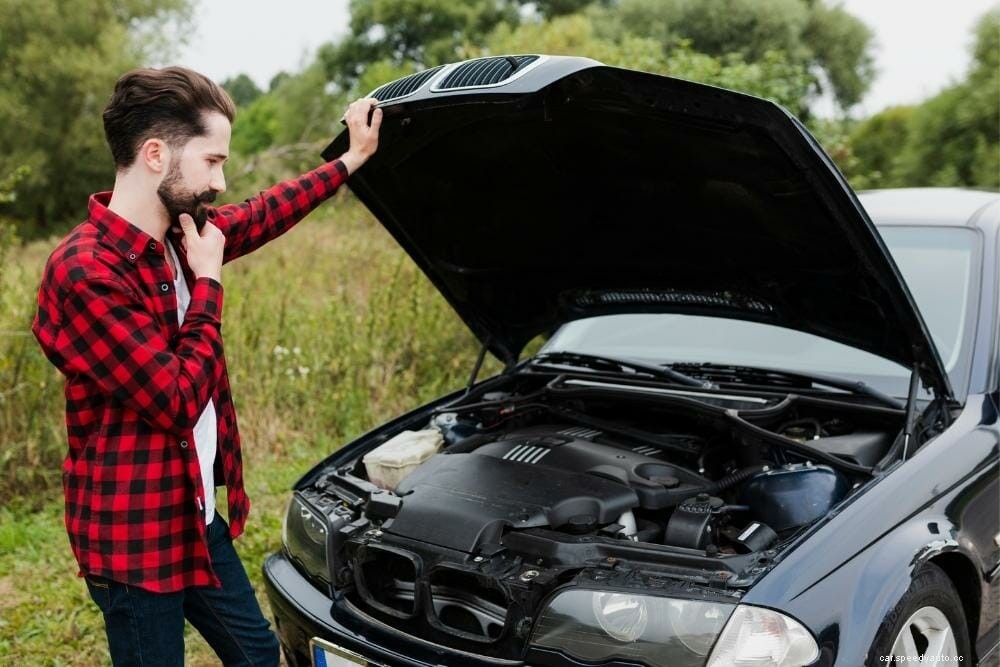
If you find your hood flies up whilst you’re driving and leads to complete obstruction of your visibility you should slow down and peer through any gap or window you can, or just place your head out the window until you find a safe place to pull over and stop your vehicle.
Usually, when a hood won’t close fully there is something in the way preventing the latch from locking shut. Alternatively, your latch may be bent and require straightening out.
Fixing the hood of your car is straightforward to diagnose if you know where to look on your vehicle. Using the information in our article will show you not only how to locate but fix the issue that is leading to the hood of your vehicle being jammed, stuck, or broken. If you don’t feel comfortable enough with your skills you should always ask for the assistance of a qualified mechanic to help fix your vehicle and prevent any extra unnecessary damage.
Here are other related tips for you to follow:
Car Door Won’t Open from Inside or Outside – How to Fix
How To Open The Trunk On A Nissan Kicks
Subaru Outback Trunk Won’t Open: Causes and Fix
