
If you are reading this, you likely want to make sure that you have enough coolant in your overflow tank. Most reservoir tanks have a minimum and a maximum marked on the side of the tank.
Most tanks require you to at least need 30 percent of the tank full to run the car without harming anything. Keep reading if you have any further questions that need to be answered. There are different types of coolants and mixtures.
Keep reading for all your questions to be answered.
The term coolant is a basic term for a cooling liquid that goes inside your cooling system. Coolant protects against corrosion, frost damage, overheating the engine when running, and lubricates the engine components.
Coolant is designed to help dissipate the engine heat through the coolant. Coolant is a mixture of tap water and an anti-freezing compound. It’s mixed with other additives too.
The mixture ratio is water and antifreeze should be between 60:40 ratio or 50:50 ratio. There is a minimum ratio too. The ratio should be at least 70:30 and a maximum ratio of 40:60. The engine has a greater chance to overheat with a minimum ratio of antifreeze. Antifreeze freezes around-13 degrees Celcius.
The coolant system is mostly designed to dissipate the engine’s heat to stop the engine from overheating. The system has a few components that help keep the engine cold. They are:
The antifreeze is designed to run through the fan and hoses to reach the engine. It then absorbs the heat from the engine parts and dissipates through the radiator.
A leaking coolant system can be a bad thing. It’s not good because your engine realizes the use of antifreeze to prevent your engine from overheating. If your engine is overheating then it can damage engine parts. This can be costly and time-consuming.
You can usually identify a coolant pretty easily since it will mostly be under the car. You might also see bubbles ion the coolant tank or in the hoses. If you see these there is probably a leak somewhere in the system. Please watch a youtube video for further information on finding coolant leaks.
Nothing is more frustrating than seeing steam come out of your hood, especially when you are stuck in traffic. What you should do when seeing your temperature gauge start to climb. Keep reading below to see the next steps:
You want to turn off the air condition because then you’re using less power to run the ac. This will entail you giving more power to the engine’s cooling system.
I know your like why turn on the heat? The reason is that when the heat is on in the cabin it’s not reaching the engine. This is putting the heat In the interior of the car instead of coming off the engine.
You can always open the window for the heat to go outside. This is the best way to have heat transferred away from the hot engine bay.
I know your think this might be a weird way of cooling the engine down. Doing this lightly allows more air and cools the radiator down faster. This will only work if the problem isn’t with the cooling fan. Switching the car into neutral and rev the car under 1,500PRM. This will allow the cooling fan to work.
If you’re able to pull over in a safe location and open the hood it would be recommended. This will allow the engine to cool off with the hood open. Driving a car with a hot engine can be more harmful than good.
It would be recommended to look at your antifreeze levels. You could leak into the system. If you want to continue on your way it would be recommended to top of your tank before continuing to make sure they are no harm to the engine.
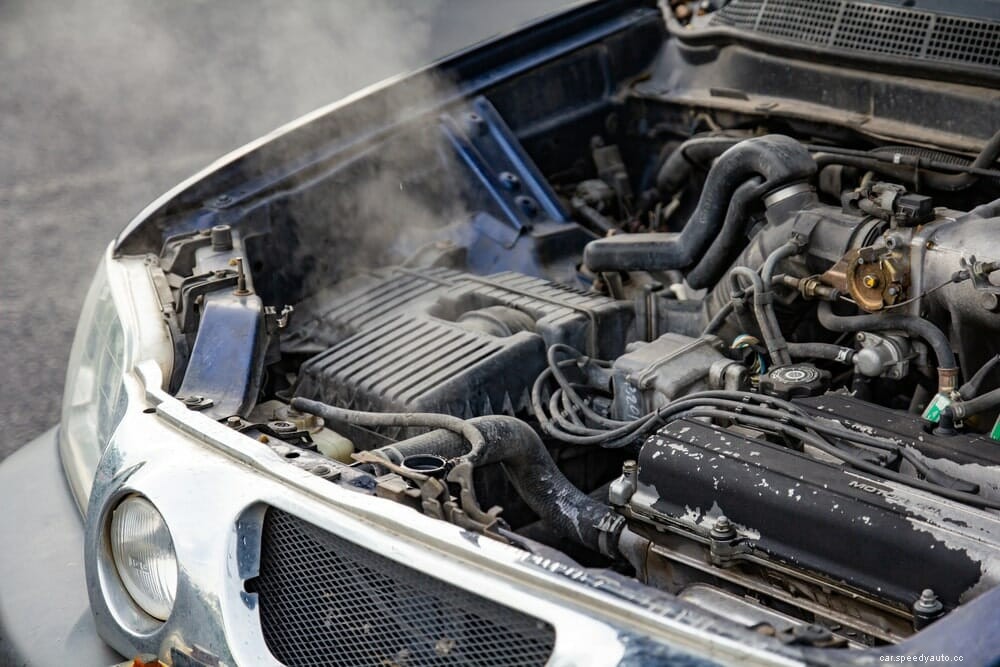
In most vehicles, heat will always be there. Internal combustion engine powers most vehicles. Fuel burns to create power and then the power produces heat. It’s important to keep your radiator in good shape because then your engine’s life will be longer.
In normal circumstances, it will take a minimum of 30minutes to have your engine get down to a manageable level to inspect. Just remember when inspecting the overheating engine it’s very hot. The radiator is going to be the hottest part because it’s the first part of the cooling system.
Engines with aluminum blocks tend to usually cool down quicker than engines with cast iron blocks. The only downside of having aluminum blocks is that they are more prone to heat damage due to the heat.
Several malfunctions can cause a vehicle to overheat. Most car engines have a cooling system and four major components. The components are a water pump, radiator, heater core, and thermostats. All these components are connected with hoses to the engine.
They all have a large importance in the cooling system. If one has a problem it will usually lead to a larger problem if untreated.
A water pump problem or failure within the radiator will be the most expensive to fix. If the cooling fan has a problem It usually has a problem with the engine or an electrical issue. Cooling fans usually have a fan belt in other words this is the cheapest fix in a cooling system.
In general, the coolant expands about 12 percent of the total amount of coolant. When filling the coolant make sure you leave a little space for the coolant to expand in the heat. When it’s cold, you will have to add more coolant than normal. The levels are always changing.
Most cars and trucks have a different size or radiator or reserve tank which in tales to use more antifreeze mixture. There is an average of three gallons that can be held in most vehicles. Keep in mind that each type of antifreeze is different.
Some will require water to be added. Antifreeze helps prevent rust and any mineral contaminants. Trucks can hold more antifreeze because it’s a large engine and radiator.
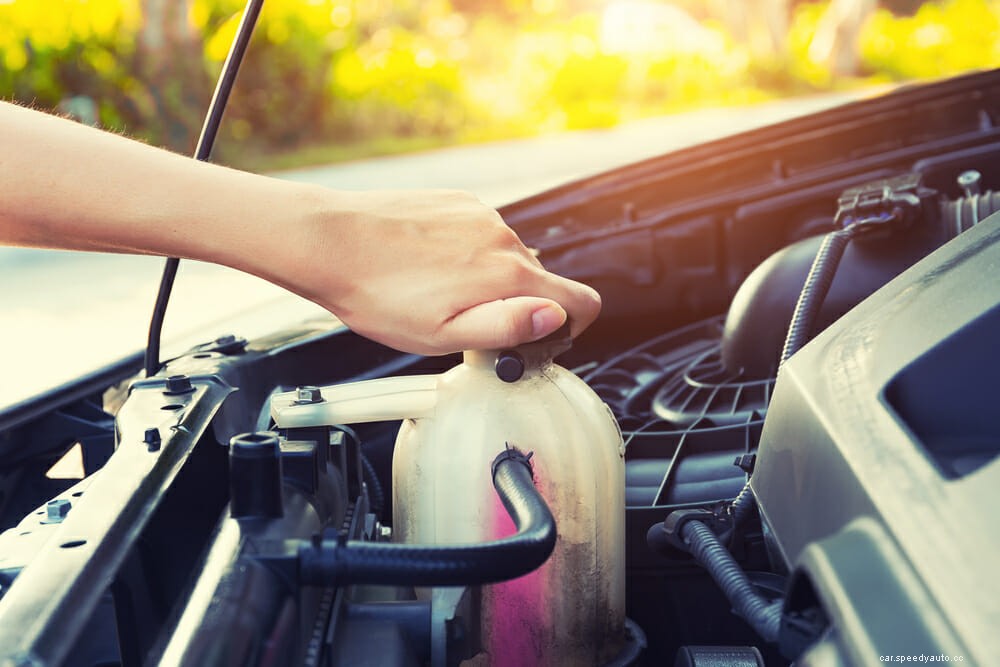
The coolant in your vehicle will change dramatically due to heat or cold weather. If it’s cold outside you have to let your car warm up so coolant in your system can be pressurized. When it’s hot outside the coolant expands and will create pressure inside the system.
This allows the radiator to be full. Then the hot coolant will overflow into the reservoir tank. It’s designed to fluctuate due to the weather changes.
You should only fill the reservoir tank to 30 percent because when the system gets hot the overflow will go back into the reservoir tank. This means the tank will always change in levels and you don’t want to overfill the tank.
If you fill the tank to 100% and it’s warm outside the pressure has nowhere to go for the overfill. Then it can cause a major problem. It can burst a hose or cause more damage to the engine. That would be very costly and you want to just make sure that your reservoir tank is only at 30 percent.
You are now aware of how to check and add coolant to your vehicle. This will enhance the overall understanding of the process and you can do it in the comfort of your home. This process is not a difficult one, however, each step should be completed with care and caution.
Taking the time to do the process right the first time is going to ensure that you are not wasting any money. These items are not too expensive, however, if you keep messing up, it could be.
Keeping your car maintenance regularly will prove a good thing because then you might not have these problems on a road trip where the tools and time might be hard to come by. You don’t want to have any other stress on vacation.
We hope that you have found the information in this article useful. Thank you for taking the time to read and see our point of view. We hope that you can easily check and maintain your coolant levels without too many problems.
