
Your engine is like your body – if one part isn’t working properly, it can affect the entire system. The knock sensor is an important part of your engine that helps to keep it running smoothly. If this sensor isn’t working correctly, it can cause a lot of problems for your car.
Most bad knock sensor symptoms are easy to detect, as you will notice bad acceleration and a rough engine idle, but some are more subtle like bad fuel damage and catalyst damage.
In this article, we will discuss 5 bad knock sensor symptoms that you need to watch out for!
A knock sensor, or a contactless knock sensing system, is an electronic device that uses piezoelectric technology. Piezoelectricity is electricity resulting from pressure on certain types of materials such as quartz and certain types of ceramic material.
When the engine in your car starts to run, it goes through different phases (four-stroke cycle) before it’s at full capacity.
When the piston hits the top dead center during its intake stroke, which happens when the crankshaft is exactly 90 degrees after it has rotated all four cycles (intake, compression, power, and exhaust), the air and fuel mixture ignites and causes an explosion within each chamber in your cylinders.
This is where a knocking sound comes from.
Knocking sounds are produced when the piston hits a “hot spot” in the chamber and causes an uncontrolled burn. In other words, it is not controlled by the normal sequence of events during combustion. It has been proposed that uncontrolled ignition causes damage to the engine over time and eventually leads it to fail.
So why do we care about these knocks? Well, for one thing, they can be really annoying especially if you want a quiet ride. On a more serious note, knocking usually comes from improper fuel octane or faulty spark plugs.
What happens is after all this mayhem occurs within your cylinders, it sends a signal through your car’s electrical system that disturbs your car’s computer resulting in the ECU (engine control unit) adding more fuel to the mixture.
This, in some cases, can lead to engine knocking or pinging that you hear when your car accelerates at higher speeds.
Knock sensors are typically made up of piezoelectric elements that produce electric signals within the range of 10-150 mV depending on different factors such as heat and pressure.
One component of a knock sensor is its signal conditioner which amplifies these voltage levels so they are easier for the ECU to interpret accurately.
If your car starts to have trouble accelerating at higher speeds after prolonged usage, it’s time for you to check if the knock sensors are working properly by checking their output with an oscilloscope device.
If they are not giving off any signals, they got fried by the heat and there’s nothing you can do about it. If they are working fine, then your ECU is probably faulty.
If you are having problems with your knock sensor or if you can’t seem to find its location under the hood of your car, check out this video for a demonstration of how it works:
If you have a bad knock sensor or ABS noise, it usually means the engine is misfiring and that’s not good. It causes decreased performance and higher than normal emissions as well as possible catalyst damage and elevated and rough idle.
Symptoms of a bad knock sensor would be:
This symptom is one you feel. The engine feels like it’s going to seize up or stop running completely. It’s a terrible feeling and not something you want to play around with.
This symptom is also one you feel when driving the car, but much less pronounced than the above symptom. The power will be much lower and overall drivability will suffer, especially in low gear.
The service engine soon light indicates ignition misfire from a bad knock sensor code in your car’s computer memory. If the car has a steady light and no codes are present, but you still have symptoms, there could still be a bad knock sensor lurking inside the distributor housing that is undetected because it hasn’t set a bad misfire code yet.
There also could be other causes for the code and symptoms, but we’ll save those for another day. Replacing one or both knock sensors is not a difficult job and shouldn’t take more than about an hour to complete. The hardest part might be getting to either sensor on some models.
This symptom is one you can feel in your wallet when you get to the gas station. The car will use considerably more fuel than normal, especially in city driving or at part throttle. If you notice this, check for low power and rough idle first to see if they are the cause.
A bad knock sensor can damage your car’s catalyst resulting in elevated HC (hydrocarbons) emissions and possibly even lower MPG. The hydrocarbons from an engine misfiring or running poorly will be released into the atmosphere without burning them completely.
It’s a big no-no for our environment and will result in a collapsed catalytic converter if done too much over too long of a time period.
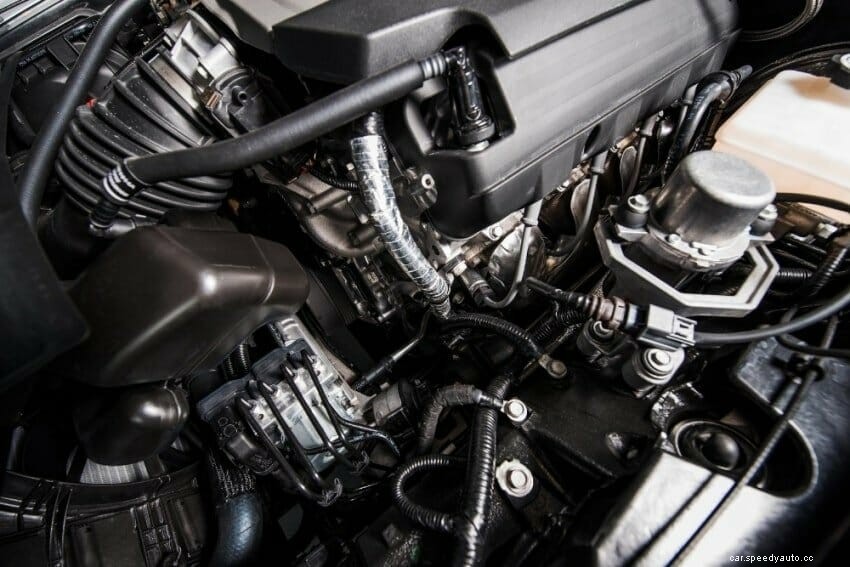
A bad knock sensor can cause several problems. The first is failed emissions testing. If the car is running rich, the fuel mixture will not pass, even though you have fixed all internal engine problems. Second, are elevated HC levels in your exhaust stream after the catalytic converter.
Third, are elevated CO (carbon monoxide) levels due to an improper air/fuel mix which do not burn completely because of the misfire caused by a bad knock sensor.
While most likely there will be no noticeable symptoms if one or both knock sensors fail, this does not mean that you should wait to replace them as they age and start malfunctioning as described above.
On most cars with distributor-less ignition (DIS) and electronic ignition, you simply pull out the old sensor and push in the new knock sensor.
There may be a retaining bracket holding it in place that can either be removed or bent out of the way to remove the faulty sensor. Then using some anti-seize on the new one’s threads (if available), screw it into place with a wrench or socket until tight.
On most cars with distributor ignition, there is a knock sensor wire going from the engine to the back of your car’s dashboard for diagnostic purposes so Nissan can see how badly your car is misfiring at any given time.
This wire will need to be unplugged from its connection under your dash before removing or replacing it as well as plugged back into its connection after it is installed.
You will need to remove the wire from its connection under your dash before removing or replacing the sensor. On most cars with distributor ignition, there will be two wires going to each knock sensor.
One carries a signal and one carries voltage for the sensor’s heater element (if equipped). These are usually plugged together on one end of both wires and plugged together on the other end onto the ECU (engine control unit).
Make sure they are unplugged during installation as well as afterward when plugging them back in. The picture above shows an old-style oxygen sensor electrical connector that can be used to plug into during replacement if an available knock sensor wiring harness slot is not available under your car’s dashboard.
Please note that on some models, the knock sensors are located next to each other and only one is shown in the pictures below. You will need to unplug both wires from their connection under your dash before removing or replacing the sensor(s) regardless of how many there are.
There are many things that can cause a knock sensor to malfunction, but the most common are:

You can drive with a bad knock sensor, but you will notice decreased performance and power as well as an increase in emissions. You should replace the knock sensor before long-term driving unless it is not convenient to do so.
It is not recommended to disconnect the knock sensor. If it’s disconnected, your car will not be able to adjust its air/fuel mixture and could run too rich or too lean. This can cause poor performance, damage your engine, and increase emissions levels.
If you’re experiencing any of these problems, make sure to replace your knock sensors as soon as possible!
A bad knock sounds like pinging or knocking. It happens when the air/fuel mixture ignites too early due to excessive heat, detonation, or another problem that causes increased pressure inside your cylinders such as worn piston rings.
This usually occurs at higher RPMs during acceleration when there are more vibrations from your engine causing rapid changes in temperature and pressure within its cylinders which results in preignition (knocking).
If this condition exists for too long without addressing any of the underlying problems, it can damage your engine.
On some models, the knock sensors are located next to each other and only one is shown in the pictures below. You will need to unplug both wires from their connection under your dash before removing or replacing the sensor(s) regardless of how many there are.
If you’re not sure where they are on your car, make sure to refer to the service manual for your vehicle before unplugging them.
The cost of a knock sensor repair can vary depending on the make and model of your car. It can range from $50 to $200 for parts and labor. You should always have a professional check it out if you’re not sure what’s wrong with your car.

A bad knock sensor can cause transmission problems. Symptoms include shuddering, jerking, and hesitation. If you’re experiencing any of these problems, have a professional check your transmission for damage.
A bad knock sensor can damage the engine if it’s not addressed. Symptoms include pinging or knocking noises, decreased performance and power, high HC and CO levels in the exhaust, and low compression readings.
If you’re experiencing any of these problems, make sure to replace your knock sensors as soon as possible!
Bad fuel can cause knock sensor damage. The most common symptoms are a decrease in performance and power, high HC and CO levels in the exhaust, and low compression readings. If you’re experiencing any of these problems, make sure to replace your knock sensors as soon as possible!
A bad knock sensor can cause a lot of problems. The most common are failed emissions testing, high HC and CO levels in the exhaust, and low power and rough idle. If you’re experiencing any of these problems, it might be time to replace your knock sensors.
Most cars with distributor-less ignition or electronic ignition make replacement very easy, but on cars with distributor ignition, it may be a little more difficult. Make sure you unplug the knock sensor’s wiring harness before removing or replacing it to avoid any problems.
If your car is running poorly, has failed emissions testing, or has high levels of HC and CO in the exhaust, it might have a bad knock sensor. If you don’t know how to check for yourself, make sure to visit a professional!
