
The fan clutch is responsible for transferring power from the drive belt or the water pump pulley to the fan, but should it be spinning freely when cold?
The viscous fan clutch will, with some resistance, spin freely when cold. You can see an example of it in this video.
The whole radiator fan construction is actually ingenious, from the self-contained system to the automatic fan activation. This article will explain in detail how the system works, and what are the modern alternatives to the drive-clutch fan system.
The mechanical fan clutch, also known as a viscous fan clutch or just Visco is a brilliant system that provides on-demand power to the radiator fan through a self-contained system.
The fan and the clutch are merged into the front half of the system. The second half represents the drive portion that is spinning with the water pump or on a drive belt pulley, depending on the system.
The two halves meet in the middle but never come in direct contact, so there’s no friction wear.
The drive section rotates two comb-like sides of the plate, while the clutch section has the same comb-shape, but offset so the two are very close to each other, but not in contact. These are called the shear plates.
The front of the clutch housing has a bi-metallic plate rolled into a spiral. It’s heat sensitive and will expand in heat, releasing the valve for the silicate viscous fluid to flow from the clutch housing and into the shear plates through centrifugal force.
The thick fluid creates friction between the two halves, and the power from the drive portion is transferred to the clutch portion, which moves the fan.
When the ambient temperature drops, the bi-metallic plate retracts, closing the release valve, and the viscous fluid returns to the clutch housing, which disconnects the two halves.
What makes the system brilliant is that it’s completely self-contained. There is no need for a thermostat or a computer-controlled unit, as the bi-metallic plate engages and disengages the fan as needed.
When the clutch is cold, the viscous liquid is contained within the housing, so there is no physical connection between the clutch and the pulley that provides power to the drive portion.
The fan can be spun, but there’s a dose of resistance that prevents the airflow from spinning up the fan on its own and cause unnecessary cooling, so technically, the fan clutch doesn’t spin freely.
The following video does an excellent job of visually illustrating how the whole system operates:
Engine overheating is an obvious sign that there’s something wrong with the cooling system, which can be, but isn’t limited to fan clutch failure.
The easiest way to identify whether the fan clutch is the cause is to drive your vehicle on a hot summer day until the temperature gauge reaches its optimal position. Then, continue to drive while monitoring the gauge.
When the temperature climbs beyond the normal limit, park safely and let the car idle. Pop the hood and see whether the fan is spinning – if you’ve experienced overheating before and the fan is not spinning, it’s a clear sign that the fan clutch has failed.
The mechanical clutch depends on the viscous fluid to create friction between the two halves and power the fan portion of the unit. However, when the bi-metallic plate fails, it may close and open randomly, causing the fan to intermittently activate and slip from the lack of liquid.
The problem can be accompanied by a variety of unusual noises, with the most prominent being the obvious sound of the fan spooling up and slowing down. Replacing the fan clutch is the only solution to the problem.
Just as it’s likely to distribute the viscous fluid intermittently, the clutch can also become stuck on open, creating a permanent link between the radiator and the engine. Identifying this issue is easy: let the engine cool, then start it up.
If the fan starts spinning immediately, the clutch broke in the open position. The problem is accompanied by loud noise, as the fan and the engine are turning at the same rpm.
When the clutch is cold, the fan can be moved by hand, but it cannot be spun up. There’s enough resistance in the system to allow you to move the fan, but keep it from spooling up when hit by air pressure.
If you can spin the fan effortlessly and it continues to spin without quickly slowing down, that’s a sign that the fan clutch has failed and needs to be inspected and replaced.
The efficiency of the electromotors grew significantly over time, and at one point, the engineers decided to incorporate them to power the radiator fan.
The working principle is simple – the electric motor receives power from the alternator and uses it to spin the fan or two side-by-side fans that can be found in a lot of vehicles.
Because the electric fan is not physically tied to the location of the water pump or the drive belt, it can be positioned in a better location where it takes up less room, and makes the vehicle more compact.
Additionally, the electric fan may continue to run even after you’ve turned the engine off, as the ECU still sends the signal that the coolant is too hot.
This is a preventive measure that’s simply not available on the mechanically-driven fan, as it uses the power produced by the crankshaft.
Replacing the fan clutch is not an easy task, and requires a lot of physical work to get the old part disconnected. The only specialized tools necessary are the fan clutch removers, but if you can get away with a DIY solution, go for it.
The mechanic’s labor cost is going to be at least $100, so investing into your own toolset is not only going to be cheaper short-term but even more so in the long run, as you built up your inventory.
| Image | Title | Price | Buy |
|---|---|---|---|
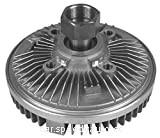 | Hayden Automotive 2786 Premium Fan Clutch | ||
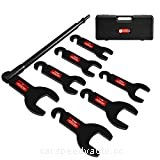 | BETOOLL 8PCS Pneumatic Fan Clutch Wrench, 43300 Fan Clutch Removal Tool Kit, Auto Repair Spanner Kit Installs Fan Clutch Compatible with Ford, GM, Chrysler and Jeep | ||
 | DEWALT Mechanics Tool Set, 84-Piece (DWMT81531) | ||
 | KORR Tools KTW003 1/2-Inch Drive 24-Inch Length Premium Quality Breaker Bar | ||
 | Estwing Gooseneck Wrecking Bar PRO - 36" Pry Bar with Angled Chisel End & Forged Steel Construction - EWB-36PS | ||
 | Amartisan 10-Piece Magnetic Screwdrivers Set, 5 Phillips and 5 Slotted Tips Professional Cushion Grip Screwdriver Set (10-Piece) | ||
 | Edward Tools Harden Pro Slip Joint Pliers - Heavy Duty Fine Carbon Steel - Non Slip Handle - Channel Lock Design - Nut and Bolt Fastener - Extra Strong Teeth for Superior Grip (8") | ||
 | Butane Torch Kitchen Blow Lighter - Culinary Torches Chef Cooking Professional Adjustable Flame with Reverse Use for Creme, Brulee, BBQ, Baking, Jewelry by FunOwlet (Butane Fuel Not Included) |
You’ll find a lot of conflicting answers to this question, and they vary primarily because of the differences in vehicles. For some, the fan shouldn’t spin more than 5 rotations, others say 3, and a third group says it shouldn’t spin at all.
It really comes down to your vehicle, and you shouldn’t worry yourself too much about precisely meeting these standards. If the fan is so stiff you can’t move it at all, that’s not a good thing.
The same goes for a fan that spins like a household fan, without any resistance. As for everything in between – consider it acceptable.
The bimetallic spring is set to expand at approximately 170° F, and reduce the temperature down by about 20° F before disengaging. A fan should not be running all the time, nor should it remain stationary when the dashboard temperature gauge starts climbing.
I don’t think you can overtighten the fan clutch during the installation. The two parts are met together through metal-on-metal contact, and the clutch is self-tightening to ensure the fan doesn’t come off.
If the fan doesn’t engage when the system needs it, the excess temperature could cause the engine to overheat. A fan clutch can break in the closed position and fail to deliver the viscous fluid to the sheer plates.
Without the fluids, the plates cannot create friction to move the clutch and the fan.
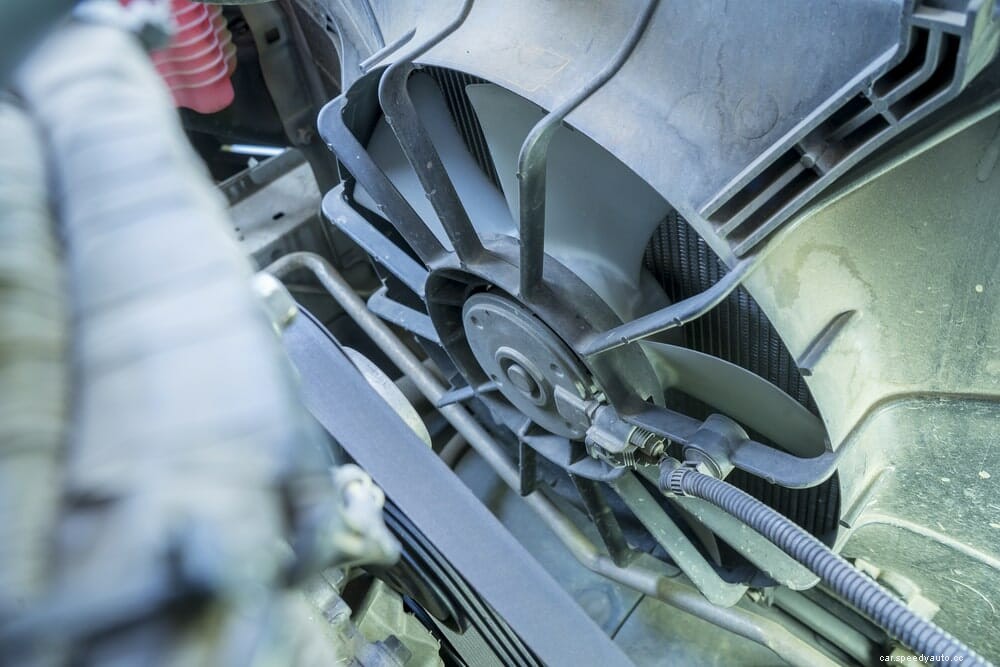
A radiator fan with a clutch activates automatically, meaning that it only needs enough temperature to connect with the driveshaft and spin. The fan with an electric motor takes the information from the ECU and activates when it’s required.
The clutch fan is connected to the clutch by a series of bolts. The problem is access – in theory, you could reach the bolts, unscrew the fan and install a new one in its place, without taking off the fan & clutch unit.
However, you’re likely going to be constricted in access because the radiator is centimeters away from the fan housing. The only viable solution, in this case, is to disconnect the fan clutch as described in the how-to above.
Driving without a fan clutch means you’re effectively driving without the radiator fan. The fan does more than you may think and is an important part in reducing the temperature of the engine.
You can get away with driving without a fan clutch in colder weather and winter in particular, when it’s unlikely for the engine to ever go beyond its normal operating temperature. Don’t do the same when the weather turns nice, as your vehicle may overheat.
The radiator fan with a viscous clutch has no ties to the thermostat and will activate when the temperature inside the engine bay becomes high enough for the clutch to engage.
A fan operated by an electric motor relies on the information from the ECU, so if the ECU receives false information from the thermostat, it may also lead to the fan not engaging.
The fan should never be engaged when cold. If it won’t move at all, it means the clutch failed in the open position and has created a solid connection between the drive and the fan. This will cause the fan to spin at all times and match the RPM of the engine, accompanied by loud noise.
When the clutch is hot, it should engage with the drive portion and become immovable by hand. If your clutch is spinning freely when the engine is hot, that means that the clutch failed in the closed position.
The viscous fan clutch is a surprisingly interesting piece of engineering. It’s a self-contained unit that allows the fan to spin freely (with some resistance) when cold and merges with the drive portion when hot to power the fan through a frictionless system.
We’ve gone through all the symptoms of a bad fan clutch and the steps to replace it, so if you’ve read the entire article you should know all there is to it when it comes to the viscous fan clutch operation!
